14
From the newsletter (September 22; sign-up or follow if you want it sooner): From live-network AI-RAN trials and a massive transpacific cable build to private LTE iPhones and stratospheric lasers, the latest developments show telco infrastructure evolving – though commercial breakthroughs remain some way off.
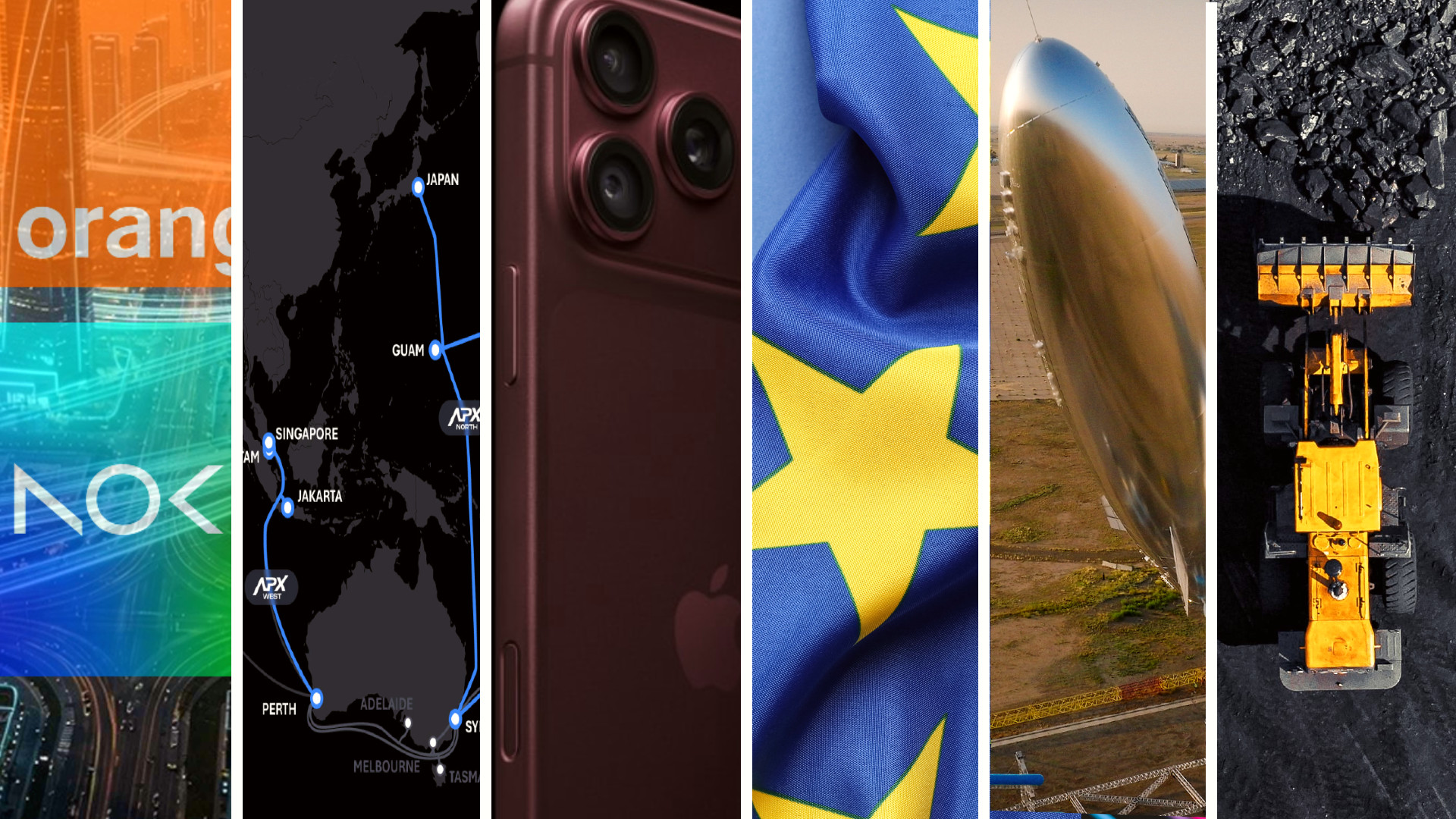
Some cool stuff, today – starting with an excerpt from a session with Nokia and Orange at Intelligent Forum, where Orange said it is about to test Nokia’s AI-RAN platform in its live network. Which sounds, at least, like an advance on some of the lab trials Nokia has with a bunch of others – at least, the new-joiners announced last week. Maybe not; but the move by Orange goes to the heart of matter: the test is not whether AI can make a radio do clever things in a lab, but whether it can do it when the network is carrying traffic, serving customers, and paying bills; and then, after that, whether it can deliver on all the big talk about third-party AI workloads. Orange CTO Laurent Leboucher is very good, as always; Nokia CTO Pallavi Mahajan is also candid.
Besides, there is a flurry of press announcements, listed below the line, which are worth memorializing here: Australian subsea cable operator SUBCO is to sink about 40,000 kilometres of cable onto the seabed, as three brand new transpacific 24-fiber-pair systems – going Australia-Japan, Guam-Los Angeles, and Perth-Singapore/Indonesia. It has a 2029 date to open them to directly serve global AI traffic into the region. It bills it as “the single largest subsea infrastructure build ever”. That is the biggest, not just its own biggest – so an enormous physical infrastructure commitment, directly tied to AI traffic and Indo-Pacific capacity. Related, kind of, Colt has a solid sovereign infra story – particularly for European enterprise readers.
The deal is pretty straightforward – private connectivity to Oracle’s sovereign EU cloud in Frankfurt and Madrid – but it gets into the bones about how sovereign cloud reserves get physically connected to enterprises. Sovereign cloud still needs new network infrastructure – is the message. Maybe more telling, perhaps, for those that still care about private networks (and getting AI to work in the blue-collar economy): the latest iPhone 18s (Pro and Duo) work on private LTE in Anterix’s dedicated 900MHz (Band 106) spectrum. They are the first iPhones to do so. So everyone’s favorite phones (eye roll) are now good-to-go in certain rarefied industrial climes – which must be considered a boost for the whole market. The infrastructure itself isn’t more capable; but the device ecosystem is less of a barrier.
What else, worth noting? Ah yes, a couple of technically interesting experiments, which chime with stuff RCR has written lately: Softbank has bounced laser light off a passive reflector on a HAPS aircraft; Huawei and China Mobile have managed 1Gbps (1.022, to be precise) on an uplink channel on a 5G-Advanced network at a mine in Inner Mongolia. Both, we’d suggest, augur well for the promise and practical headaches of getting more out of telco infrastructure – which is what the big story is all about. Softbank’s HAPS experiment, discussed before, is about the optical tracking needed to make high-capacity links work between the ground and the stratosphere; the mining trial is about pushing more uplink capacity into demanding industrial environments.
Neither is a commercial breakthrough just yet, but both are useful markers of where the network edge might be headed. But neither is a business case on its own, either. So don’t get too excited – but small steps, good ideas, and plentiful promise, including if AI-RAN is really (!) to matter.


