Like its rivals Microsoft and Google, Amazon is struggling to tame its greenhouse gas emissions in the face of explosive growth in cloud computing and artificial intelligence services: Its carbon footprint rose 16 percent in 2025.
The cloud computing services and e-commerce giant has logged a cumulative increase of 58 percent since the 2019 baseline year for its net-zero-by-2040 commitment, according to its 2025 sustainability report published on July 1.
Much of that came from data center and other building construction, which contributes to a supply chain footprint that represents 76 percent of the company’s total. That chunk grew 20 percent year-over-year, but Amazon has convinced a growing number of its top suppliers to declare emissions reduction targets through the Climate Pledge initiative it co-founded in 2019.
Google, which published its 2025 data the previous day, experienced similar emissions growth. Microsoft has yet to disclose its latest climate data.
AI expansion is making Amazon’s job tougher, but the company remains “confident and optimistic” in its long-term sustainability vision, said Chief Sustainability Officer Kara Hurst, in the report’s introduction.
“While the speed and scale of AI adoption is unique — and the change is happening faster and more broadly than anything else we’ve encountered in our lifetimes — the need to stay stubborn on our vision and flexible on the details is familiar territory,” Hurst said.
Data center dynamics
Amazon’s sustainability strategy, unlike those of Microsoft and Google, must contend with a vast e-commerce engine.
The company doesn’t break out emissions data for Amazon Web Services, but its data centers (like Google’s) fueled a 34 percent increase in emissions from purchased electricity in 2025, along with building electrification and electric vehicle charging.
The purchased electricity category (Scope 2) represents 5 percent of Amazon’s total footprint. The company has spent billions of dollars to match 100 percent of that load with “carbon-free energy.” As of January 2026, it has deals for more than 712 projects in 30 countries, representing 42 gigawatts of capacity. Most of that is solar and wind generation, but Amazon is increasingly prioritizing nuclear sources.
Amazon also reported its power usage effectiveness score, which measures how much electricity is used for computing gear versus what’s lost for overhead such as lighting or cooling. The closer to 1.0, the better. Amazon’s score is 1.14, slightly higher than the latest published data from Microsoft and Google.
Amazon’s score for water efficiency in data centers, however, is better than Microsoft’s. Google doesn’t disclose this metric.
E-commerce milestones
Amazon’s e-commerce-related sustainability narrative for 2025 contains other bright spots.
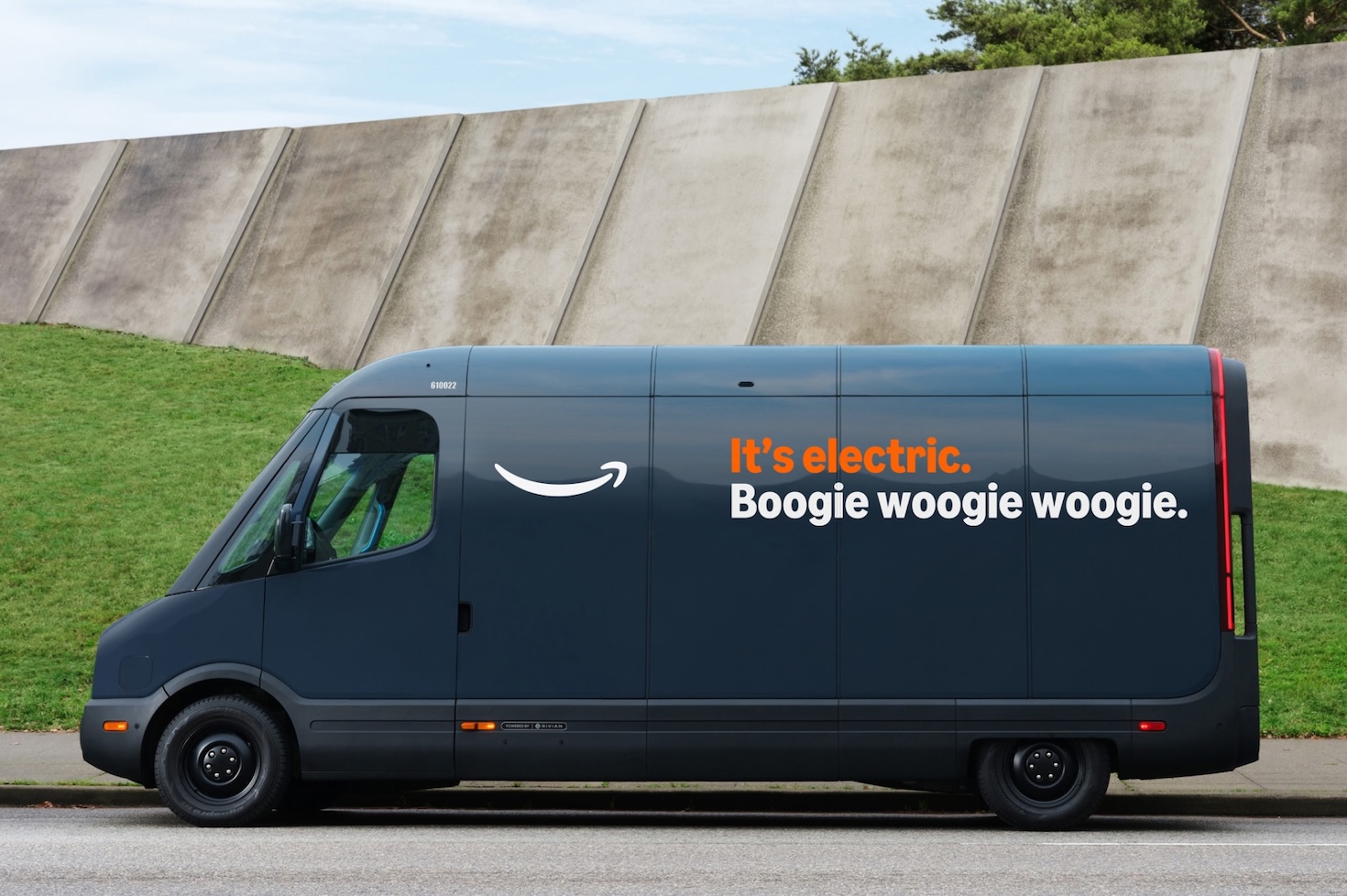
For example, the company is more than halfway toward its goal to put more than 100,000 electric delivery vehicles on the road by 2030. Currently, it has 52,700 EVs running globally, up from 31,400 in 2024, and is the biggest EV fleet operator in the U.S.
Those vehicles delivered 2.4 billion packages in 2025. Amazon cut emissions per shipped unit by 7 percent from 2024; the cumulative decrease since its 2019 baseline is 39 percent.
Amazon also continues to reduce single-use packaging across its delivery network: More than half its North American distribution centers didn’t use it in 2025, and it has been removed entirely in Europe.
The company figures it avoided 288 million plastic bags in North America alone, up from 134 million, by retrofitting its machinery to produce custom-fit, paper packaging. It also shuns extra boxes and mailers when possible: 11 percent of all packages shipped globally were delivered in manufacturers’ original packaging.


