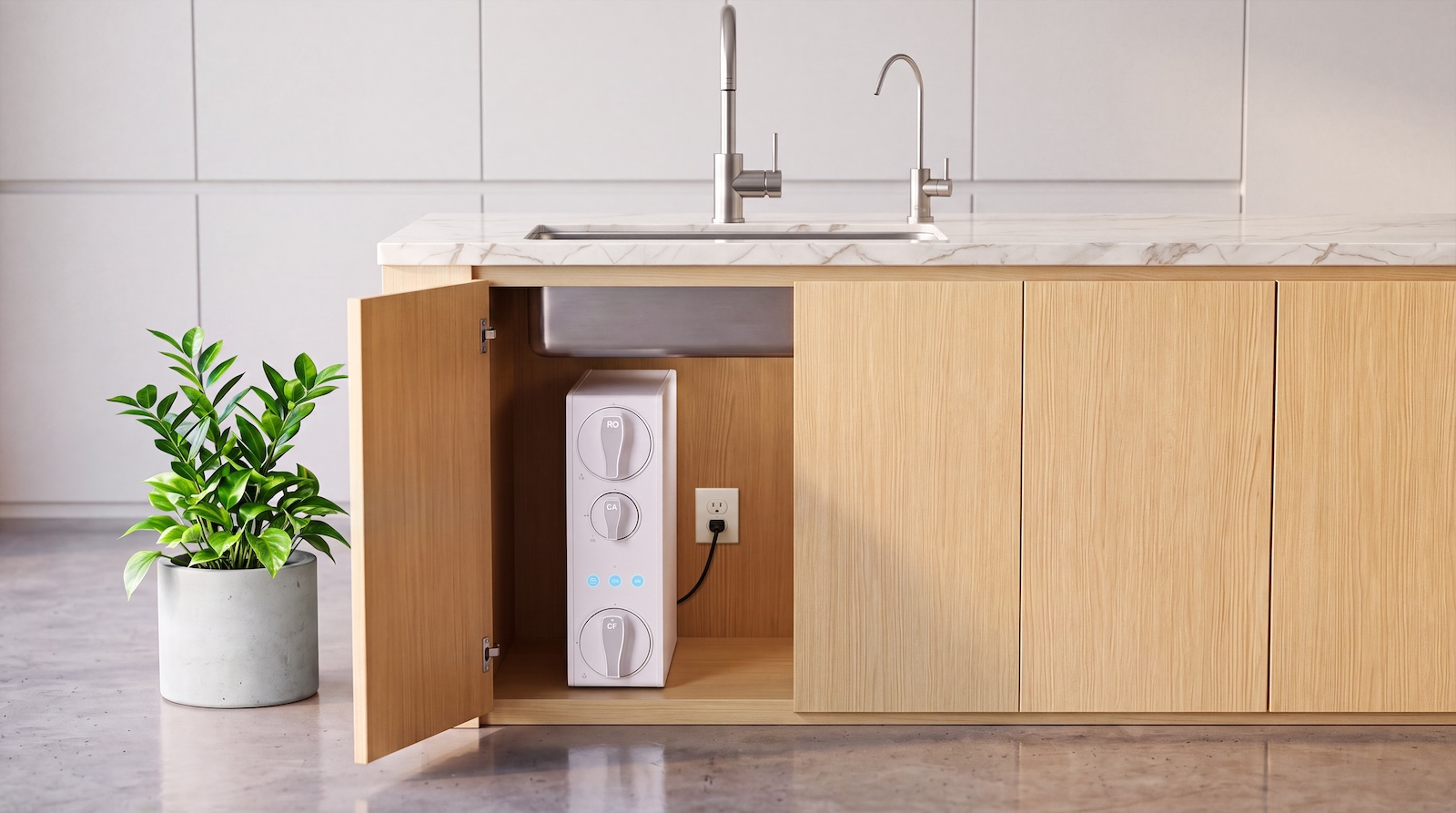
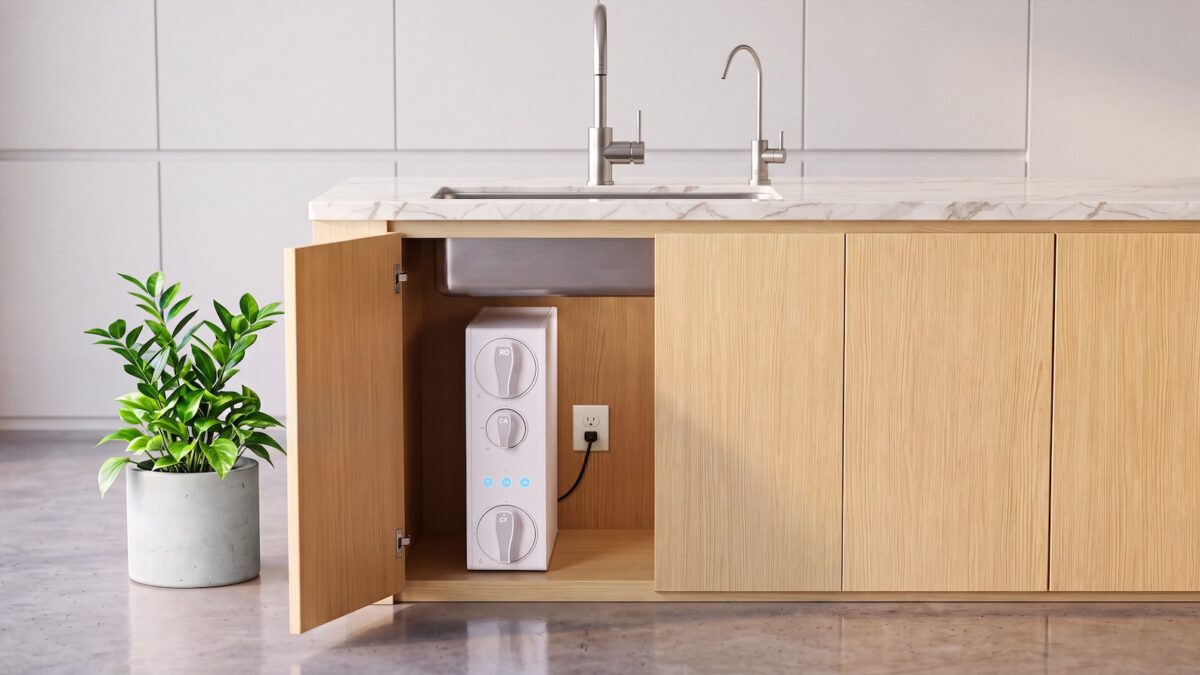
Most reverse osmosis systems tell you they meet NSF standards. Fewer can say NSF International certified the whole unit, not just a filter cartridge inside it. That distinction matters more than it sounds, and it’s the main reason the iSpring RO500AK-BN NSF Certified Tankless Reverse Osmosis Water Filtration System is worth a closer look if you’re shopping for a home water filter this summer.
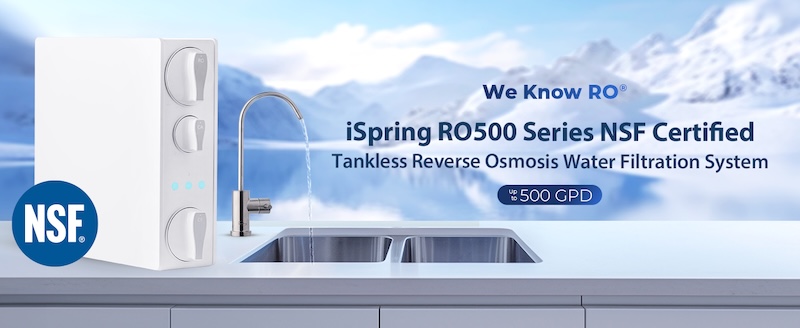
A lot of water filter marketing leans on the phrase “meets NSF standards,” which usually means a manufacturer ran its own tests and is telling you to trust the results. The RO500AK-BN skips that gray area. It’s certified under NSF/ANSI Standard 58, the industry benchmark for reverse osmosis systems, as a complete unit, verified by an independent third party rather than self-reported. If you’ve ever bought a water filter and had no real way to confirm it does what the box says, this is the difference between marketing copy and a paper trail.
For anyone filtering water for kids, aging parents, or anyone managing a health condition where water quality matters, that third-party sign-off is worth paying attention to.
What’s inside the RO500AK-BN
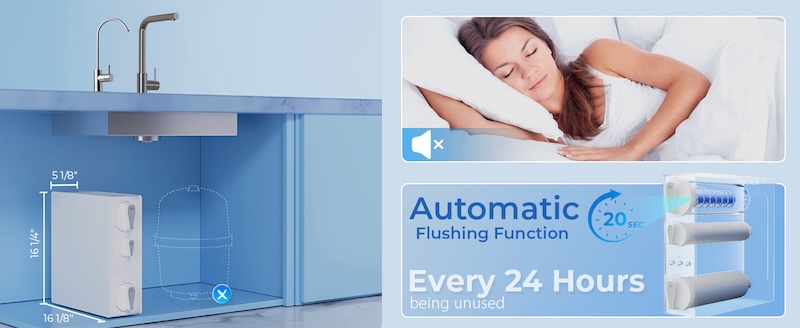
This is a tankless under-sink RO system, which means no bulky storage tank eating up your cabinet space, just a compact unit that filters water on demand.
Core specs:
- NSF/ANSI 58 certified tankless RO system with alkaline remineralization
- 3-stage filtration: sediment and carbon block pre-filter, RO membrane, then a carbon alkaline post-filter
- Removes up to 99% of over 1,000 contaminants, including lead, fluoride, arsenic, chlorine, and sediment
- 500 GPD output at a 0.4 GPM flow rate, fast enough to fill an 8 oz glass in about 10 seconds
- 2:1 pure-to-drain ratio, meaning it wastes a fraction of what older RO systems waste per gallon of clean water
- Automatic self-cleaning cycle and tool-free filter swaps: no need to shut off your water supply to change a filter
Independent reviewers who’ve run this system long-term report tap water starting around 330-350 ppm of total dissolved solids dropping to roughly 9-11 ppm after filtering, sometimes down to 4-5 ppm after a quick flush. That’s the kind of number that makes the “removes 1,000+ contaminants” claim feel less like a marketing line and more like something you can verify yourself with a $10 TDS meter.
The 3-stage filtration, broken down
- Sediment + carbon block pre-filter catches rust, sand, and larger particles and knocks out chlorine taste and odor before water hits the membrane.
- RO membrane does the heavy lifting, filtering out the contaminants people worry about most: lead, fluoride, arsenic, and more.
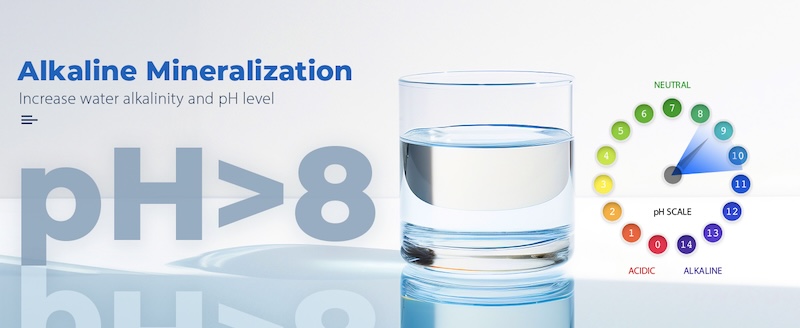
- A carbon alkaline post-filter adds minerals back in and balances pH, so the water doesn’t come out tasting flat the way straight RO water sometimes does.
That third stage is the “AK” in RO500AK-BN, and it’s the part that separates this from a plain RO system. If you’ve tried reverse osmosis water before and found it a little too clean-tasting for your liking, the alkaline stage is built to fix exactly that complaint.
What it’s like to own one
A few things worth knowing before you install it, straight from long-term owners rather than the spec sheet:
- The unit has a built-in 30-minute continuous-run shutoff as a safety feature. It’s not an issue for daily glasses of water, but if you’re filling several 5-gallon jugs back to back, you’ll need to unplug and replug the unit partway through.
- There’s a soft pump hum when the system is actively filtering. It’s quieter than older pump-driven RO systems, but it’s not silent.
- It runs a self-cleaning cycle after 24 hours of inactivity, which is a nice bit of set-it-and-forget-it maintenance you don’t have to think about.
- The included faucet has a built-in digital TDS readout, so you can see the purification working in real time instead of taking it on faith.
None of these are dealbreakers. They’re just the kind of details that separate an honest review from a spec sheet copy-paste.
Who this makes sense for
- Households on municipal or well water with noticeable taste, odor, or chemical concerns
- Families with kids, older relatives, or anyone managing a health condition where water quality is non-negotiable
- Small offices, cafes, or anyone who needs fast, high-volume filtered water without waiting on a tank to refill
- Apartments or smaller kitchens where a traditional tank-based RO system just won’t fit under the sink
If you’re after a whole-house filtration system that treats every tap in the building, this isn’t that. The RO500AK-BN is built specifically for your drinking and cooking water at one faucet, which is where most people want the extra layer of protection anyway.
Backed by a company that’s been doing this a while
iSpring has been building water filtration systems out of the Atlanta area for close to two decades, and the RO500AK-BN comes with the kind of support that reflects it: a 1-year manufacturer warranty, lifetime access to US-based technical support, and a design meant for DIY installation without needing to call a plumber.
The price, while it lasts
iSpring is running the RO500AK-BN at $589.04, down from $692.99 (15% off) through July 30, 2026. For a system that’s independently certified rather than self-certified, that’s a lower bar to clear than most people expect to pay for water they can trust.
If you’ve been putting off replacing an aging filter, or you’re tired of buying bottled water because you don’t trust what’s coming out of the tap, this is a reasonable moment to stop putting it off.
Check out the iSpring RO500AK-BN and the rest of the NSF-certified lineup →
Madhurima Nag is the Head of Content at Gadget Flow. She side-hustles as a parenting and STEM influencer and loves to voice her opinion on product marketing, innovation and gadgets (of course!) in general.


