Apple Inc. turned 50 in 2026. Five decades of pushing boundaries and of revolutionising entire industries. Five decades of innovations and ideas that have changed the way we work, communicate, listen to music, exercise, and so much more.
In that time, the company started by the two Steves – Jobs and Wosniak – out of a garage in Los Altos, California has risen to a valuation of $4.5 trillion (around £3.3 trillion) as of August 2026.
In 1976, when the first Apple I home computers were being assembled, few would have predicted the iPhone, AirPods, Vision Pro, or Apple Watch leading the way half a century on. That makes predicting the next fifty years almost impossible. All we can do is look at the trends and credible reporting for clues on Apple’s long-term roadmap.
For years, it was the idea of an Apple driverless car, that was tipped to propel Apple the company into the next half century. That’s no longer happening. Now it’s spatial computing, in-home technology, robotics and human health pushing the conversation. Everything will potentially be driven by generative AI advancements with Apple’s success in that sector far from assured.
How can Apple carry ‘Think Different’ into the second fifty years of its life? Let’s take a look into the crystal ball…
Personal robotics in the home
Consistent reporting from Bloomberg’s Mark Gurman suggests Apple is targeting an in-home takeover. Those plans may start imminently with a home hub akin to the Echo Show. A Face ID-enabled video doorbell could also be on the agenda. Next could be a tabletop version with a robotic arm with a ‘Pixar Lamp’ design that’ll interact with users like another person in the home.
“The idea is for the device to act like a person in a room. It could interrupt a conversation between friends about dinner plans, say, and suggest nearby restaurants or relevant recipes. It’s also being designed to engage in back-and-forth discussions for things like planning a trip or getting tasks done,” Bloomberg’s Mark Gurman has reported.

That’s near term. Longer term, Apple is said to be targeting a mobile version on wheels that can carry out tasks and follow users around the home. “Engineers at Apple have been exploring a mobile robot that can follow users around their homes,” the erstwhile Apple reporter adds.
Extrapolate that over fifty years and what do we have? An AI-powered domestic assistant taking care of all your chores? An in-home companion that’s a physical incarnation of an advanced AI chatbot? A T-1000?
What comes after the iPhone?
In 2026, the spiritual successor and closest approximation to the Apple I computer is the iMac. The lineage is there fifty years on. However, the most important product in Apple’s portfolio is the iPhone… and by a considerable distance.
What will the iPhone look like in 2026? Will it even still exist? What form will it take? What will succeed the most popular and significant consumer technology product of all time? The answer could decide Apple’s long term fate.
“You may not need an iPhone ten years from now as crazy as it sounds,” said Apple exec Eddy Cue last year, when addressing the impact of generative AI.
Yet his C-Suite colleague Greg Joswiak says of the iPhone still existing in half a century. “It’s hard to imagine not. We’re not going to get into future road maps, but I will tell you, iPhones are not going anywhere.”
2026 should see the debut of the first new iPhone form factor ever, with the foldable iPhone Ultra. The handset’s 20th anniversary edition in 2027 may see design peak with a true end-to-end display. Long-term, the idea of spatial computing debuted with the Vision Pro may be the favourite to take on the iPhone mantle. The Vision Pro has been an expensive flop, but also a precursor to lightweight, AI-powered augmented reality glasses that may arrive with or without a display.
They may be guided by voice commands rather than touch, and informed by cameras and microphones capturing everything within the wearer’s environment. We may see the first version within within the next couple of years. Whether consumer adoption will follow, given the current fears over privacy, is unclear.
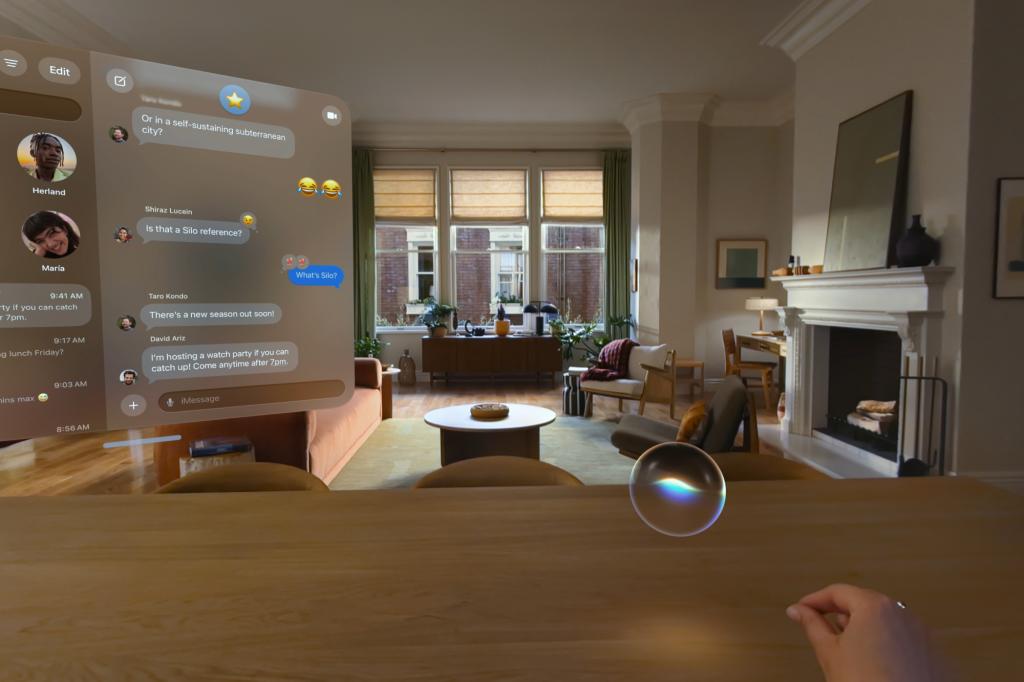
Where could that lead? Well Apple is also though to be considering a wearable AI pendant, which could lead a new era of display-free interaction with tech. “Some people working on the Apple wearables have called these devices sort of the eyes and ears to the smartphone for the AI and cloud era,” Mark Gurman has reported.
Smart contact lenses and neural implants have been floated as a long-term eventuality industry-wide, but there is no credible reporting to tell us Apple is actively exploring these avenues.
In 2025, Apple did announce it was working with the startup Syncron on brain computer interfaces (BCIs) where thought can transmit directly to actions on an Apple device. Apple called it an “emerging technology that allows users to control their device without physical movement.”
Right now, it’s an accessibility setting. Later, it’s plausible the tech will expand and either Apple works with partners in that field or develops its own chips.
AI boom or bust?
It’s only in iOS 27 this year that Siri will begin its true evolution towards an agentic AI assistant that offers deep personal context to interactions. And that’s only possible because Apple’s new Foundational Models are built with Google Gemini.
Apple’s slow progress and wait-and-see approach to fully embracing AI turn has been criticised but it may turn out to be the smart play? Or a costly error that threatens its status as tech’s most important company?
Just a couple of months ago, during the recent WWDC keynote, Apple executive Craig Federighi said: “Some appear to be racing forward, seemingly pursuing AI for the sake of AI, without clear regard for the people all of us that it’s ultimately meant to serve At Apple, our mission has always been to turn the potential of advanced technology into helpful and intuitive products for everyone.”

The public sentiment towards AI is mixed at best. The devastating environmental effects and the social and economic costs of the technology makes widespread pushback a very real consideration.
Apple’s slow start in the GenAI realm could certainly be Apple’s doom, effectively making it the next BlackBerry. However, leaning on partners to remain competitive without betting the farm on an AI future could be the smart play that keeps Apple the pre-eminent company in technology for the next half century.
Health and wellness
In 2019, outgoing Apple CEO Tim Cook stated his believe that Apple’s defining legacy is in health.
The Apple Watch has gone way beyond the idea of a mini iPhone on your wrist. It’s a health, fitness and wellness companion with life-saving tech on board. Things like fall detection, crash detection, an ECG and irregular heart rate alerts. Apple seeks non-invasive glucose monitoring in the medium-term future too, patent filings have revealed. More continuous bodily monitoring systems are a given, offering proactive recommendations and keeping tabs on biomarkers.
As some wearable tech companies like Whoop are proving, truly personalised wellness management can be enhanced through bloodwork readings powering personalised recommendations to maximise wellness benefits. It’s possible Apple may embrace this sector. Any collected data could be integrated into physicians records, empowering both patents and caregivers.
The company may have shelved plans for an AI health coach for now. It remains to be seen whether that idea will be revisited as the proliferation of Apple Intelligence and Siri AI continues.




