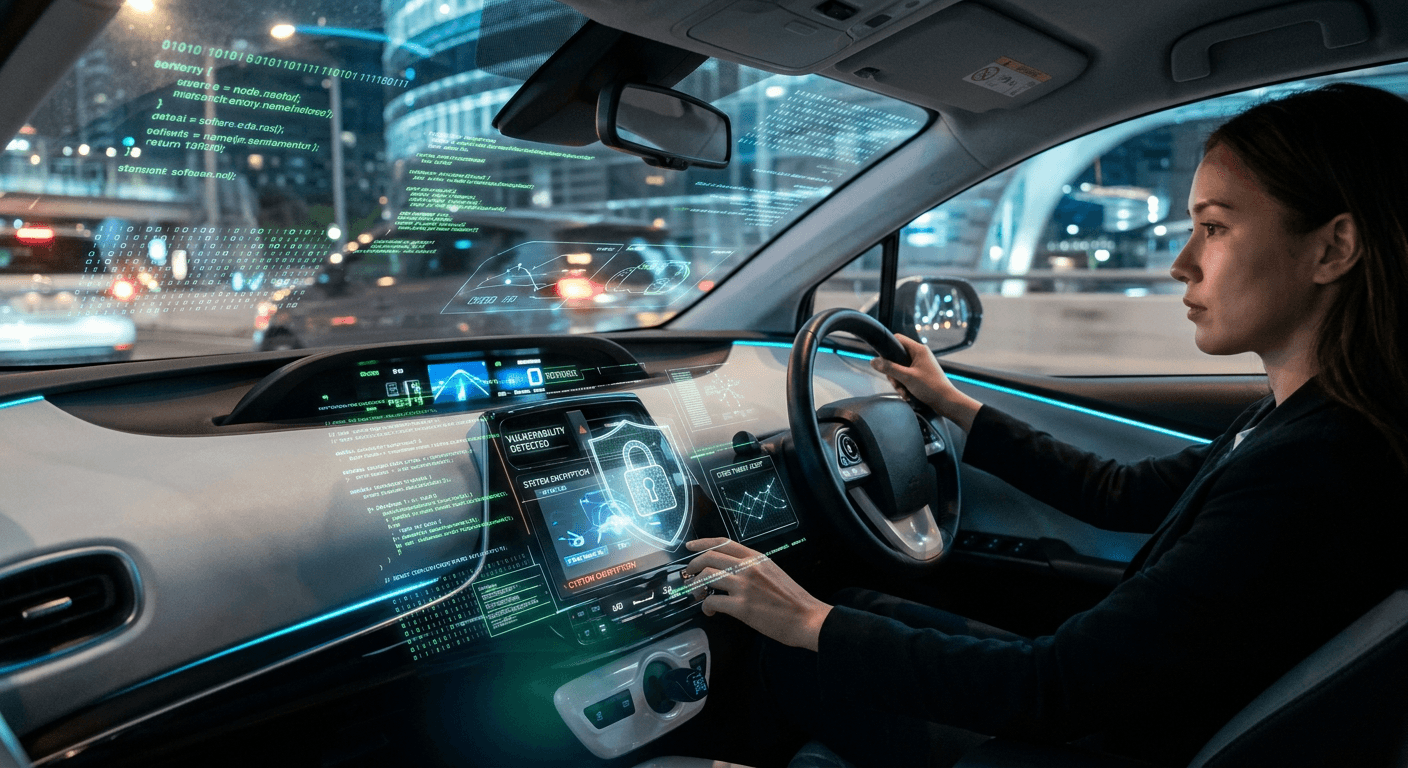
The modern car is no longer just a mechanical machine. It has evolved into a collection of digital systems rolling around in wheels. From navigation and mobile apps to sensors and over-the-air updates, you name it, they’ve got it.
All this intelligence has definitely made vehicles useful and lives a lot easier. But it has also made them (and us) a little more exposed to cyberattacks than we would like.
Reasons Smart Cars are More Vulnerable to Cyber Threats
Increased Connectivity
One of the main reasons vehicles are more vulnerable today is the increased connectivity, which has created more entry points for malicious hackers. From Bluetooth and Wi-Fi to cloud and mobile apps, every connection point is a potential doorway.
Modern vehicles are no longer isolated. They are constantly talking to other external systems. The more convenience your car offers, the more exposed it gets.
Software-centred Vehicle Design
Another reason is that vehicles today are more computer than vehicles. Almost every feature, from braking and steering to infotainment and diagnostics, relies on software.
And, as we know, software complexity scales very fast. With this level of complexity, there is always a chance of hidden gaps that hackers can exploit.
Evolving Software Threats
Attackers don’t really stay still. As tech evolves, they also advance their skills. As a result, something that was secure yesterday might not hold up to threats tomorrow.
Also, if a vulnerability is discovered today, it can easily be exploited and scaled even faster. That is the exact reason why cybersecurity has never been a one-time installation – it’s an ongoing process with constant improvements.
Why Automotive Cybersecurity is Essential
Protecting Vehicles Systems and Driver Safety
One of the main reasons why automotive cybersecurity is essential is that it protects vehicle systems and driver safety. As mentioned earlier, modern vehicles rely a lot on interconnected systems.
Things like braking, steering, acceleration and stability are all interconnected. That means a compromise in one of the systems can potentially affect others (due to interdependence). And that is why all systems (especially safety-critical ones) must remain protected from unauthorised interference at all times.
Automotive cybersecurity protects several layers of a vehicle, ensuring every system behaves predictably under all operating conditions. They prevent even those minor breaches that could potentially escalate into physical safety risks.
Securing Sensitive Driver and Vehicle Data
Automotive cybersecurity is also essential because it helps secure driver and vehicle data. Modern vehicles now collect and process large amounts of data, including location history, driving patterns and user preferences. Don’t forget, they also connect to phones at a much deeper level – and that same phone handles a lot of people’s personal lives.
Without the right level of protection, this data becomes vulnerable to unauthorised access or misuse. Reliable cybersecurity ensures users can trust how the vehicle collects, stores and transmits data.
Maintaining Consumer Trust
Trust in automotive brands is often tied to safety and reliability. As such, a single cybersecurity incident can significantly damage brand reputation. Users can’t really separate software failure from product failure.
It doesn’t help that we are in the information era, where incidents tend to spread very quickly through media and social platforms. Even if the issue is a mere misunderstanding, your brand image could already be ruined before you even react. And once trust is lost, it can be next to impossible to recover it.
Also, customers today will read reviews from other consumers before buying a car. And digital safety is just as important as physical safety on their list of criteria to consider. That’s why cybersecurity has become a competitive differentiator for vehicle brands.
Compliance with Industry Regulations
With increased threats, automotive cybersecurity standards are becoming stricter globally. Manufacturers are now required to meet defined cybersecurity processes and controls. Compliance with these requirements is tied to approvals, market access and certification.
However, this is not something unexpected – regulations are evolving to match the pace of connected vehicle technology. If a company does not comply, they are likely to face delayed product launches or restricted distribution (often imposed by destination governments).
Protecting Surrounding Ecosystems (External Interfaces)
Last but not least, automotive cybersecurity is essential for protecting digital ecosystems that interact with the vehicle’s systems. As highlighted earlier, vehicles no longer operate in isolation – they are connected to mobile apps, manufacturers’ cloud platforms and infrastructure.
If an attacker gets access to the vehicle systems, they could use it as an entry point for external interfaces connected to it. So, stopping attacks on the vehicle itself could be the easiest way to ensure the other systems are protected.
Conclusion
With vehicles becoming smarter, there is naturally a bigger surface for cyberattackers. As such, cybersecurity is no longer a nice-to-have. It has become a part of the overall vehicle design. In almost all countries, digital security is becoming just as crucial as physical safety. Governments have made it a requirement in order to allow vehicle sales in their markets. So, meeting the requirements is not only about keeping their systems safe; it determines whether or not brands can even sell their vehicles.


