Meta’s investments in artificial intelligence infrastructure, along with policy shifts that favor fossil fuels, will make it tougher to reach its net-zero goals, but the company isn’t backing off its big-bet climate commitments.
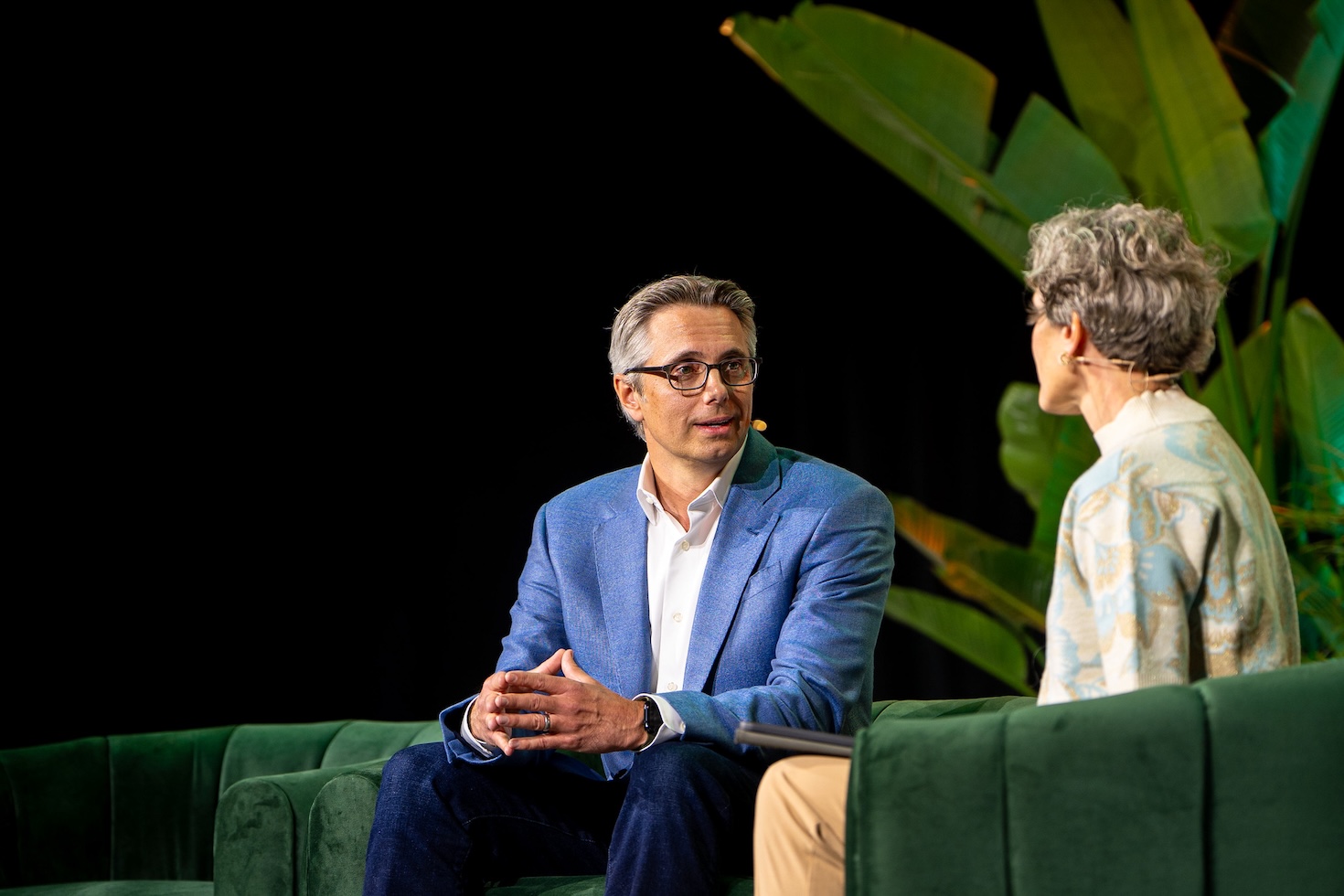
“What has changed is the terrain in which we are operating,” said Blair Swedeen, Meta’s global head of net zero and sustainability, during a Climate Pioneers interview last month on the mainstage of Trellis Impact 26. “When we set these goals in 2020, things were very different.”
Swedeen stepped into his role in April 2023; he previously managed growth partnerships and new business development for the company.
“I’ve been at the company for about 12 years and spent a lot of time operationalizing programs, figuring out how to mobilize against goals and a lot of time cultivating partnerships,” he said. “A lot of those skills ended up being transferable.”
Meta faces the same challenge as the three big AI and cloud computing services vendors: how to manage the tension between ambitious net-zero pledges and rapid data center expansion. Amazon, Google and Microsoft all reported double-digit emissions increases in their latest environmental sustainability reports.
Meta isn’t expected to release its next sustainability report until later this year, but the location-based electricity emissions from its data centers rose 16 percent in 2024 (the latest year for which data is available). Meta’s data-center electricity consumption increased 21 percent in the same timeframe.
Challenge: speed to power
The need for speed to power is forcing Meta to contract for as much electricity as it can to run new data centers directly, including new natural gas capacity, through grid connections and on-site resources.
For example, Meta’s Hyperion data center campus in Richland Parish, Louisiana — its largest yet — will gobble 5 gigawatts of energy from new natural gas generation alongside solar plants and energy storage.
“When we partner with utilities, sometimes natural gas is part of the solution,” Swedeen said. “It’s unfortunate that that’s part of the equation, but the interconnection queues can be four to seven years, right now.”
That reality is driving Meta’s sustainability team — which began sourcing renewable energy in 2013 (before most other big tech companies except Google) — to rethink its clean electricity contract priorities.
Meta and Amazon were the two largest corporate buyers of clean energy in 2025; each signed slightly more than 10 gigawatts in new contracts. Meta’s total portfolio is more than 30 gigawatts globally; nearly 12 gigawatts are already online. Now it’s putting more weight on matching electricity consumption with “stable” sources.
As of January, Meta had committed to buying more nuclear power than any other U.S. company through existing technologies and next-generation startups, approximately 7.7 gigawatts of capacity. It has also pledged to buy 150 megawatts of electricity from advanced geothermal projects being developed by Sage Geosystems, which are scheduled to come online in 2027.
This shift has required new contract structures. “All of this investment has really opened up new capital for new technologies that just wasn’t flowing previously,” Swedeen said.
“We have a number of different ways that we structure agreements on new technology,” he explained. “Everything from committing to be able to take that capacity in the future, reserving that capacity in something that’s much more structured — depending on the maturity of the technology.”
Enter ‘space solar’
Meta is also looking for ways to “extend the usefulness of those renewables that we’ve already procured,” said Swedeen.
For example, the company’s contract with Noon Energy entitles Meta to up to 1 gigawatt, or 100 gigawatt-hours, of long-duration storage to supplement its existing solar and wind relationships.
Noon’s modular solid oxide fuel cells can dispatch power for several days when generation from intermittent sources dips. The first project to be deployed on Meta’s behalf is for 25 megawatts, or 2.5 gigawatt-hours, by 2028. Once that installation is completed, Noon will deliver on the rest of the capacity.
Meta has also inked a deal with Overview Energy, an early-stage satellite company that is developing technology to collect solar energy from space and beam it to existing solar farms on the ground in the form of near-infrared light. The idea is to maximize the value of existing assets and allow solar installations to generate electricity around the clock.
“It sounds like science fiction,” Swedeen said. “It’s an early stage technology but it’s quite exciting.”
Meta is helping fund Overview’s initial demonstration in 2028; the startup seeks to deliver its service commercially by 2030.


