A Guildford startup developing AI software for the biogas sector has picked up the UK government’s Manchester Prize, securing £1 million in funding to accelerate deployment of its technology.
BiofuelAi, based at the Surrey Technology Centre, was awarded the prize for its AI-powered decision support platform that helps anaerobic digestion operators optimise plant performance, increasing energy output while reducing operational costs and carbon emissions.
The Manchester Prize, run by the Department for Science, Innovation and Technology (DSIT), recognises UK-led AI innovations with the potential to deliver significant public benefit.
The company’s technology addresses a longstanding challenge within the anaerobic digestion sector, where plant performance has traditionally depended heavily on operator experience and manual analysis rather than advanced predictive tools.
BiofuelAi’s platform creates a digital twin of a biogas plant by combining mechanistic modelling, machine learning and hybrid AI techniques. This enables operators to gain real-time insight into biological processes occurring inside digesters and optimise decisions ranging from feedstock selection and feeding regimes to storage management and long-term plant health.
According to pilot trials conducted by the company, sites using the platform achieved revenue increases of between 6% and 10%, profit improvements of 7% to 13%, and a 28% reduction in carbon emissions.
Alan Beesley, chief executive and co-founder of BiofuelAi, said: “The biogas industry is one of the least data-driven sectors in energy. Plants that generate the heat and power for thousands of homes are still largely managed through spreadsheets and operator experience. BiofuelAi changes that. Winning the Manchester Prize validates the work of an exceptional team and accelerates our mission to make green energy more affordable, more consistent and more accessible.”
The company emerged from the University of Surrey’s AI4AD research programme and has attracted more than £1.5 million in research funding. Its founding team includes Professor Michael Short, Dr Benaissa Dekhici, Dr Rohit Murali, Dr Ruosi Zhang and Alan Beesley, bringing together expertise in mathematical modelling, artificial intelligence and biogas plant operations.
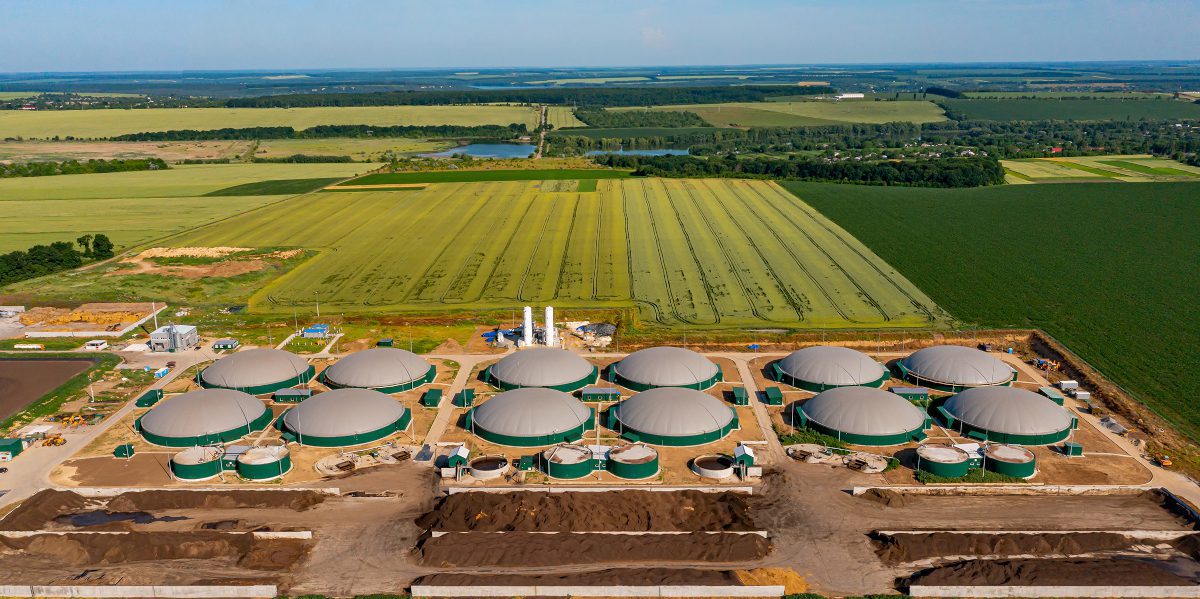
The award seems a nod to the growing interest in deploying AI to support the UK’s energy transition. Anaerobic digestion converts organic materials including food waste, agricultural residues and wastewater sludge into biogas, which can be used to generate heat, electricity or biomethane for injection into the gas grid.
The UK anaerobic digestion sector has expanded steadily over the past decade as policymakers seek to reduce methane emissions from organic waste streams while increasing domestic renewable energy production. Industry organisations have argued that greater optimisation of existing facilities could unlock significant additional renewable energy capacity without the need for major new infrastructure investment.
Science Minister Lord Vallance said: “The technology BiofuelAi has built could supercharge our mission to power Britain with clean, affordable energy, helping green energy plants produce even more power and cut carbon emissions. And they are just getting started.
“The Manchester Prize was created to find exactly this kind of innovation. Not AI as an abstract idea, but something that delivers results.
“This is British AI leadership in practice: world-class researchers tackling hard challenges and helping to build the industries of the future.”
Professor Michael Short, chief technology officer and co-founder of BiofuelAi and Professor of Chemical Engineering at the University of Surrey, said the company’s approach tackles one of the most difficult aspects of anaerobic digestion management.
“Anaerobic digestion is more like brewing than chemistry. What goes in takes days or weeks to show up in what comes out, which makes reliable prediction genuinely hard. We spent years developing models that could change that, combining physics with machine learning in ways the industry had not attempted before. The Manchester Prize win matters because it says the science is ready to become a product. We are now deploying in live plants and the results are tracking with what our models predicted. After years of work you can only test in simulation, watching it hold up in the real world is a different feeling entirely.”
BiofuelAi is currently onboarding three additional sites and has signed a UK reseller agreement as it seeks to expand commercial deployment. The company estimates that over the next five years its platform could generate more than £500 million in value for clients.
Looking further ahead, BiofuelAi projects that by 2030 its technology could help mitigate approximately 293,000 tonnes of carbon dioxide equivalent emissions annually across the UK. The company says this would be equivalent to providing enough renewable energy to heat around 133,000 homes.
Professor Stephen Jarvis, President and Vice-Chancellor of the University of Surrey, said: “BiofuelAi follows a long tradition of spinouts from our University – grounded in research with a clear purpose, by people determined to see it make a difference beyond the campus. The work started here in Guildford and has now won national recognition for what it could mean for the UK’s clean energy supply.
“That matters because energy security is not an abstract policy question right now. It depends on producing more of what we need at home, and the less efficiently we use domestic resources like biogas, the more dependent we remain on supplies we cannot control.”
The Manchester Prize is awarded annually over a ten-year period and is delivered by Challenge Works, part of innovation foundation Nesta. The competition was established to identify AI applications capable of addressing major societal and economic challenges while strengthening the UK’s position in artificial intelligence research and commercialisation.




