
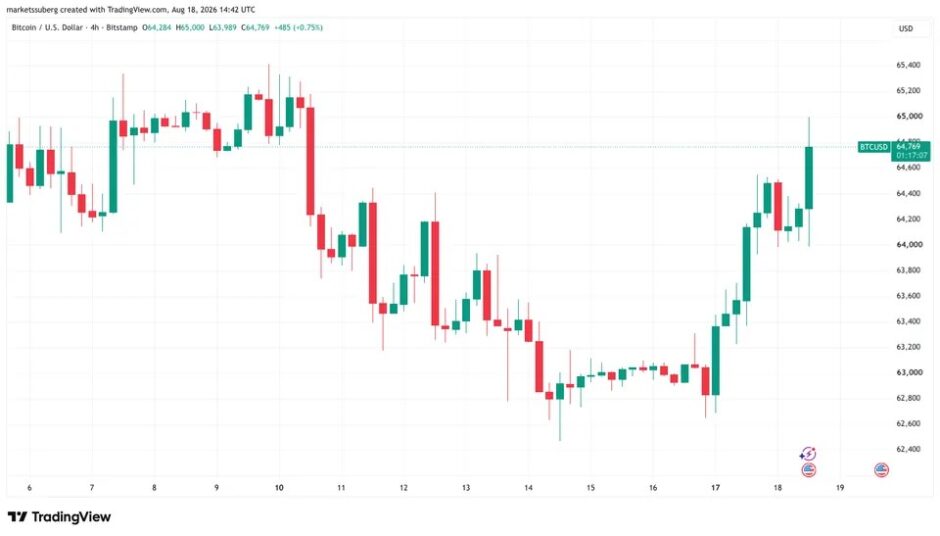
Bitcoin returned to the $65,000 level on Tuesday for the first time in a week as cryptocurrency and US equities recovered from recent losses despite renewed geopolitical tensions between the United States and Iran.
Bitcoin (BTC) reached $65,000 after Wall Street opened, while the S&P 500 also rebounded from its lowest level in two weeks.
Data showed BTC/USD building on its weekly gains as the S&P 500 recovered from 7,696, its lowest level since August 4.
Bitcoin’s latest move came amid fresh developments surrounding the Strait of Hormuz. US President Donald Trump said the strategically important shipping route was “open and operating,” while tensions between Washington and Tehran remained elevated.
Trump also indicated that further diplomatic discussions with Iran were not currently scheduled.
While Bitcoin and stocks recovered, US government bonds remained under pressure.
The yield on the 30-year US Treasury bond climbed to 5.34%, its highest level since January 2007. Rising bond yields have raised concerns among investors over inflation risks and increased government borrowing.
BNY Mellon analyst Geoff Yu said the move in bond markets reflected investors demanding greater compensation for inflation risk.
Oil prices remained relatively stable during the session, with West Texas Intermediate crude trading around $84 per barrel after falling about 1%.
Bitcoin’s recovery is now facing an important technical resistance level.
Trader and analyst Aksel Kibar identified $62,300 as a key level in a potential reverse head-and-shoulders formation. According to his analysis, Bitcoin could target $76,000 if the rebound remains intact.
However, a failure of the pattern could expose Bitcoin to a decline toward $53,000.
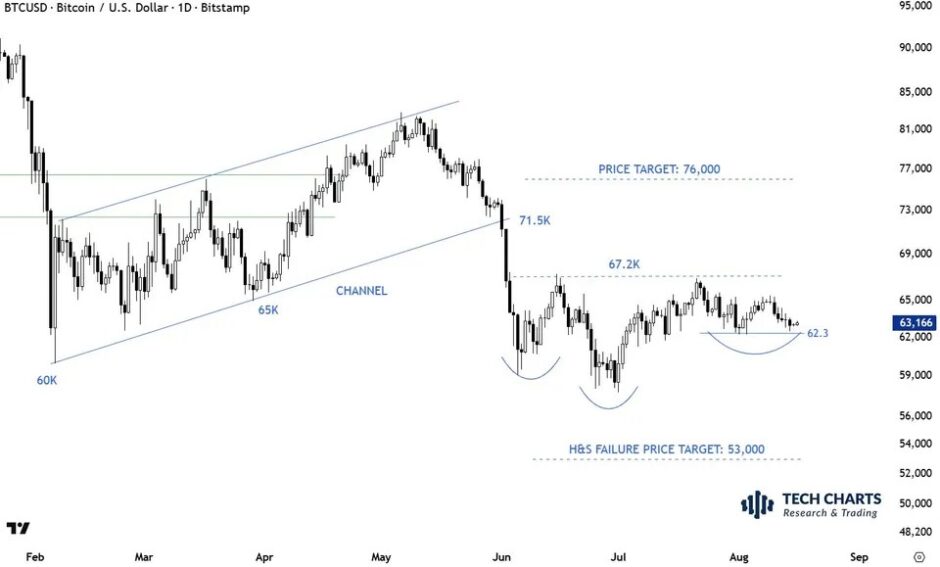
Bitcoin’s previous rebound toward $64,500 also failed to break above an important overhead trend line. The 50-month exponential moving average is currently positioned around $65,827, creating another significant resistance level for BTC.
The cryptocurrency’s ability to sustain its move above $65,000 could therefore determine whether the latest rebound develops into a broader recovery or faces another pullback.


