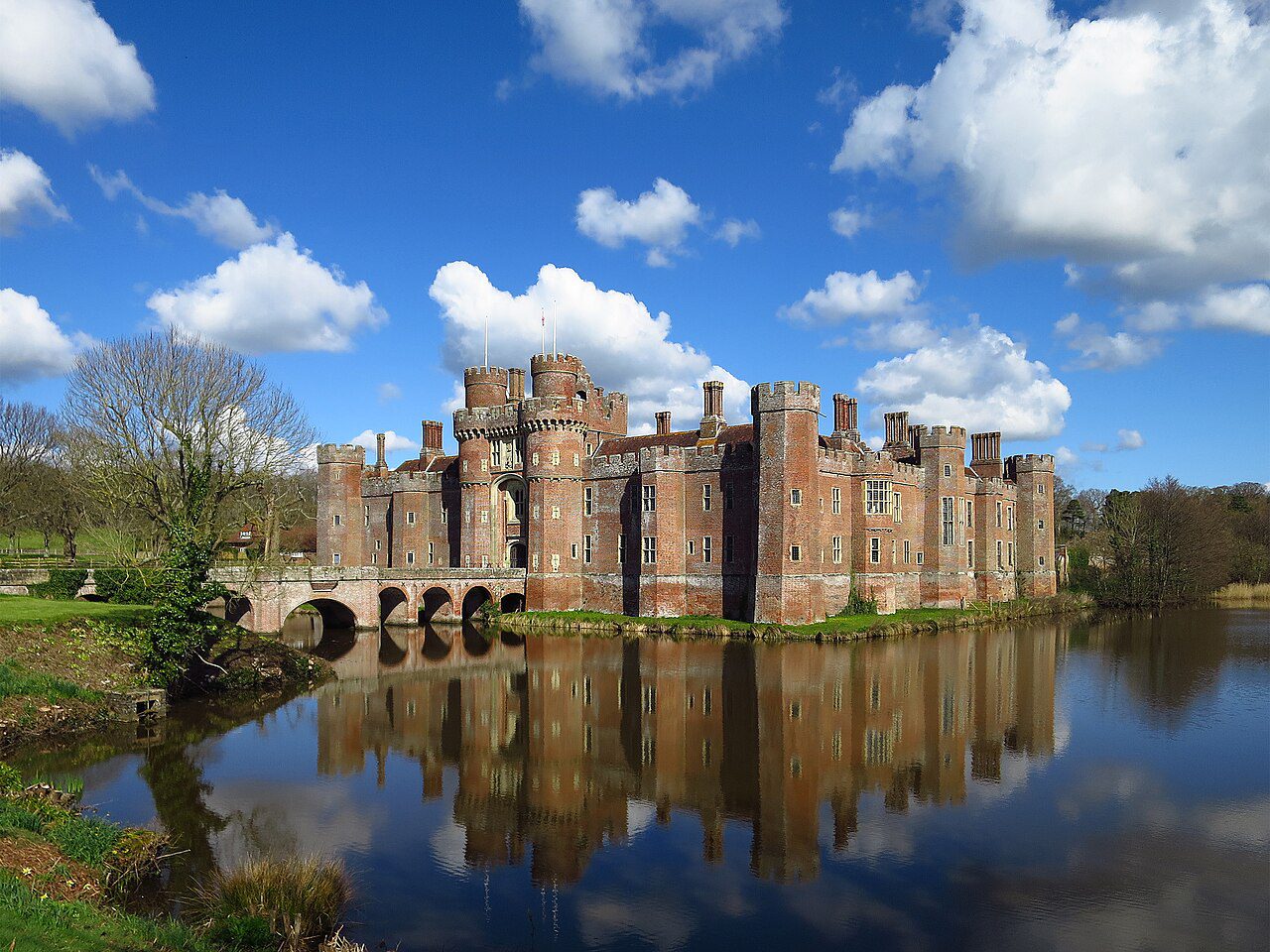


A 240-acre area of farmland at the Herstmonceux Castle Estate in East Sussex is to be restored as wood pasture, grassland and scrub under a long-term project financed through the sale of Biodiversity Net Gain (BNG) units.
Nature restoration company Nattergal will manage the project in partnership with Bader College, part of Canada’s Queen’s University, which occupies the historic estate.
Known as Herstmonceux Rewilding, the project will seek to establish a mosaic of habitats on land currently used for agriculture, with free-roaming herbivores including cattle and pigs used to influence vegetation and habitat development.
The location is considered particularly important because of its proximity to the Pevensey Levels, an extensive wetland area designated as both a Site of Special Scientific Interest (SSSI) and a Ramsar site of international importance. The partners say restoration at Herstmonceux will help buffer the Levels and improve connections with other nature-rich areas in the surrounding landscape.
The project will be supported through the sale of BNG units. Mandatory Biodiversity Net Gain was introduced for most major developments in England in February 2024 and requires development to deliver a minimum 10% increase in biodiversity value, maintained for at least 30 years.
Developers unable to provide all of the required biodiversity gains within a development site can purchase off-site biodiversity units generated by land managed for habitat creation or enhancement.
A Conservation Covenant is planned for Herstmonceux to secure the restored land for nature for a minimum of 30 years. Nattergal said buffer zones and fencing arrangements are being developed in consultation with neighbouring farmers and other local stakeholders.
The company already owns and operates nature-restoration sites in Essex, Norfolk and Lincolnshire. At Herstmonceux, its Natural Capital Monitoring programme will be used to track ecological change over the lifetime of the project.
The partnership also plans to make the site available for long-term research by Queen’s University and other scientific institutions, potentially providing data on the development of habitats and biodiversity as restoration progresses.
New trails are expected to increase public access to the estate, while volunteering and other community involvement are also planned.
Archie Struthers, CEO of Nattergal, said the project could demonstrate how ecologically degraded land can be used for nature recovery while attracting private-sector finance.
“Herstmonceux sets a precedent for UK estates: proving ecologically degraded land can become an engine for nature recovery while keeping communities at the heart of the process,” he said.
“If this is possible on a site as steeped in history as Herstmonceux, the wider potential of this work is significant.”
Matthew Evans, Executive Director of the Estate and Provost of Bader College, said the project would also create opportunities for research and teaching, describing Herstmonceux Rewilding as a “living example” of the university’s environmental commitments.



