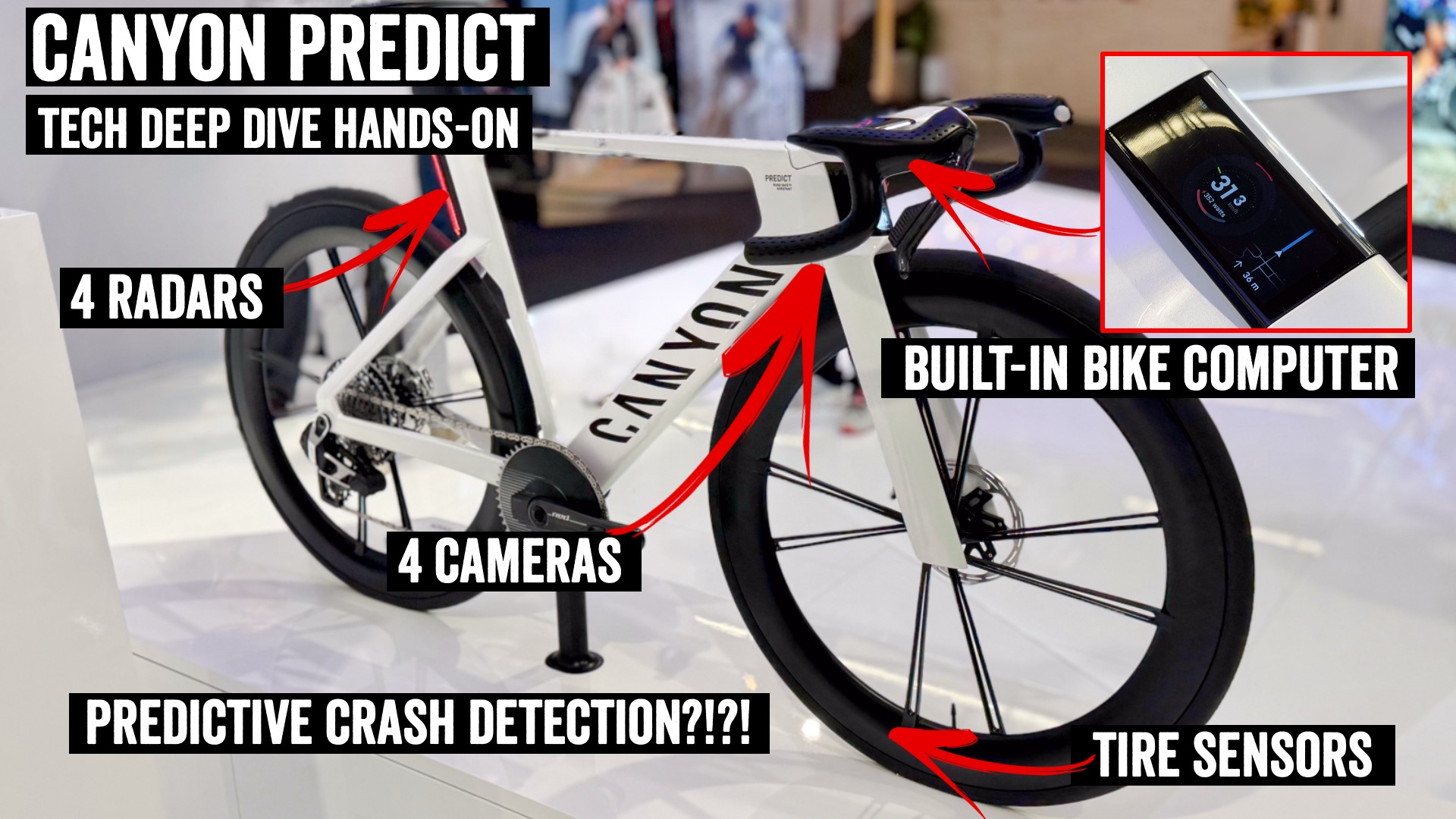

The sports tech pickings were slim at Eurobike this year, but one device stood out as the most interesting bit of sports technology: Canyon’s Predict smart bike concept. Even in years past, it still would have likely been at the top of the ‘interesting things’ stack, due to the heavy slate of technology it packs inside.
Still, I wanted to dive into all of the details, and walk through what’s real today, and what’s still a bit…futuristic. To my surprise, as you’ll see, the vast majority of the hardware is functional today – at least in a convention floor setting. But of course, what matters here is how it works out on the road. And a big part of that is the software.
After all, this is not Canyon’s first attempt at a smart bike. Some 11 years ago at Eurobike 2015 they announced a smart bike concept that also had a built-in bike computer, along with other sensors. It was promised to ship the following Spring 2016. It never did. Like most concept bikes tech promoted by larger bike brands, it quickly fell by the wayside.
Canyon says they’re hoping this might be out in 2-3 years, but will heavily depend on testing, and specifically they say whether consumers can trust the tech actually works out on the road. With that, let’s dive into it.
[Note: Canyon has been listed as a partner for DC Rainmaker for a few years, whereby they provide loaner bikes I can use to test other sports tech items on. No money exchanges hands. They didn’t ask me to write this post or video, I just thought it was cool sports tech. I’ll cover the pros and cons down below, like anything else I talk about.]
The Core Specs:
The Canyon Predict smart bike concept is currently in a road-bike form factor. It’s notable that Canyon also announced a commuter-style bike at Eurobike (Roadlite:ON V2X), that has bike to vehicle technology V2X. That bike is actually purchasable today, and theoretically talks to cars equipped with such technology. But it’s very different than the Canyon Predict, which doesn’t have V2X (because they want to do it without requiring the car to be equipped with V2X).
So, here’s the most notable bits of the bike, from a tech standpoint:
– 360* Camera Coverage: There are four cameras onboard, three up front and one at the rear, combined to have complete 360* camera coverage. This is very similar to what we see from both drones and cars that combine numerous cameras into a single cohesive picture of what’s going on around it.
– Four radar sensors: There are three radar sensors on the front of the bike (two side, one forwards), and then one rear radar sensor. The front set is there to detect objects as you approach and pass them, while the rear radar is there to detect overtaking vehicles. The rear radar is very similar to existing cycling radars, while the front radars are most focused on determining exact distances to objects.
– Onboard AI Edge Compute: Essentially, a big processing unit to combine all this data, processing it fully locally. There’s no dependency on connectivity (cellular or WiFi), instead, everything is processed locally for both privacy and speed/responsiveness reasons.
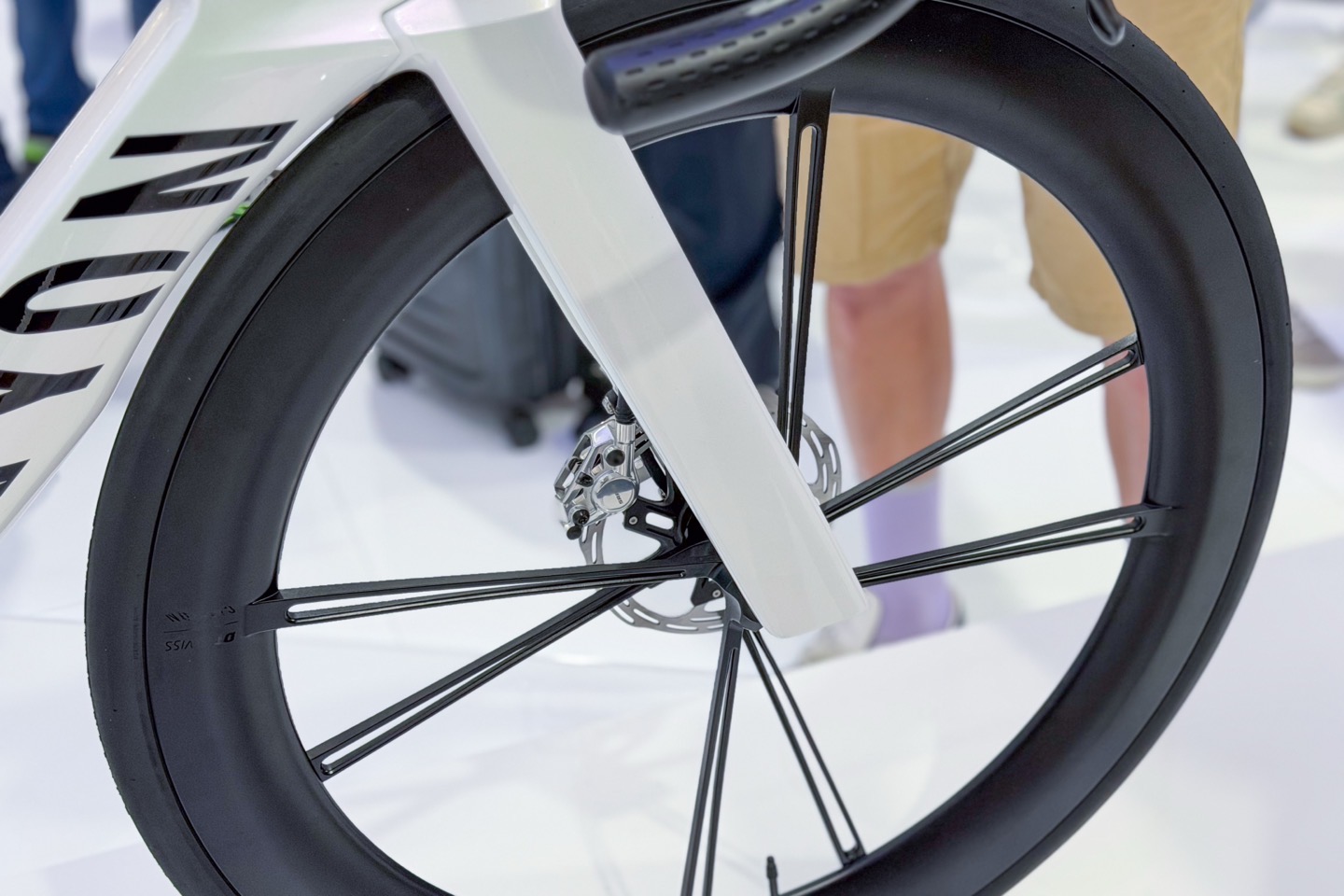
– Tire Pressure Sensors: These are inside the tire, and provide realtime pressure readings, which are in turn leveraged both both simple ‘are you running low on air’, as well as road grip suggestions (e.g. for rainy days). The wheels themselves are from DT Swiss, along with the hubs inside.
– 1KG (2.2lbs) Onboard Battery: No, this is not an eBike, this is *purely* for computational and powering tasks. That’s an absolutely massive battery to have on a bike for just powering all the cameras/radars/sensors/compute. The current battery claim is 8 hours, but that’s heavily likely to change before release (probably for the better, as things get more efficient).
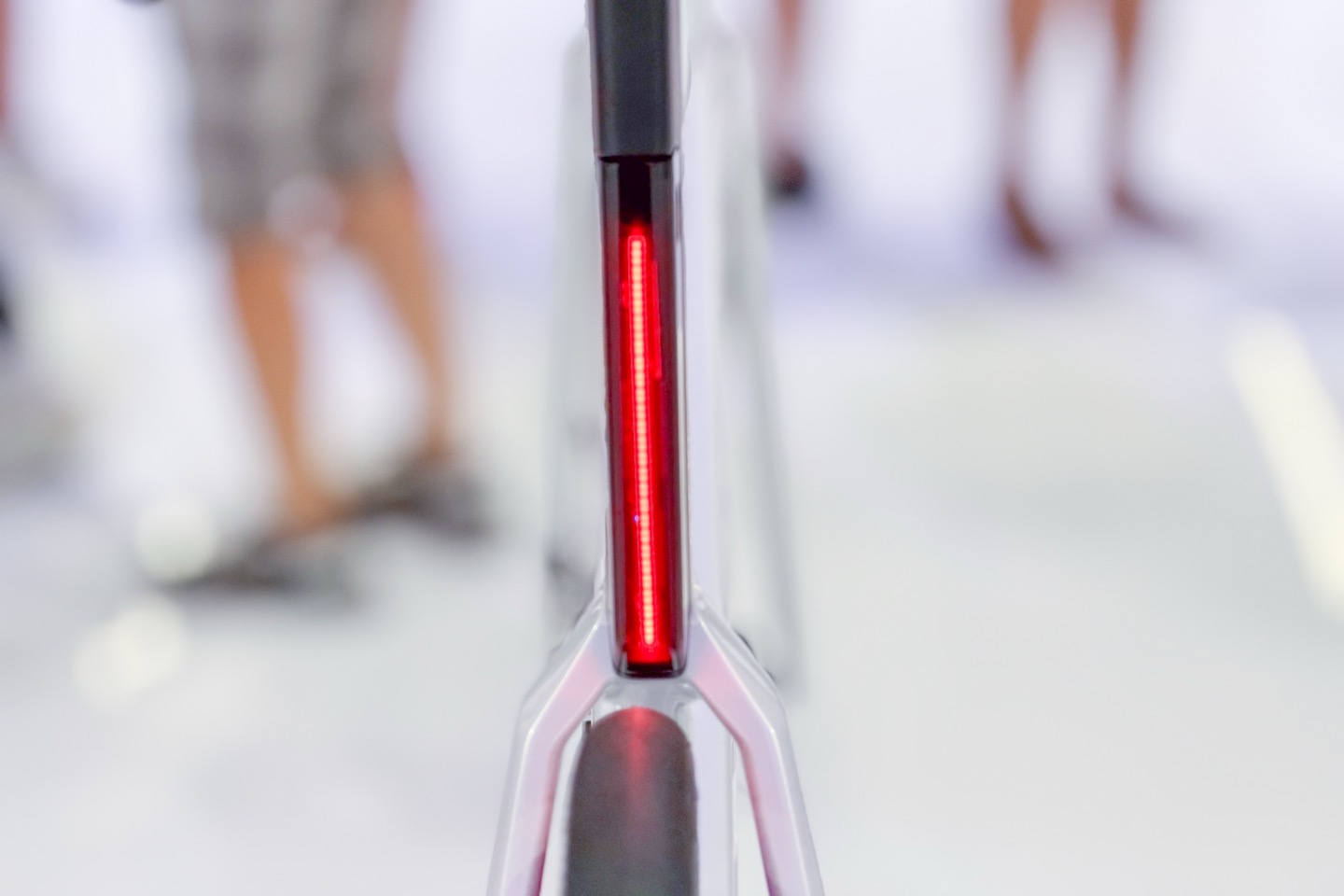
– Front and Rear Lights on the frame: Pretty self-explanatory. They didn’t have any specific lumen specs yet, as that’d all be finalized later on. But you can see it’s a pretty big light bar on the back.
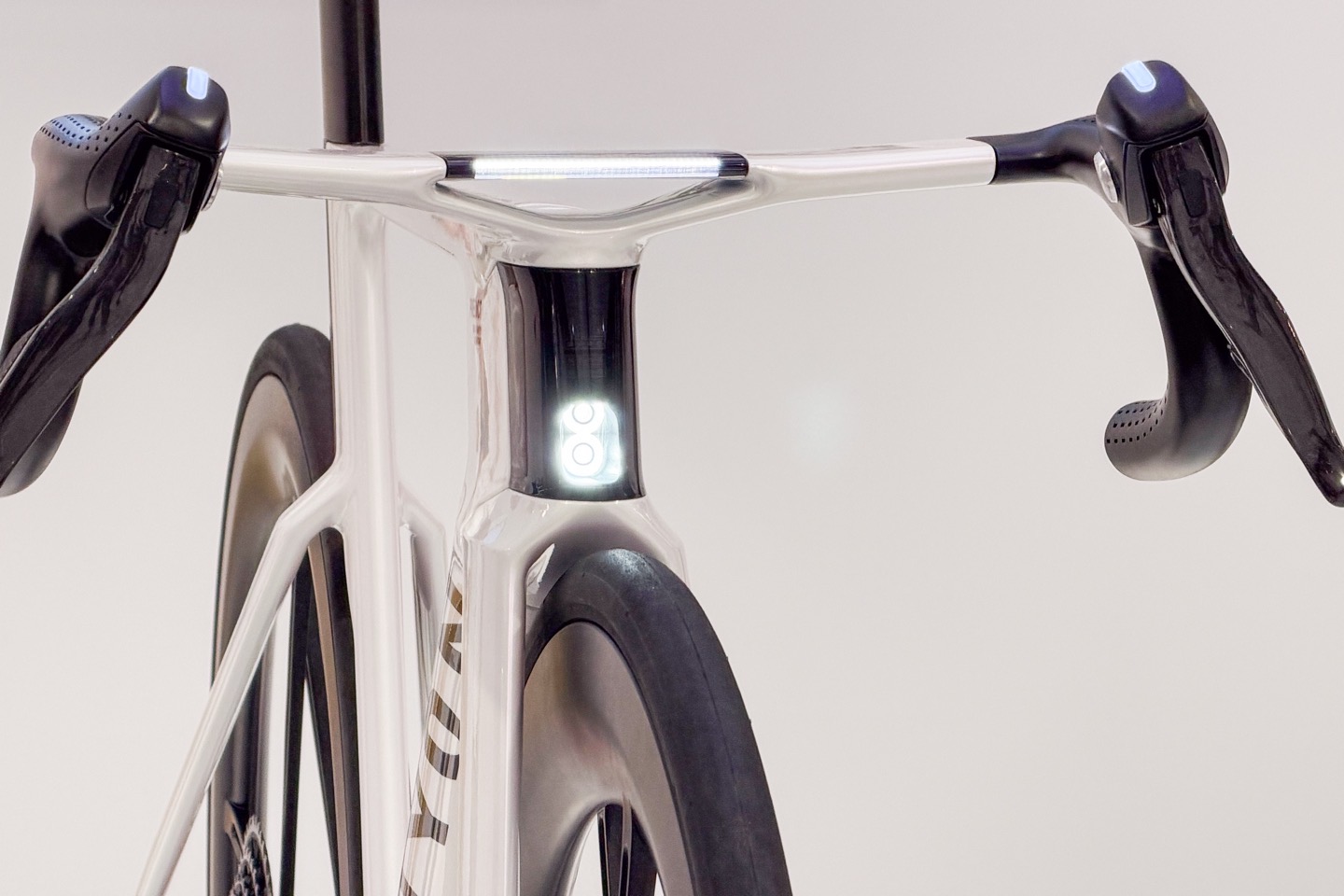
– Handlebar lights (mostly for the rider): These act as warning lights to the rider themselves, such as warning the rider to slow/stop due to a predicted issue up ahead (like car dooring, or pothole/manhole/etc).
– Extra handlebar buttons: In addition to regular shifting buttons, there’s also a secondary set of inner buttons on the handlebars that you can use for specific functions, including raising/lowering the saddle, turn signals, or ordering pizza (maybe…ok, probably not).
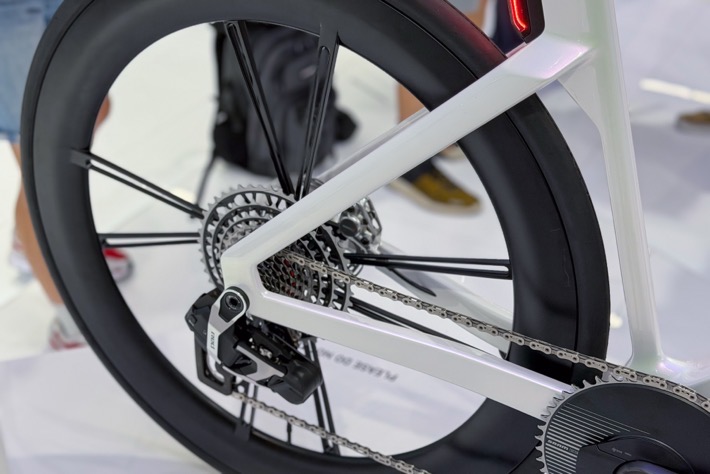
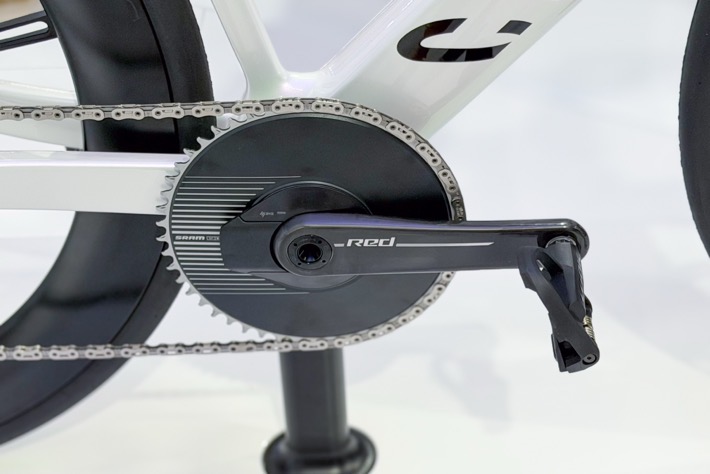
– SRAM RED groupset: This is what it was equipped with on the stand, but obviously, there’s no real dependency here on the groups. By time this bike ships it could be a different SRAM groupset, a Shimano groups, or something else entirely.
– Price & Timelines: There’s no price yet, and the timelines remain super vague. Still, Canyon hopes that perhaps in 2-3 years such a concept could be ready for production.
Got all that? Good, let’s dive into things more deeply.
A Closer Look:
Now, I’d encourage you to watch the video up above. I basically walk through each component of the bike with the lead hardware engineer at Canyon responsible for it. Lots of good tidbits in there.
Nonetheless, let’s step through it piece by piece from the front, moving backwards. First up, you can see the main forward lights just above the fork. There’s also two further white lights illuminated atop the handlebars.
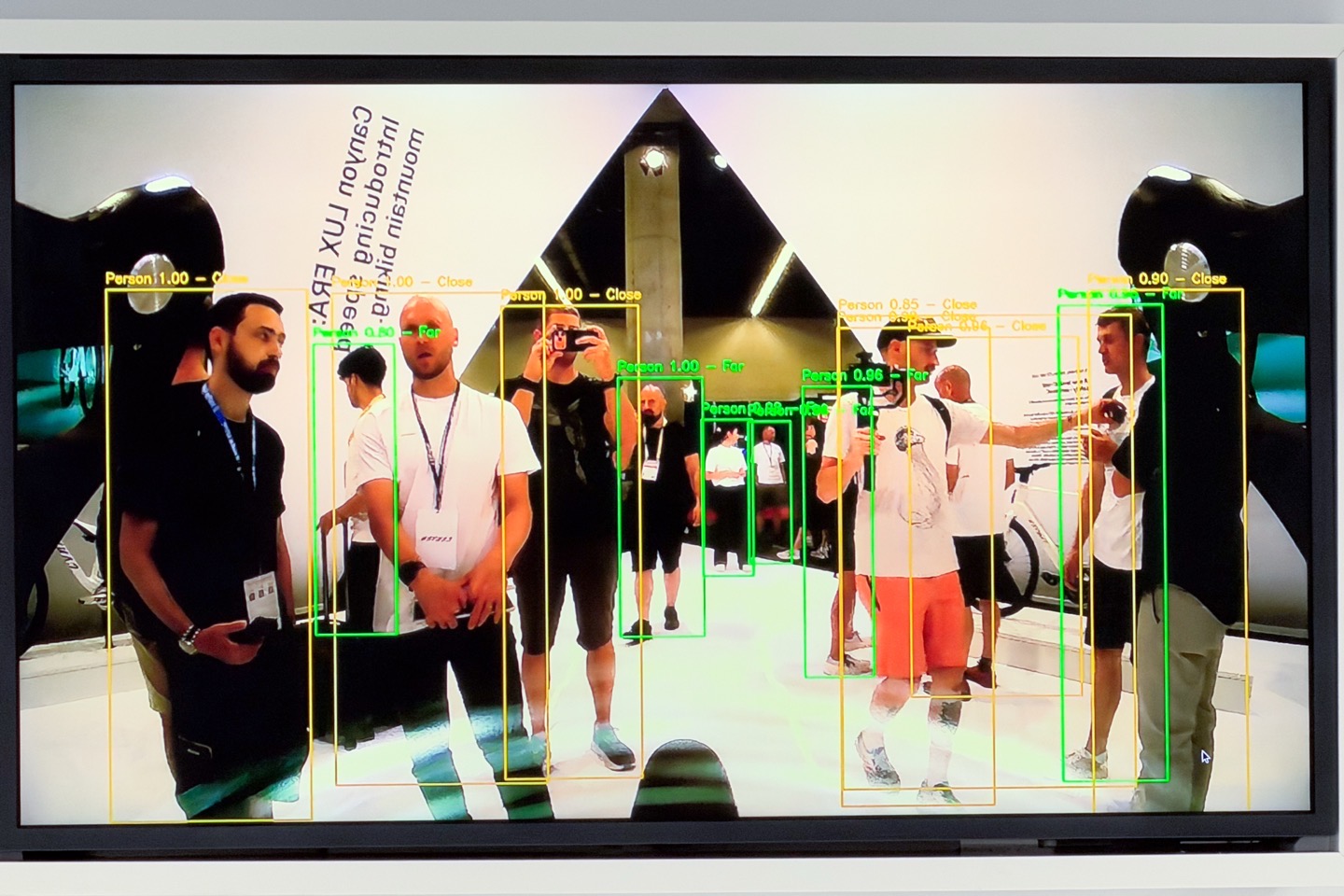
Directly above the lights you can see through the plastic and barely see the front radar sensor as well as front cameras. These are used for detecting objects (vehicles/people/potholes/etc up ahead). At the show, they had a live feed showing what the cameras are seeing when it comes to detection and classification, as well as confidence %. This is *NOT* what the end user sees, but rather, just what the computer it seeing. In the video, you can see as people move out of the way, it keeps detecting the bike in the right of the frame (as a bike)
Instead, what the user sees is this handlebar display. Obviously, the very first question I had was whether or not this display was in partnership with the now ill-fated OnlyFans crowd-funded handlebar display I covered last year. In fact, I asked three different Canyon engineers, all separately, and every one of them said it definitely wasn’t. They were pretty insistent that they have no partnership or licensing there at all. Of course, despite that project, handlebar display concepts are hardly new in cycling. But still, many people would (rightfully) ask, especially given that both are German companies.
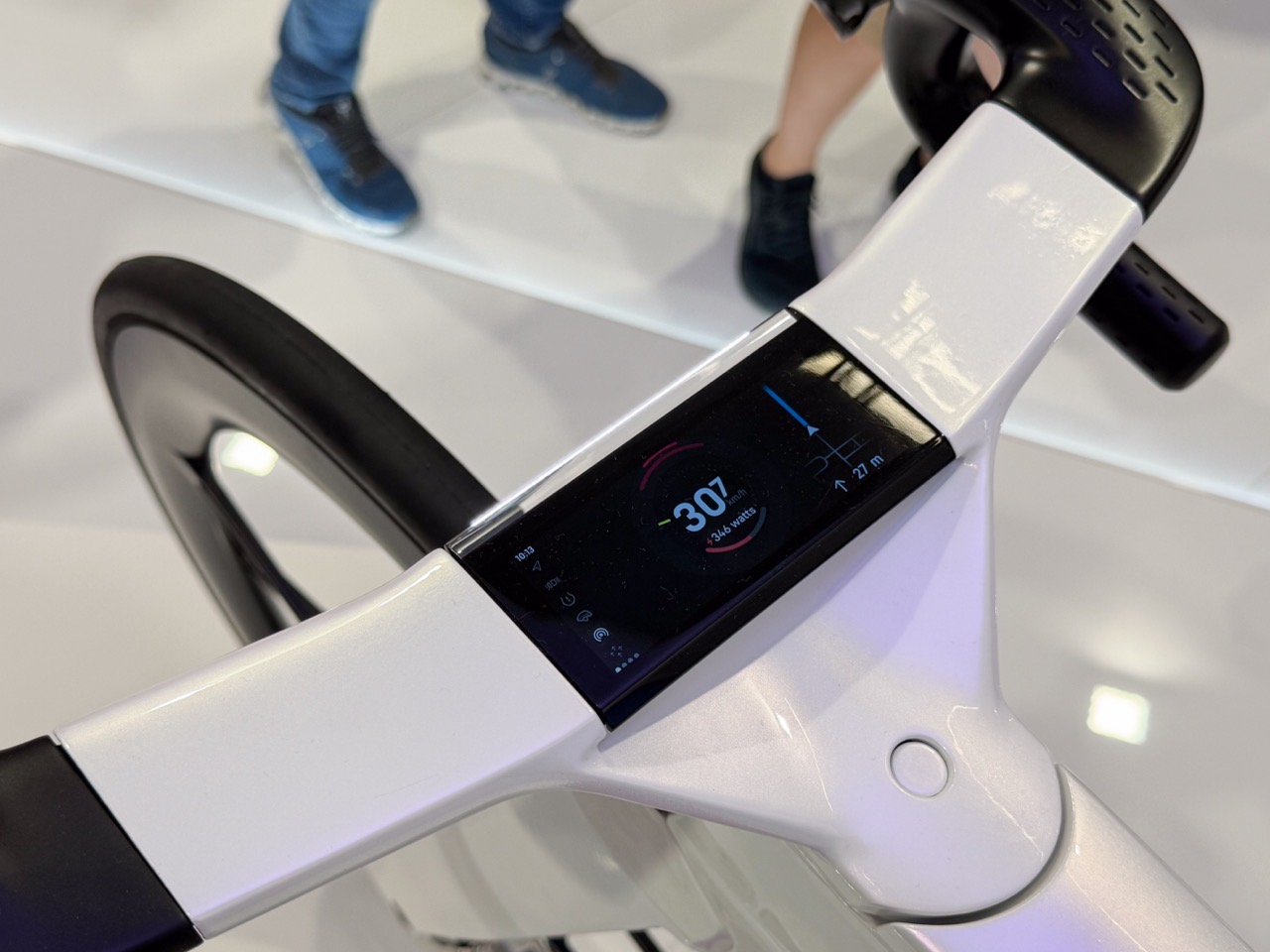
In any case, the display shows usual bike computer bits, such as speed/power/heart rate, as well as navigational bits. All of this is fairly demo-like. When asked whether or not this complements an existing bike computer or replaces it, Canyon said “It could replace it, in the long run…right now we’re just mostly focused on safety”.
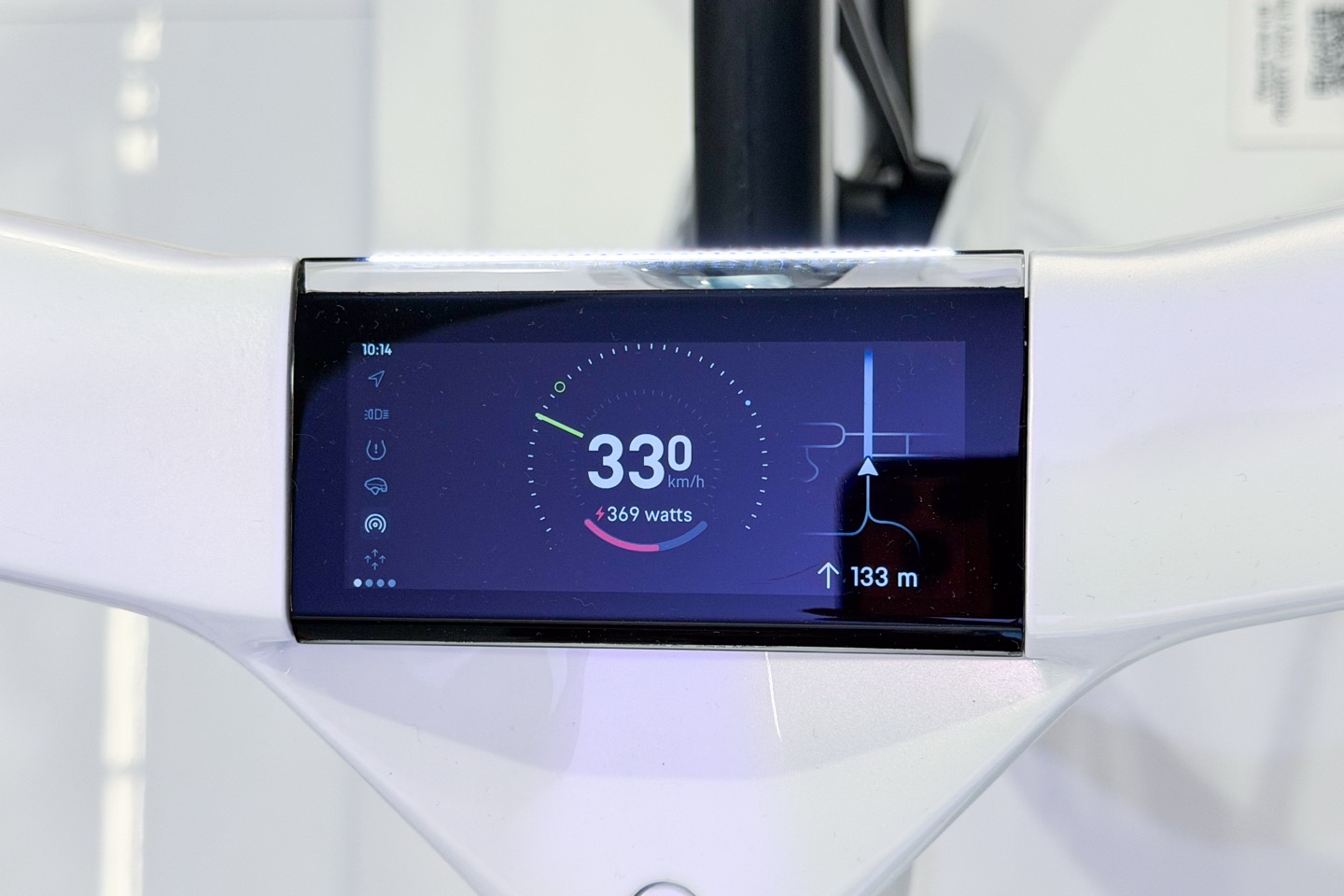
I’d argue that creating a good bike computer that consumers actually want on their handlebars is an area that most companies underestimate. Heck, I think even some of the very companies making those bike computers have forgotten that recently.
Creating a *competitive* bike computer from scratch requires a boatload of different feature areas: Navigation, routing, re-routing, offline maps, structured workouts, sensor connectivity (e.g. power meters, cadence sensors, heart rate sensors, radar, lights, numerous other sensor types), climb-related metrics (e.g. ClimbPro), and literally hundreds of other features. It’s ‘easy’t make something like the above image that shows basic information. It’s really hard to make a bike computer that competes with what Garmin/Wahoo/Hammerhead/etc have been building for 10-15 years.
I feel like the better opportunity here, short to mid-term, is for Canyon to partner with a Garmin/Wahoo to basically build such a bike computer into their handlebars. But whether either side will overcome their egos to do so, would be a bigger question.
In any event, when it comes to forward predictive avoidance, the bike is pulling in the forward radar and camera sensors to put together that picture of what’s happening. From there it’s using the sensors in the bike (including steering tube sensors) to determine whether or not you’re on track to actually hit said thing. Meaning, if you turn such that your new angle is away from the danger (like a car door), it won’t flag that as an alert.
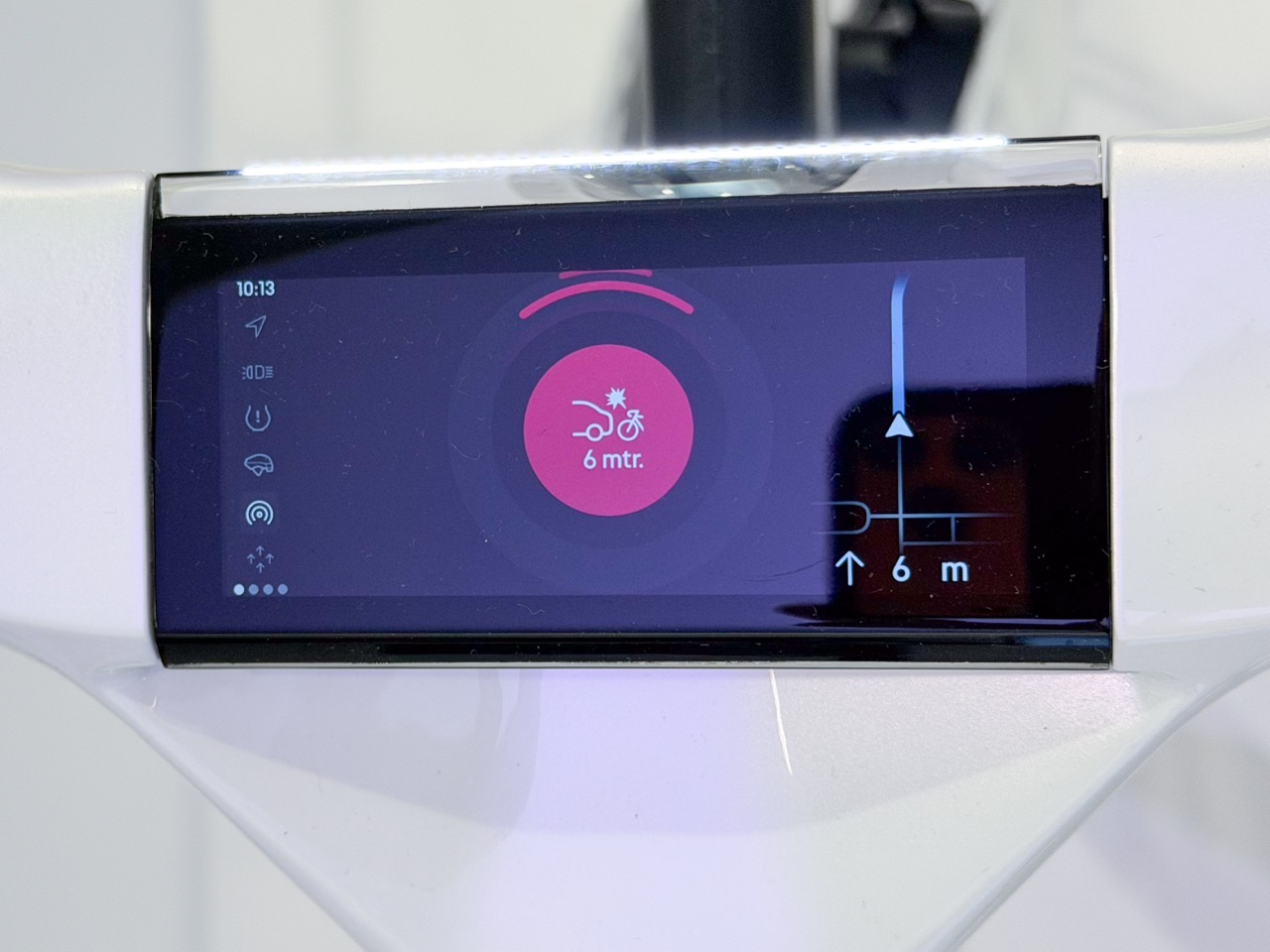
The system’s response time is 1/20th of a second (50ms), operating continuously. They noted that they will eventually look at how they can save battery by slightly reducing that. For example, if you’re riding on a simple empty road in the middle of empty farmland, they could reduce it down to 1/5th of a second, and likely save a bunch of battery (by reducing compute processing time).
The unit itself has full connectivity, but doesn’t require it for any actions. All of it is processed locally. They said this is for two core reasons. The first is privacy; they don’t want your imagery having to go to the cloud and be processed remotely. Canyon’s lead engineer noted how much they’re hearing today from customers about lack of trust in AI system and AI processing (from a privacy standpoint). Thus, everything is processed within the bike.
The second reason is simply responsiveness. To achieve that 50ms response/identification time, doing so across poor cellular connectivity simply isn’t viable.
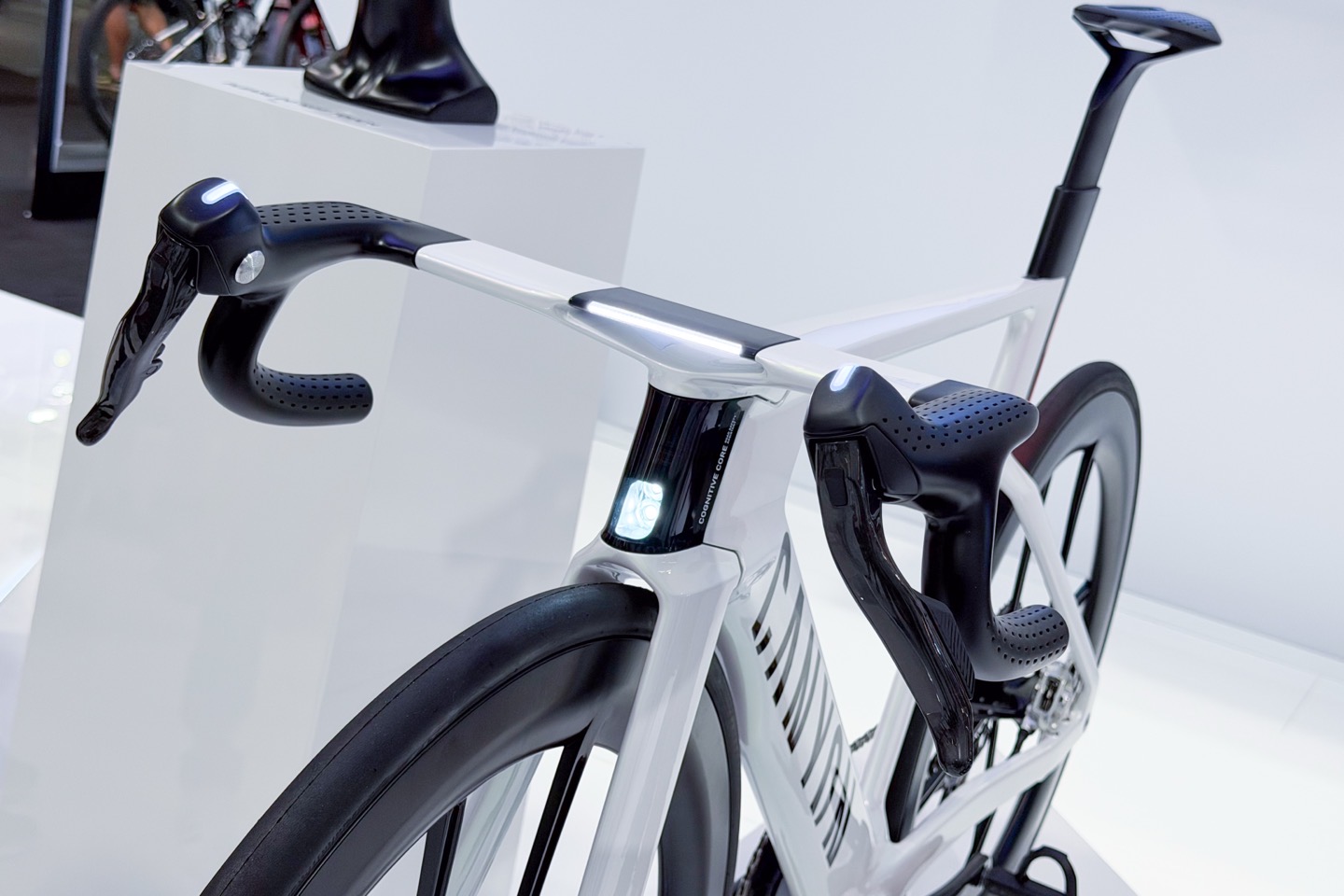
Speaking of processing, the entire thing is dependent on a 1kg-sized battery inside the bike, which currently only gets them about 8 hours of battery time. They said not to overthink the battery life estimates right now, because a lot will change in terms of tech (and battery burn) in the next 2-3 years, including just their own optimizations. Also keep in mind this is powering the full stack of bike lights, cameras, radar, bike computer, GPS, etc…
Still, I feel like they should be shooting for around 12-15 hours of ride time, or essentially a full week’s worth of riding for most riders buying this time of bike.
Nonetheless, next up are the handlebars. This is a combination of a SRAM shifter, with their own handlebar. You can see the white light below, which also changes red, and will alert accordingly (see the video how that works). Likewise, there’s also a vibration motor planned in there, as well as audible alerts via the main display portion – just like any other bike computer.
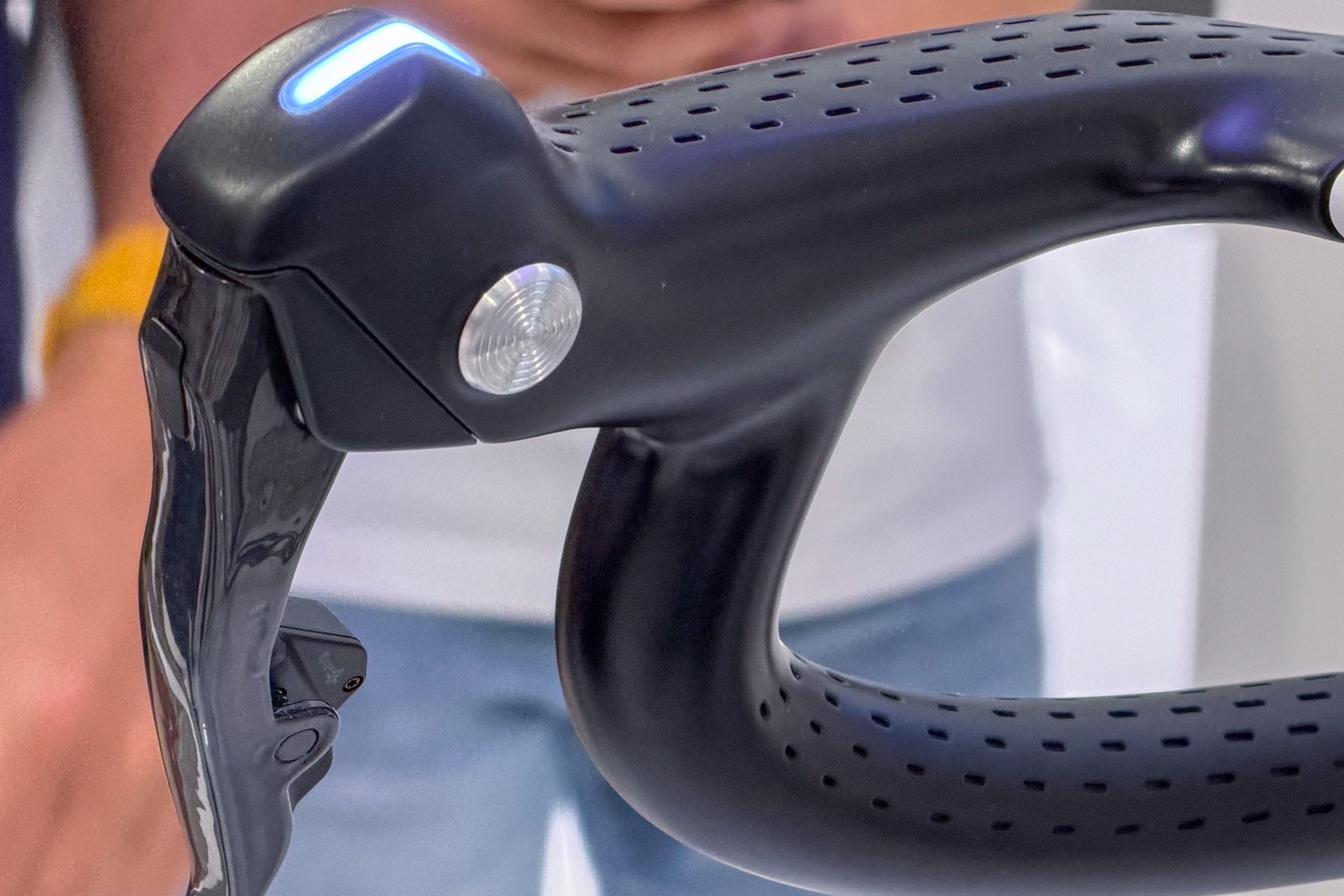
But if you look you’ll also notice that silver button. That allows for activating left/right turn signals, as well as customization to enable moving the saddle up/down. The bike has an adjustable height saddle that can go up/down by simple button press (also shown in the video). The idea here being to allow for more stable (lower) positions while descending. If I were to bet on any piece that won’t make the final bike, it’s this. We’re not talking about a typical dropper post scenario that uses a spring, but rather, this is literally like a small elevator for your seat post. That’s electronically and mechanically costly, and fraught with complexity.
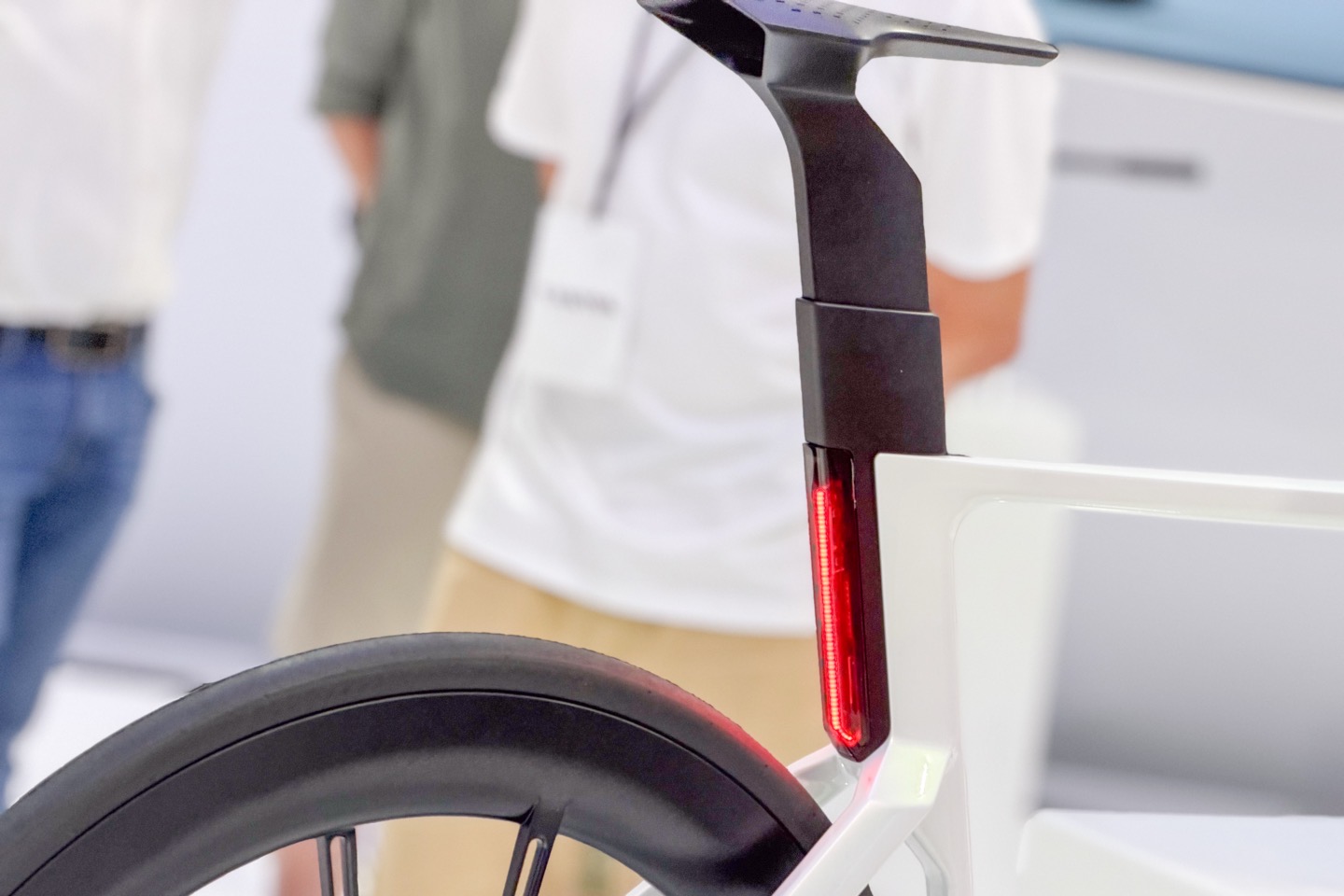
Towards the back of the bike they’ve got the rear light bar, as well as radar and camera packed above it.
Meanwhile, below it are the custom wheels from DT Swiss, which have a Canyon-designed tire pressure sensor in it (not designed by DT Swiss). Canyon says they can use this to give you warnings about not just tire pressure, but suggesting for dealing with road conditions (like rain) by changing tire pressure.
Finally, down below you’ve got the relatively straightforward SRAM RED groupset. As noted above, this will probably change by time this bike comes out, but for now it looks nice.
There ya go – a complete look at this bike from front to back. Again, there’s a fair number of bits in the video that are worthwhile diving into, showing how some of the features work in real-time.
The Stingr Smart Helmet:
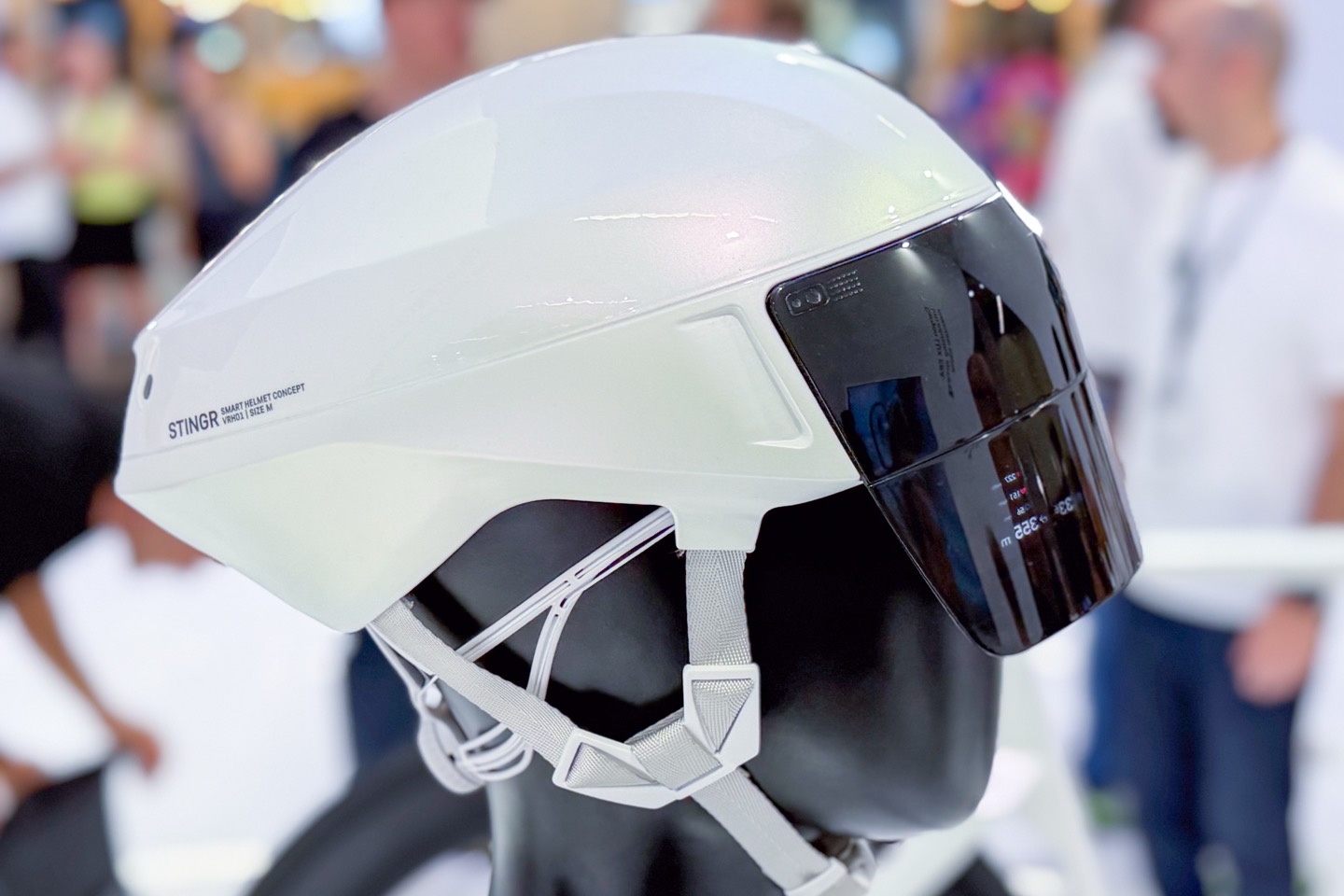
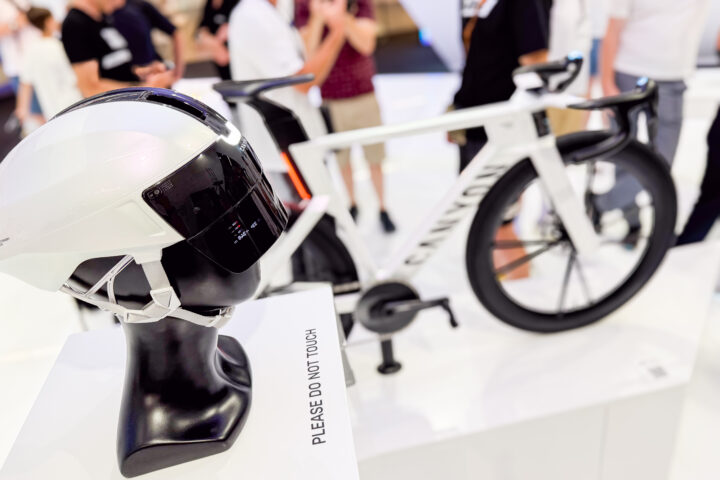
I want to very briefly talk about the Stingr Smart helmet, which can operate with or without the bike. Likewise, the bike doesn’t require the helmet. The helmet is also very much in the ‘concept’ phase, without any prices or timelines. I’d actually guess that achieving such a helmet might be harder than the bike, especially once I saw the state of things (and, knowing the last decade+ of companies trying to make smart helmets/glasses).
As you can see above, the helmet has a heads-up display on the inside, showing live metrics from your ride, just like a bike computer would. This includes all the usual bits like speed/power/cadence/etc, but also directional stuff as well as warnings about vehicles and other dangers. Basically, much the same metrics as the Canyon Predict smart bike concept.
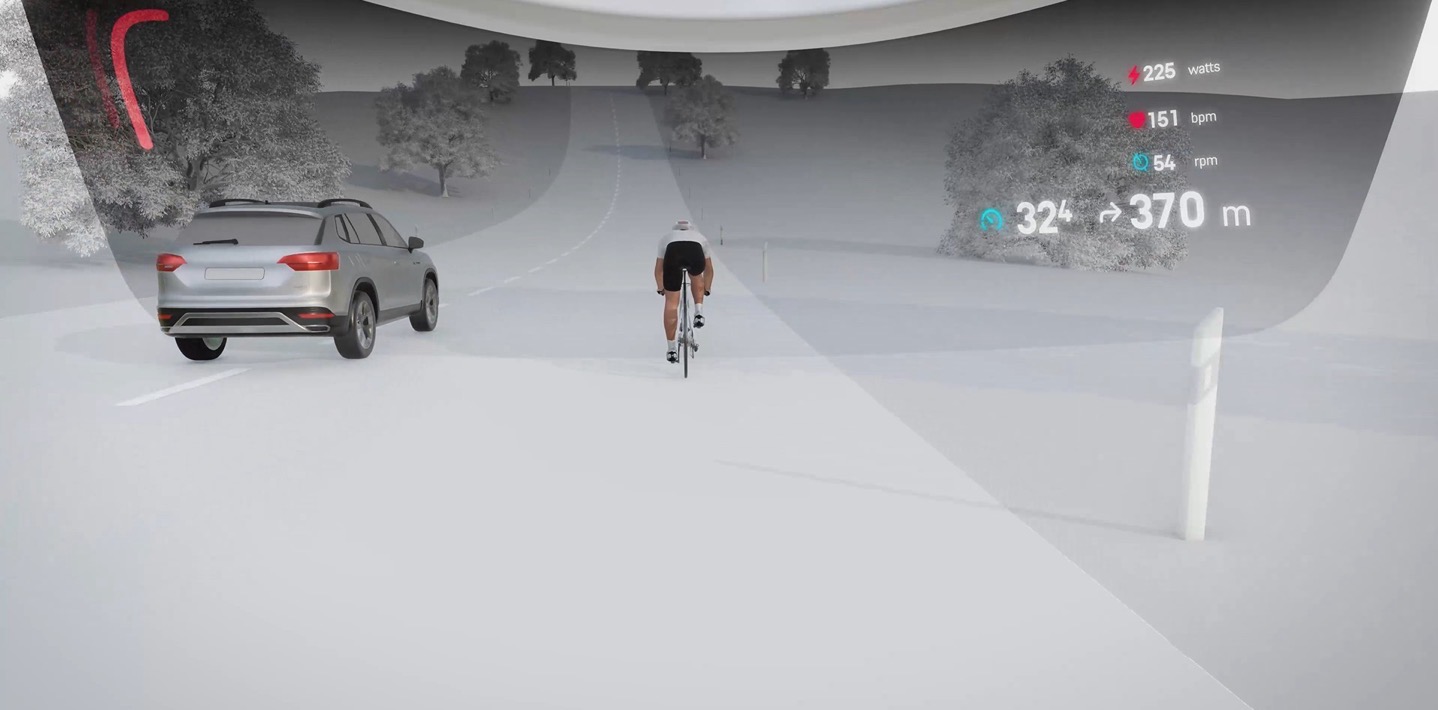
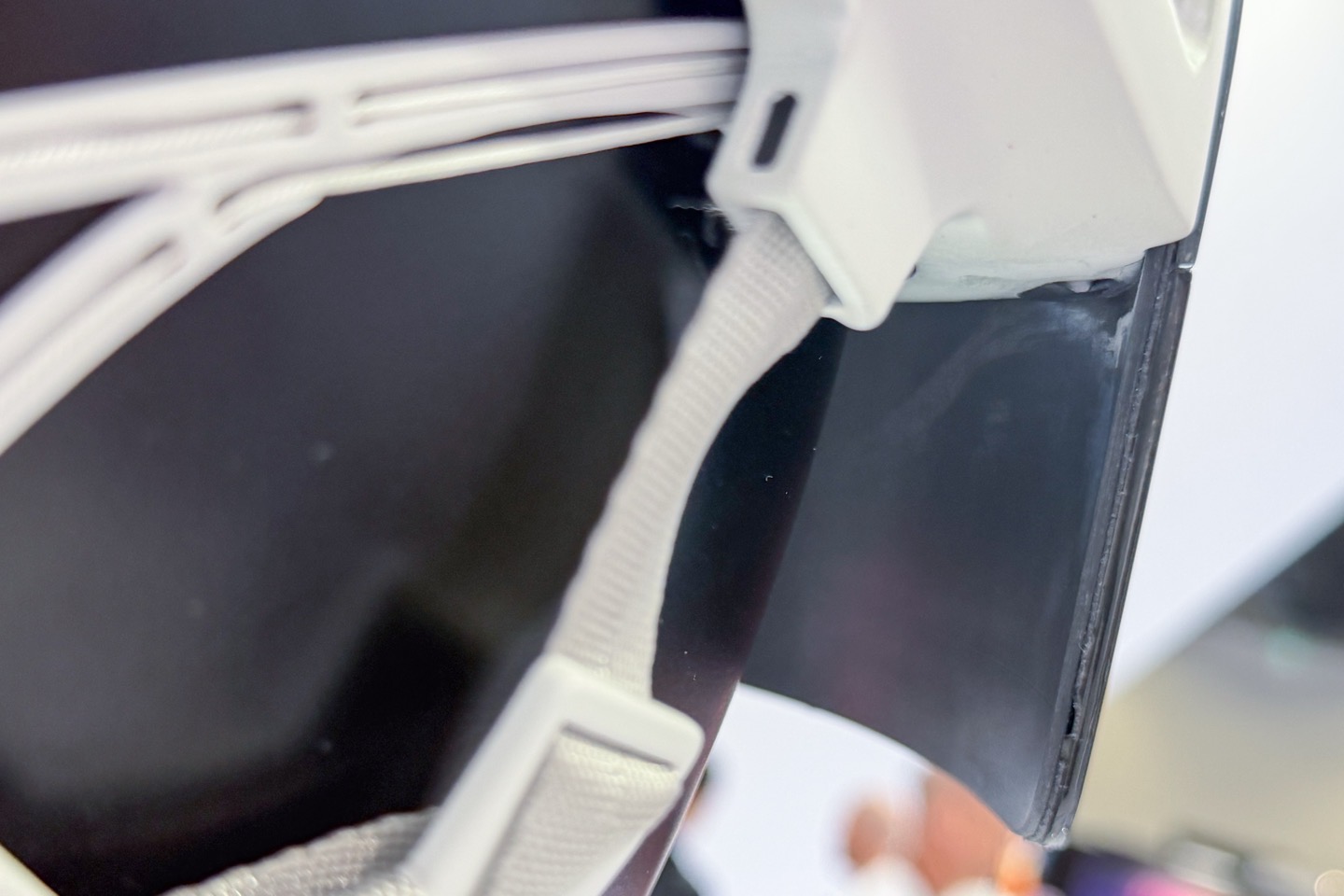
Except, as of today, the display isn’t real. Well, at least for the rider. Yes, the display seen on stand was real, and was showing people *outside* the helmet a video and photo-friendly real and changing set of metrics. But in reality, that display was actually kinda fake. It wasn’t for the rider. When you looked inside the helmet, there’s just foam there.
For context, over the years I’ve tried Recon Snow (2012+), Recon Jet (2013+), Google Glass (2014), Recon Jet (2013+), Garmin Varia Vision (2016), to the SOLOS glasses (2018), Everysight Raptor (2018), FORM Swim Goggles (2019+), Oakley Vanguard (2025), and many more I never got around to writing about. And that ignores products like the Apple Vision Pro (2024).
Having talked to many companies over the years that work in this space of heads-up display space, what Canyon is trying to do is by far one of the most difficult things to do.
You have to find a way to project something against that glass that’s also visible to the end user in all sorts of lighting conditions. By having the foam backing in the demo, they’ve essentially removed the most difficult part of the problem. It’s like building a rocket that doesn’t have an engine/motor to launch to space.
But, we’ll set aside that for a brief second. Atop the helmet are also a set of lights that can be used as turn indicators, brake lights, or just general visibility. There’s also small white lights to the left/right of the large vent you see at the rear (they show illuminated/blinking in the video).
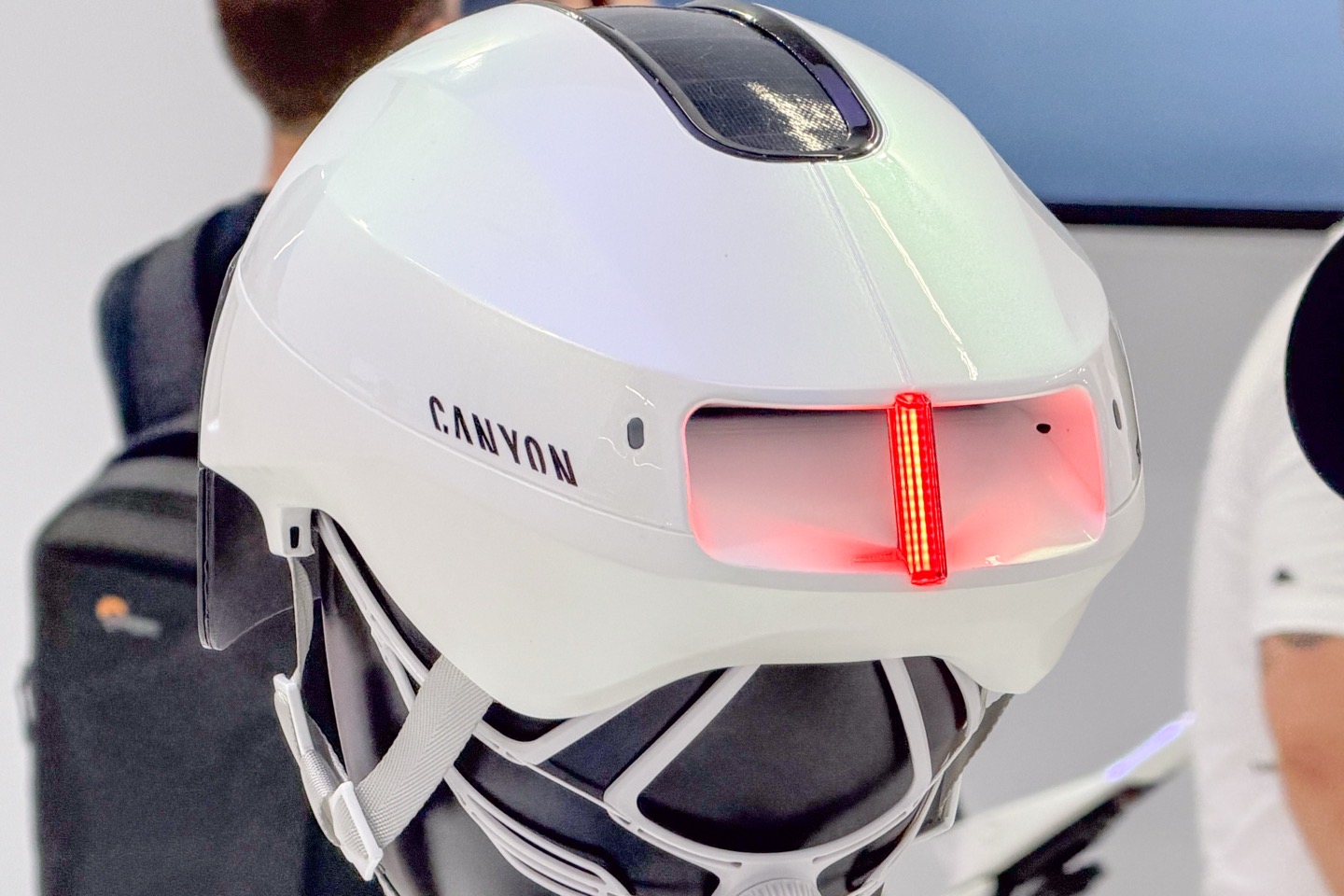
Inside the helmet there’s audio alerts as well as haptic (vibration) alerting.
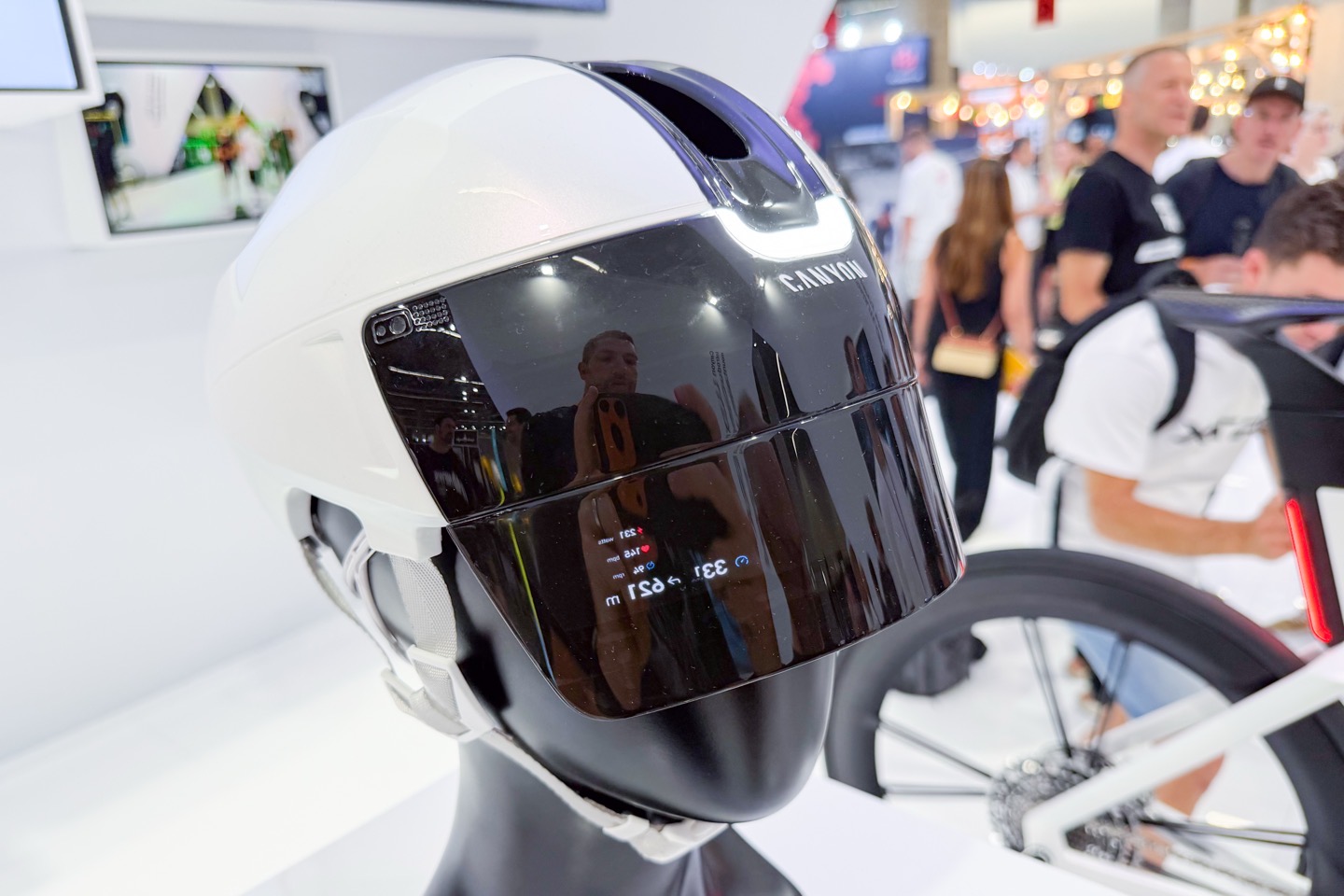
Finally, up top there’s an implied solar panel, for powering it. Assuming they sort out the overall cooling elements (e.g. vents), putting a solar power atop your head is actually quite logical. Currently it’s slated for 8-15 hours of battery life.
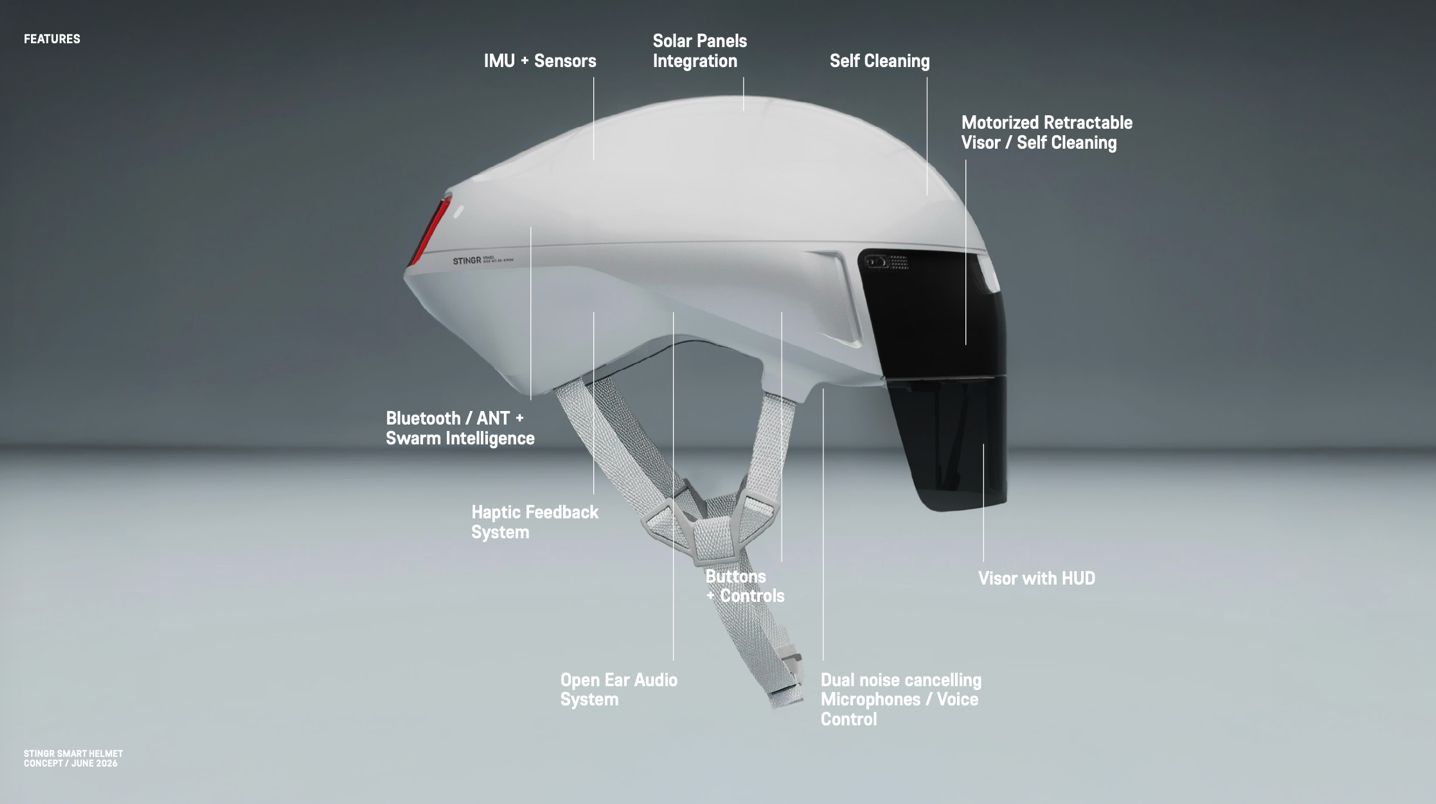
Here’s a chart from Canyon showing all the features in the helmet (or at least, planned to be in the helmet):
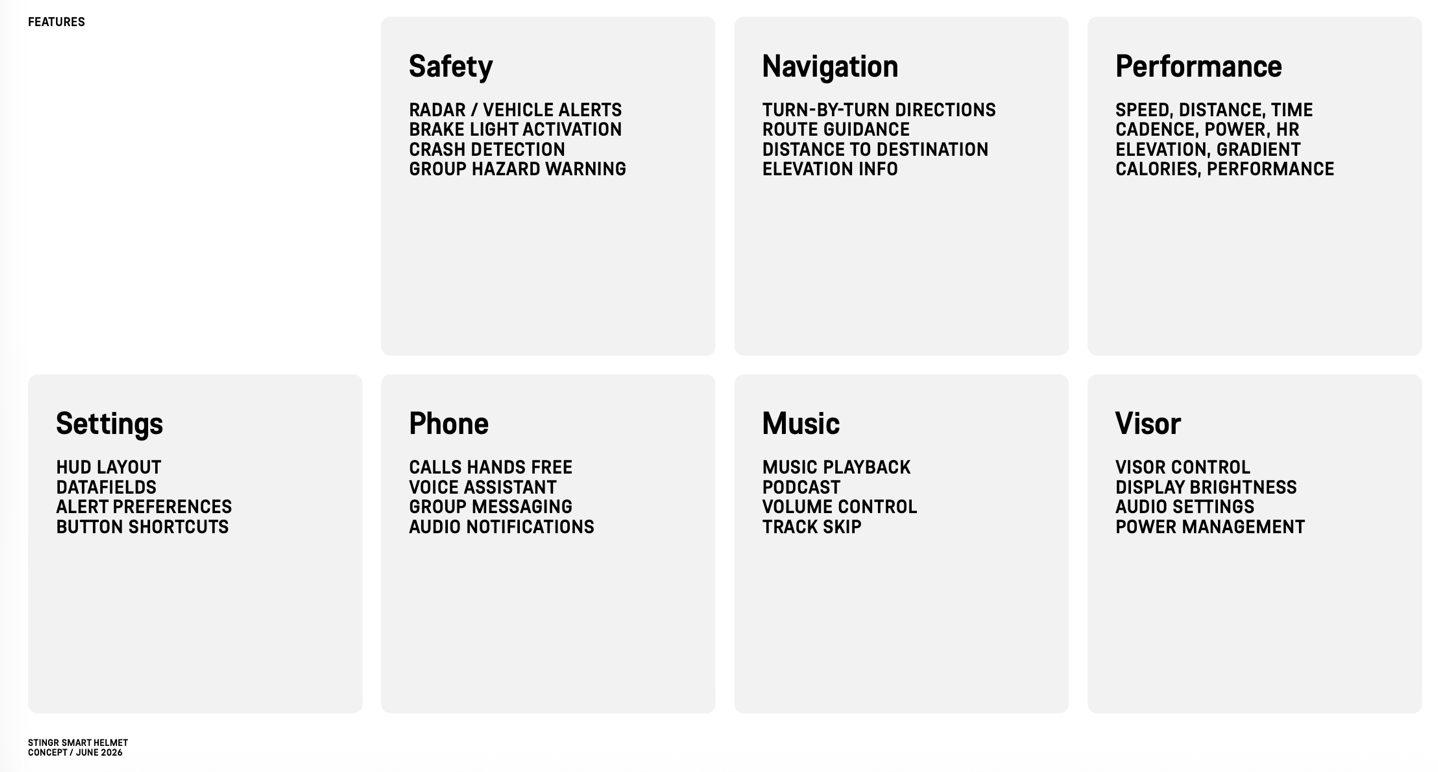
Again, who knows what that’ll look like once it finally ships.
Wrap-Up:
In an ideal world, regulators would find ways to get drivers to be more aware of cyclists and pedestrians. But we don’t all live in the Netherlands, thus, pretending to ourselves that’s going to change doesn’t save lives. It simply doesn’t. I’m tired of watching cyclists I know get killed by drivers, and thus I’m more than happy for companies to try and do things that attempt to reduce the number of cyclists getting killed.
It is an unfortunate reality that certain (many?) countries will continue to have poor safety laws, bad or distracted drivers, or even bad road conditions. Many cyclists already use safety devices to try and mitigate some of those risks, such as rear-radar units. And others add safety cameras for post-incident evidence.
As cyclists we should continue to push for regulation changes, and hold bad drivers accountable. But equally, we can also be pushing for real-world solutions that safe our friends lives in the meantime. Sadly, no points awarded for coulda/shoulda/woulda when it comes to preventing cycling accidents. Thus, I’m all for whatever trusted tech can be put in place to prevent that, from any company. Whether or not Canyon can make this tech, or more challengingly, make it trustworthy, remains to be seen.
Finally, there’s the element of how well such a system would work long-term given everything is built-in. Meaning, could you swap out the handlebar or front sensors for a new version? Or would that require a new bike? I’d think swapping handlebars should be straightforward, but not if the main computing unit is somewhere else in the frame. Things that need to be decided and weighed by both Canyon and consumers.
With that – thanks for reading!
FOUND THIS POST USEFUL? SUPPORT THE SITE!
Hopefully, you found this post useful. The website is really a labor of love, so please consider becoming a DC RAINMAKER Supporter. This gets you an ad-free experience, and access to our (mostly) bi-monthly behind-the-scenes video series of “Shed Talkin’”.
Support DCRainMaker – Shop on Amazon
Otherwise, perhaps consider using the below link if shopping on Amazon. As an Amazon Associate, I earn from qualifying purchases. It doesn’t cost you anything extra, but your purchases help support this website a lot. It could simply be buying toilet paper, or this pizza oven we use and love.


