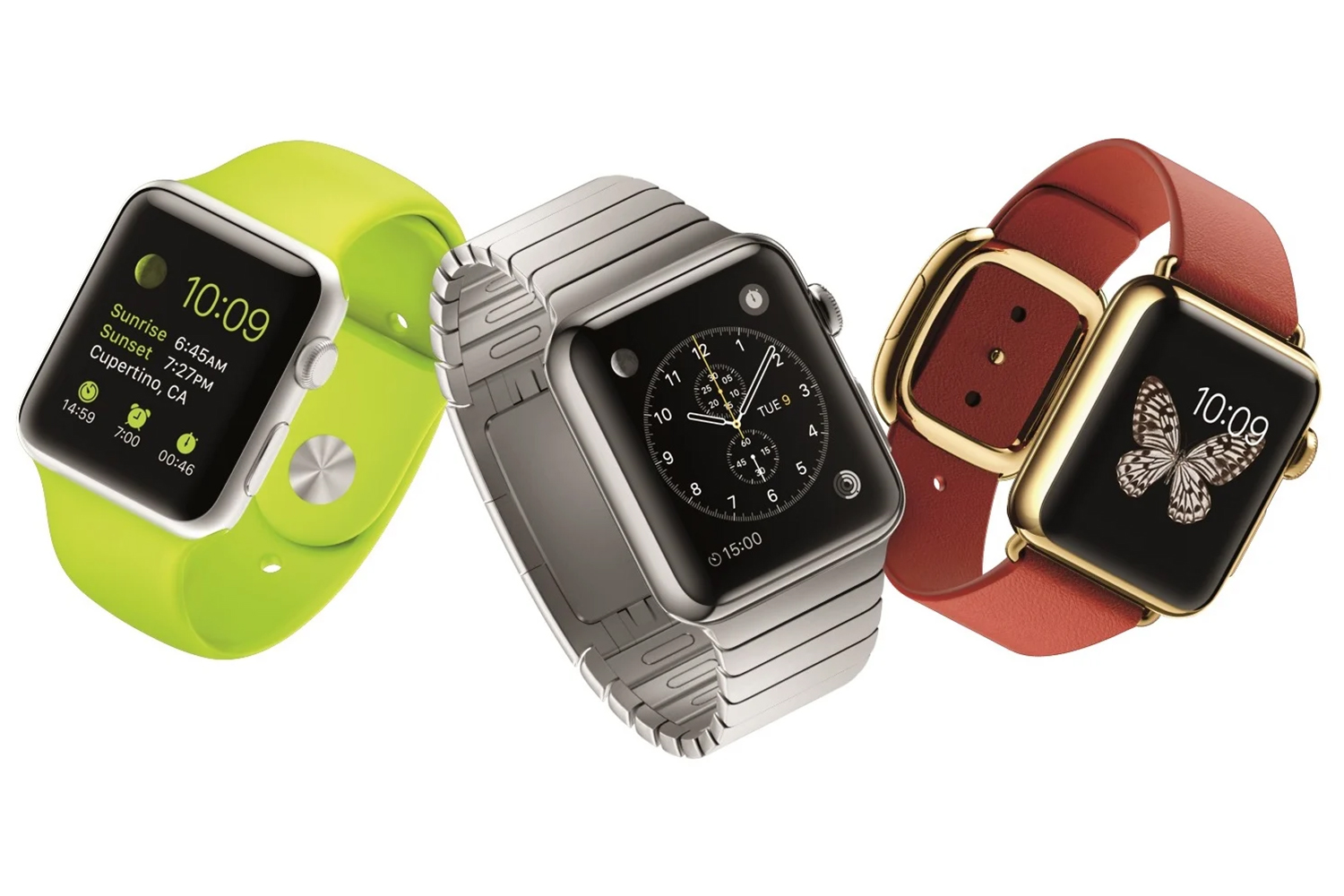
Rocking an iPhone? If so, chances are your smartwatch of choice is an Apple Watch. There’s a new one on the horizon too – the Apple Watch Series 12. It’s not official, of course, (nothing ever is until the launch event), but we all know it’s coming later this year.
For now, then, we’ll have to make do with industry analysts, sensible predictions, and rumours. If you want the short version, everything so far points to a more familiar update, with a new chip, watchOS 27, Apple’s rebuilt Siri experience, and a handful of under-the-hood improvements doing most of the work. There are also whispers around Touch ID and new health features, although both remain uncertain.
With that said, here’s everything we’ve heard about the Apple Watch Series 12 (so far).
Price and release date

Apple hasn’t confirmed when the Apple Watch Series 12 will launch, but September is the fairly obvious month. Apple typically announces its new flagship watches alongside its new iPhones (this year, that’s the iPhone 18 Pro series), and Bloomberg‘s Mark Gurman, along with pretty much the entire tech world, expects the Series 12 to launch this autumn.
Pricing is less clear. No reliable reports have revealed how much the Apple Watch Series 12 will cost, and there have been no strong rumours pointing to a major price increase or reduction. In the past, we’d have put a safe bet on a similar or identical price to the current Apple Watch Series 11. But with Apple and other manufacturers increasing product prices across the board (thanks to the AI-fuelled hardware shortage), don’t be surprised by a moderate increase.
Design

Elsewhere, if you’re hoping for a major redesign, you might want to temper your expectations.
Current rumours suggest that the Apple Watch Series 12 will retain the same overall design language as the Apple Watch Series 11, with similar display sizes, case shapes and general styling. Apple could still introduce new colours or finishes, as it often does with annual Apple Watch updates, but there is currently no strong evidence of a thinner body, larger screen or major external overhaul.
If true, it would certainly make sense. Apple gave the standard Apple Watch a larger-screen redesign with the Series 10, so the Series 12 looks more likely to refine that formula than replace it. We’d be happy to be proven wrong, of course, but even if it’s more of the same, we can’t imagine too many complaints, given the already-refined design.
Performance

One of the guaranteed upgrades in the Apple Watch Series 12 is a new processor. Leaked Apple software discovered by Macworld suggests that Apple’s 2026 watches belong to a new internal hardware family, which suggests that a new Apple Watch chip is in development after several years of relatively minor processor updates. Apple hasn’t confirmed what the chip will be called, but most analysts expect either S11 or S12 branding. For anyone planning to keep their Apple Watch for several years, then, that could end up being one of the Series 12’s most important improvements.
Processor aside, the Apple Watch Series 12’s battery life isn’t expected to change dramatically – no credible reports have suggested that Apple is planning a major increase in runtime for the Series 12, suggesting that any gains are more likely to come from the improved efficiency of the new chip, rather than a larger battery.
Health features

Health tracking remains one of the Apple Watch’s biggest selling points, but the Watch Series 12 rumours are still cautious.
According to Bloomberg‘s Mark Gurman, Apple continues to work on blood pressure monitoring, but the tech might not be ready in time for the Series 12. Blood glucose monitoring is believed to be even further away, which makes sense. Major medical tools typically require extensive testing and, in some cases, regulatory clearance before they can be sold to consumers. And rightly so, might we add!
One new rumour has suggested that Apple could take a different approach to expanding its health features. Leaker Kosutami claims that the Apple Watch Series 12 could introduce a new health sensor built into a silicone sport band rather than the watch itself, although they didn’t specify what it would measure.
It’s not an absolutely wild concept by any means – Apple has filed multiple patents over the years exploring smart watch bands capable of housing additional sensors, including concepts for hydration monitoring and other biometric measurements. However, none of those patents has resulted in a commercial product, and Kosutami’s latest claim has yet to be corroborated by more established sources such as Bloomberg‘s Mark Gurman or analysts with more proven track records, like Ming-Chi Kuo.
For now, it’s an interesting possibility, but one that should be treated with a healthy dose of scepticism until more evidence emerges.
Touch ID
One of the more intriguing rumours is the possible arrival of Touch ID, which stems from leaked internal Apple software discovered by Macworld, which found references to “AppleMesa” – Apple’s long-standing internal codename for Touch ID – in code apparently linked to future Apple Watch models.
If Apple were to introduce the feature, the most likely implementation would be a fingerprint sensor built into the side button, allowing users to unlock the watch without entering a passcode. Apple has explored similar ideas in patents before, although patents alone are, of course, never a guarantee that a feature will ship.
For now, though, Touch ID should be treated with caution. Neither Bloomberg‘s Mark Gurman nor Ming-Chi Kuo has reported that fingerprint authentication is coming to this year’s Apple Watch, despite both having strong track records when it comes to Apple’s hardware roadmap.
There are also practical reasons that Apple may decide against it. Space inside an Apple Watch is extremely limited, and adding a fingerprint sensor could come at the expense of a larger battery or additional health sensors. More recent reports have also suggested that Apple could be prioritising those upgrades instead, making Touch ID one of the least certain Apple Watch Series 12 rumours.
Apple watchOS 27 and a rebuilt Siri experience

While the hardware upgrades could be relatively modest, the Apple Watch Series 12 software experience could see more noticeable improvements.
Apple has already unveiled watchOS 27, which introduces its rebuilt Siri experience alongside a range of new features across the operating system. Apple says that Siri is now more conversational and context-aware, while Apple Intelligence continues to expand across the Apple ecosystem.
Elsewhere, watchOS 27 also introduces new watch faces, including a version of the Modular Ultra face previously exclusive to the Apple Watch Ultra, along with updates to Workout Buddy, Live Translation, Messages and other system apps.
There is an important caveat, mind. Apple Intelligence features on Apple Watch still rely on a compatible iPhone to perform much of the AI processing. That means owners will need both a supported Apple Watch and an Apple Intelligence-capable iPhone to access the full experience.
As with previous releases, Apple is expected to launch watchOS 27 alongside the Apple Watch Series 12 this September.
Should you wait?

If you’re already using an Apple Watch Series 10 or Series 11, the current rumours suggest that the Series 12 could prove to be a relatively modest upgrade.
The biggest reasons to wait are the expected new chip, watchOS 27 and Apple’s rebuilt Siri experience, all of which should help future-proof the smartwatch for years to come. Touch ID remains an interesting possibility, but it’s far from guaranteed, while the long-rumoured health breakthroughs appear more likely to arrive further down the line than this year.
Of course, Apple hasn’t confirmed any of these hardware rumours, and its plans could change before launch.
If the reports prove accurate, though, the Apple Watch Series 12 won’t reinvent Apple’s smartwatch formula – but it could be one of its most polished updates yet, combining a faster chip, smarter software and a more capable AI experience for anyone upgrading from an older model.




