
In FPV drones, the electrical wiring and connectors play a crucial role in ensuring that the drone operates efficiently and safely. In this tutorial, we will cover everything you need to know about electrical wires and connectors, including the different types and how the size of wire and connector affects performance.

What Type of Electrical Wires Should You Use for Your FPV Drone?

Only use silicone stranded wire in FPV drones:
- Silicone-insulated wire is preferred for its flexibility compared to PVC-insulated wires which are very rigid
- Silicone wires are also lightweight and can tolerate a wider temperature range, making them more durable in extreme environments. In addition, they are less likely to melt or shrink when exposed to heat during soldering.
- Compared to solid core wires, stranded wires are more flexible and easier to work with.
Electrical Resistance in Wires
One important factor to consider when choosing wires for your FPV drone is the wire’s resistance. Longer or thinner wires will have more resistance, which can lead to voltage drop and power loss (especially so for the battery). This is why wires have a current rating.
To minimize resistance, it’s best to keep your wires as short as possible. While thicker wires can also help reduce resistance, they can add weight to your drone.
To ensure that your power system can deliver the required power, make sure your wires are appropriately sized for the components in your drone. Choosing the right size wire will prevent it from becoming a bottleneck in your power system and allow your drone to perform at its best.
Understanding Wire Gauge
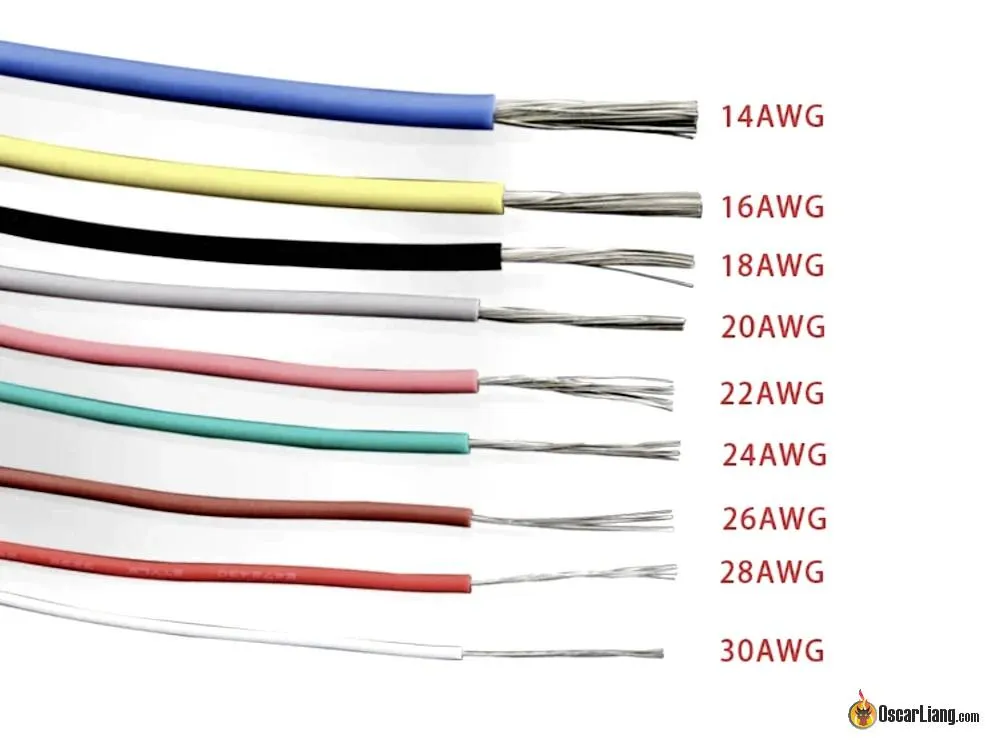
Wire gauge refers to the thickness of the electrical wire and is measured in AWG (American Wire Gauge). Choosing the right wire gauge is important to ensure that the wire can handle the current required by the component it is connected to.
In general, the higher the AWG number, the thinner the wire. The lower the AWG number, the bigger the cable size and current capacity. The current rating of a wire is the maximum amount of current that it can safely handle without overheating or becoming damaged.
When building an FPV drone, minimizing weight is important. For instance, here are some commonly used wire gauges for different components on a 6S 5-inch FPV drone:
- 14AWG for Battery XT60 Pigtail
- 18AWG-20AWG for ESC and Motor power wires
- 28AWG for other low power components and signals
When connecting two wires, the maximum current that can be passed through them is limited by the smaller wire. Therefore, if you are extending a wire, it’s best to match the wire gauge and use the same AWG wire. Using larger wires than necessary doesn’t provide any benefit but extra weight, which is not ideal for an aircraft.
Here’s the estimated weight per meter of wire for different AWG number:
- 24 AWG – 4.5g
- 20 AWG – 7.5g
- 18 AWG – 11g
- 16 AWG – 20g
- 14 AWG – 27g
- 12 AWG – 39g
- 10 AWG – 61g
Disclaimer: The numbers here are only estimates.
Current Rating Look-Up Table
To determine what AWG wires you need, you should first work out your quad’s maximum amp draw and then refer to a current rating look-up table. The current rating is normally a continuous current if not specified.
Different electrical wire manufacturers may have different standards and current ratings. Here’s one example:

Example – Wire AWG and Current ratings
As a general guideline, I personally follow this table based on the burst current requirement (e.g. current draw at full throttle):
- 10AWG Wire: 250A
- 12AWG Wire: 160A
- 14AWG Wire: 110A
- 16AWG Wire: 80A
- 18AWG Wire: 50A
- 20AWG Wire: 30A
- 22AWG Wire: 24A
- 24AWG Wire: 20A
It’s important to use the appropriate wire size to minimize voltage drop and power loss due to resistance, and to reduce the risk of overheating. However, in some cases, it may be acceptable to use slightly thinner wires if the wire length is short and the current bursts are only for a short period of time to minimize weight.
There is also a voltage rating for electrical wire, but this is rarely a concern in typical RC applications because the voltages we use are well below 50V. The insulation on the silicone wire commonly used in FPV builds is usually rated for much higher voltages, often hundreds of volts.
What Wire Gauge Should I Use?
For a 6S 5-inch build, or even a 7-inch, I typically use 14 AWG wire for the XT60 battery lead.
Yes, these drones can draw more current at full throttle than the continuous current rating of 14 AWG wire might suggest, but I do not consider that a major issue in practice.
Firstly, the battery leads are usually very short, so their resistance is low. Secondly, peak current draw normally only lasts for a few seconds. Even if you hold full throttle for longer, the battery itself will usually begin to sag before the wire becomes the limiting factor.
You could use larger wires such as 12 AWG, which is what most 5-inch and 7-inch BNF quads typically come with, but I still prefer 14 AWG in my own builds. It is much easier to solder and can also save a few grams.
Where to Buy Silicon Electrical Wires
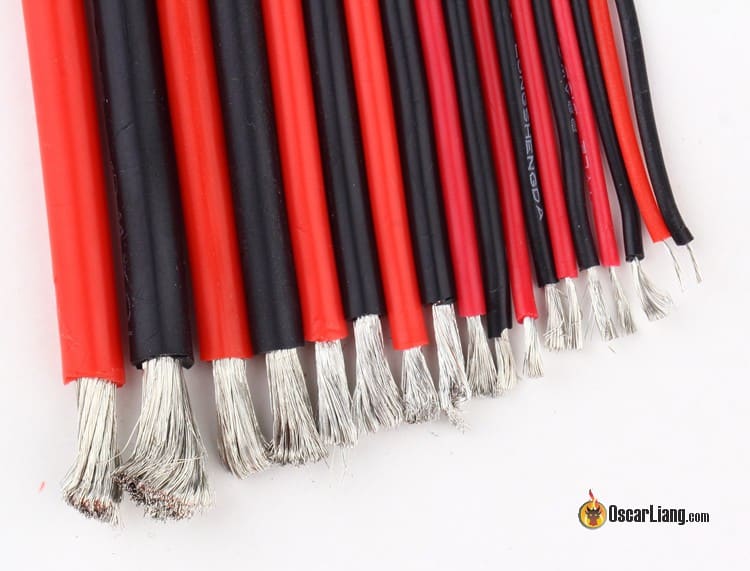
Are Red and Black Wires Different?
No, red and black wires are the same wires, just different in colour. You can use any colour wire you want for your drone, but conventionally, red is used for positive power and black is used for ground. Following this convention makes it easier to visualize which wire is which and helps prevent mistakes. There are other colour-coded wires which are typically for signals, but it’s totally up to you what color wires to use.
12 AWG
For XT60 pigtail in high power 5″ – 7″ FPV drones.
14 AWG
For XT60 pigtail in typical 5″ – 7″ FPV drones.
16 AWG
For XT30 and XT60 pigtail in long range and low power builds (80A burst).
20 AWG
For XT30 in micro builds (under 250g), and motor wire extension in 5″ builds. 18AWG can also works if you don’t mind the extra weight.
26AWG-28AWG
For signals, FPV system and receiver power etc, basically anything that isn’t battery or motor related.
Choosing the Right Connectors for Your FPV Drone

Connectors designed for power some for signal and have different current ratings.
Here is a general guideline for the continuous and burst current ratings of some commonly used connectors:
- JST connector: 5A (10A)
- 2mm bullet connectors: 20A (40A)
- XT30: 30A (60A)
- XT60: 60A (180A)
While it’s tempting to use larger connectors just to be on the safe side, not always a good idea as it adds unnecessary weight to your drone. In some cases, it may even have a negative impact on your drone’s performance. For example, when it comes to micro drones such as Tiny Whoops, there’s a debate about whether XT30 connectors or BT2.0 / A30 connectors are the better option. While XT30 connectors have a lower resistance than PH2.0, BT2.0 and A30, but the benefits are hardly noticeable while it’s much heavier, some argue that BT2.0 and A30 are the optimal choices because they provide a good compromise between weight and performance. You can learn more about these connectors for micro drones in my testing: https://oscarliang.com/micro-battery-connectors-testing/
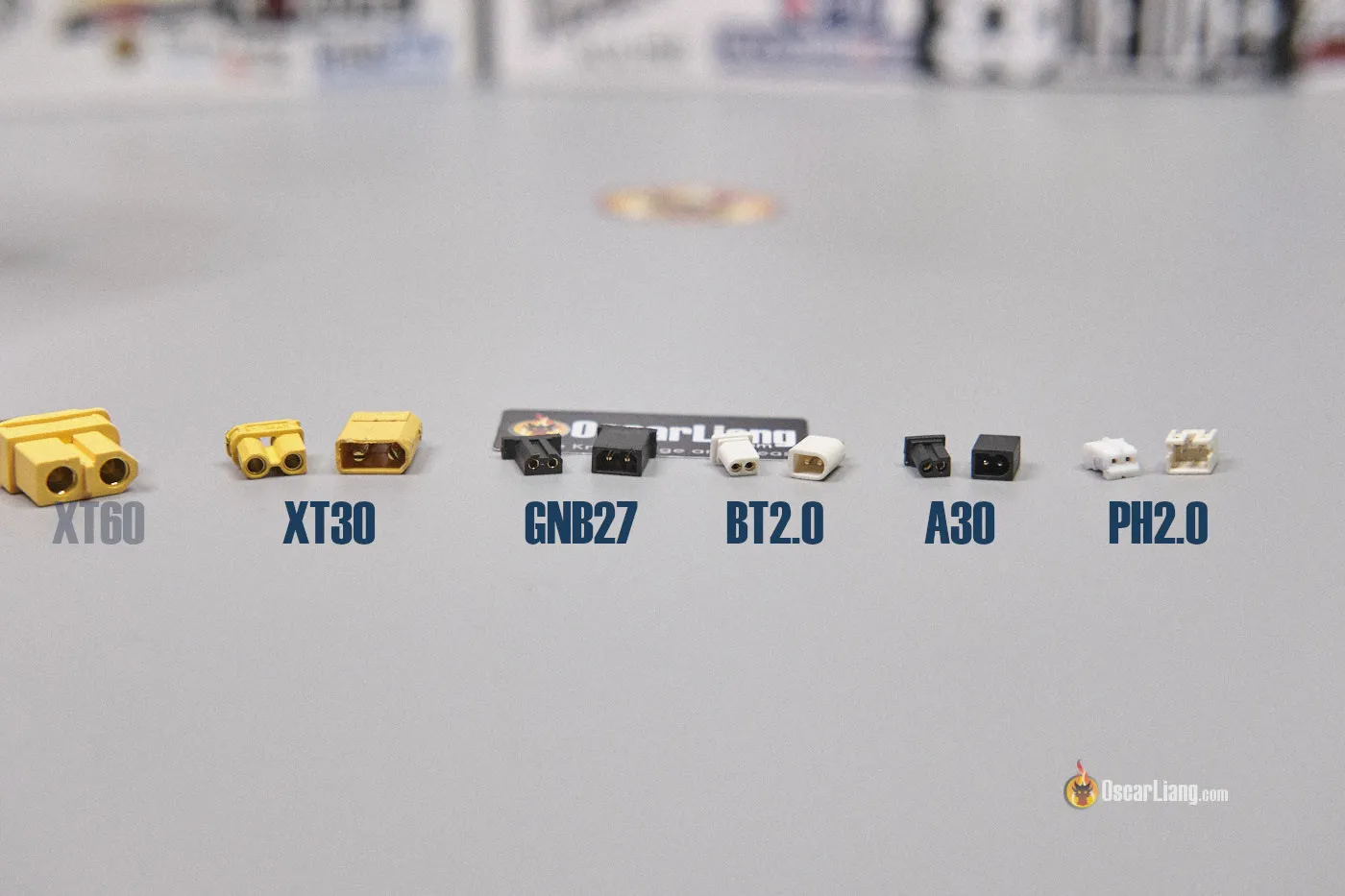
By choosing the appropriate connector based on your drone’s specific needs, you can ensure that your drone operates safely and efficiently.
Where to Buy LiPo Battery Connectors
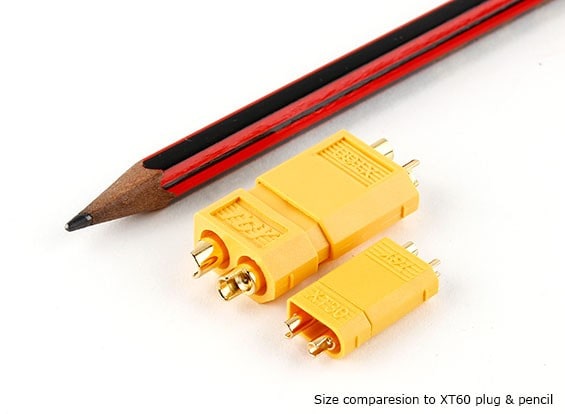
Two of the most popular battery connectors used in FPV drones are the XT60 and XT30 connectors. These connectors share the same design but come in different sizes and are rated for different maximum currents. According to the official datasheet, the XT60 connector is rated for a maximum current of 60 amps, while the XT30 connector is rated for a maximum current of 30 amps. These ratings are designed to ensure safe operation of the connectors under specific conditions.
However, recent test has shown that the XT30 connector can actually support a much higher continuous current of up to 60 amps without any problems, as long as the wires connected to it are large enough. This means that you can safely use an XT30 connector for applications that require higher currents, as long as you follow the appropriate safety precautions.
On the other hand, the XT60 connector has also been put to the test, and it has been found that it can safely handle burst currents of up to 180 amps for 10 seconds without any problems. This makes it a reliable choice for a typical FPV drones without the need to upgrade to heavier and bulkier connectors.
XT60 Connectors
XT60 14AWG Pigtail
Comes with wires soldered on.
XT30 Connectors
XT30 16AWG Pigtail
Comes with wires soldered on.
Tips for Using Wires and Connectors
What Gauge Wires for Extending Capacitor?

When extending a capacitor in your FPV drone, the recommended wire gauge will depend on the size of the capacitor and the amount of current it will be handling. But in general, the length of the wires are more important than the wire gauge.
For smaller capacitors (under 1000uF), you can use thinner wires such as 18AWG or 20AWG (like the motor wires). For larger capacitors (over 1000uF), it’s best to use thicker wires such as 16AWG. It’s important to keep the wire as short as possible to minimize resistance.
You can learn more about why and how to add capacitor in your drone in this article.
Soldering Techniques

Proper soldering techniques are important for creating strong, reliable electrical connections in your drone. Techniques for soldering wires and connectors include tinning, splicing, and using heat shrink tubing to protect the connection. It is important to avoid common soldering mistakes such as overheating the wire, creating cold joints, or using too much solder.
You can learn about how to solder wires and connectors in this tutorial.
Proper Cable Management

When routing wires in your drone, it’s important to keep them as short as possible to reduce the risk of interference and voltage drops. If the wires are too long, you can twist them to keep them neat and tidy, which also help against interference.
When connecting wires and components, ensure that they are securely fastened and will not come loose during flight. Loose wires can cause significant damage to your drone during flight and potentially lead to a crash.
It’s also important to avoid resting cables on top of the flight controller, apart from potentially causing interference, it could also be hitting the gyro which affect flight performance. Instead, try to route cables underneath or around the FC.
Finally, to help prevent damage to your battery lead solder joints during crashes, it’s recommended to secure the battery lead to the frame using zip ties. This provides stress relief and prevents pulling the solder joints during a crash.
More Info and Discussion
We have a similar topics on the forum if you’d like to learn more about this subject and like to comment.
Edit History
- May 2014 – Article created
- Apr 2017 – Article revised
- Nov 2017 – Added product shopping options
- Mar 2023 – Updated guide, added “Tips” section, updated product links, changed page URL
- Sep 2026 – Updated product links


