While PetaPixel already covered the big-picture information from Fujifilm’s latest financial results, including that the company’s Imaging business is a huge moneymaker, there is another part of the company’s results well worth discussing: the impact of increased memory prices on expected operational costs and what Fujifilm plans to do about it.
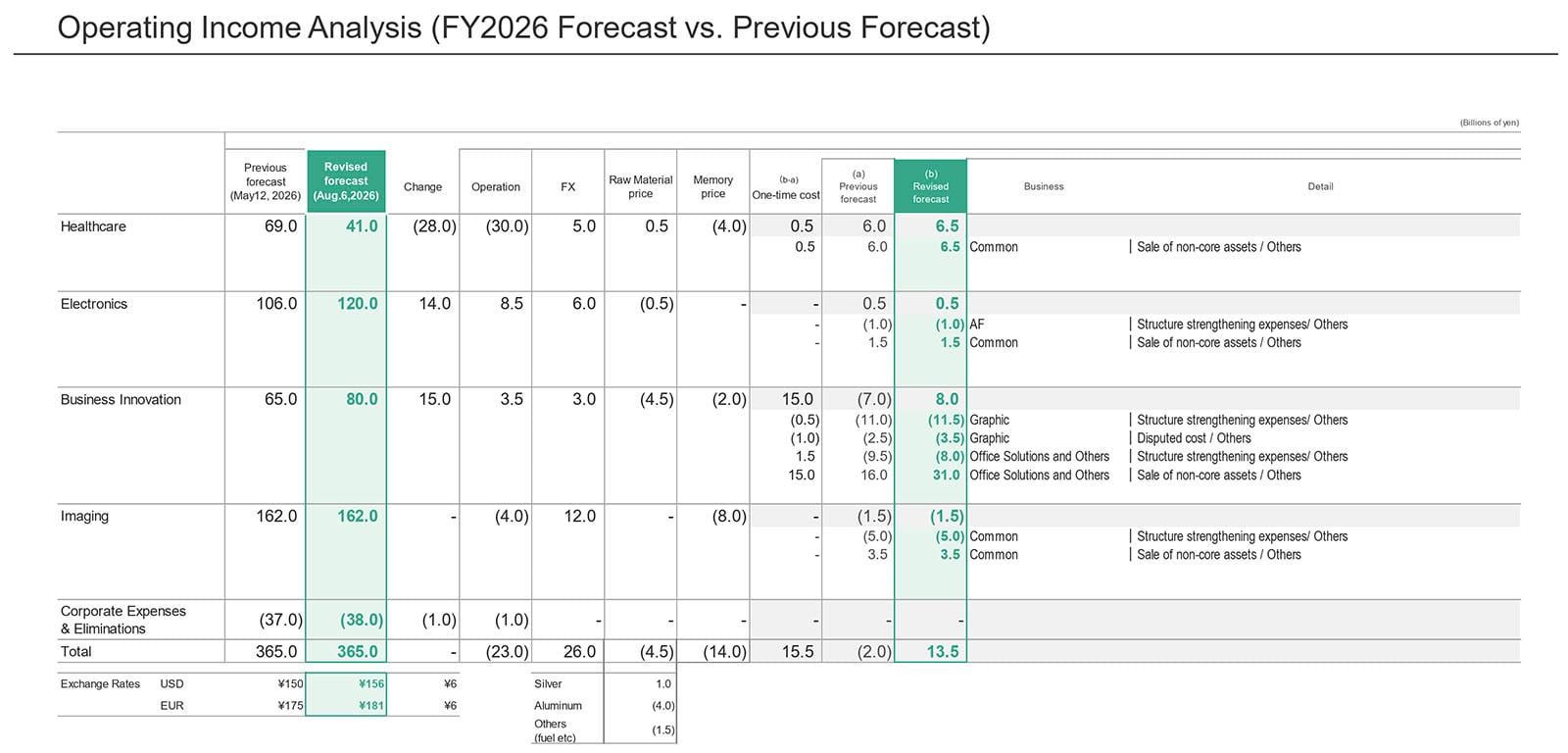
Fujifilm mentioned the impact of rising raw materials prices when discussing its revenue and operating income for the first quarter of its fiscal year ending March 31, 2027. However, the company’s full presentation offers more detail about what that actually means. Compared to its previous forecast for this fiscal year, released on May 12, 2026, Fujifilm has significantly revised its cost projections. While Fujifilm’s operating income projections have not wavered from 365 billion yen ($2.29 billion) across all segments for the entire fiscal year, precisely how the company will get there has changed quite a bit.
In the Imaging division, which Fujifilm expects to contribute 162 billion yen of the company’s total operating income, the highest amount of any of the company’s four primary business segments, it is quite bearish about the costs of running this business. Fujifilm has increased its forecasted memory price cost projections by 14 billion yen (nearly $88 million) for this fiscal year, and the Imaging division alone accounts for eight billion yen (just over $50 million) of that cost revision.
While much ink has been spilled about the memory crisis, especially as it relates to memory card and storage products, its impact has not yet been particularly felt in the camera space. But it will be. Cameras rely on these same chips that are exorbitantly pricier today than they were last year, thanks mostly to AI data centers.
Fujifilm’s cost breakdown offers unique insight into a potential reckoning in the digital camera space, but make no mistake, increased memory prices will affect everyone, not just Fujifilm.
All else equal, increased production costs have two potential consequences. The first is that a company makes less profit, since costs increase without an accompanying revenue bump. The second, much more palatable option for most companies, is to pass some or all of its increased costs directly to consumers. This is what most camera companies did last year when dealing with US tariff policy, which makes perfect sense.
This latter route appears to be the one Fujifilm is more comfortable taking. In its financial results, Fujifilm specifically writes that it will “Minimize the impact of rising prices through pricing measures and the procurement of alternative materials and components” in response to what it describes as “recent increases in semiconductor memory and IT-related component prices.”
While there’s little doubt Fujifilm will try its best to acquire affordable memory components, “pricing measures” is a more reliable, simpler solution to rising costs. Fujifilm has not fully detailed all the expected price increases, but Fujifilm Germany detailed a bunch of them late last month. In that region, camera prices are increasing by 5.3 to 11.1 percent across the board, which is up to 500 euros. While pricing measures will likely vary by individual market, there is no question that German photographers won’t be the only ones affected.
It is probably fair to guess that the pricing increases related to Donald Trump’s tariffs that already hit U.S. customers last year won’t be rescinded, as while those have been ruled illegal, those prices now appropriately offset the increased costs of production that the memory shortage is inflicting.

Although Fujifilm has thus far been the most open about specifically how increased memory prices are expected to impact its business, other companies are sounding alarm bells, too, albeit more generally.
Canon mentioned “higher costs resulting from rise in memory prices” in its latest financial results release. Nikon said it has experienced “higher memory prices” that kept its operating profit “flat” despite increased sales and US tariff refunds. Sony noted that the “impact of increase in memory costs” hurt its Imaging and Displays businesses this past quarter.
Photographers, many of whom were exhausted by the seemingly unending tariff-induced price increases last year, must unfortunately brace themselves for the impact of memory prices. They are coming.
Worse yet, it is not inconceivable that the memory crisis will prevent some new cameras from being released on time or being readily available. With the memory supply as constrained as it is, with no relief in sight, many different companies are bidding for the same small pool of chips. This sends prices skyrocketing, and it is not always possible to increase a product price enough to absorb this without making it undesirable to the market. The memory price problems could particularly harm entry-level and mid-range cameras, as these are particularly sensitive to price increases.
There are still many unknowns, but when every camera company is expressing the same concern, and Fujifilm specifically says it expects to spend an extra $50 million to source memory components for its Imaging products this year, there is plenty of reason to worry.
Image creditsFujifilm
Affiliate Disclosure PetaPixel articles may include affiliate links; we may earn a commission if you buy through one.


