I came across GoPro’s Q2 2026 results before any of the MISSION 1 PRO ILS launch coverage, and what I’d taken from the report stayed with me as I read through the launch material. Revenue came in at $105 million, down 31% year over year.
Pre-orders for the MISSION 1 PRO ILS opened August 26 at $699.99, four months after GoPro‘s board authorized a process to evaluate selling the company. Shipping a third camera into a series while your board shops you around takes nerve. GoPro’s own product page leads with a creator testimonial saying the company “has built something entirely new here,” and the marketing line happens to be accurate.
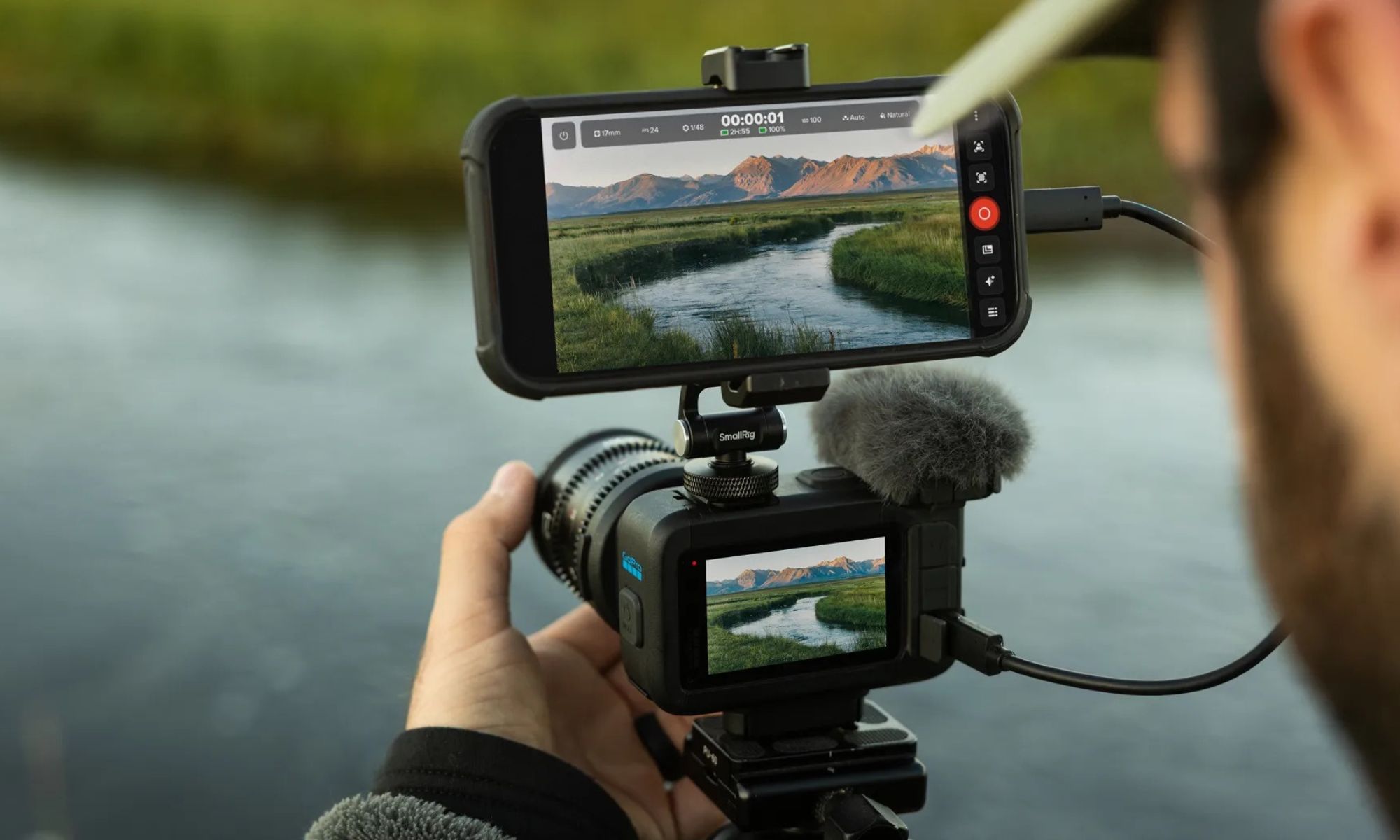
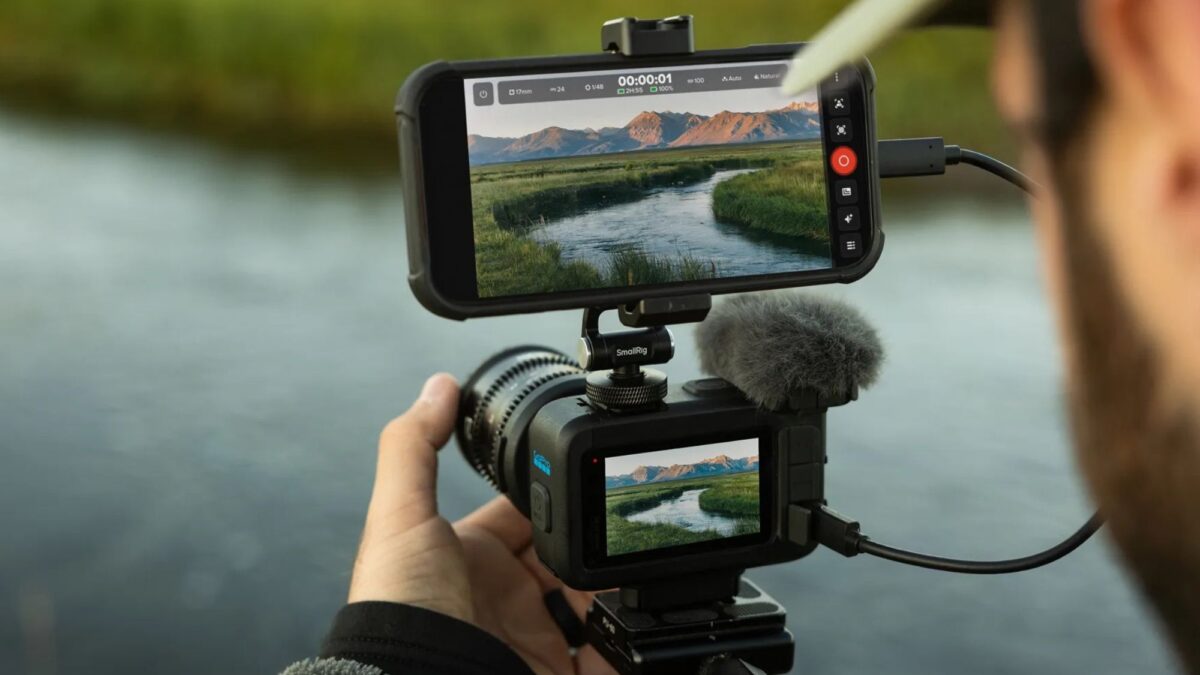
The pitch is small and odd. A 197g weatherproof body carrying a Micro Four Thirds mount, a 50 MP 1-inch sensor, 8K60 video, and no electronic contacts anywhere in that mount. Manual focus, manual aperture, nothing else.
The Reddit clips sold me
Two clips out of r/gopro did more work on me than the entire feature list. One was a Burst Slo-Mo reel at 960 FPS, and the frame I keep returning to is a jet of water coming apart into separate beads over dark leaves. A dragonfly lifting off a blade of grass. Two blue-spotted eggflies tumbling against a concrete wall with their wings at full stretch.
Burst Slo-Mo caps out at 10-second 1080p clips, but 32x slow motion changes what handheld footage can get away with. The reel was shot handheld with HyperSmooth off. At 3% speed, there was little left for stabilization to fix. Canon’s EOS C50 reaches 180 FPS, but only in its cropped 2K mode.
An oak titmouse arrives at the nest box with a grub in its beak and disappears inside. The camera stays in one spot with the focus locked, while the recording starts over Bluetooth from across the yard. It was shot in 4K240 with a Brightin Star 50 mm f/1.8. With a bird moving in and out of a dark nest box, autofocus would have had a hard time keeping up.
Macro is where I’d point the ILS. Precision optics reward patience more than automation when you’re working at a fixed distance with something the size of a fingernail.
Laowa’s 50 mm T2.9 Macro APO for MFT reaches 2x magnification. Bolt that to a body you can leave out in wet grass.
Where I’d hold off
The lens situation bothers me more than GoPro’s launch material suggests. There are no electronic contacts, so Panasonic and Olympus lenses with electronic focus lose a lot of their usefulness. If you’ve already built up a Lumix kit, that’s a nasty limitation.
Burst Slo-Mo comes with a pretty narrow ceiling. You’re looking at 8-bit footage and 10-second clips, with no GP-Log2 to give you more room in post.
HyperSmooth is another question mark once you move past GoPro’s tested setup. 5 fisheye lenses have profiles, while rectilinear lenses have only been tested to 50mm. I’d think twice before pairing it with anything longer.
The 3x crop factor doesn’t help either. A 17 mm lens becomes a 51 mm equivalent.
Who should buy the MISSION 1 PRO ILS
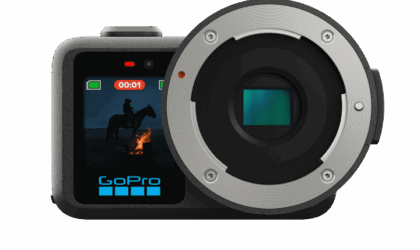
Anyone sitting on a shelf of vintage manual lenses and adapters has the strongest case, since the ILS removes the reason that glass stayed in a drawer. Wildlife and macro shooters working from fixed positions come next. Then rig operators, the people bolting cameras to cable cams and car footwells where a $2,000 body would be an act of faith. Nobody buying a first camera belongs anywhere near it.
My take for now
Don’t get me wrong, I like the camera… but the timing is strange. GoPro just posted a $51 million net loss while its board searches for a buyer, yet it has come out with the most interesting camera I’ve seen from the company. A 69% subscriber attach rate suggests the remaining customers aren’t going anywhere.
The 960 FPS footage is what I need to see. At f/8, where those insect shots need to live, the sensor has nowhere to hide.
Grigor Baklajyan is a copywriter covering technology at Gadget Flow. His contributions include product reviews, buying guides, how-to articles, and more.


