Real-time data streaming and event processing are critical components of modern distributed systems architectures. Apache Kafka has emerged as a leading platform for building real-time data pipelines and enabling asynchronous communication between microservices and applications. However, running and managing Kafka clusters at scale can be challenging, requiring specialized expertise and significant operational overhead.
Amazon Managed Streaming for Apache Kafka (Amazon MSK) is a fully managed service that you can use to build and run production Kafka applications. With Amazon MSK, you can rely on AWS to handle the heavy lifting of provisioning and managing Kafka clusters, while you focus on building innovative applications and real-time data processing pipelines.
In this post, you learn how AppFolio adopted Amazon MSK Express brokers to replace hours-long rebalances and manual storage planning with a streaming platform that scales automatically.
About AppFolio and its data streaming platform
AppFolio is a leading Real Estate Performance Management platform, serving thousands of property management companies across the United States. AppFolio’s platform processes millions of transactions daily, from rent collection and maintenance requests to lease management and financial reporting. In this data-intensive environment, reliable streaming infrastructure isn’t only important. It’s mission-critical.
At AppFolio, real-time data is the foundation of the company’s ability to deliver powerful, intelligent solutions that power the real estate industry. To achieve this level of performance, AppFolio engineered a modern streaming data architecture built on Amazon MSK with Express brokers. This infrastructure enables high-throughput, real-time applications at scale. With Amazon MSK Express brokers, AppFolio reliably ingests massive volumes of diverse data, including Change Data Capture (CDC) and server-side events, and makes it available to downstream consumers, such as real-time fraud detection, financial reporting, and automated property management workflows, within seconds of origin.
Previous architecture and AppFolio’s evolving requirements
Until early 2025, AppFolio ran their streaming platform on a single Amazon MSK cluster with Standard brokers, supporting both customer-facing and internal workloads. The architecture served them well through earlier growth phases. As AppFolio’s data platform evolved to support increasingly complex use cases and higher throughput, two characteristics of their workload led them to look for a more elastic streaming foundation.
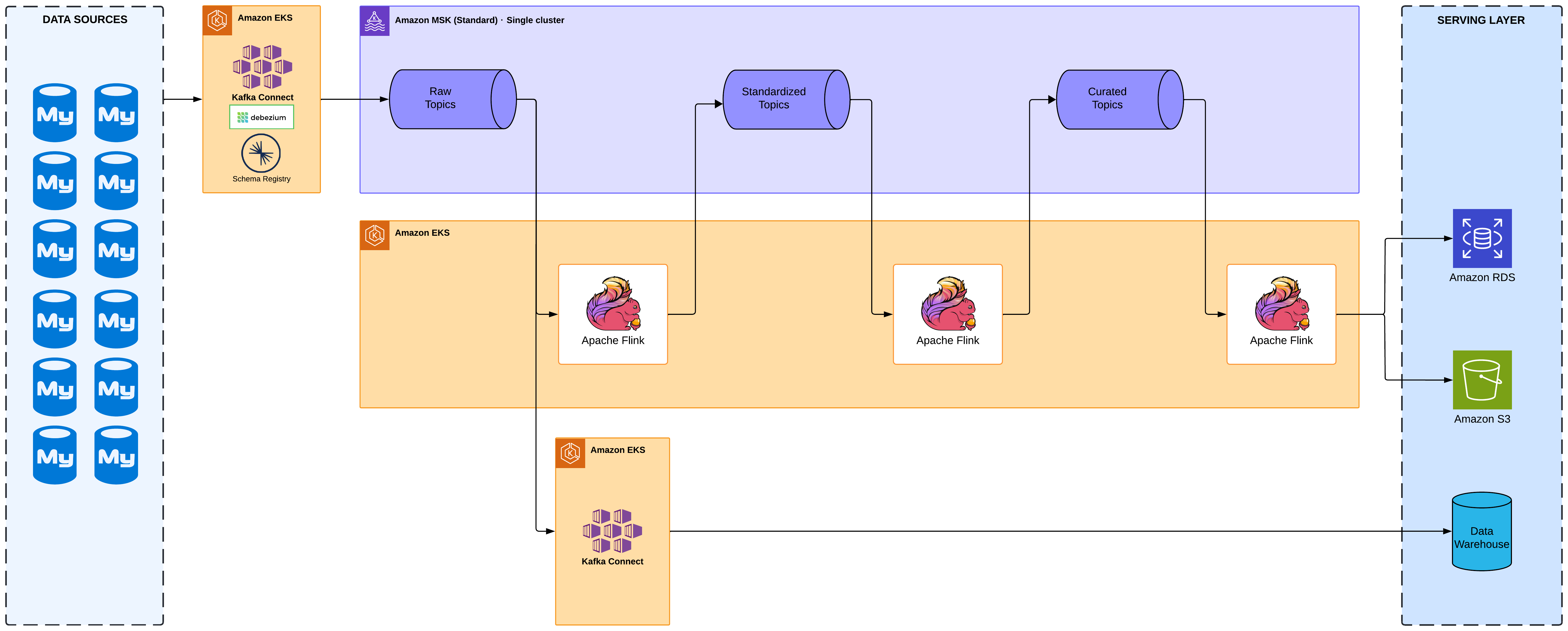
Figure 1: AppFolio’s previous architecture with Amazon MSK Standard brokers
First, AppFolio makes extensive use of log-compacted topics for their CDC streams. Compacted topics retain the latest value for each key indefinitely, which is exactly what they want for streams that mirror the state of operational tables. As their footprint grew, AppFolio wanted an infrastructure model that could scale storage automatically alongside data growth, without ongoing capacity planning that took multiple hours every month.
Second, AppFolio’s throughput continued to grow as they onboarded new use cases and added more event sources. They wanted the ability to scale the cluster quickly in response to traffic shifts, with minimal lead time for partition reassignments.
Third, as AppFolio’s platform matured, they needed workload isolation between customer-facing and internal data flows. Running customer-facing and internal workloads on a single cluster made it harder to size and tune each independently. As both grew, AppFolio wanted dedicated resources so each could be sized and tuned independently.
Based on these needs, AppFolio identified the following key requirements for their next-generation streaming platform:
- Elastic, automatically managed storage that scales with AppFolio compaction-heavy CDC workloads, removing the need for upfront broker capacity planning.
- Faster horizontal scaling and partition reassignment so AppFolio can adjust cluster shape in response to actual traffic in minutes rather than hours.
- Workload isolation between customer-facing and internal data flows, so each workload can be sized and tuned for its own traffic pattern.
Why AppFolio chose Amazon MSK Express brokers
After evaluating their options, AppFolio chose Amazon MSK Express brokers as the foundation for their next-generation streaming platform. Express brokers are a broker type offered under MSK Provisioned. They include pay-as-you-go elastic storage that scales automatically, intelligent partition rebalancing, and Kafka configuration defaults tuned for production workloads. Express brokers mapped directly to the requirements AppFolio identified:
- Elastic storage that scales with their data. Express brokers remove broker disk sizing and provisioning, with storage scaling automatically alongside data growth. AppFolio pays only for the storage actually used.
- AWS benchmarks showed up to 20 times faster scaling. Horizontal scaling and partition reassignment that previously took hours now complete in minutes, letting AppFolio react to traffic shifts on a much shorter cycle.
- Production-tuned defaults. Express brokers come pre-configured with Kafka best-practice defaults and built-in client throughput quotas, simplifying AppFolio’s operational model.
- Full Kafka API compatibility. AppFolio was able to migrate without changes to its producer and consumer applications.
As part of the migration, AppFolio also took the opportunity to rethink how the cluster was being used. Rather than recreating a single shared cluster on Express brokers, they segmented their MSK clusters by workload type. This gives customer-facing and internal workloads dedicated resources, providing better isolation and more predictable performance for each workload class.
Current architecture
AppFolio’s current architecture consists of multiple Amazon MSK clusters with Express brokers, segmented by workload type. Each cluster is sized and tuned for its specific traffic pattern, providing improved isolation and more predictable performance. The following diagram shows the deployment.
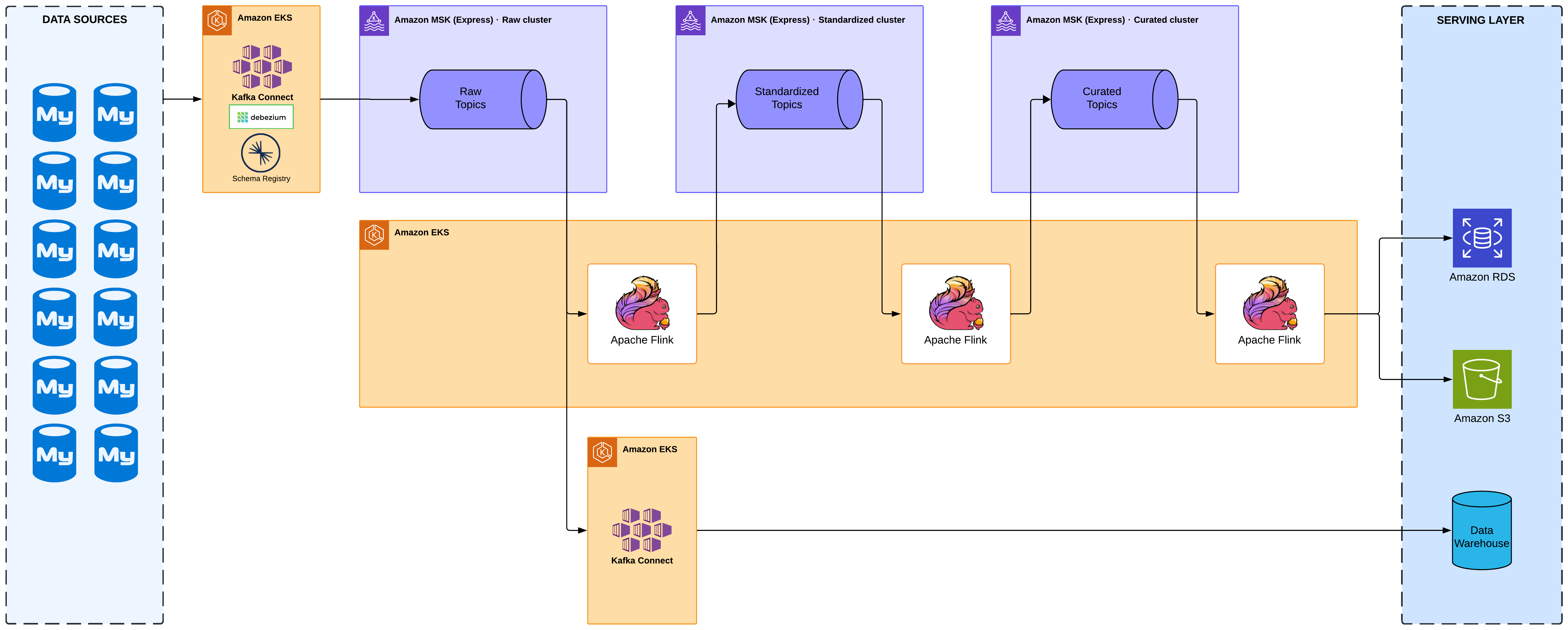
Figure 2: Current architecture with workload-segmented Amazon MSK clusters using Express brokers
Benefits achieved
By migrating to Amazon MSK Express brokers and adopting a workload-segmented cluster design, AppFolio has realized several key benefits:
Elastic, hands-off storage
The pay-as-you-go storage of Express brokers scales automatically with AppFolio’s data growth. Storage capacity is no longer something the platform team plans, provisions, or monitors, and AppFolio pays only for what they use. For a workload that runs heavily on compacted topics, this is the single largest operational improvement they have seen.
Faster scaling
Partition reassignment and broker scaling that previously took hours now complete in minutes, enabling AppFolio to adjust cluster shape in response to actual traffic instead of running ahead of forecasts.
Improved workload isolation
Splitting their streaming traffic into workload-segmented clusters has given AppFolio more predictable performance. Customer-facing and internal workloads now run on dedicated infrastructure, and each cluster can be sized and tuned for its own traffic pattern.
Stable environment as data volumes grow
Since the migration, AppFolio has maintained a stable environment with no significant downtime, even as data volumes continue to grow.
Reduced operational overhead
Hands-off storage management and intelligent rebalancing have removed several recurring tasks from the AppFolio platform team’s queue, including the constant monitoring and manual intervention that storage planning required under their previous architecture.
Conclusion
By using Amazon MSK Express brokers and adopting a workload-segmented cluster design, AppFolio has built a streaming foundation that scales elastically with their data growth and adapts quickly to changes in traffic. The pay-as-you-go storage and faster scaling of Express brokers let AppFolio’s platform team focus engineering effort on building new capabilities for customers, rather than on Kafka capacity planning. As AppFolio continues to expand its platform for the real estate industry, the Amazon MSK Express brokers infrastructure provides a scalable foundation for future growth.
To learn more about Express brokers for Amazon MSK, see the Express brokers for Amazon MSK documentation and the AWS announcement post Introducing Express brokers for Amazon MSK.
About the authors


