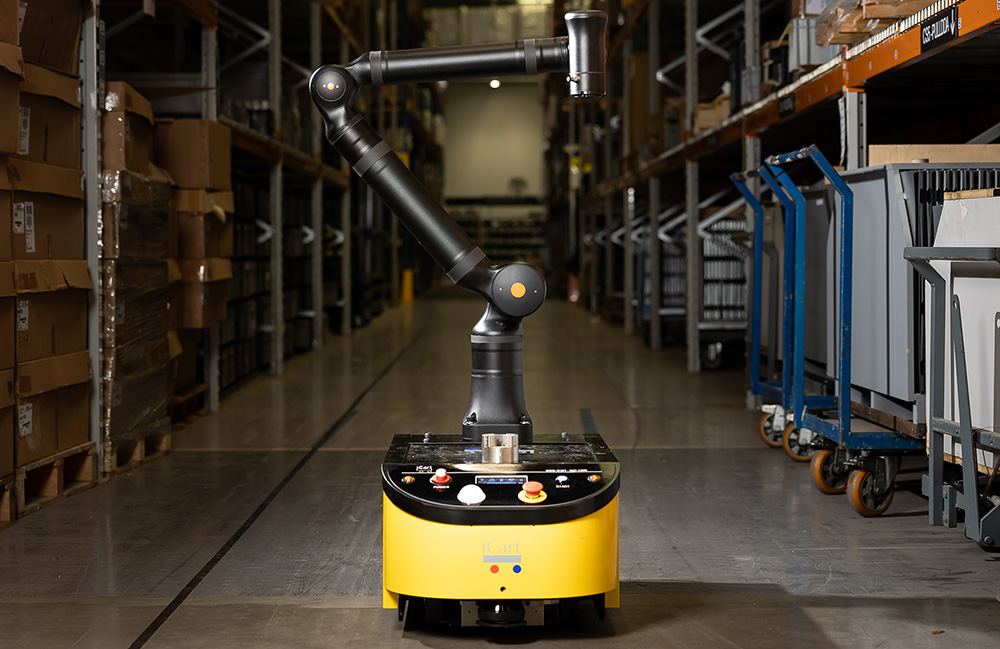
Kassow said its cobots can reach difficult-to-access areas, handle heavier objects, and perform demanding tasks with accuracy. | Source: Kassow Robots
The increasing automation of warehouse pick-and-place, palletizing, and machine-tending tasks has introduced new technologies. Robotics and automation have drastically changed operations as productivity needs and labor shortages impact the industry. Workers are interacting with autonomous mobile robots and collaborative robots, or cobots, integrated into mobile manipulators.
Cobots are quickly shaping the future of warehousing, with their use rising tenfold from 2018 to 2025. Some seven-axis models of force- and power-limited arms are gaining popularity because they can be mounted on AMRs, enabling a greater range of motion and access into harder-to-reach areas.
Cobots offer numerous precision-enhancing capabilities across industrial environments, improving repetitive tasks such as picking, assembly, screwing, labeling, and welding, while helping to address ongoing labor challenges.
Integrating these capabilities onto AMRs extends these benefits across the facility to streamline workflows and improve precision. This reduces the need for multiple cobot and industrial robot arm stations, reducing the number of manual and repetitive touchpoints for workers.
Such integration includes loading or offloading materials and driving carts from station to station—tasks that a mobile manipulator can handle more easily.
Cobots are designed for flexibility and precision
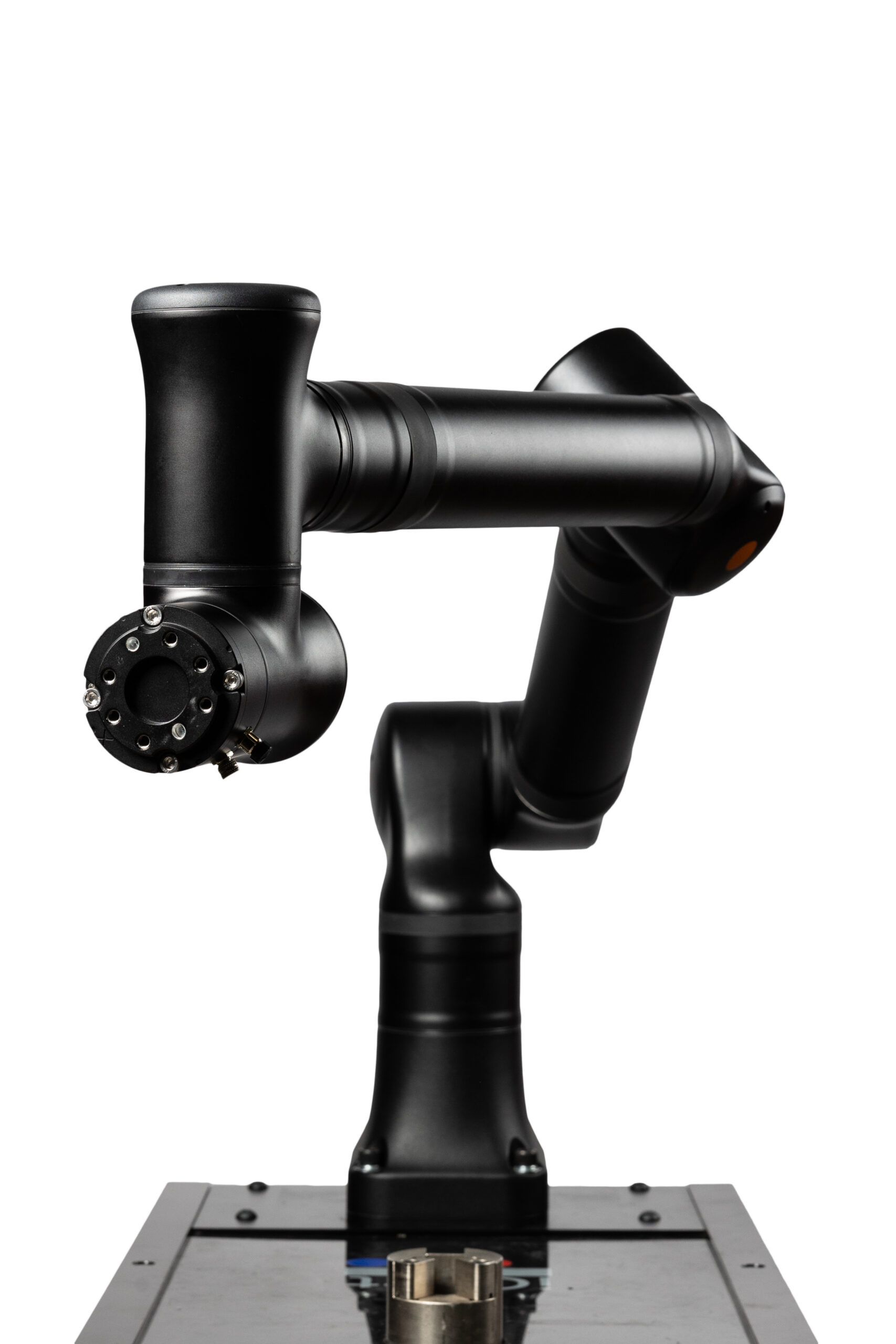
Kassow’s robots have an integrated backdrive to facilitate positioning and programming. | Source: Kassow Robots
Some industrial operations are replacing cobots with seven-axis cobot arms mounted on AMRs, providing a better range of motion and a more optimized workspace. These robots provide adequate force while reaching under and around obstacles more effectively, while working closer to the base of the robot, an area where six-axis arms are limited.
This flexibility allows the system to complete more work with greater accuracy and in more orientations.
Previously, making cobots mobile had one large unknown outlier—the controller. Static cobot arms require a large controller to be in a nearby cabinet.
What makes next-generation cobots on AMRs special is that the controller can be built into the arm within a slim base on the robot, eliminating the need for the control cabinet.
In addition, such cobots can run directly off of the AMRs’ batteries, allowing for a more compact solution, improving functionality and its footprint around a facility.
Consider infrastructure and workers
Staffers in production environments have long been taught to follow extensive safety protocols when working near or interacting with large industrial robots. This same safety dynamic does not transfer to more compact mobile solutions, since collaboration and engagement are more encouraged.
This is in part because high speed is not the main function of the technology compared with the common roles of industrial robots. This makes daily worker interaction easier and safer, as integrated cobots and AMRs need fewer precautions. However, workcells, workpieces, and processes still require safety assessements.
As AMRs operate in facilities, workers should be aware that the robots have priority when crossing high-traffic areas to ensure they are getting to their desired locations easily with little to no bottlenecks.
Some physical infrastructure barriers are less of a concern today than when autonomous guided vehicles (AGVs) were first introduced into warehouses. AGVs required more infrastructure to guide movements such as changing lanes. Magnetic or lead tape provided physical mapping, and safety sensors were eventually required to better detect people and surroundings.
AMRs don’t need a physical guide and typically use built-in lidar for enhanced maneuvering. This autonomous mobility, in tandem with flexible, seven-axis cobots, can make material handling more efficient. Recent examples of mobile manipulators include Brightpick’s Autopicker, Mantis Robotics’ new system, and Locus Array.
AMR cobot adoption
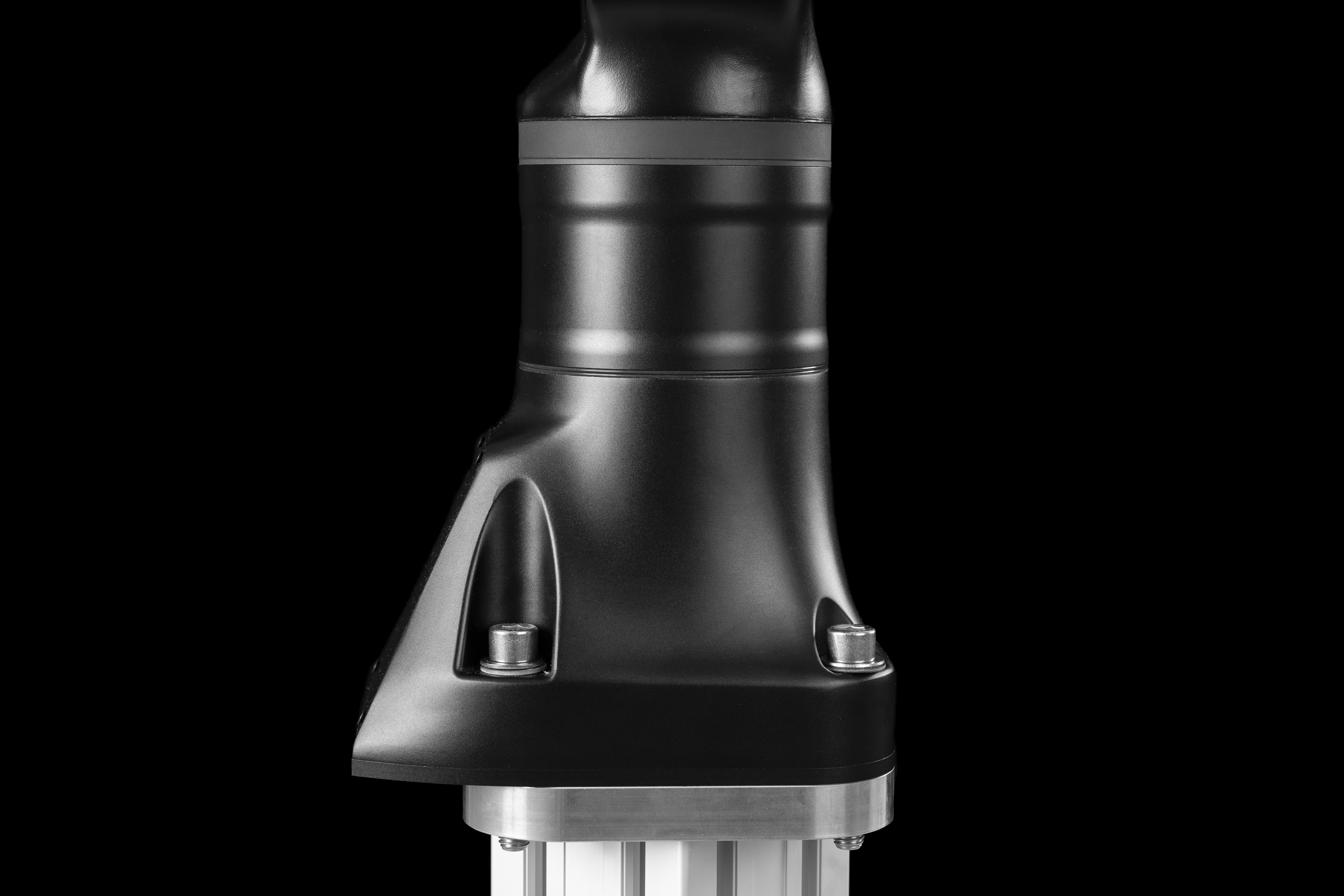
Kassow’s cobots feature a small base for use in tight spaces. | Source: Kassow Robots
Adoption of warehouse automation has been steadily increasing for years, despite some skepticism around the pricing, integration, and return on investment of robotics. However, cobots plus AMRs equals a cost-effective solution for repetitive, manual tasks and can free workers’ time for more complex tasks, as labor shortages continue to affect warehouses.
Working alongside robots has been shown to improve job satisfaction at work by reducing physical strain and injury, which, over time, can help reduce high turnover rates. One study from the International Federation of Robotics (IFR) reported that robotics can improve warehouse competitiveness through quality enhancement. Another report from Exotec found that 98% of workers said automation makes them more productive.
Cohesive work requires a delicate balance between human workers and emerging technologies such as mobile manipulators and humanoid robots. As they evaluate further investments in automation, decision makers should should evaluate how seven-axis cobot-AMR integration could benefit their operations while still supporting skilled workers.
As long as repetitive tasks and productivity are the main priorities in warehousing, cobots integrated into AMRs can improves productivity and protect workers’ well-being.
 Submit your session idea for the 2026 RoboBusiness
About the author
 Chris Hapsias is an application engineer at Kassow Robots. The Copenhagen-based company develops and manufactures efficient and lightweight robots for industrial applications.
Despite their extensive reach, these cobots are not only extremely strong and fast, but they can also be deployed in the tightest of spaces, thanks to the maneuverability afforded by the seventh axis, said Kassow.
The post How compact cobot integration enhances autonomous mobile robot applications appeared first on The Robot Report.


