11
Motorola Solutions argues that 5G has become a valuable connectivity layer for utilities, public safety and industry, but mission-critical operations still depend on resilient LMR networks, with broadband technologies serving as complementary rather than replacement infrastructure.
It’s been seven years since 5G cellular network technology was first formally rolled out across South Korea.
Those who remember the introduction of 4G recall that most of its early years were mired in bandwidth reallocation and an ongoing LTE period that didn’t quite deliver the full intended experience. But despite the head start 5G has over its predecessor, it only accounts for one-third of all mobile subscriptions.
With 6G on the horizon, leaders are busily assessing the value of 5G for utility and public safety networks. To the public, it’s a matter of convenience, but for certain industries, it’s a crucial layer of connectivity across dead zones, remote sites and mobile assets.
Defining “mission-critical”
Despite 5G’s expanded bandwidth, which suggests it can enable the transmission of voice, video and data from each party in the workflow, it’s not expected to do this at all times. Instead, 5G sits as a supporting layer within these workflows, expanding who can connect and where they can connect from.
Operations leaders aren’t in the habit of fully investing in a singular means of connection. Telecom and tech experts frequently debate the value of “broadband vs. radio,” and while the difference in specs can be interesting, it’s not conclusive enough to wholly rely on one or the other in a practical setting.
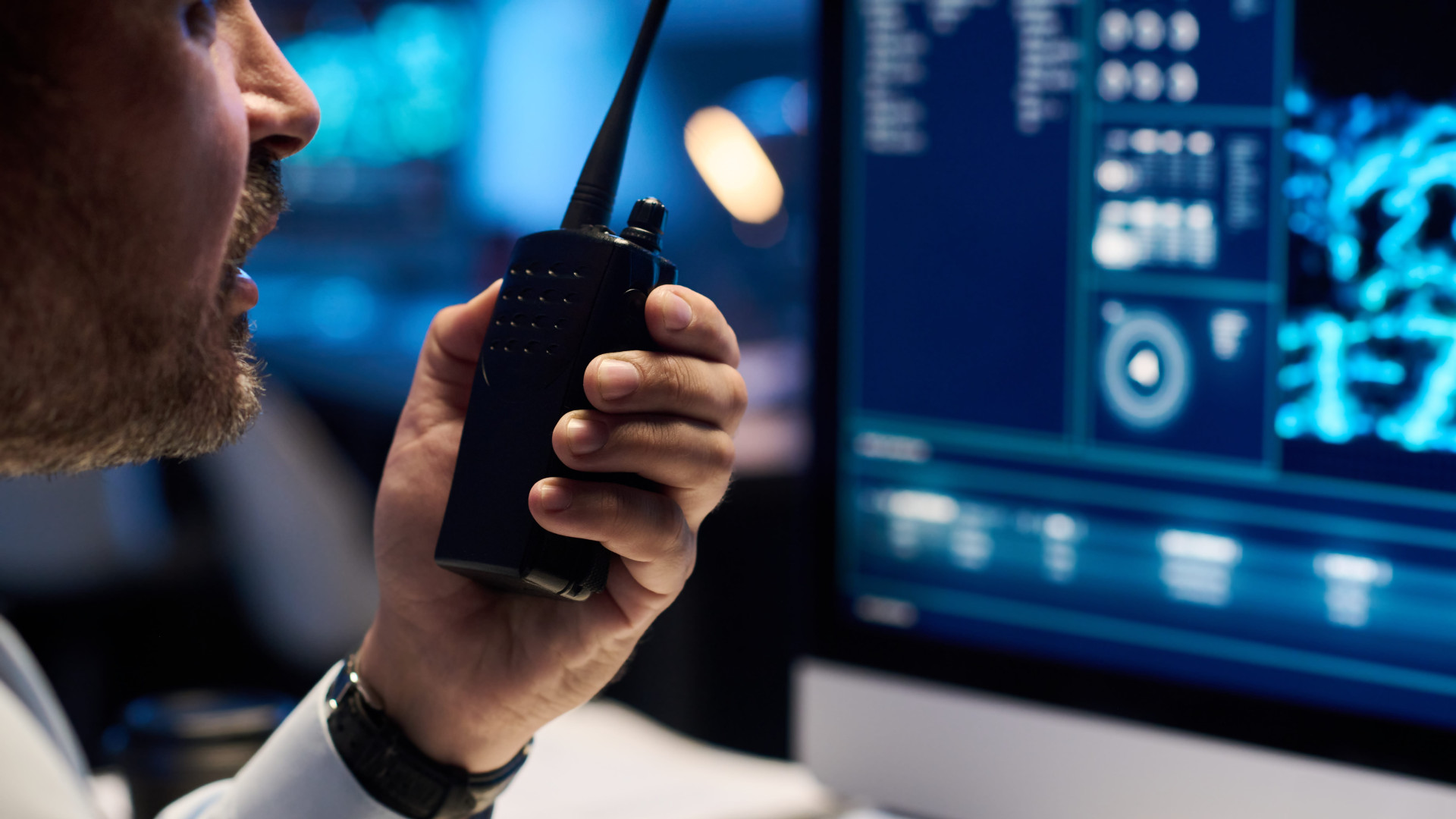
True mission-critical communication demands a standard that public broadband networks, including 5G, have yet to consistently meet. LMR infrastructure is purpose-built for availability. Sites are hardened against the conditions most likely to trigger an emergency, networks maintain multiple fallback modes and redundant components and spectrum is dedicated. This guarantees capacity in ways that public carriers cannot.
When wildfires sweep through California or Hawaii, or hurricanes make landfall in Florida, LMR sites continue operating while commercial cell infrastructure fails and can take weeks to restore.
While two-way radio has historically been optimized for instant voice communication – the foundational layer of situational awareness – modern radio systems increasingly support data integration, working alongside broadband to deliver broader operational context across the response workflow. Images, video, maps and diagnostic updates may not be relevant to the initial contact, when an incident is first discovered and relayed, but they provide essential context to help deliver a more targeted response during later stages.
In this regard, 5G and other broadband technologies, including 4G and LEO connectivity, are valuable additions to the operational ecosystem. They are not replacements for mission-critical LMR networks, but they can serve as capable complementary layers that expand what teams can do and where they can do it.
5G in the field
5G is primarily used to connect distributed assets, a common necessity for utility, public safety and manufacturing sectors. Command points need real-time updates from isolated workers, but they can also either employ drones and security equipment or monitor the asset’s performance via broadband-connected systems.
In the event of an outage, 5G can serve as a supplementary facilitator of operations – though it’s worth noting that broadband infrastructure is often affected by the same phenomena that caused the outage in the first place, whether severe weather, power line failure or intentional sabotage. This is precisely why LMR remains the backbone of mission-critical response rather than a fallback.
The popularity of 5G is growing considerably in certain areas, particularly in industrial environments. But connectivity in rural areas, such as those utilized by power companies and small-town emergency service providers, is not yet standardized, reinforcing the continued importance of resilient LMR coverage in areas where public networks remain thin.
Overall, operations leaders should focus on 5G’s practical performance rather than its promised speed. Consistency, coverage and interoperability are essential in any communication tool, and what matters most is how 5G can improve these areas by working alongside existing systems.
Evaluation framework
Utilities, public safety and manufacturing already use 5G in many areas, and the modernization of infrastructure, both in the U.S. and globally, all but mandates some form of widely accessible internet. But before leaders try to expand the use of 5G to support workflows in areas where it isn’t required, they should focus on answering a set of specific operational questions:
– Which workflows are failing because they lack connectivity, and which ones are inconsistent due to a weak connection?
– Can a workflow function with only voice, or would data and video enhance its capabilities?
– Is the workflow mission-critical or merely business-critical?
– Is public 5G secure enough for a site, or does it require private 5G, LTE or a hybrid approach?
Installing 5G as a network project will inevitably force its use into workflows that may function fine without it, adding complexity to spaces where simplicity is operationally preferential. A more successful approach likely comes from a targeted redesign of communication pathways that suffer from inconsistent connectivity, as we have seen in the utility market and the manufacturing sector.
Link in a longer chain
We are far enough into 5G’s lifecycle to understand its practical uses and limitations, far beyond the speculative capabilities touted in the run-up to its launch. Leaders who see 5G as a solution to specific mission-critical workflow inefficiencies have seen much more promising results than those who view it as a holistic network upgrade.
Though we are in an age of unparalleled data, fueled by systemic integration, not every situation needs multimedia capabilities to function smoothly. Proven methods of communication – land mobile radio foremost among them, alongside widely distributed LTE – remain the mission-critical backbone, with 5G and emerging technologies like LEO serving as capable additions to the same ecosystem.
5G has earned its place in operational workflows. But mission-critical communication still demands the hardened infrastructure, dedicated spectrum and built-in resilience that LMR networks are specifically designed to provide.
Darrell Stogner is the director of strategic services at Motorola Solutions, where he specializes in technology management and innovation. A technical leader, he is a Motorola Scientific Advisory Board Associate, holds 25 patents and was awarded Patent of the Year in 2009 and 2015. Stogner also coauthored the TIA High Speed Data and ETSI Digital Mobile Radio industry standards.


