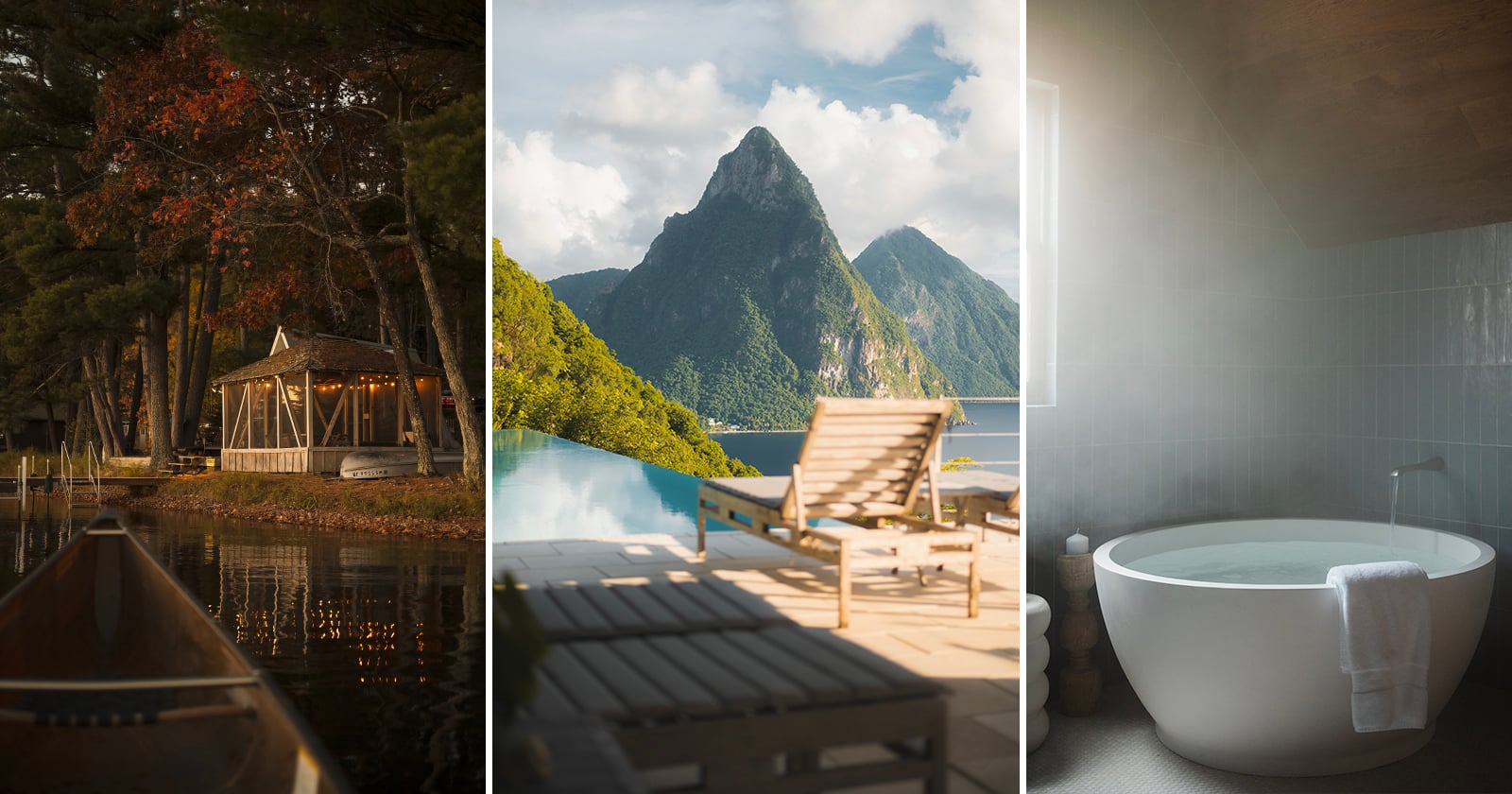
Jon Kreye has spent more than eight years photographing cabins, vacation rentals, hotels, and resorts around the world for major travel and lodging companies. In this exclusive PetaPixel interview, the award-winning photographer shares how his love of travel and unique places shaped his career, his approach to storytelling and light, and why staying true to his creative voice matters.
Curiosity Has Always Been the Foundation
Jon Kreye grew up in Minnesota, where lakes, cabins, road trips, and time outdoors were a regular part of life. Those experiences gave him an early appreciation for the places he now photographs professionally, but travel eventually expanded his perspective far beyond the Midwest.
His photography has taken him from Alaska to Switzerland and many destinations in between. For Kreye, being somewhere unfamiliar creates an opportunity to notice details that might otherwise disappear into the background.
“Outside of photography, I’m someone who is endlessly curious. I love traveling, exploring new places, meeting interesting people, old buildings, cabins, architecture, the outdoors, and learning the story behind why something exists or how someone ended up doing what they do,” Kreye says.
That curiosity is not limited to the visual qualities of a location. He is interested in the people, history, architecture, and circumstances that make a place worth experiencing. Photography became a natural way to investigate those interests while sharing his discoveries with others.
“I think curiosity is probably the common thread through all of it. I genuinely like discovering things, and photography became a way for me to share those discoveries with other people,” Kreye says.
Childhood Cabin Trips Became a Professional Specialty
Some of Kreye’s strongest connections to hospitality photography can be traced back to childhood. Family trips around Minnesota and Wisconsin introduced him to cabins and resorts that felt distinctly removed from everyday life. Those memories were not simply about the buildings themselves, but about what happened in and around them.
“I grew up in Minnesota, and so much of my life has revolved around lakes, cabins, road trips, and time outside. I’ve also been fortunate to travel quite a bit through photography, from Alaska
to Switzerland and a lot of places in between. Travel has probably shaped me creatively more than anything. Being somewhere unfamiliar forces you to pay attention. You notice the light
differently, the architecture, what people eat, how they live, the landscape, the little details you might overlook at home,” Kreye says.
As an adult, he became increasingly interested in finding unusual cabins and small resorts and photographing them. When vacation rentals began exploding across social media, he saw an emerging world of locations that aligned naturally with his existing interests.
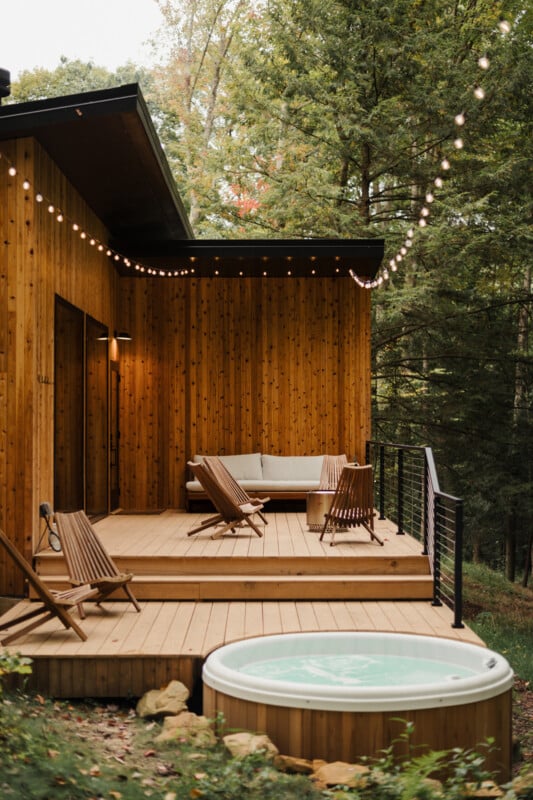
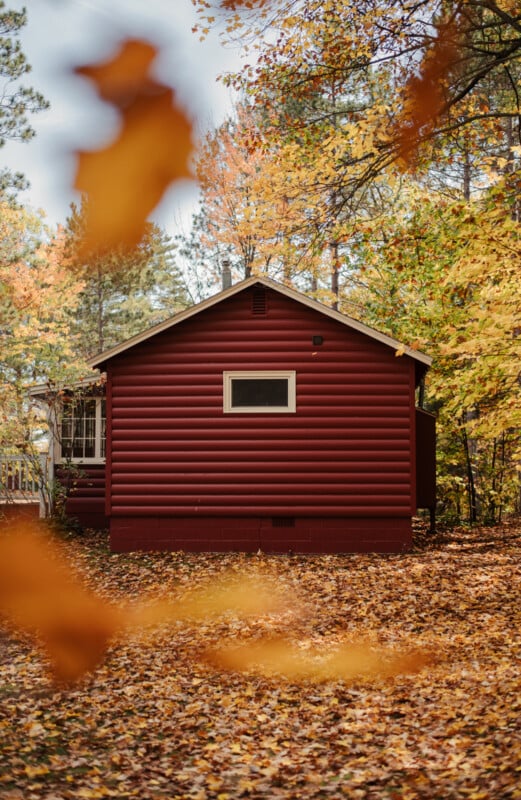
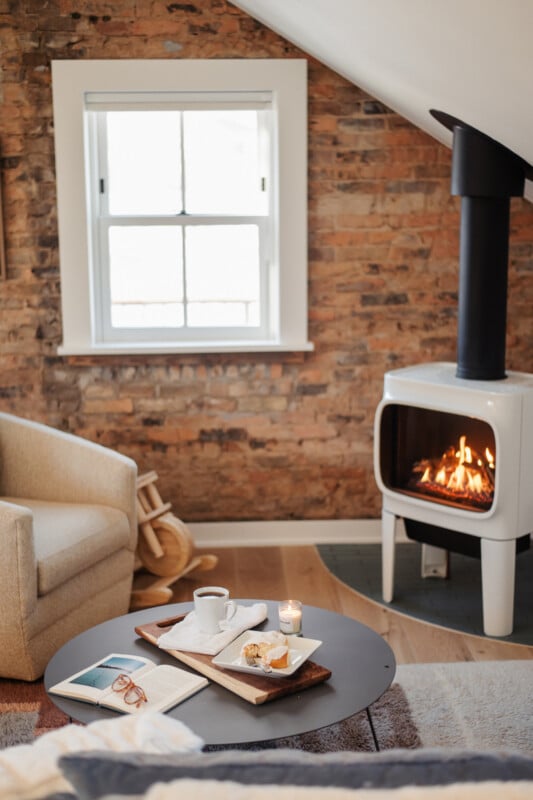
“I think that childhood connection still influences the way I shoot today. I don’t just want someone to see what a cabin looks like. I want them to imagine waking up there, making coffee, walking down to the lake or sitting by the fire at night,” Kreye says.
That idea of photographing the experience rather than simply documenting a property would become a defining part of his career.
Finding a Gap Between Real Estate and Storytelling
Kreye’s original path into photography was relatively informal. He photographed friends and portraits in high school and eventually became the person who always carried a camera. His interest in unique places eventually led him to contact properties simply because he wanted opportunities to photograph them.
There was no larger business strategy behind those early efforts. But as he photographed more vacation rentals, he began to see a gap in how many properties were being presented.
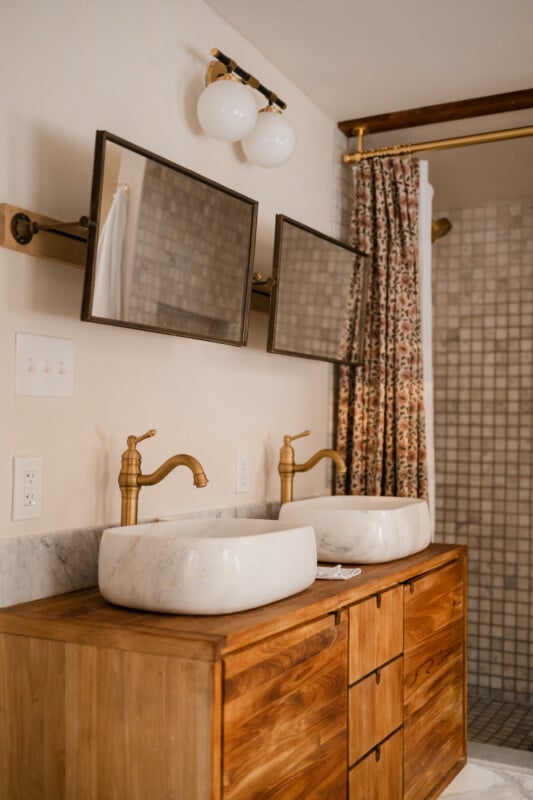
“Vacation rental owners needed great imagery, but a lot of the photography at the time was very functional. It showed the bedrooms, bathrooms and kitchen, but it didn’t necessarily make you feel anything,” Kreye says.
That observation gave him a problem to solve: how could a photograph communicate not only what a property contained, but why someone would want to spend their vacation there?
One project led to another, followed by referrals and eventually work with hotels, resorts, tourism organizations, and larger hospitality companies. Kreye has now photographed more than 300 vacation rentals, hotels, and resorts around the world.
“It still feels funny sometimes because the career essentially grew out of photographing places I personally wanted to visit,” Kreye says.
Photographing Why Someone Wants to Stay
That distinction between documenting a property and communicating its appeal remains central to Kreye’s process. When he arrives somewhere new, he first walks through the property and observes how the space works rather than immediately moving from one required photograph to the next.
He considers the direction of the sunlight, views through windows and doorways, connections between indoor and outdoor spaces, and the places where guests would naturally spend their time. He also thinks about the stay as a sequence of experiences rather than a collection of rooms.
“One of the first things I ask myself is, ‘Why would someone choose this place?’” Kreye says.
Sometimes the answer is obvious, such as a dramatic view or unusual architecture. Other times, it’s an understated detail that’s easy to overlook in a conventional property shoot.
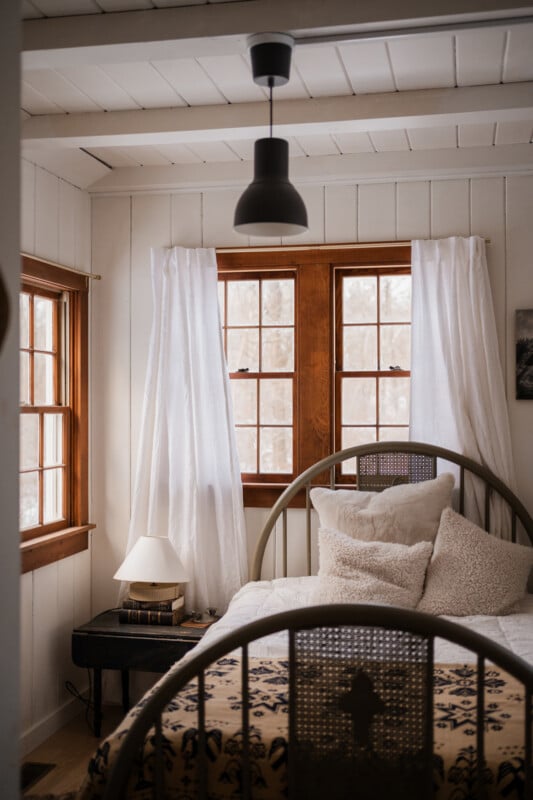
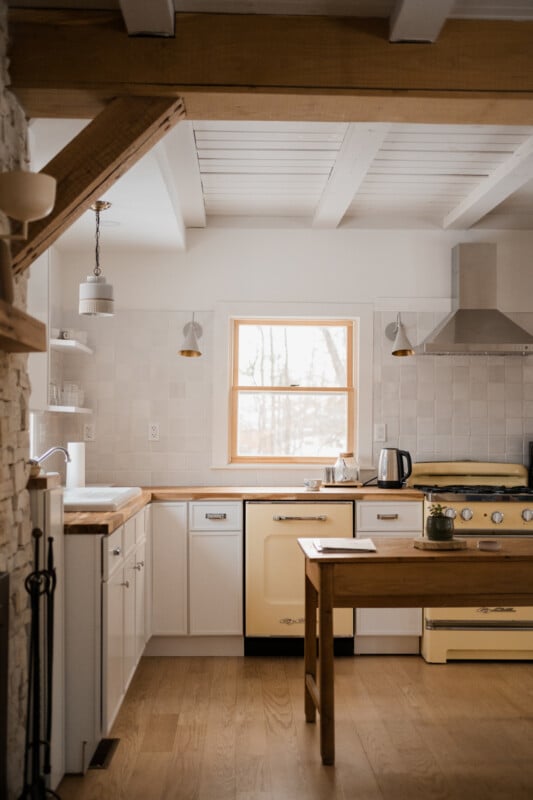
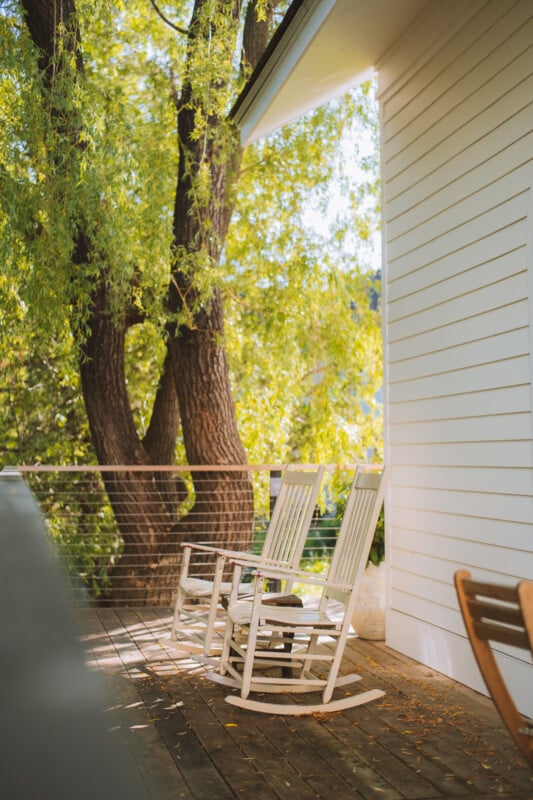
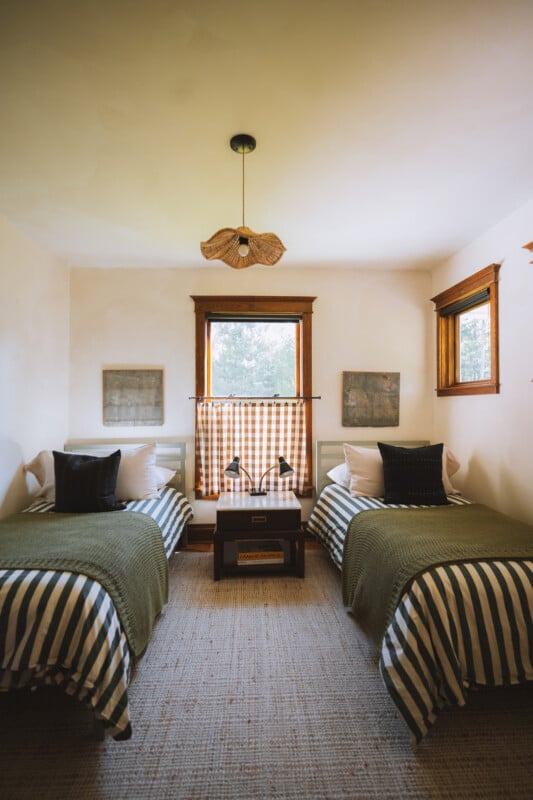
The result is a body of work designed to make viewers mentally enter the space. A photograph of a chair beside a fireplace, morning light falling through a window, or a path leading toward a lake can tell a different story from a straightforward image designed simply to prove that the feature exists.
“Those moments are often more important to me than creating a perfectly comprehensive photographic record of every room,” Kreye says.
The Best Images Often Come From Being Part of the Experience
Kreye’s approach isn’t limited to vacation rentals. His work increasingly encompasses travel experiences themselves, including a recent assignment photographing excursions for MSC Cruises’ inaugural Alaska season.
The project brought him back to Alaska, where he had previously lived, and gave him the opportunity to photograph whale watching, ziplining, hiking, crabbing, floatplane flights, and glaciers.
It also reinforced one of his broader beliefs about travel photography: photographers shouldn’t always remain observers.
“Projects like that have reinforced something I have learned again and again: the photographs people remember often come from genuinely experiencing something rather than standing on the sidelines documenting it,” Kreye says.
That means accepting some discomfort and unpredictability in pursuit of a better photograph.
“I want to be in the boat, on the trail, in the airplane or getting soaked in the rain. Being part of the experience changes the photographs,” Kreye says.
Letting Light and Composition Create Atmosphere
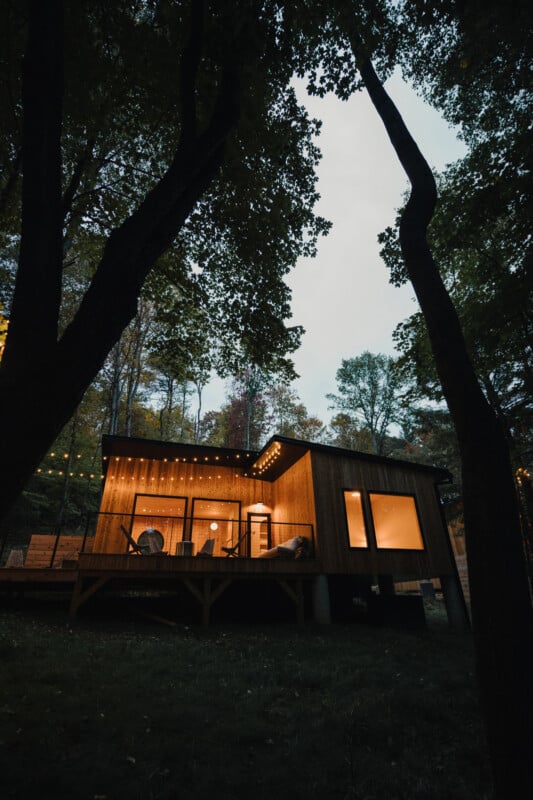
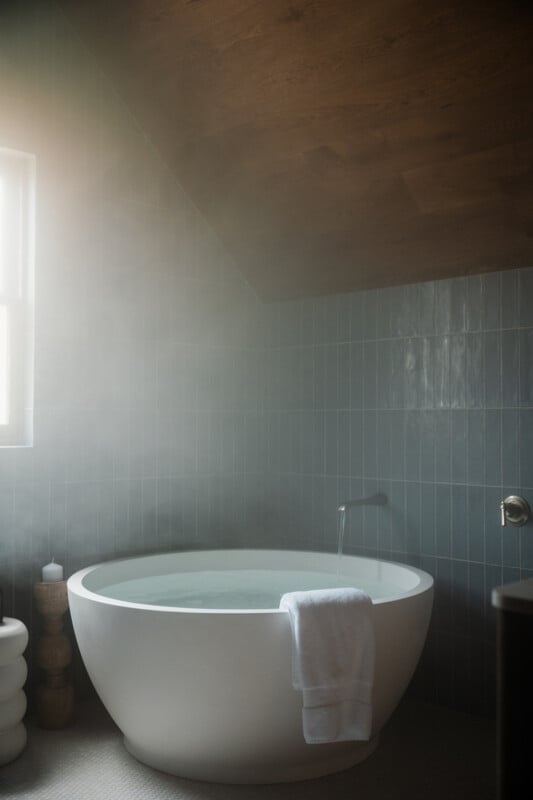
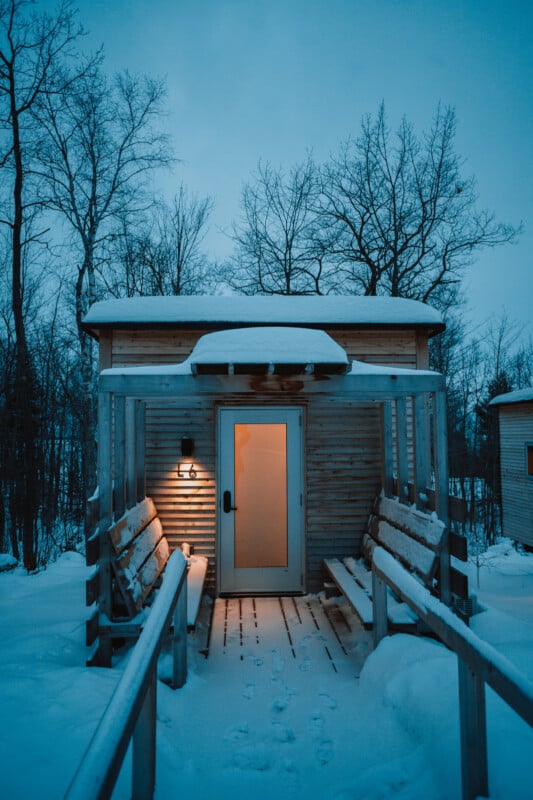
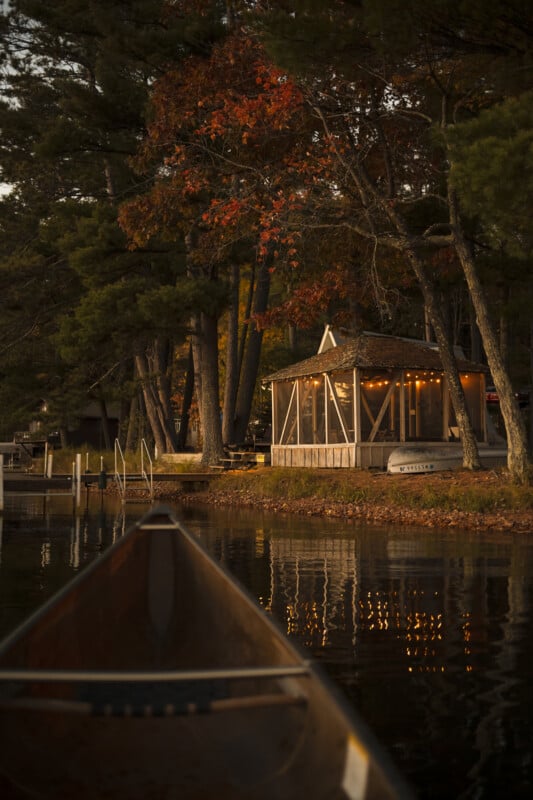
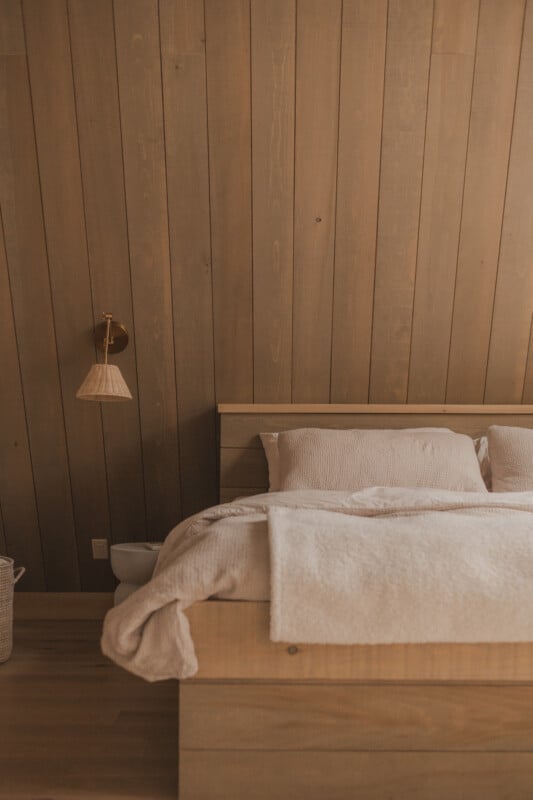
Kreye’s visual style is recognizable for its moody tones, natural light, shadows, and immersive compositions. Rather than trying to illuminate every corner of a property equally, he often lets the available light determine which parts of a scene draw the viewer’s attention.
His style developed gradually through years of photographing rather than from a deliberate attempt to create a particular aesthetic.
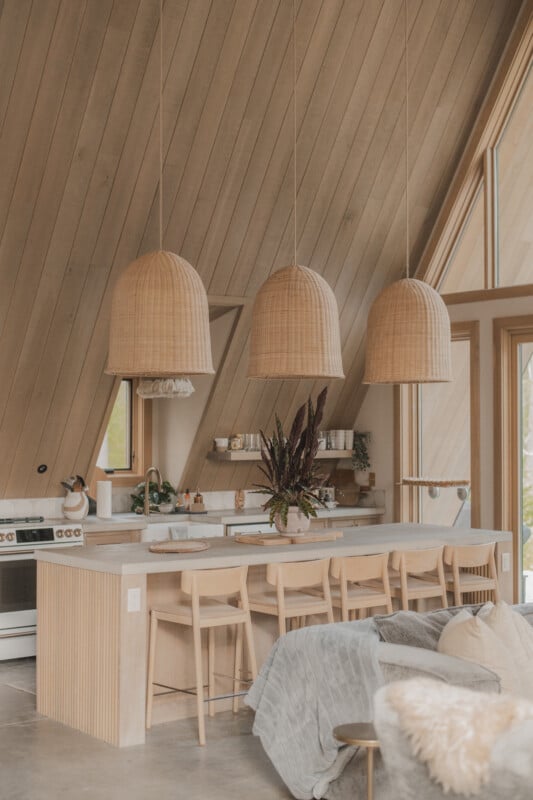
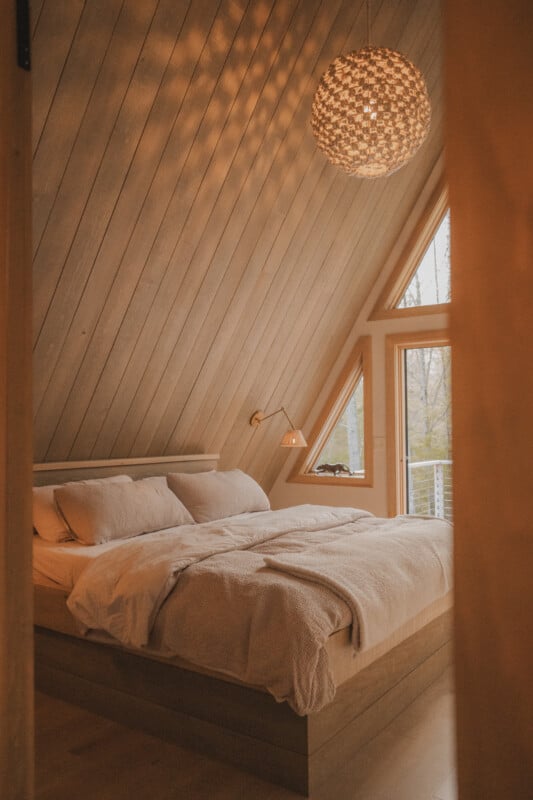
“I’ve always gravitated toward natural light, shadows, texture and images that provide an emotional response. I would much rather photograph a cabin when light is pouring through one window than make every corner of the room equally bright,” Kreye says.
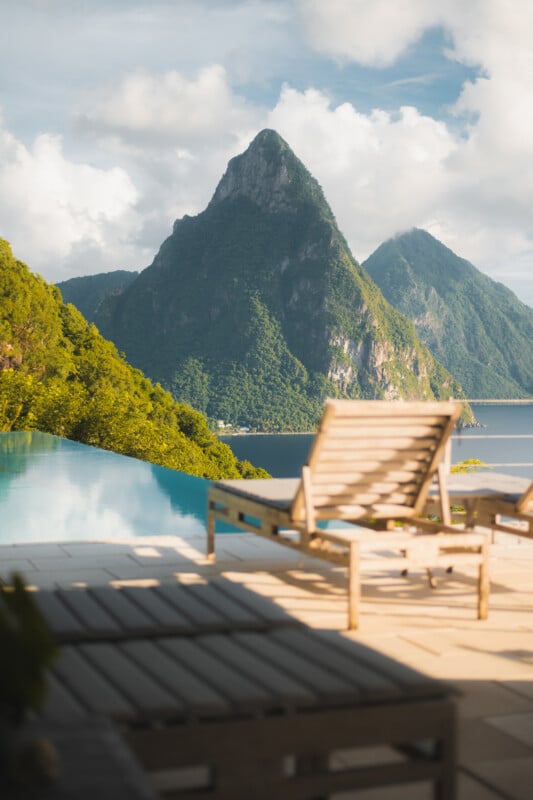
He also uses architectural elements to create a sense of discovery within the frame. Doorways, foreground objects, and structural lines can give the viewer the feeling of looking into a space rather than simply being shown a room.
“Composition is similar. I love shooting through doorways, using foreground elements or letting architecture frame a scene because it gives you the feeling of discovering the space rather than simply looking at a photograph of it,” Kreye says.
The goal is ultimately emotional rather than purely technical. Even when a photograph is being created for a commercial client, Kreye wants the finished image to communicate what it would actually feel like to be there.
Experience Has Taught Him to Leave Room for the Unexpected
Hospitality assignments can involve extensive planning, but they also come with variables that are impossible to control. Weather changes, rooms become occupied, construction falls behind, furniture moves, and production schedules rarely provide as much time as a photographer might want.
Kreye says those realities have made him more adaptable. Earlier in his career, he was more likely to arrive with a fixed vision of what he wanted to create. Now, preparation remains important, but he is more willing to respond to what is actually in front of him.
“Earlier in my career, I would arrive with a very specific idea of what I wanted. Now I still prepare heavily, but I try to respond to what the property gives me,” Kreye says.
That flexibility also leaves room for photographs that aren’t part of the original plan. Once the required images are covered, he tries to give himself time to explore.
“Some of my favorite images have happened because the original plan fell apart,” Kreye says.
Balancing Social Media With a Personal Creative Voice
The demands of hospitality photography have changed considerably as social platforms have become a major way for travelers to discover properties. A single assignment may now require horizontal images for websites, vertical photographs for social media, short videos, behind-the-scenes material, and advertising content.
Kreye has embraced those changing requirements, but he is wary of allowing the platforms themselves to dictate his photography.
“I pay attention to what performs. But I don’t want every decision to be based on what might get the most views,” Kreye says.
For him, maintaining a recognizable creative voice is more important than maximizing every piece of content for engagement.
“Photography is and always will be an art to me. I would rather make an image that feels like mine and was shot with my signature style and gets less engagement than slowly train myself to photograph everything exactly like everybody else because an algorithm rewards it,” Kreye says.
At the same time, he doesn’t dismiss the realities of social media. His approach is to understand what captures attention without allowing those conventions to replace his own perspective.
“The best social content, in my experience, combines both. It has a strong hook that makes somebody stop, but there is still an authentic and unique point of view behind it,” Kreye says.
Building a Career Requires More Than Making Good Photographs
Kreye’s experience offers another lesson for photographers who want to turn a creative passion into a sustainable career. Technical ability may get a photographer started, but maintaining a career requires relationships, communication, reliability, and a clear sense of what makes the photographer valuable.
His own specialty developed from subjects he already cared about, which eventually gave potential clients an easy way to understand what he did.
“The biggest thing I have learned is that being good at photography is only one piece of building a career in photography,” Kreye says.
He puts particular emphasis on relationships. Opportunities don’t always come from pitching a project right away. Sometimes they grow from connections that take years to develop.
“Be curious about people. Ask questions. Follow up. Do good work. Make the process enjoyable for the client,” Kreye says.
Just as importantly, he believes photographers benefit from becoming associated with something specific. A recognizable specialty can create momentum and help opportunities come to the photographer rather than requiring them to constantly search for the next job.
“And probably the biggest lesson is to make yourself known for something,” Kreye says.
Expanding the Story Beyond the Places He Photographs
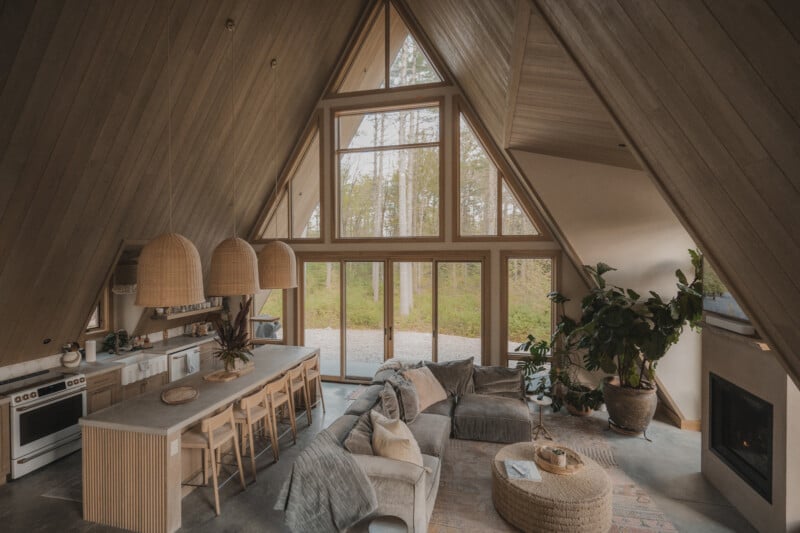
Although hospitality remains an important part of Kreye’s career, his interests are increasingly moving into architecture, travel, and larger stories about place. Recent opportunities have taken him aboard cruise ships in Alaska and into the mountains of Switzerland, while an upcoming project will bring him to the Theodore Roosevelt Presidential Library in North Dakota.
He is also becoming more interested in the people behind the places he photographs. Architects, builders, founders, chefs, owners, and others who create distinctive destinations can add another dimension to the visual stories he has spent years telling.
“I also want to photograph more people. The older I get, the more interested I become in the people behind the places, the architect, builder, founder, chef, owner or person who has spent their life creating something unusual,” Kreye says.
That shift represents a natural expansion of the same curiosity that has driven his work from the beginning. Instead of only asking what makes a place visually compelling, Kreye is increasingly interested in understanding the people and ideas that made it exist in the first place.
“For years I became known for photographing beautiful places. I think the next evolution is telling more complete stories about those places and the people who made them possible,” Kreye says.
Keeping Photography an Excuse to Stay Curious
After more than eight years in the industry and hundreds of properties photographed, Jon Kreye’s ambitions are becoming broader rather than narrower. Hospitality gave him a specialty, but travel, architecture, people, and storytelling are opening up new possibilities.
At the center of it all is the same motivation that first drew him to photography: curiosity about somewhere new and the desire to bring something back from the experience.
“At the end of the day, I still want photography to give me an excuse to be curious. If I can keep going somewhere I have never been, meeting someone interesting and coming home with a story to share, I’ll call it a win,” Kreye says.
Image creditsJon Kreye
Affiliate Disclosure PetaPixel articles may include affiliate links; we may earn a commission if you buy through one.


