There’s a “lot of excitement” about satellite or non-terrestrial networks (NTN), observed Luke Pearce, principal analyst at FDM CCS Insight, although he also warned that there’s “quite a lot of uncertainty” owing to several factors.
Speaking during RCRTech’s NTN Forum this week, Pearce noted that while NTN is a big topic right now, it remains at an early stage in its lifecycle. Commercial momentum is clearly building, but the market “remains shaped by some business-case uncertainty, as well as some technical roadblocks and barriers,” he said.
Direct-to-device (D2D) is certainly the topic du jour. In July, the Global mobile Suppliers Association (GSA) reported that there are now 123 publicly announced D2D partnerships, of which 23 have now launched a service. A further 27 are evaluating, testing or trialing the service, while 73 partnerships are in the planning phase. (See Satellite D2D goes global as Africa gears up for service launches – GSA and Satellite D2D moving into the mainstream for mobile players – GSA.)
Thanks largely to Starlink, the number of D2D connections is on the rise. However, just a sliver of mobile users around the globe have linked their phones to a satellite at this still-nascent stage of the D2D market, according to a recent study from Ookla. (See D2D connections rising, but only a sliver of mobile subs have used them – Ookla.)
Fighting talk
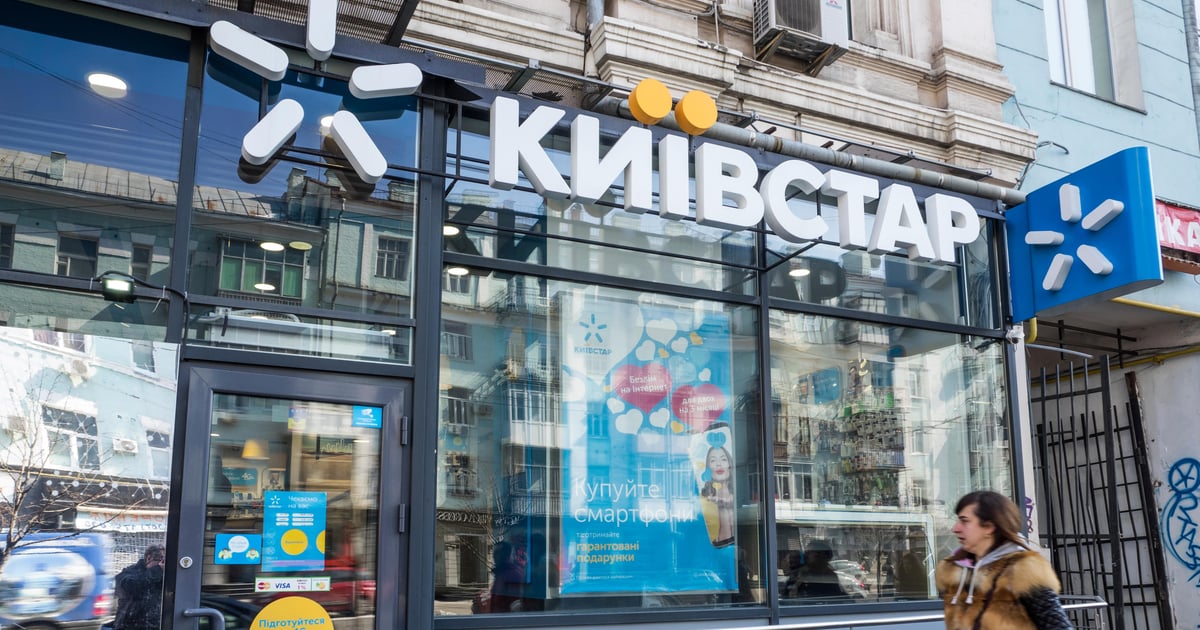
One operator that is riding the D2D wave is Kyivstar, Ukraine’s largest operator, which in November 2025 became the first operator in Europe to launch commercial services. It has been integrating Starlink Mobile with its terrestrial network to create a hybrid terrestrial/non-terrestrial system. (See Kyivstar drafts in Starlink to bolster war-damaged network.)
Fast forward nine months, and over 7.5 million Kyivstar customers have connected to the Kyivstar-SpaceX network in Ukraine, up from five million in March 2026 and three million at the start of this year (See Eurobites: Kyivstar’s D2D Starlink service takes off in Ukraine.) It has also delivered more than 10 million SMS messagesover satellite.
To be sure, no operator would want to be in Kyivstar’s position, given it was forced to integrate the satellite and terrestrial mobile networks under extremely difficult wartime conditions. At the same time, these circumstances have given Kyivstar a very different perspective on NTN compared to operators that are engaging in pilots or using satellite for coverage or service extension.
In an interview during NTN Forum, Illia Polshakov, chief new business stream officer at Kyivstar, said a perfectly well-served area in Ukraine can suddenly become a coverage hole because of a blackout, damaged infrastructure or another disruption. While it is has invested heavily in its terrestrial network and energy resilience, it still cannot guarantee 100% availability when something goes wrong.
The telco’s challenge was not simply to connect areas that had never been served, but to maintain connectivity when a functioning terrestrial network suddenly disappeared.
That led Kyivstar to build satellite connectivity on top of its terrestrial network, with customers automatically switching to satellite when terrestrial service is unavailable. Its value is that it can provide connectivity when the terrestrial alternative is no longer there. While the terrestrial network remains the primary infrastructure, the satellite network provides what Polshakov describes as a “dome” or resilience layer covering the ground-based mobile network.
Indeed, this wartime experience has provided a real-world test at a scale that cannot be replicated in a lab: millions of customers adopted satellite connectivity during blackouts. Kyivstar has subsequently expanded its services from SMS into light data and business-critical applications. (See Eurobites: Kyvistar hooks up with Starlink for ‘light data’ service.)
Based on Kyivstar’s experience, Polshakov’s advice to other operators is to start with the customer problem rather than the technology. “You need to understand what big pain points you are trying to touch into, what you would like to resolve,” he said.
He also counsels operators to embrace innovation, or risk becoming “a company who really [does] not know what type of products and services are coming.”
Meanwhile, Kyivstar’s parent VEON is planning to offer satellite services in all its markets, with Kazakhstan next in line during 2026, followed by Bangladesh.


