
Best for…
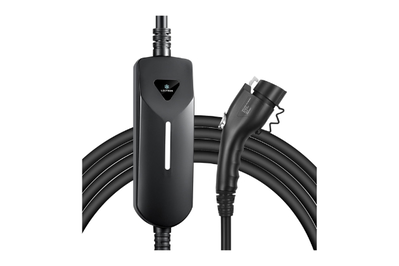
This portable J1772 charger is small enough to toss in a trunk, and it has many of the same features found in the best full-size EV chargers. Although it isn’t as powerful as some others we tested, it’s often less expensive.
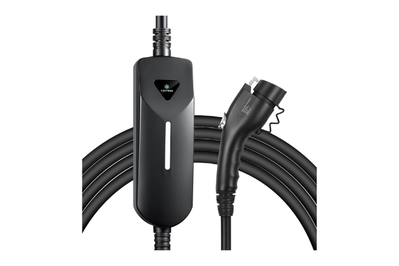
This portable NACS charger is small enough to toss in a trunk, and it has many of the same features found in the best full-size EV chargers. Although it isn’t as powerful as some others we tested, it’s often less expensive.
The thing is, I rarely (if ever) need to fast-charge my car at home. I did the math and realized charging overnight (while the car isn’t in use, and power costs are typically lower) would be enough to keep it topped up, even on my busiest driving days.
After weighing the options, I decided to get the Lectron Portable EV Charger, a pick in our guide to the best EV chargers. It charges more slowly than many of our other picks, but it avoids the rigmarole and costs associated with installing many home EV chargers.
With this charger, I can fully juice up the traction battery in my PHEV overnight using a standard outlet — no electrician required. It’s like charging your phone at the end of the day using a USB charger, but with a much thicker and longer cable. I just have to open the charging door on my car, plug in the charger, and wake up the next day to a fully charged PHEV.
Although I have the gas engine in my PHEV to fall back on, as long as I remember to plug the car in at home for two or three hours, it will recharge enough to get me to the closest supermarket or emergency room and back.
The exact version I have is discontinued — that one had swappable 240-volt and 120-volt plugs and is now available only for NACS/Tesla vehicles — but you can get a nearly identical model from Lectron for about $155. Both versions supply up to 12 amps of current from an ordinary 110-volt outlet, and they’re compatible with any EV or PHEV with a J1772 port.


Since the Lectron Portable EV Charger is highly weatherized, I haven’t had to worry about it getting damaged when I leave it outside. So far, it has survived monsoon-like rains this summer, and I anticipate it will do fine with the snow I get in the Northeast as well. Like all our picks, it’s rated to operate in temperatures between -22 and 122 degrees Fahrenheit.


The charger’s 16-foot cable is long enough to reach from an outlet outside my garage to my car, and it’s easy to roll up and stow in the trunk. The charging nozzle fits securely in my car’s J1772 port, and simply pressing a button on the top of the handle releases it.


In the six months I’ve owned it, the Lectron Portable EV Charger has fit seamlessly into my life. Between it and the growing network of public chargers in my area, I’ve never felt tempted to upgrade to a faster at-home charger for my PHEV.
Someday, I hope to switch to a fully electric vehicle. But even then, plugging in overnight with my current setup would give me roughly 50 to 60 miles of driving range, and even more if I left it plugged in for a full day.
Would having a Level 2 charger permanently mounted on my garage wall be faster than using this portable charger and more convenient than zipping over to a nearby public charger for a quick top off? Indubitably. But for now, with the car I have and the driving I have to do daily, I’m happy to keep this solution in place and use the savings for something else.
This article was edited by Sarah Witman and Erica Ogg.


