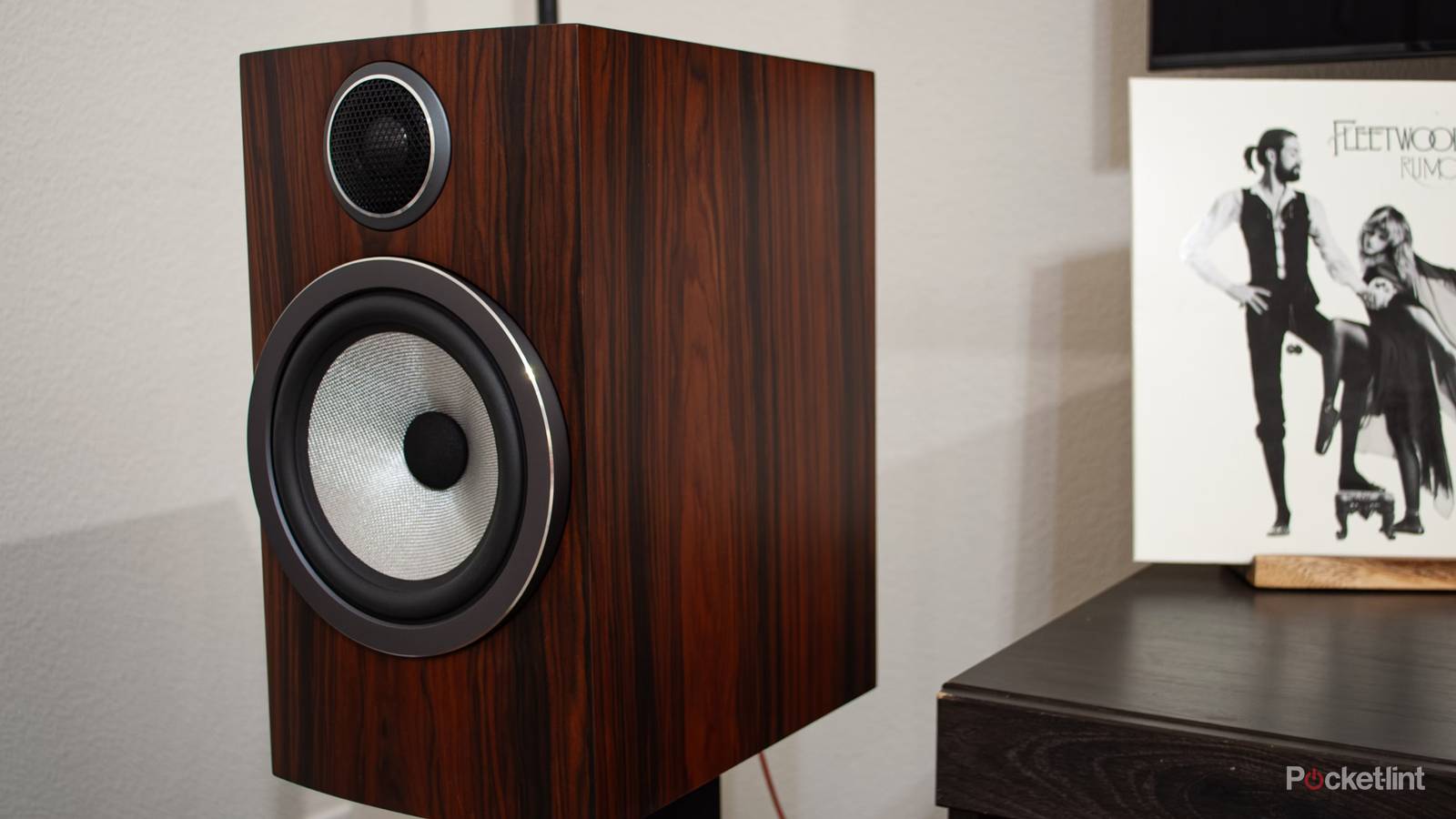
Something I’ve talked about recently is the chase for perfection you’ll find in some quarters of the home theater community. I hope I’m wrong, but it feels like some enthusiasts are far more concerned with the “how” of watching something rather than the “what.” That problem isn’t unique to the home theater space, I should add. There are PC gamers who seem to be more concerned with specs and benchmarks than how to beat a particular mission or boss.
Nothing exemplifies this chase more than the idea of using professional studio monitors for a sound system. There is some practical value to it, which I’ll get into in a moment. But for the average person — and most enthusiasts, probably — it’s going to be more trouble than it’s worth. There are reasons the vast majority of setups veer in the opposite direction.
Why would you want to use studio monitors in your living room?
It’s hardly insanity

If you’re not familiar, studio monitors are what engineers and producers use while recording, mixing, and mastering audio tracks, whether it’s for movies, music, or something else. They’re necessary because conventional speakers can conceal problems, owing to limited range or how they’re tuned. Mixes need to sound (reasonably) clear and balanced on everything from your TV’s internal speakers to a cinema-level Dolby Atmos system.
Accordingly, any monitor worth its salt will cover a wide frequency range, which is obviously great if you want to catch every last nuance in your favorite media. Monitors are moreover tuned flat, meaning every frequency gets the same amount of juice. Not everyone will like this — more on this shortly — but if you’ve been frustrated by speakers that are overly bass-heavy or shrill, a flat EQ may be welcome as a starting point for your own flavor.
An adjunct of this pro intent is extreme control. Passive (unpowered) monitors should respond beautifully to EQ adjustments on a receiver. Active ones usually have to be tweaked on a per-unit basis using things like gain knobs and HF/LF (high/low-frequency) trim switches, but if you’re a purist, that might be exactly what you’re hoping for.
Something that almost goes without saying is that monitors don’t skimp on power. They need to be loud enough to hear every last detail, and some models can legitimately compete with cinema speakers. JBL’s LSR6332, for example, supports 200W of continuous power, and up to 800W peak. Cranking a pair in your living room would be deafening, and that’s before connecting a subwoofer or satellites.
So what’s the problem with monitors, then?
The opposite of plug-and-play

What’s useful in a studio can be a curse at home. Flat tuning avoids bias, but we’ve all been conditioned to expect pronounced bass for a lot of movie effects, such as explosions, gunshots, and soundtrack percussion. There are of course ways around this issue, but that can require extra tweaking or hardware that’s just not necessary with consumer-oriented speakers. Bass isn’t the end of the story, either. Some people might want dialogue enhancement, or naturally prefer crisper highs. Tuning can also optimize around the quirks of particular design choices, as well as common listening scenarios.
Consumer speakers in general are better geared towards convenience. They may have bass- and dialogue-boosting buttons built in, and even if they don’t, you should be able to make EQ adjustments via a smartphone app. There’s no need to worry about things like XLR cables or trim switches, and indeed, the industry trend has been towards making things not only simpler, but as automated and wireless as possible. If you go with a Sonos system (or similar options), the core soundbar will link your other speakers via Wi-Fi, and help calibrate EQ settings for you based on room acoustics. Monitors assume you know the ins and outs of audio, and that you’d rather handle the details yourself.
Complicating things further, you can’t necessarily count on accessing all the components you’d want, at least if you want them to be monitor-level and from the same brand. Some companies aren’t particularly concerned with center-channel speakers or ceiling satellites, and even subwoofers aren’t guaranteed. Bass duties may be integrated into the primary speakers. That could be irrelevant for you, considering the power of some of the products we’re talking about, but it’s one more thing to weigh before taking the leap.
There are subtler problems you might encounter. For one, active monitors can be prone to audible hissing in quiet spaces, which is a bit ironic given the emphasis on fidelity. The reasons for this are complicated to explain — suffice it to say that you may need to spend more to dodge this problem. Regardless of how they’re powered, monitors are sometimes designed to produce a narrow sweet spot. That is, they presume you’ll be the only listener, located at a desk or mixing board. You’ll want a wider soundstage if you ever plan on sharing your theater setup with other people.
Returning to inconveniences for a moment, active monitors can require not just separate power cords for each one, but turning them on and off individually every time you want to use them. And while you don’t necessarily need a receiver, if you buy one, you’ll want to search for something with pre-outs. Passive speakers require that your stack be able to supply enough power, since they’ll do nothing on their own.
The lessons learned
Some final thoughts

If you’re truly determined to achieve the most accurate audio possible, adjusted only enough to meet your preferences, I’m not about to deter you from investing in studio monitors. I’m jealous in some ways, knowing what’s possible with the right gear and enough elbow grease. You may hear elements in my favorite movies and shows that I never will.
Personally, though, I make it a point not to get hung up on specs. I can appreciate a high-fidelity system, certainly. But focusing on those details runs the risk of putting form over function, in turn hurting my ability to enjoy something when I don’t have access to the best hardware. One of my minor joys when going on vacation is watching videos on my iPad during the flight down. An 11-inch screen and a pair of noise-canceling earbuds might not be ideal, but because content is king, I’m thrilled to have uninterrupted viewing time.
I’m also old enough to have some perspective. When I was a kid, VHS alone made me happy, since I was able to watch what I wanted, when I wanted, sans commercial breaks. And what’s now archaic technology was once state of the art — the family with the projection TV and the 5.1-channel Dolby ProLogic setup wasn’t lamenting the absence of spatial audio or 4K HDR.
Lastly, I have to admit that convenience is extremely important to me. I want as little delay as possible between me and my entertainment. I can’t abide the idea of having spend several hours installing and customizing a monitor-based system. Not that it has to take that long — it’s just that with one of the better all-in-one soundbars out there, I can be rocking impressive audio in 30 minutes or less, and never again worry about knobs, cables, or switching things on or off.

- Connectivity
-
HDMI eARC, Bluetooth, Wi-Fi, Apple AirPlay 2
- Audio Channels
-
9.1.4
- Surround Sound Support
-
Dolby Atmos


