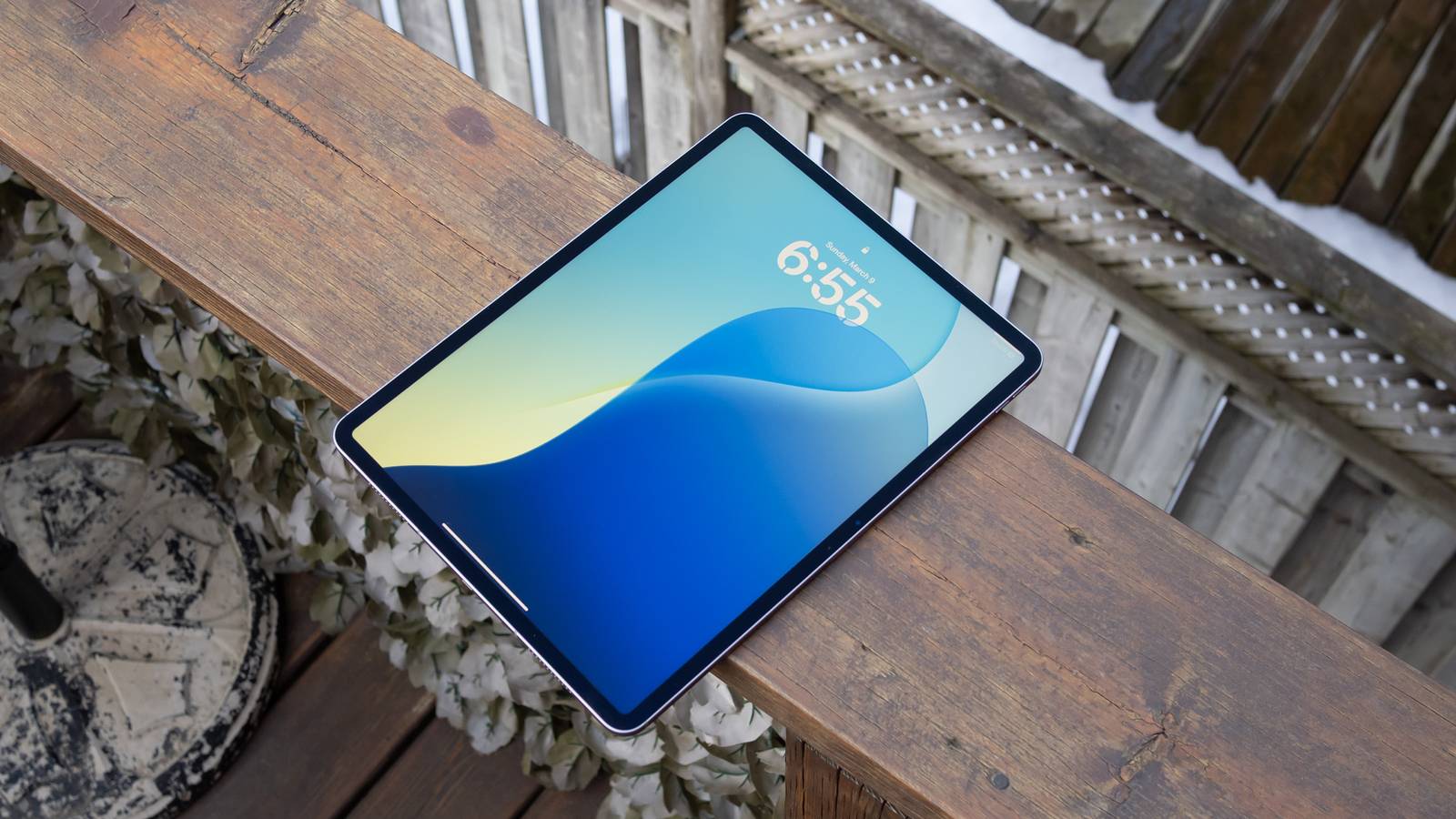
I’ve been an iPad owner since 2012, and that includes not one but two iPad Airs. I kept the second one so long that it ended up being a hand-me-down device for my son, born several years later. I certainly didn’t picture that happening when I walked out of the Apple Store.
Recently, however, I’ve come to realize that the Air no longer has a solid place in Apple’s lineup. It’s a hangover from a different era, and today, arguably a way of trying to nudge you towards an iPad Pro if you’ve got the budget. That could change in 2027, but I’m not holding my breath given Apple’s current situation.
What’s so wrong with the iPad Air?
Stuck in the middle with you

In a vacuum, the Air is an excellent device. It’s light, it’s bright, and its M4 processor is wildly overpowered for most of the apps you’re going to run. It’s also the cheapest iPad available in a 13-inch version, which can make a world of difference for productivity. Believe me, I’ve tried writing articles from 11-inch iPads. Having to switch apps repeatedly to check reference material is irritating.
Where things break down is in comparison to other iPads. Any new Air is at least $749, a full $300 higher than the entry-level iPad. That does get you an M-series processor with 12GB of RAM instead of an iPhone chip, but not much more, practically speaking. There is a faster USB-C port and some other tweaks, but you’re stuck with the same cameras, Touch ID, and 60Hz LCD.
Contrast that with the iPad Pro, which not only has a faster processor, but Face ID, an ultrawide lens, USB 4/Thunderbolt 4, and a smoother, high-contrast 120Hz OLED screen. It’s comparable to a high-quality laptop. It’s even slightly lighter to boot. That’s ironic, given that the raison d’être for the original Air was proving how lightweight iPads could be.
What we’re left with, then, is a device that’s far more expensive than a base iPad, but crippled in terms of its potential. It’s Exhibit A in Apple’s unspoken “ladder pricing” strategy. The idea is that some people who have the money to step up from the $449 iPad will take a look at the Air, then realize they might as well go another $450 in the hole to get as close to a true laptop replacement as possible.
That’s a sizable amount of cash, so even people who can afford a Pro may be well-served by buying an Air. In that regard, though, my issue is that the Air feels kneecapped. Cheaper Android tablets have been at the 120Hz threshold for a while now, and USB 4 has been available since 2019. It’s clear that Apple just wants to keep its profit margins as high as possible — if it can continue to get away with a 60Hz LCD, it will.
While I’m sure Apple has business data to prove me wrong, this seems like the right time to narrow the iPad lineup. Apple should fold some Air features into the base iPad to keep up with the times, but push the Pro as far as it can, making it worthy of the name. Heck, the entry option should be switched over to 120Hz as well, considering not just the rest of the industry, but the spec’s arrival on non-Pro iPhones last year.
What are the odds of Apple fixing the iPad Air?
Possible, but doubtful

Rumors are pointing to the next Air shipping in spring 2027. This could be a ripe opportunity to spruce up the tablet beyond a processor upgrade, yet I’m pessimistic about that actually happening. The truth is that the last several Air upgrades have been incremental, and there’s more pressure than ever to keep manufacturing costs in check, given the astronomical prices for flash memory triggered by AI datacenters (Apple’s included). The last thing it’s going to want to do is take a haircut on making the Air a better value.
Having said that, the 120Hz switch is overdue, and that could be enough to entice people like myself. Would I rather splurge on a new Pro, coming from a 2020 Pro model? Absolutely. But the feature I’d miss most from that device is its refresh rate, so including that would make everything else either bearable or a major leap forward. I imagine a lot of iPad owners are in the same boat.


