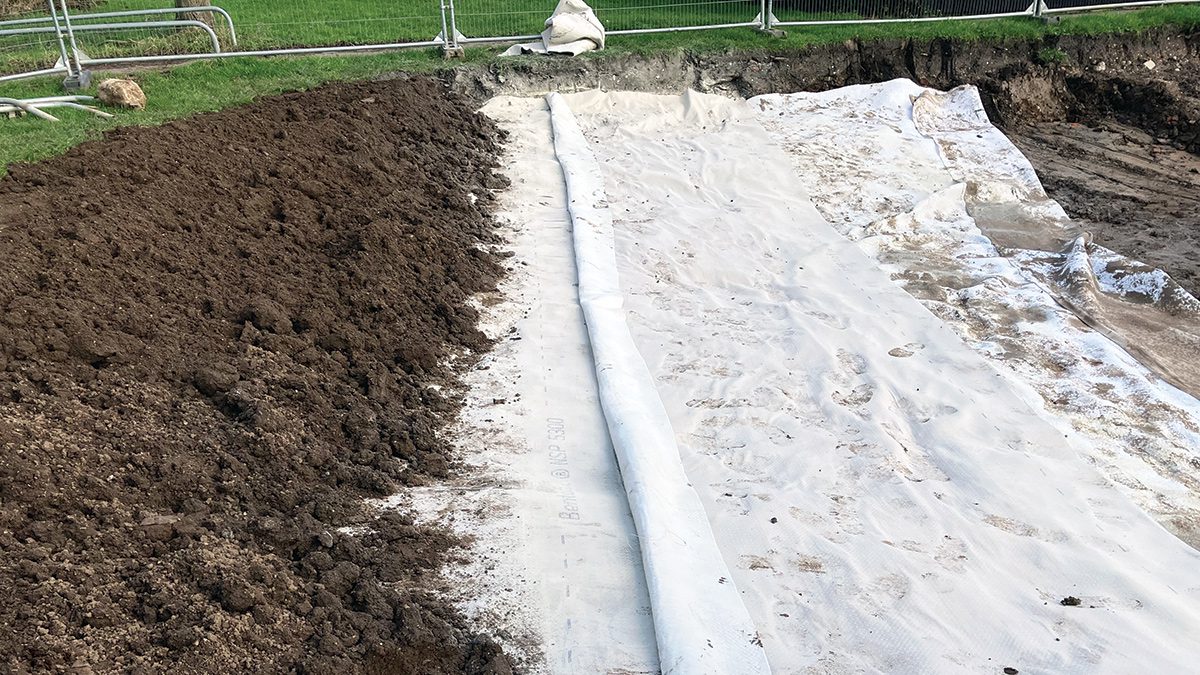
A lining solution used in landfill leachate containment has been transferred into the water sector for use in a major sustainable drainage project in Yorkshire, says Jason Hemmingway, sales director, SIG Infrastructure.
The installation of a structured waterproof lining product within a large-scale sustainable drainage system (SuDS) in Yorkshire looked like a routine job for main contractor JN Bentley (JNB), which called in SIG Construction Accessories (SIG CA) to specify at the earliest stage.
The £8.4 million Derringham Aqua Greens Project has been delivered by the Living Water (LWW) partnership between Yorkshire Water, Hull City Council, East Riding of Yorkshire Council, the Environment Agency and the University of Hull. These organisations all play a role in managing water in the region and are working together to build flood resilience and develop innovative water management systems.
The LWW partnership worked closely with construction partner Mott MacDonald Bentley (MMB) on the Derringham scheme, and the programme of works in the Hull suburb completed in August 2025. It represents a major milestone in the city’s flood mitigation plan.
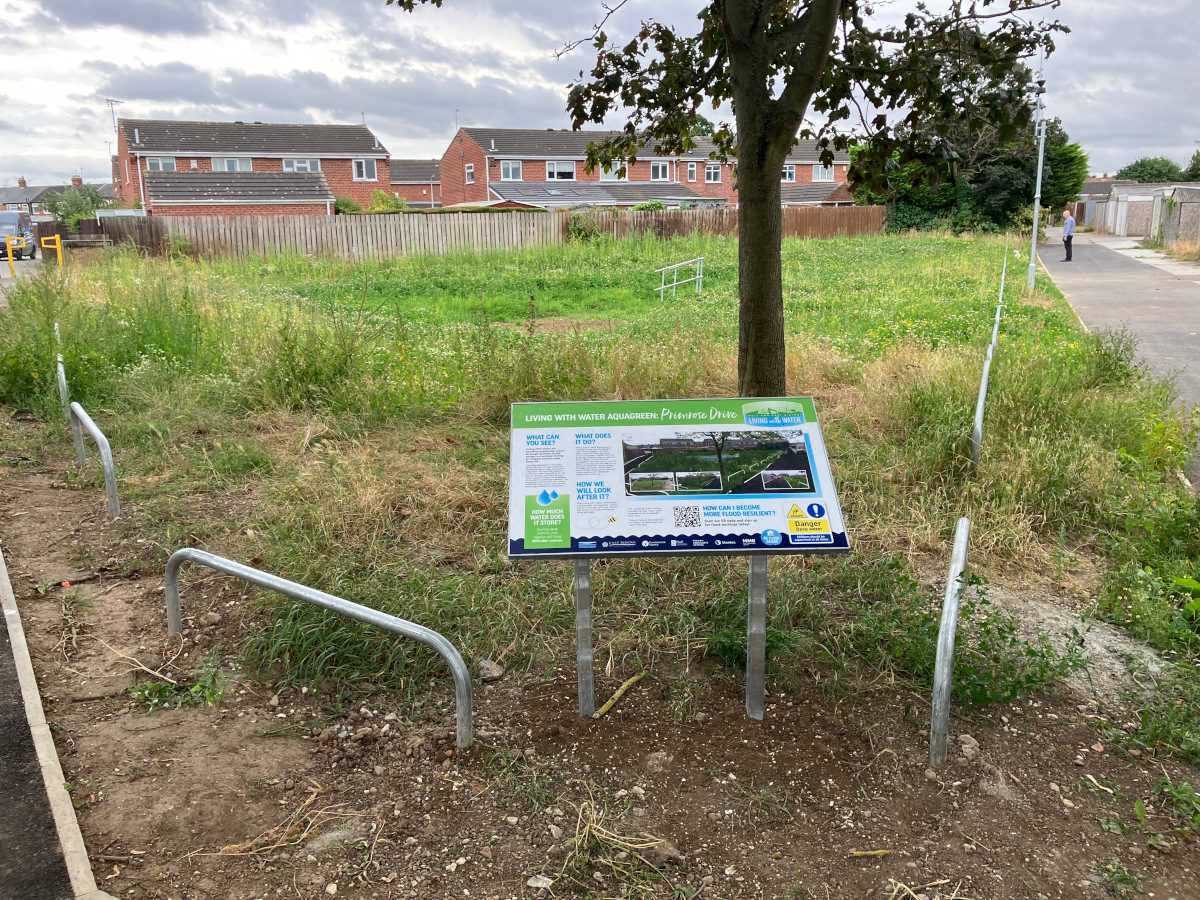
The scheme featured six basins for temporary stormwater storage, designed to retain heavy rainfall close to where it lands. Excess flows are slowly released to the sewer network once there is capacity, significantly reducing the risk of flooding.
Three of basins were lined with the SecuDrain structured waterproof lining system, a synthetic product from German manufacturer Naue, while three were left unlined as a trial to see how the clay subsoil filtered the water naturally.
The concept design for this nature-based approach to flooding required a full hydraulic model. This determined where the highest flood levels occur and identified the green spaces that would provide the most benefit if they were used for water storage.
Challenging application
While working on the detailed design for the application and speaking with engineering consultancy Mott Macdonald, part of the MMB joint venture, SIG CA identified that the lining system originally proposed would not fully meet the challenging requirement for the storage basins. SecuDrain, which is usually used to contain leachate at landfill sites, was proposed as an alternative.
The project timeframe meant that it had not been possible to carry out long-term monitoring of groundwater levels prior to the design process, so groundwater had to be assumed to be at ground level. This meant an additional drainage layer needed to be added beneath the liner to prevent flotation.
Jason Bland, head of power & utilities, SIG CA said, “Due to the high water table at the site, an additional composite drainage layer was required. When our German supply chain partner Naue ran calculations, the partners were assured that the company’s SecuDrain product could meet the groundwater flow rates and was the best product for the job.”
Suppliers like SIG CA, that can source and deliver at scale, give project teams access to technical experts, including civil and geotechnical engineers, that can give agnostic advice on a wide range of products that meet specific needs, and are not tied to particular brands and manufacturers.
Savings at scale
“The Derringham Aqua Green Project demonstrates the scale of savings that is possible,” says Bland. “Early engagement with all suppliers – with deep collaborative conversations, even at the point of tender – should be adopted as standard practice.”
The cost-savings arising from installation of the SecuDrain synthetic drainage system come because it completely replaces thick mineral gravel or crushed stone layers – saving on materials, reducing transport costs and significantly simplifying installation, all while maintaining equivalent drainage performance.
The installation of the pressure-stable filtration liner took place during a particularly wet period between December 2023 and January 2024 and both Sig CA and Naue attended to oversee the works onsite, ensuring end-to-end support for this innovative application. The success of the project has since given JNB confidence to roll it out in several water company schemes, including other complex sites.
Bland said, “The crossover of SecuDrain from use on landfill sites for leachate containment to water industry SuDS schemes makes good sense – rainwater run-off is itself a contaminated leachate and goes through the same Environment Agency approval process.”
Industry first
Fiona Booth, design lead, Mott MacDonald said, “The Derringham Aqua Greens Project is a flagship flood resilience project for the Living With Water partnership. By engaging early-on with our framework partners and supplier community, we quickly identified the Naue SecuDrain lining system proposed by SIG Construction Accessories.
“This is the first time this liner has been used in a SuDS application, but with a big push for nature-based drainage schemes in water companies’ AMP8 asset management plans, we are already hoping to put it to good use in similar projects in the future.”
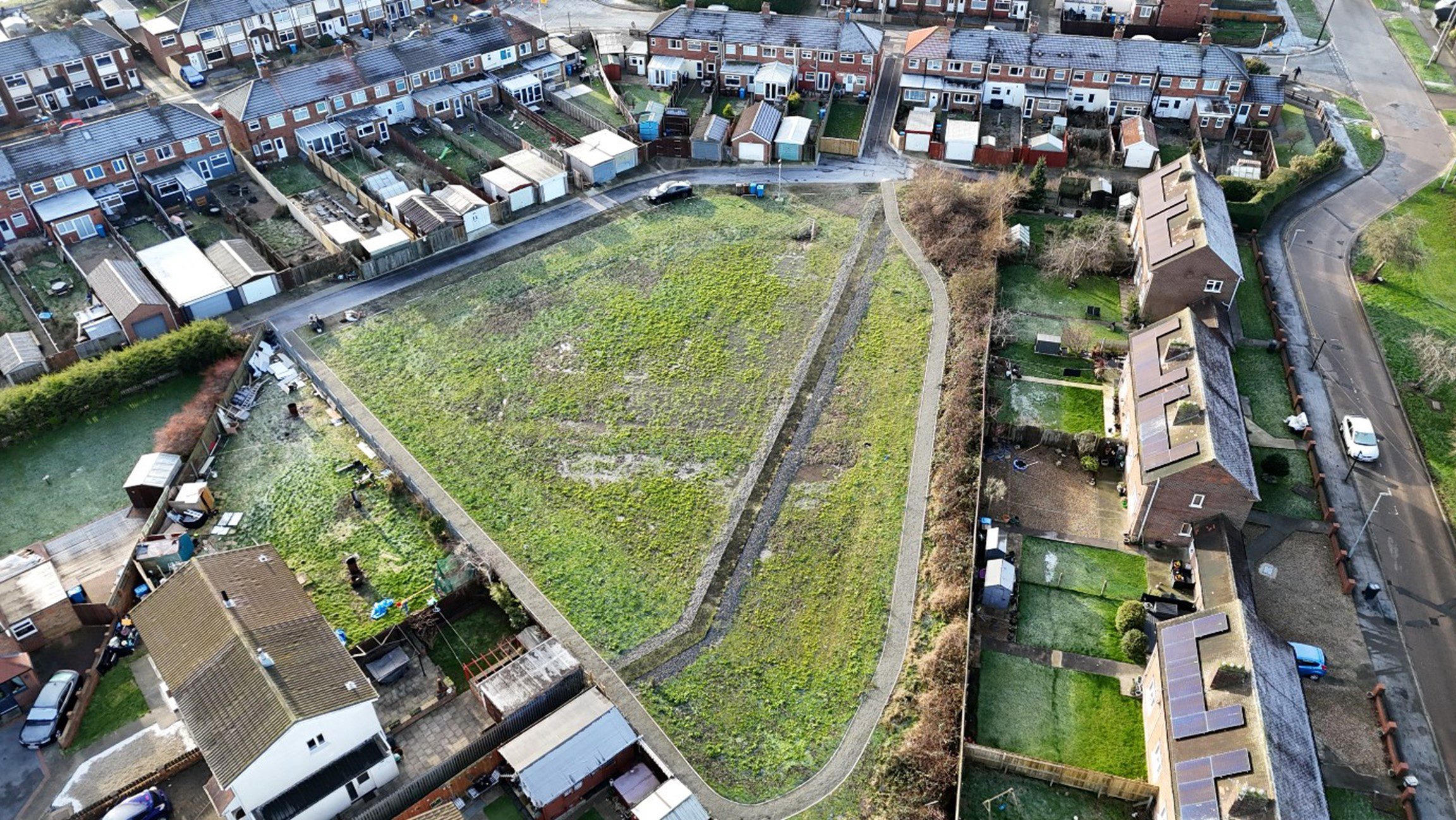
Since completion of the Aqua Greens, the community benefits of the scheme have been tangible during heavy rainfall. These large-scale SuDS basins have provided flood protection to hundreds of properties in a very high-risk area.
Using a blue-green approach to water storage, rather than heavily concreted infrastructure, has resulted in a solution with a much lower carbon impact, while improving biodiversity and access to nature for the community. The partners say it is a blueprint can be applied across the UK at locations where properties are at high-risk of flooding.




