
Active Gear Review is supported by its audience. If you purchase through links on our site, we may earn an affiliate commission.
One of my favorite footwear companies is getting into one of my favorite extracurricular activities, which immediately puts Lems in a bit of a tough spot. I already like their shoes. That means they weren’t starting from zero with me. They were starting with expectations.
My history with Lems goes back to 2018, when I reviewed their Boulder Boot. That boot pretty much nailed what I wanted from minimalist footwear at the time. It was zero drop, light, flexible, shaped like an actual foot, and had enough material underfoot to keep rocks and rough ground from beating me up. The wide toe box and slipper-like fit were a big part of what made it work.
I’ve kept that idea of a “Lems fit” in my head ever since. Room for the foot to spread. Nothing pinching the toes into some pointy little shoe-shaped prison. Good ground feel. Enough cushion to take the edge off, but not so much foam that I forget there’s a road underneath me.
So when Lems announced its first dedicated road-running collection, I was interested…very interested.
There’s some history behind the move, too. Lems founder Andrew Rademacher was a collegiate decathlete in 2008 when frustration with traditional running shoes led him to start cutting them apart and studying their construction. That eventually helped lead to Lems, founded in 2011. So while ZENSPEED is the company’s first road-running collection, running was part of the story long before the Boulder Boot ever landed on my feet.
Lems is entering the running category with two models: the ZENSPEED+, a more cushioned daily trainer, and the ZENSPEED Lite, the lower and lighter option. The Plus has a 31mm heel, 26mm forefoot, 5mm drop, and weighs 9.4 ounces in a men’s size 10. The Lite drops to 24mm/22mm, a 2mm drop, and 8.8 ounces. Both use Lems’ new TrueFit foot-shaped last, ZENCELL foam made from EVA with 10% PEBA, a minimal cork insole, and a 3.5mm injected-rubber outsole. Lems also groups the low-drop geometry and rocker under what it calls its Natural Running Platform.
Those numbers and design choices set the stage, but the real test was whether Lems had successfully translated its familiar fit and feel into a good road-running shoe. I’d find out once I started running in them.
A Month, Two Shoes, and More Than 70 Miles
I’ve had both ZENSPEED models in rotation for just over a month, putting a little more than 35 miles on each pair.
My testing has included pavement, gravel roads, and non-technical hard-packed trails. Think smooth dirt paths, firm two-track, and neighborhood roads rather than roots, mud, and technical terrain. Most of my runs have stayed under six miles, so I’m not going to pretend I have some deep revelation about how either shoe feels at mile 12. I don’t.
I also haven’t had either pair out in wet conditions, so I can’t tell you how they behave on slick pavement or painted crosswalks after a rain. In the dry, though, grip has been good on pavement, loose gravel, and packed dirt. I haven’t had any unexpected slips or moments where I questioned the outsole.
Both pairs were a men’s 12.5 Wide, and both fit true to size. Heel and midfoot lockdown have also been excellent. No heel lift. No pressure points from the laces. No hotspots. No weird rubbing. Nothing that made me stop mid-run and start fiddling with the laces.
And if you’re new to running, here’s something worth knowing: socks matter. After enough years testing running shoes, I’ve learned that a bad sock can make a perfectly good shoe seem guilty of problems it didn’t cause. A good running sock should fit snugly without bunching, stay in place, manage moisture, and have smooth seams that won’t rub your toes or heels raw. I stuck with socks I already trust so I could judge the shoes instead of wondering why one seam was trying to saw through my toe.
Lems makes a pretty big deal out of its new TrueFit last. The idea is to keep the shoe foot-shaped and roomy enough for natural toe splay, while trimming some of the extra volume that can make wide-toe-box shoes feel loose through the rest of the foot. The Wide version is listed as a D width and is the fit Lems says is closest to its traditional Wide Fit.
The interesting part is that these two shoes share a lot of DNA but feel pretty different once they’re on your feet.
The Lems ZENSPEED+ Is the More Familiar Running Shoe
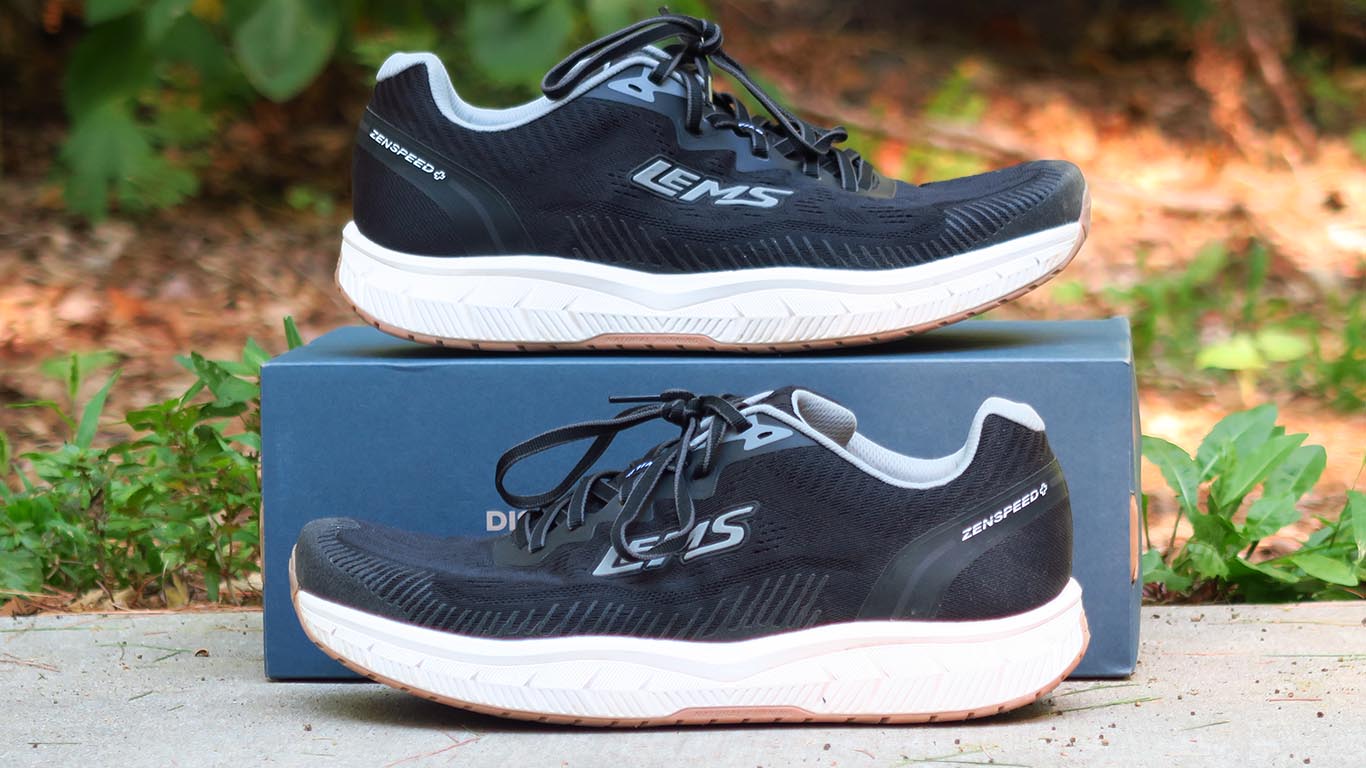
Of the two, the ZENSPEED+ feels more like a conventional modern running shoe. That can be both a compliment and a criticism.
The heel and midfoot fit are excellent. The upper wraps the foot well, the lacing holds everything in place, and I haven’t had any sliding around inside the shoe. Once I’m moving, the fit feels secure and controlled without creating pressure points. That part is easy to like.
My first reaction to the forefoot was a little different. “Where did my Lems toe box go?” Remember, I’m testing the Wide. There is still more room up front than you’ll find in plenty of traditional running shoes, but it doesn’t have the same immediate toe-splay freedom I associate with Lems. The ZENSPEED+ feels closer to something I’d expect from Brooks or Saucony. Those companies make very good running shoes. That’s also the problem. If I want a Brooks-like or Saucony-like fit, I already have plenty of options. Part of the reason I come to Lems is because their footwear doesn’t feel like everybody else’s.
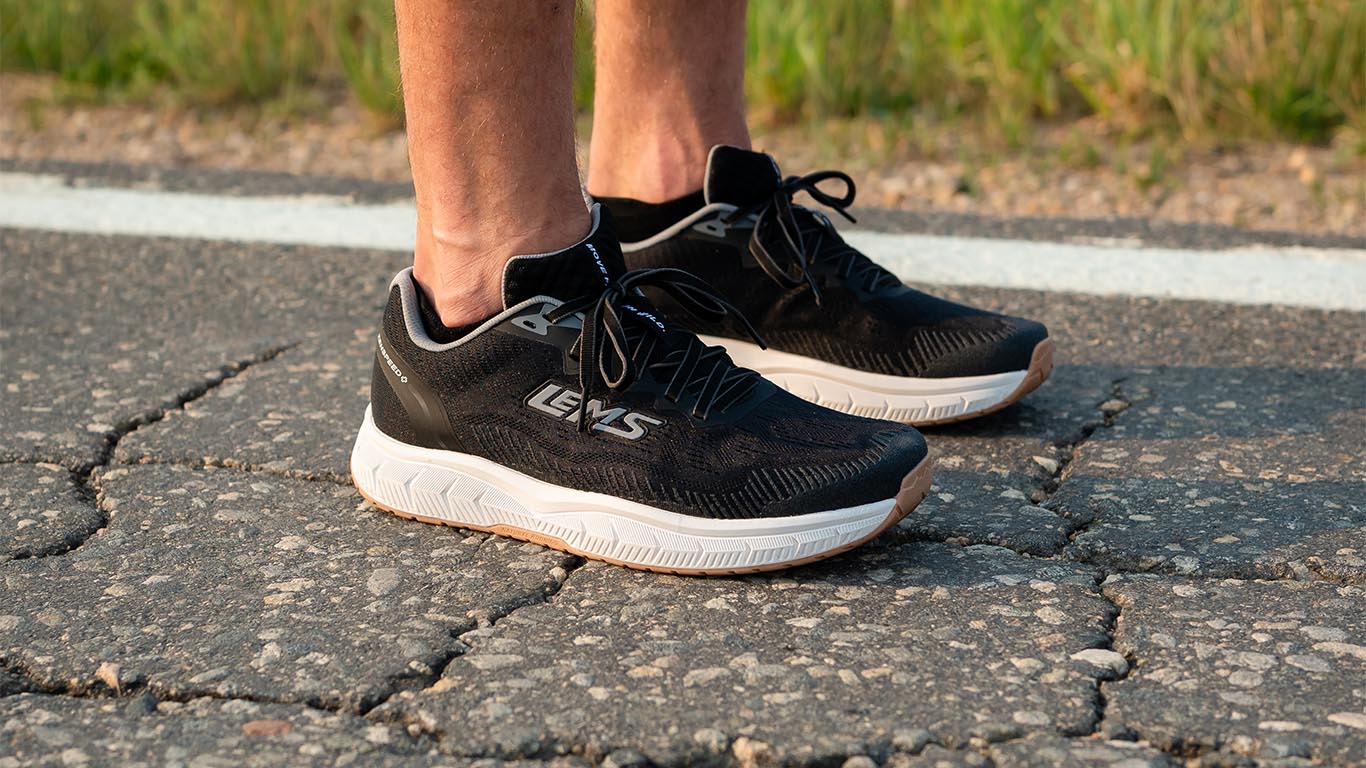
The final ZENSPEED press release gives some context for why the fit is more streamlined. Lems says the TrueFit last is meant to reduce the extra bulk and foot movement you can sometimes get in wide-toe-box shoes, creating a more secure overall fit. I get what they’re going for. And through the heel and midfoot, I think they nailed it. I just want a little more of that familiar Lems freedom around the toes.
The explanation became even clearer after I spoke with the Lems design team. They told me the ZENSPEED+ uses welding in the toe area along with about 0.5mm of 3D-printed material in the toe cap. The ZENSPEED Lite leaves those extra elements off to save weight.
Half a millimeter sounds like nothing. Put it around five toes trying to spread out and you notice it. It’s a little like putting a thin case on your phone. The case barely seems worth measuring, but suddenly the phone doesn’t slide into that tight pocket quite the same way.

The good news is that the Plus has gotten better with mileage. The upper has started forming around my foot, and I like the fit more now than I did during the first few runs.

So I wouldn’t call the Plus uncomfortable. Not even close. I’d call it a more tailored, traditional running-shoe interpretation of the Lems fit. And for me, that’s a little different from what I come to Lems for.
Lems ZENSPEED+ Firm Cushioning, Not a Marshmallow

Underfoot, the ZENSPEED+ lands on the firmer side compared to all the marshmallow shoes we have been testing as of late. There is cushion here. With 31mm under the heel and 26mm under the forefoot, this isn’t some paper-thin barefoot shoe pretending pavement doesn’t hurt. But don’t expect that big, soft, sink-into-it sensation you get from some of the high-stack trainers filling running shelves right now.
Lems calls the midsole foam ZENCELL, an EVA blend with 10% PEBA, and positions it as a more energetic foam intended to help with push-off. The shoe also uses what Lems calls its Natural Running Platform, pairing the 5mm drop with a rocker profile meant to help create a smoother transition through the stride. That sounds more aggressive than the shoe feels to me. I don’t get a big trampoline effect from the Plus. There’s no dramatic pop under the forefoot and no marshmallow squish when I land. What I notice more is stability, ground feel, and a smooth transition from landing to toe-off. That’s not a bad thing. In fact, I like it.
Some shoes feel like you’re running on a mattress somebody dragged into the road. Comfortable, sure, but a little disconnected from what’s happening underneath you. The Plus keeps more of that connection.
On gravel roads, I can tell when the surface changes without feeling every little stone through the sole. On pavement, the shoe feels planted and predictable. There isn’t a bunch of soft foam shifting around underneath my foot when I corner, change pace, or move from smooth asphalt onto rougher gravel.
The rocker is there, but it never felt exaggerated to me. I didn’t have one of those moments where the shoe seemed to be tipping me forward or trying to dictate my stride. Instead, the transition feels smooth and pretty natural. The ZENSPEED+ gives the road a voice without handing it a megaphone.
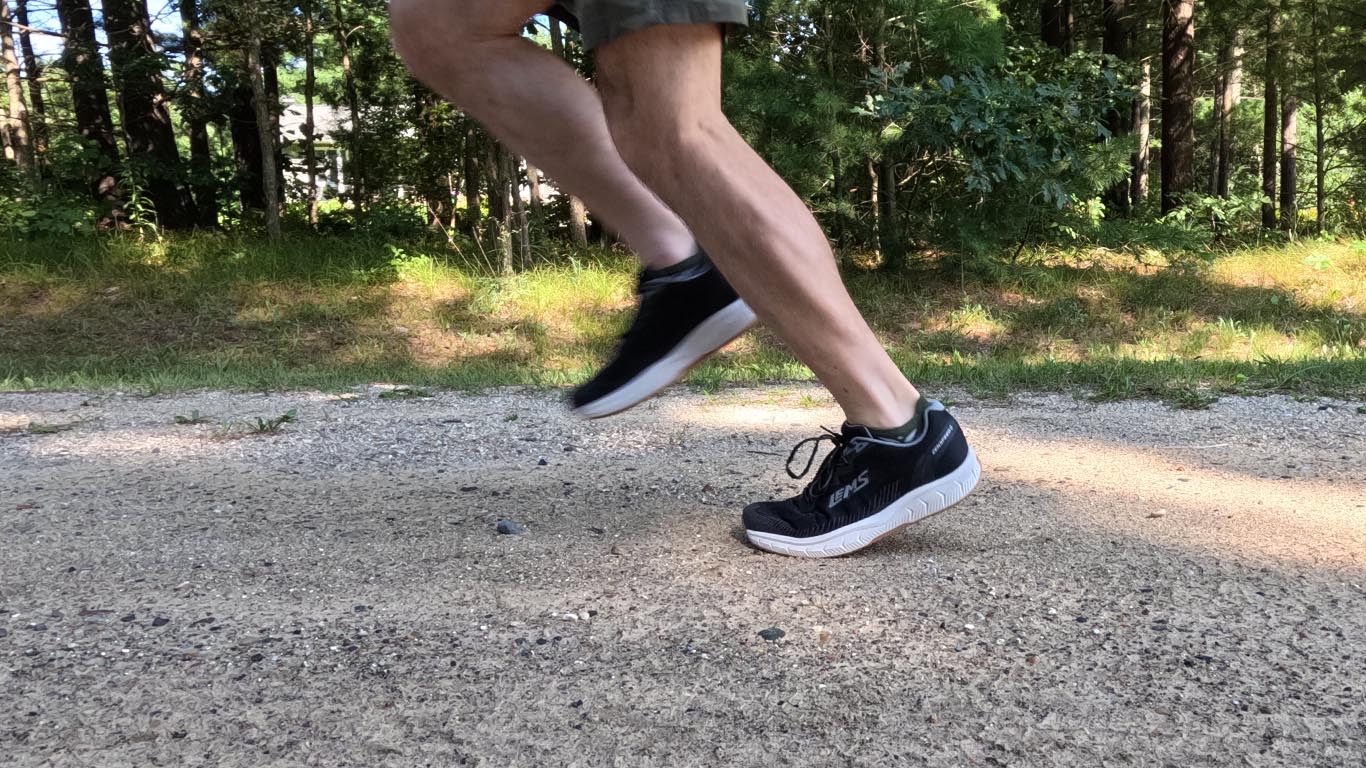
All my runs have been under six miles. I see no reason it couldn’t handle longer runs, and this is certainly the ZENSPEED I’d choose if I wanted to stretch the mileage. But once I get into the 10-plus-mile range, I tend to prefer more stack height and a softer landing. That has less to do with the capability of the shoe and more to do with the fact that my body has accumulated a few miles of its own over the years. My legs appreciate a little extra forgiveness. My ego can argue with them all it wants. My legs usually win.
For the shorter daily runs I’ve been doing, though, the Plus strikes a nice balance between protection and ground connection. It also feels fairly light on foot. It isn’t one of those shoes that disappears the second I put it on, but it certainly doesn’t feel heavy either.
Then I put on the ZENSPEED Lite. And that’s where the personality of these two shoes really starts to separate.
The ZENSPEED Lite Feels Like the Lems Running Shoe I Was Waiting For

The Lite got the fit right for me from the first run. No break-in period. No waiting for the upper to loosen up. No stopping after a mile to wonder if I tied the shoe too tight. I put my foot in, spread my toes, and thought, “Yep. There it is.” This is the fit I associate with Lems.

The forefoot gives my toes room to spread naturally, but the shoe still holds the heel and midfoot securely. That balance makes a noticeable difference on the run. A wide toe box is great until the rest of the shoe feels like a grocery bag. That isn’t happening here. The Lite gives me the room I want up front without sacrificing lockdown through the middle of the foot. My heel stays planted, the upper doesn’t bunch or slide around, and I haven’t had any rubbing or pressure points. For me, the fit is a 10 out of 10.

The lack of those extra toe overlays used on the Plus seems to make a noticeable difference. The upper moves with my foot more and lets my toes spread without feeling sloppy everywhere else.
If you’ve spent time in Altra running shoes, there’s some familiar territory here. The roomy forefoot, low drop, and connected feel all live in a similar neighborhood. I wouldn’t call the two brands interchangeable, but someone coming from Altra is probably going to understand what Lems is going for with the Lite pretty fast.
More important, existing Lems fans should recognize the fit. That’s what I was hoping for when I heard Lems was getting into road running. The Plus feels like Lems adapting itself to the running-shoe market. The Lite feels like Lems brought its own personality with it.
The ZENSPEED Lite Makes Me Want to Run Faster

The name fits. The ZENSPEED Lite feels light, airy, and eager to move.
With a 24mm heel, 22mm forefoot, and just 2mm of drop, there isn’t a lot of shoe separating you from the ground. Lems positions it as the more minimal, grounded option in the ZENSPEED lineup, and that description matches what I’ve felt during my runs.
What surprised me most is how much the Lite changes the way I run. Not because it forces me into some magical version of perfect running form. It doesn’t. There’s just less forgiveness underneath me.
In a tall, soft, stacked running shoe, I can get lazy. My stride starts creeping farther out in front of me because there’s a big slab of foam waiting to absorb the landing. The shoe covers for me a little. The Lite doesn’t cover for much. If I start overstriding, I feel it. Not in a painful way, but enough that my body gets the message pretty fast. I shorten my stride, turn my feet over a little quicker, and my cadence comes up. It reminds me of the rumble strips along the side of the highway. Nobody has to explain what they mean. You drift a little, feel the vibration, and move back where you belong. That’s what the Lite does for my stride. It gives me feedback.

And once I settle into that shorter, quicker rhythm, the shoe starts feeling really good.
There’s very little getting in the way. The lower stack keeps me connected to the surface, and the light upper doesn’t feel like it is dragging along for the ride. When I decide to pick up the pace, the Lite follows without making a big production out of it.
That has made it my choice of the two for quicker runs. The Plus feels more like, “Let’s head out and get some miles.” The Lite feels like, “We’re already out here. We might as well move.” And more often than not, I do.
If the Plus is the shoe I grab when I want a little more protection, the Lite is the one I grab when I want the run to feel quicker, lighter, and a little more alive.
Ground Feel Without Beating Up My Feet

Minimal running shoes can cross a line. Ground feel is good. Feeling every pebble like somebody hid a Lego under your forefoot is less good. The ZENSPEED Lite stays on the right side of that line for the running I’ve done.
On smooth pavement, there’s enough protection that I’m not thinking about impact every step. On gravel, I get more information through the sole than I do with the Plus, but not enough to make the surface annoying. Hard-packed trails have also been a good match.

I wouldn’t call either ZENSPEED a trail shoe, and I haven’t tested them on technical terrain. But for dirt paths and those trails that are basically roads without asphalt, both have handled themselves well. Dry grip has also been trouble-free so far. Wet grip remains an unanswered question because I haven’t had the conditions to test it.
What About Durability on the Lems ZENSPEED Running Shoes?

At a little over 35 miles per pair, both shoes still look the way I’d expect them to look. That’s good, but 35 miles is also far too early for me to start making big durability claims. I haven’t seen outsole problems, strange upper wear, premature breakdown around the toe, or anything else that raises concern. And at this mileage, I wouldn’t expect to.

The absence of problems is still worth noting, especially with a first-generation running shoe. Nothing has started peeling off, stretching out, or looking like it might become an issue soon. For now, no news is good news.

Two Good First Attempts, But One Is More “Lems”
This is the distinction I kept coming back to throughout testing:
The ZENSPEED+ is a good running shoe.
The ZENSPEED Lite is a good Lems running shoe.
The Plus gives you more cushion, a secure upper, firm underfoot protection, good dry grip, and a fit that should feel familiar to runners coming from traditional brands. I’ve also liked it more as the miles have accumulated and the upper has started forming around my foot. But even in the Wide, I want more freedom around the toes.

The Lite gets that right from the start. It has the toe splay I want from Lems, enough cushion for shorter daily runs, plenty of ground feedback, good lockdown, a breathable upper, and very little excess material. It also makes faster running feel fun, which counts for quite a bit in my book.
There’s no mystery about how I use the two. If I want more cushioning, I grab the ZENSPEED+. If I’m heading out for something quicker, I grab the ZENSPEED Lite.
And if you told me I could only keep one? I’m taking the Lite.

Final Thoughts Lems ZENSPEED Shoes
Lems entering the running category makes a lot of sense. The company already understands low-drop footwear, natural foot shape, ground feel, and the idea that the human foot doesn’t need to be squeezed into something shaped like a slice of pizza.
Running shoes are just a much more crowded arena. There are a lot of very good shoes out there, so simply making another competent daily trainer isn’t enough to stand out. That’s why the ZENSPEED Lite is the more interesting shoe for me. It feels like Lems leaned into the things that made me like the brand in the first place. The Plus moves a little closer toward the middle of the running market. The Lite stays weird enough, for lack of a better word, to have its own identity. And I mean that as a compliment.
If you already wear Lems and have been waiting for the company to make something you can run in, start with the ZENSPEED Lite. The Plus isn’t a bad shoe. Not even close. For runners who want more cushioning, more upper structure, and a somewhat more traditional fit, it may end up being the better choice. But if you’re coming to Lems because you want that unmistakable roomy forefoot and connected-to-the-ground feel, the Lite gets there faster.
For a first shot at running shoes, Lems has put together two solid entries. More than anything, though, these shoes make me curious. First-generation products are where companies figure out what they know, what they don’t, and what needs another pass. Lems already has a strong foundation here. Now I want to see what happens with version two. Especially if they give the ZENSPEED+ just a little more room for my toes to breathe. For more info or the check them out for yourself visit lemsshoes.com.


