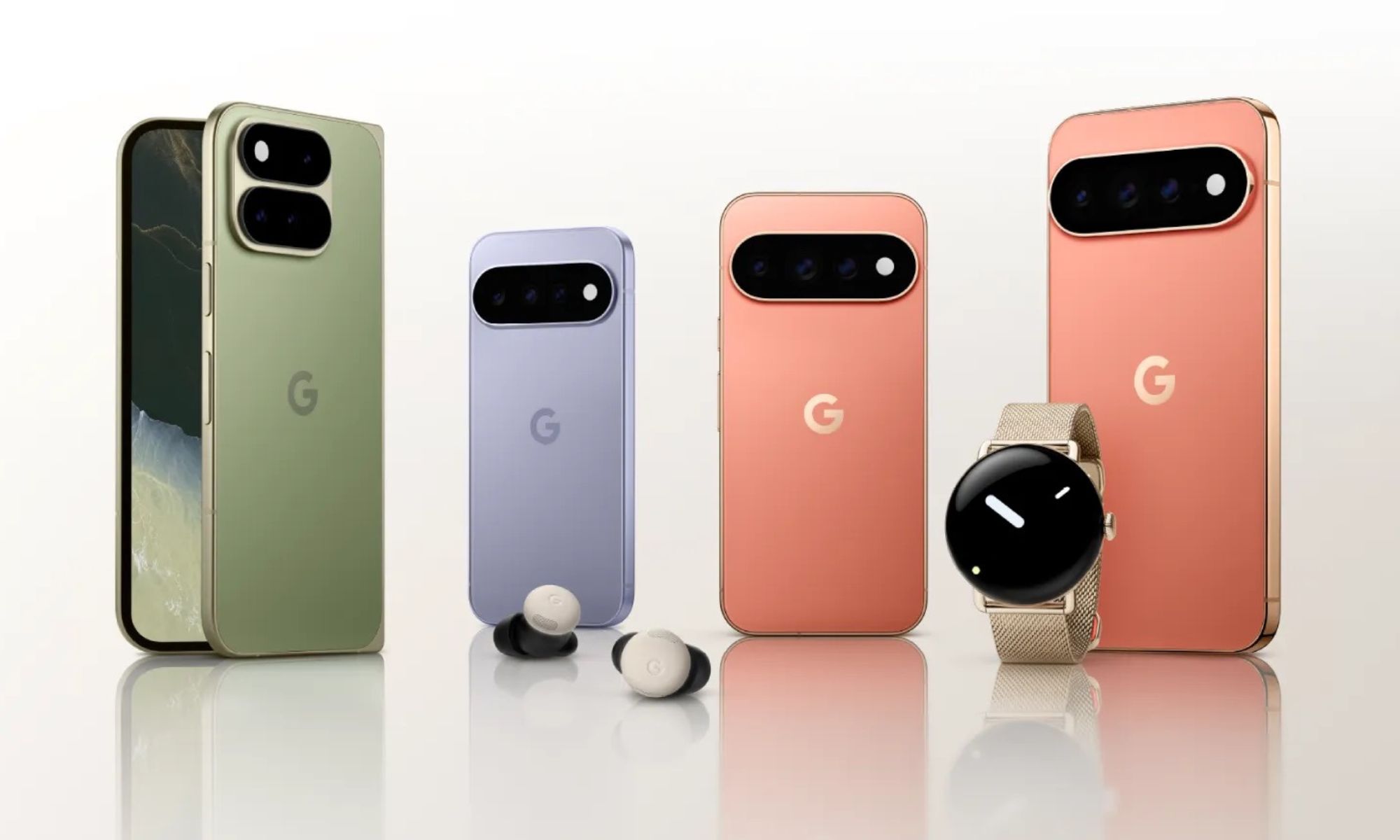
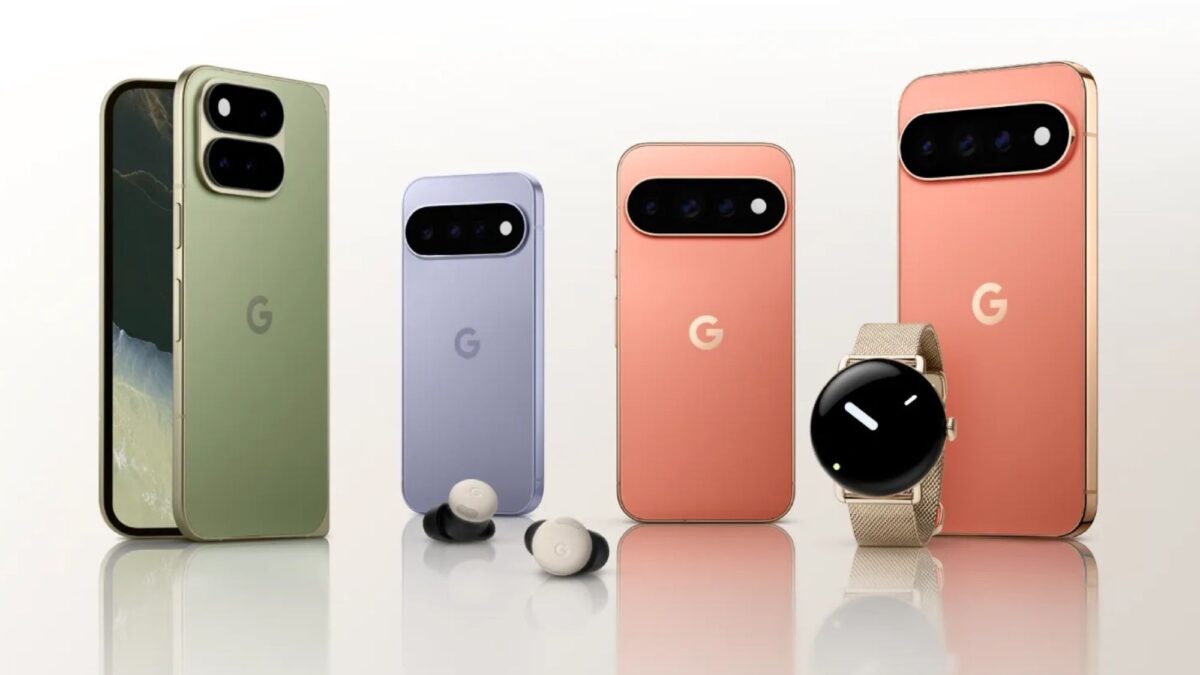
Google caught me off guard… putting the whole Pixel 11 lineup on sale in New York on Wednesday, hours before its own Made by Google keynote had even started, and every phone costs $100 more than the model it replaces. The Pixel 11 starts at $899, the Pixel 11 Pro at $1,099, the Pixel 11 Pro XL at $1,299, and the Pixel 11 Pro Fold at $1,899. Pre-orders opened that morning, and retail stock arrives August 20.
Pricing is the headline of the day, and Google isn’t dressing it up. Base Pro and Pro XL configurations fall to 12 GB of RAM from last year’s 16 GB, which the company attributes to a supplier-driven memory shortage across the industry. Alongside the increase, you get Tensor G6, 256 GB of base storage instead of 128 GB, a new rear notification LED called HiLight, and a Pixel Watch 5 that can dial emergency services if you stop breathing.
Memory shortage, meet the price tag
A Google spokesperson described the situation as a severe, supplier-driven RAM shortage and said the company needed to adjust Pixel 11 pricing and RAM configurations while it engineers its way through the problem. I can accept a shortage driving up costs, but as someone looking at the $1,099 starting price, I’m not sure why I should also accept less memory. Google’s answer leaves the cheaper Pro feeling like the wrong one to buy. I’d wait for the 16 GB configuration rather than spend $1,099 and start the year with a downgrade.
The 256 GB base storage makes more sense to me. I’m quite good at managing storage, removing every PDF I check out, and I don’t keep any games besides Call of Duty. However, I’ve lost count of how many times my father has asked me to clean up his phone after years of photos, videos, screenshots, and downloads have piled up.
A flash that talks: HiLight
For starters, HiLight wraps an array of colored LEDs around the camera flash on the Pixel 11 Pro, Pro XL, and Pro Fold.
I’d use HiLight most when, say, I’m listening to Spotify at my desk and don’t want to keep checking my phone. A rich green glow for Spotify notifications would give the feature some personality and make the rear light feel useful beyond calls. Google limits customization to favorite contacts for now, which, I have to be honest, is a missed opportunity.
I can see the appeal of knowing who’s calling without reaching for the phone, especially when it sits face down while I work. But once I move beyond that use case, HiLight starts to feel like Google is asking a tiny ring of LEDs to do too much. Favorite-contact message alerts are also coming later, making the hardware feel ahead of its use cases. Tom’s Guide called it gimmicky after trying it, and I understand why.
Bigger sensors, and a 120x asterisk
Camera hardware is where the money went. The standard Pixel 11 gets a larger 48MP main sensor Google rates at 56% better light sensitivity, plus 30x Super Zoom off its 5x telephoto. The Pro pair moves to an all-new 50 MP wide camera and a redesigned 48 MP zoom lens with a bigger sensor pulling in 30% more light. Portrait Mode now works at 5x, and Night Sight captures up to four and a half times faster on Tensor G6.
Then there’s Pro Zoom at 120x. That number is AI upscaling at work, so treating it as equivalent to a 120x lens would be a mistake. Magic Capture and Camera Looks interest me more, since one grabs a video plus several stills from a single tap and the other saves reusable film styles you can switch between. Magic Capture, in particular, would come in handy when I’m doing a hands-on review and need to record a video of a gadget while also taking photos.
Tensor G6 arrives with a benchmark problem
Google’s claims for Tensor G6 concentrate on efficiency and AI throughput. The chip promises 25% faster web browsing, 15% quicker app launches, 50% more TPU compute, and on-device Gemini Nano work up to 3.5 times faster while drawing up to 3.5 times less energy. I’ve always said that if you want an Android phone with an iPhone-like experience and a great camera, the Pixel is an excellent choice. For gaming, though, Samsung is ahead. Tensor G6 could help make the Pixel series more competitive there.
Raw speed remains the sore spot. Geekbench listings for the Pixel 11 Pro XL that surfaced ahead of the keynote put the chip at 2,112 single-core and 5,196 multi-core against 2,995 and 8,562 for the iPhone 17 Pro Max and 2,808 and 10,212 for the Galaxy S26 Ultra. Should that multi-core gap hold up in retail units, Google is shipping about half the Galaxy’s throughput at flagship money.
Still tall, still narrow: Pixel 11 Pro Fold
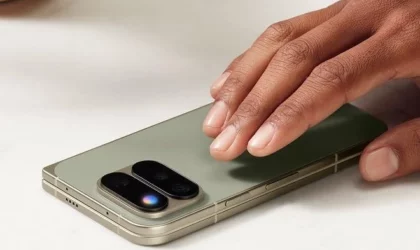
Anyone who follows my foldable takes knows I’ve wanted Google to commit to the passport shape… and it didn’t. Samsung’s Galaxy Z Fold8 went squat and wide, Apple’s folding iPhone will follow suit, and the Pixel 11 Pro Fold keeps the tall, narrow body that opens into a boxy 8-inch panel. Google shipped the wider format on the original Pixel Fold, then walked away from it, and I’d love to know who the mastermind behind that decision was.
I should anyway give credit to the engineering underneath. The Fold is about 1 mm thinner and about 10% lighter than the Pixel 10 Pro Fold, according to Google, with a glass-fiber composite back designed to resist cracking, a gearless hinge that protects the inner display, and a ceramic cover glass on the outer screen. Both displays hit 3,600 nits, a 20% jump, and the company rates the whole package as three times more durable than last year’s model.
Durability is the argument that tends to win Google customers. IP68 dust and water protection at $1,899 undercuts the Galaxy Z Fold8 Ultra by $200 while offering better sand- and grit-resistance, and a beach trip stops being a gamble.
Sign-to-text also debuts here, letting a signer use American Sign Language in front of the outer camera and surface translations on the cover display through Live Transcribe and Gboard.
Satellite ray paths on your wrist: Pixel Watch 5
Pixel Watch 5 arrives at $399 for the 41 mm and $429 for the 45 mm, with a Stephen Curry Special Edition 45mm at $579 due on shelves September 3. Inside is Qualcomm’s Snapdragon W5 Gen 2 Accelerated processor in a dual-chip layout with 50% more RAM and a 12% CPU bump, which Google totals as 20% faster. Battery figures come in at up to 30 hours on the 41mm and 40 on the 45mm.
GPS is the upgrade I keep rereading. Google claims twice the route-tracking accuracy of previous generations in difficult environments by tracing satellite ray paths through the 3D building models behind Google Maps, then correcting readings against a global network of weather and GPS reference stations as conditions change. Raw measurements get compressed on the watch, processed on a server, and returned to the Google Health app.
My grandfather spent his career as a geodesist, so multipath error and atmospheric correction were dinner-table topics in my house long before wearables existed. Seeing a 41mm watch apply differential corrections and urban ray tracing impresses me, and Google claims the result beats both the Apple Watch Ultra 3 and the Garmin Fenix 8 Pro. Independent route testing will settle that claim, but the engineering behind it looks like more than decoration.
Breathing Emergency Detection stops at the US border
The flagship health feature can detect a persistent, dangerous drop in blood oxygen using PPG, accelerometer, and barometer data with an on-device algorithm, then call emergency services and share your location if you don’t respond. Escalation runs in stages, starting with a haptic buzz and a full-screen alert, followed by an audible alarm and a 30-second countdown. To limit false alarms, the watch confirms you’re in a low-motion state without rapid altitude changes and haven’t been asleep for more than 30 minutes.
American buyers won’t get it. The feature hasn’t been cleared by the Food and Drug Administration, so the launch covers ten European countries including the UK, Germany, France, and the Netherlands, and it reaches Pixel Watch 4 owners too. Google also cautions that the feature isn’t intended for people with preexisting respiratory conditions.
Blood pressure trends, insulin resistance trends, and sleep breathing quality trends fill out the new Health Guardian umbrella, arriving later this fall for Fitbit Air and Pixel Watch 3, 4, and 5 as monthly summaries instead of live readings. Google says the insulin resistance model was pretrained on over a trillion minutes of data from 5 million opted-in users and validated against clinical blood tests in a Nature paper. Daniel Jones, a former president of the American Heart Association, notes that no wrist device carries an AHA recommendation for blood pressure monitoring, with arm cuffs still the diagnostic standard.
Cheap, late, and smarter about batteries: Pixel Tag
Google Pixel Tag (1-pack)
Five years after the AirTag, Google decided to give Pixel owners a finder tag of their own. Pixel Tag costs $29, or $99 for a four-pack, and it ships November 11.
Two details raise it above a straight AirTag clone. A physical button rings your phone in reverse, and the tag keeps sending low-battery reminders every two weeks until it dies, which beats the single warning Apple’s tracker offers. Sharing extends to 10 people, Left Behind alerts can be switched on, and unknown tags traveling with you trigger a warning on your phone.
Quieter updates: Pixel Buds Pro 2 and Gemini connections
Pixel Buds Pro 3 will wait another year, as Pixel Buds Pro 2 get an Olive finish and a software refresh instead of a successor, a tactic I’ve come to expect from Sony.
Dynamic ANC compensates when the ear seal shifts, Gemini handles voice-driven audio settings, and Live Translate supports more than 70 languages, with playback through your phone at near-conversational speed. I’m not much of a Gemini user, so Live Translate is the feature I’m keeping an eye on. I’ll soon decide whether it’s good enough to earn Pixel Buds Pro 2 a spot in my guide to translator earbuds. Orders are now open, with the software update rolling out in September.
Gemini also picks up a batch of connected services over the coming weeks. Granola, Otter.ai, and Wix cover meetings and websites, Fever, Get Your Guide, Localiza, OpenTable in the UK, and Ticketmaster handle bookings, iHeartRadio and Pandora bring streaming, and Angi, Thumbtack, and Zocdoc reach into home services and doctor appointments. Gemini can now place orders and dial businesses on your behalf, with final approval left to you.
What came before, and what’s still unproven
Google’s high-end design language is now in its third year with only the edge-to-edge camera bar glass and fresh colors to distinguish it. Apple revamped its Pro iPhones 12 months ago, and the iPhone 18 series is expected to carry that look into a second generation, while Samsung’s Galaxy S26 Ultra shipped earlier this year with a privacy screen. Familiarity is a fair criticism of a lineup that has raised prices.
The same goes for some of Google’s bigger claims. Tensor G6 efficiency, GPS accuracy, Fold durability, and several health features still need real-world testing, while features such as strength training coaching and HiLight are not available at launch.


