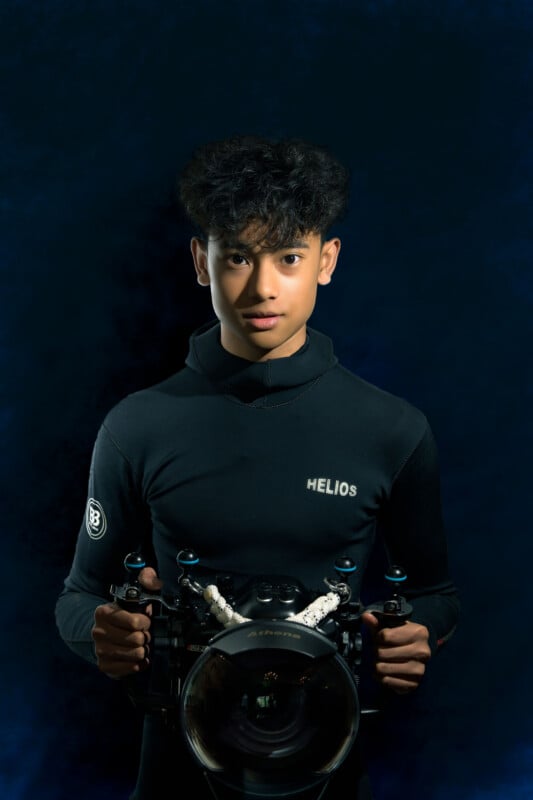
14-year-old award-winning underwater photographer Panitbhand Paribatra “Pari” Na Ayudhya of Thailand, made waves late last month after he won the Project // 21 category in the prestigious Hasselblad Masters 2026 photo contest. It was not Pari’s first big awards win, and undoubtedly won’t be his last.
PetaPixel spoke with Pari to learn more about his photographic journey, how he got started with underwater photography, what it felt like to win Hasselblad Masters, and what’s next.
Winning Hasselblad Masters 2026
“I was really glad I made it to the finalists,” Paribatra tells PetaPixel . “I didn’t expect to win because there were really good other photographers I was competing with. I just thought, ‘It was really good that I made it to the finalists.’ I just didn’t expect to make it to the top.”
This is arguably Paribatra’s biggest victory yet, besting exceptionally challenging competition in Hasselblad Master’s Project // 21 category, which was open to all photographers 21 years old and younger. However, Pari has won other major competitions, including being named Photographer of the Year Under-18 by the Shark Trust, receiving a Commendation at the Siena Awards last year, and more.
“I was really excited because the prize is really good,” Pari laughed when recalling finding out he had won Hasselblad Masters. In addition to earning the title, “Hasselblad Master,” Pari also won a 5,000 euro creative fund and his choice of a Hasselblad 100-megapixel camera and two XCD Series lenses.
“I am very honored to win this prestigious award,” Pari adds.
The 14-year-old photographer showed strategy beyond his years to win, explaining that he looked at all the winners of prior editions of the contest to see what types of images tended to perform the best.
“I looked at all the categories, and I saw there’s this pattern in which all the photos have to be unique, but they also have to go along with each other,” Pari observed.
In Hasselblad Masters, photographers enter a series of three photos.
For the three underwater shots Pari settled on, he said they needed to be really good on their own, but also aesthetically fit together.
“They all look similar but they’re all different in a way,” the ambitious young photographer says.
Capturing the Striking, Award-Winning Underwater Photos
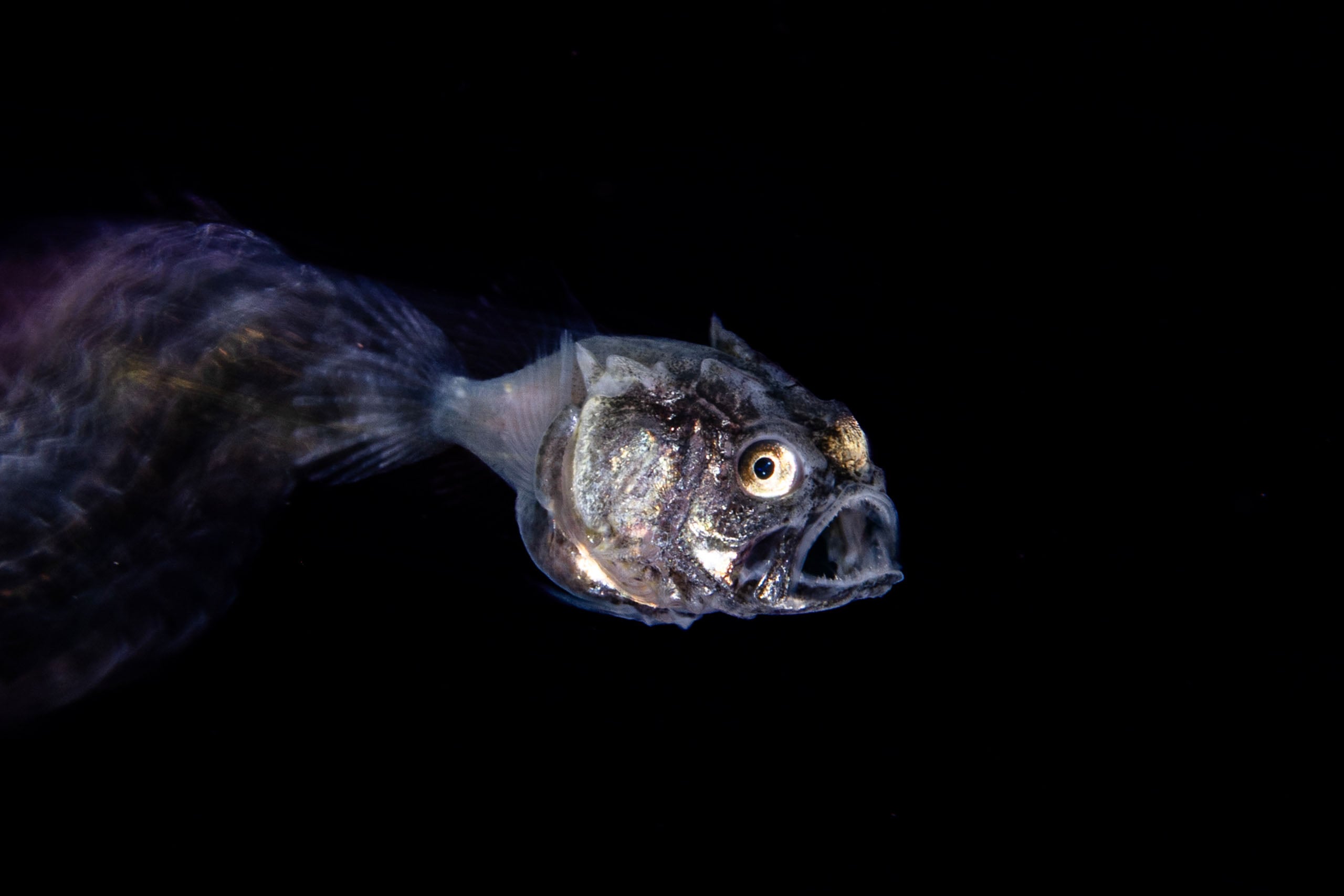
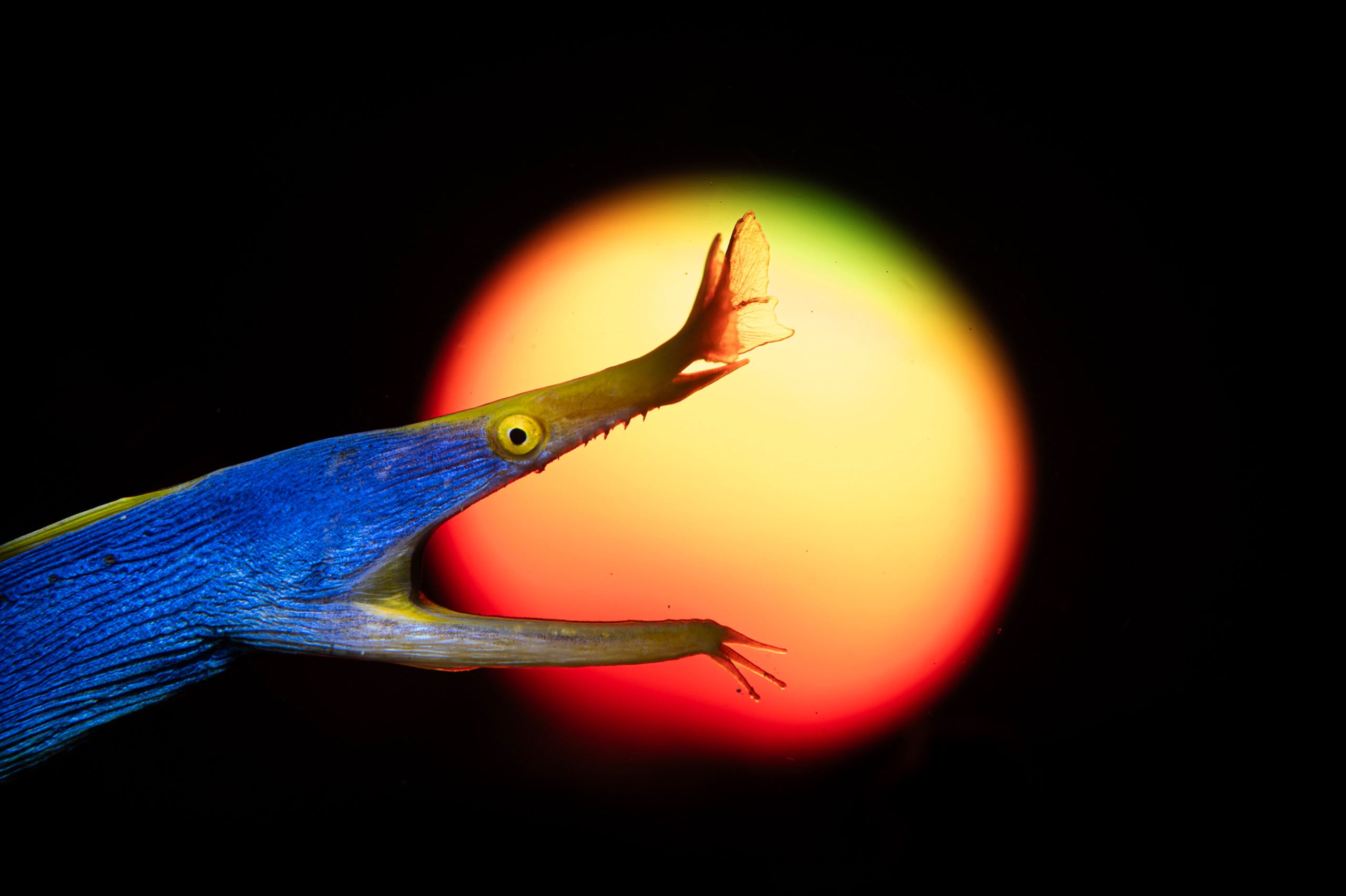
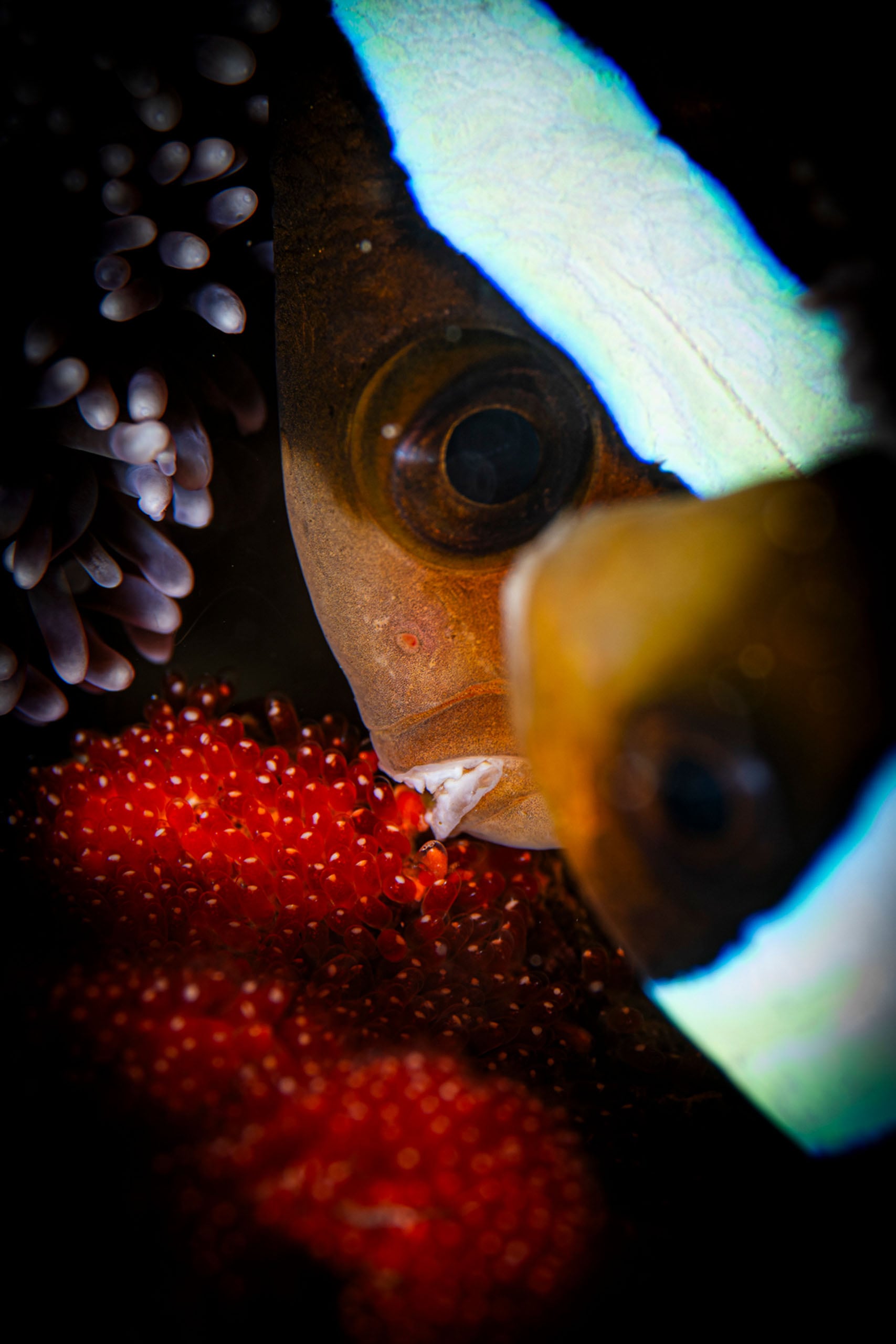
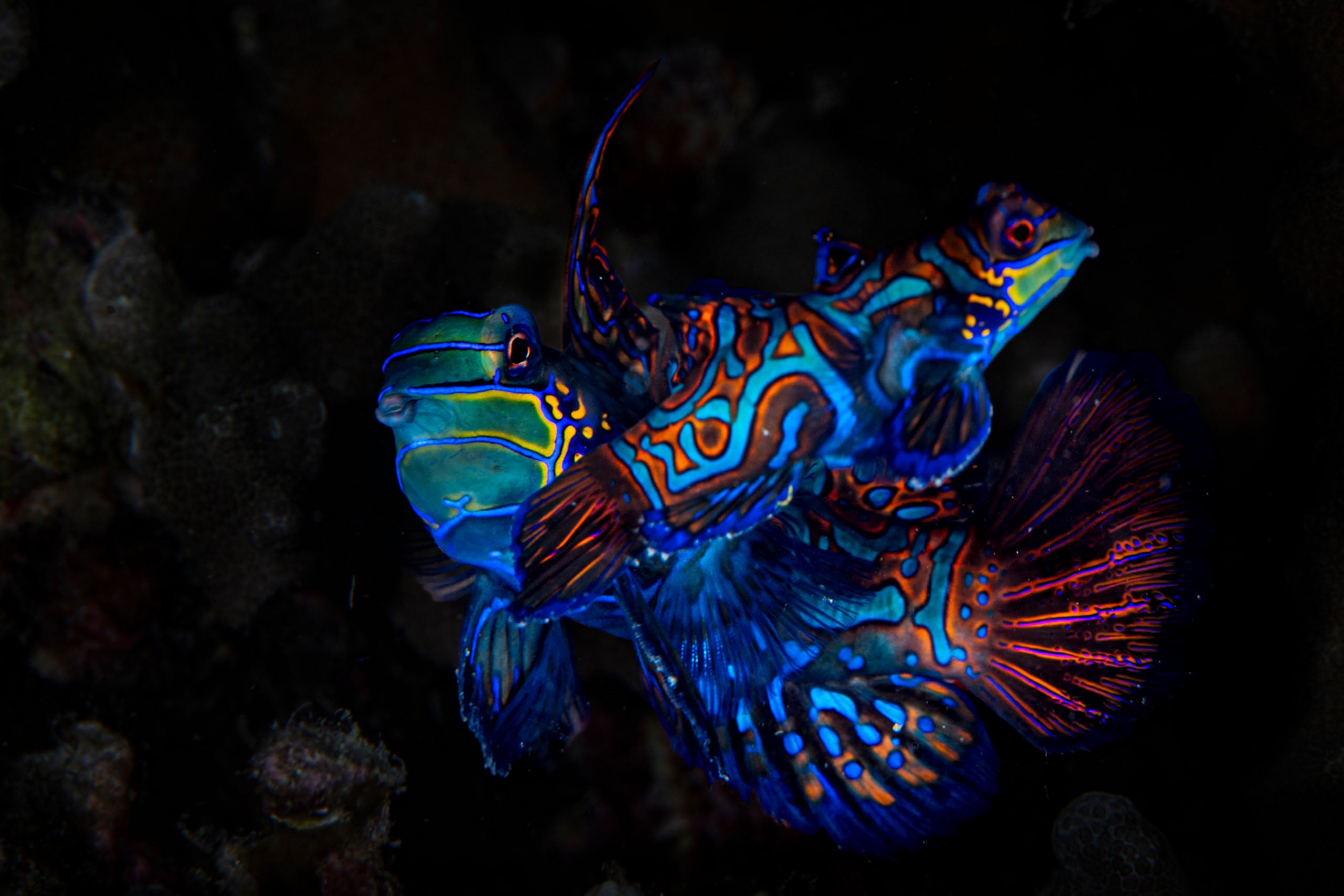
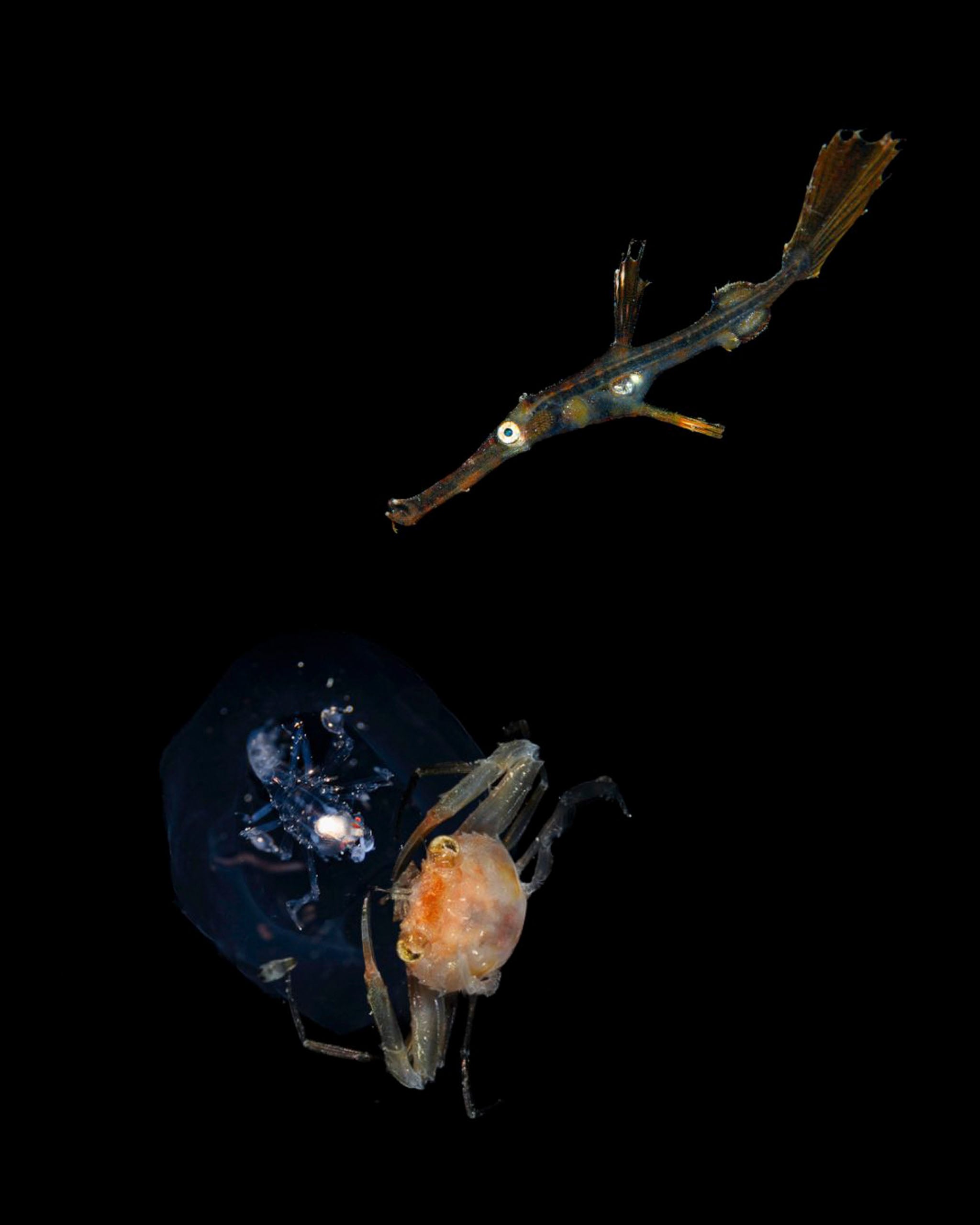
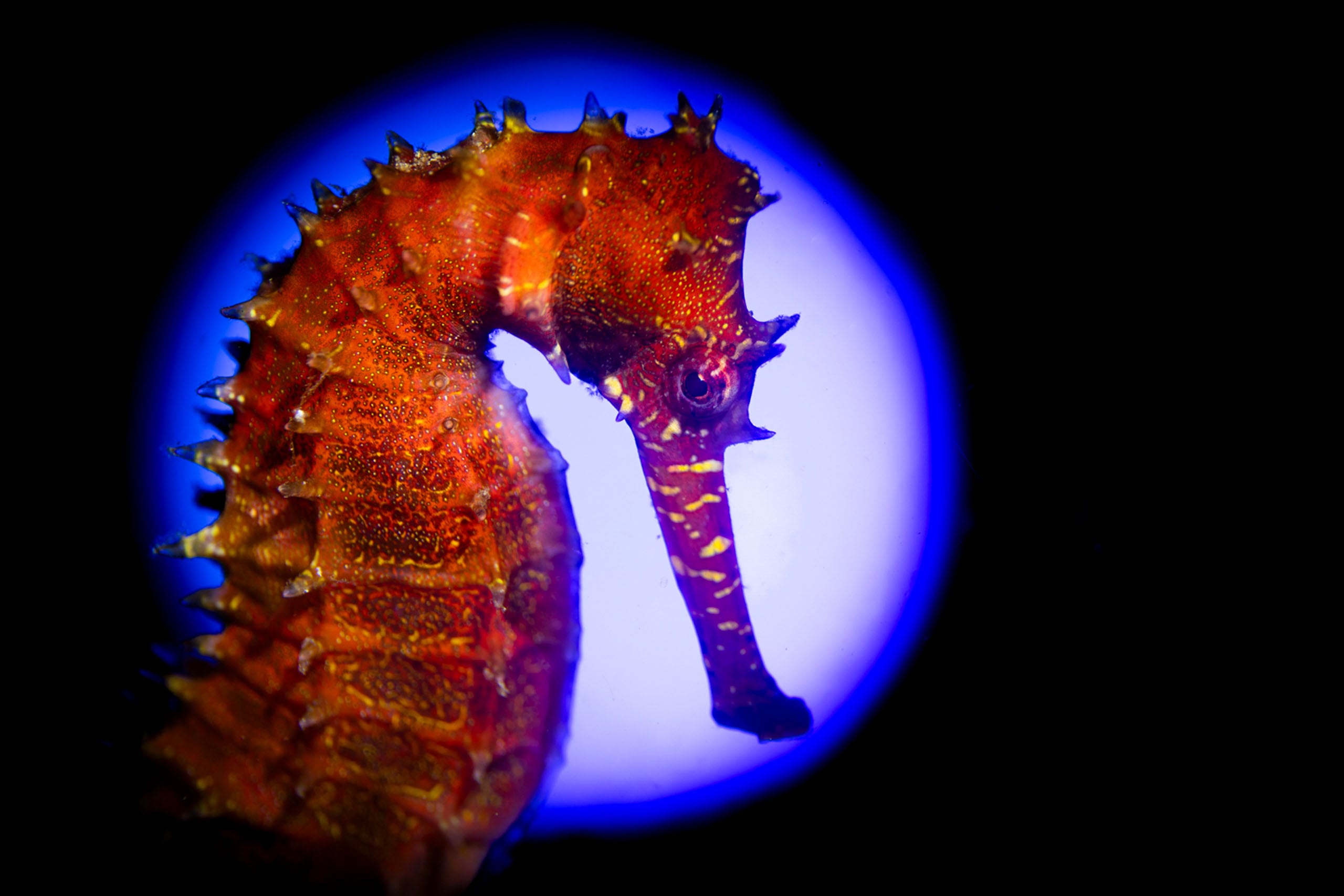
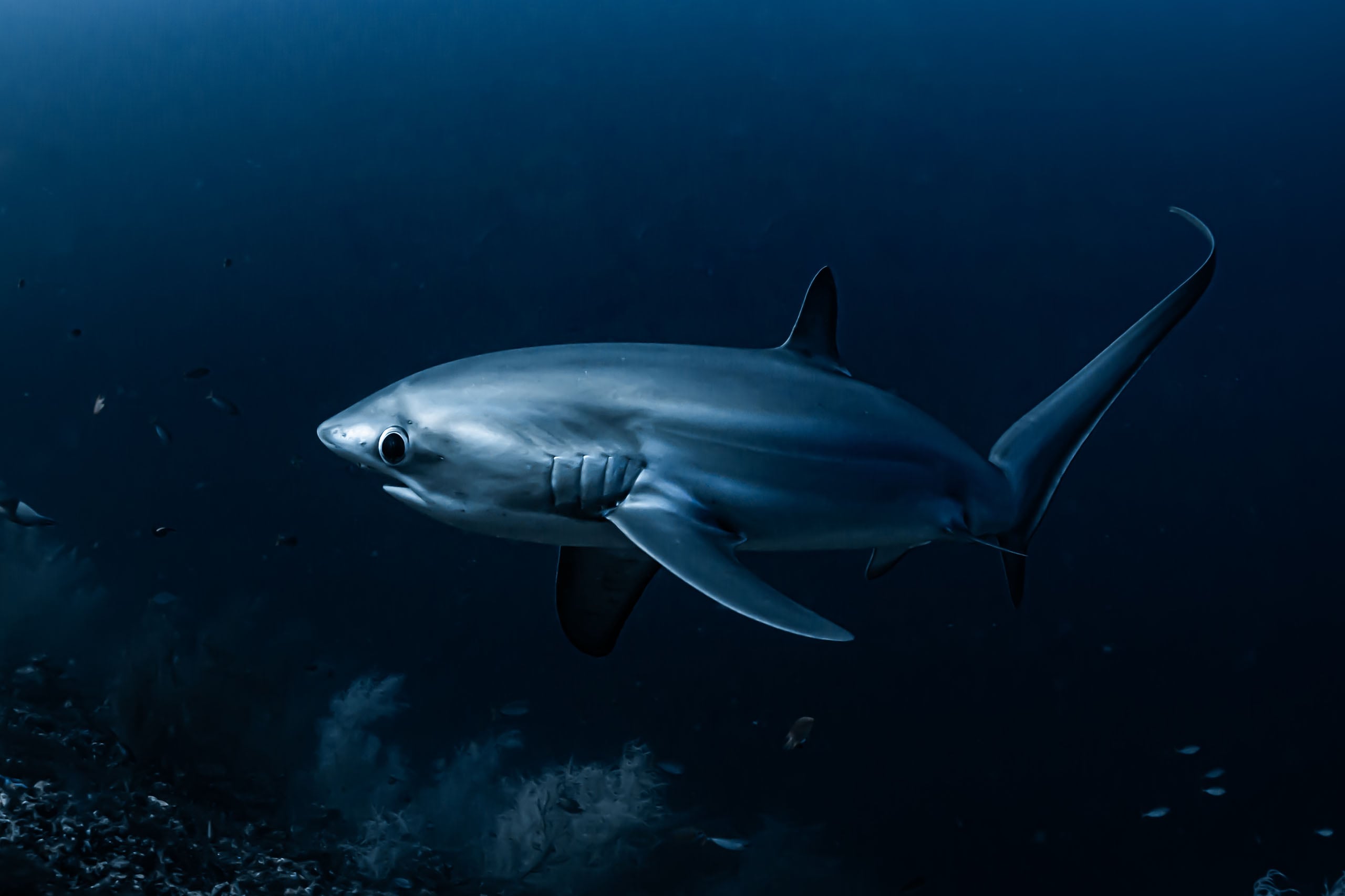
Pari captured all three of his award-winning shots during a blackwater dive in the Philippines. As Pari explains, there aren’t too many places in the world where you can blackwater dive. It’s an open-ocean nighttime dive, where divers essentially float in a water column over deep abyssal depths. A powerful light attracts plankton to the waters, which then encourages deep-water creatures feeding at night to swim over.
“We were in the middle of the ocean, waiting for creatures to come up at night,” Pari says. “During the first dive, I took normal shots with a typical flash, so the photos are all clear and everything.
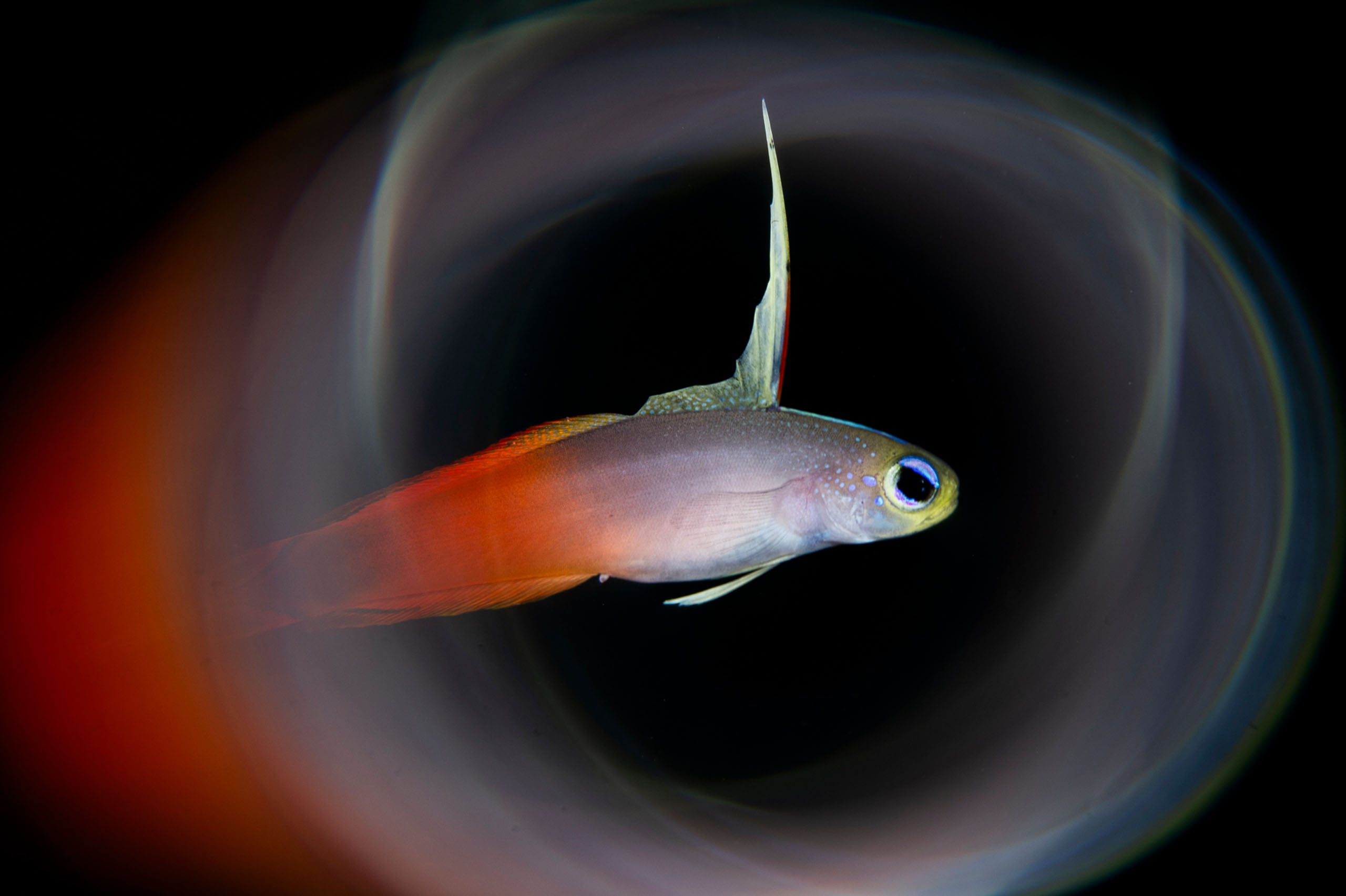
“Then, because I saw this thing that people did with slow shutter speeds during blackwater dives, I wanted to try it.
“I tried it with normal flash, and it was kind of wonky. It wasn’t organized, everything was all over the place.
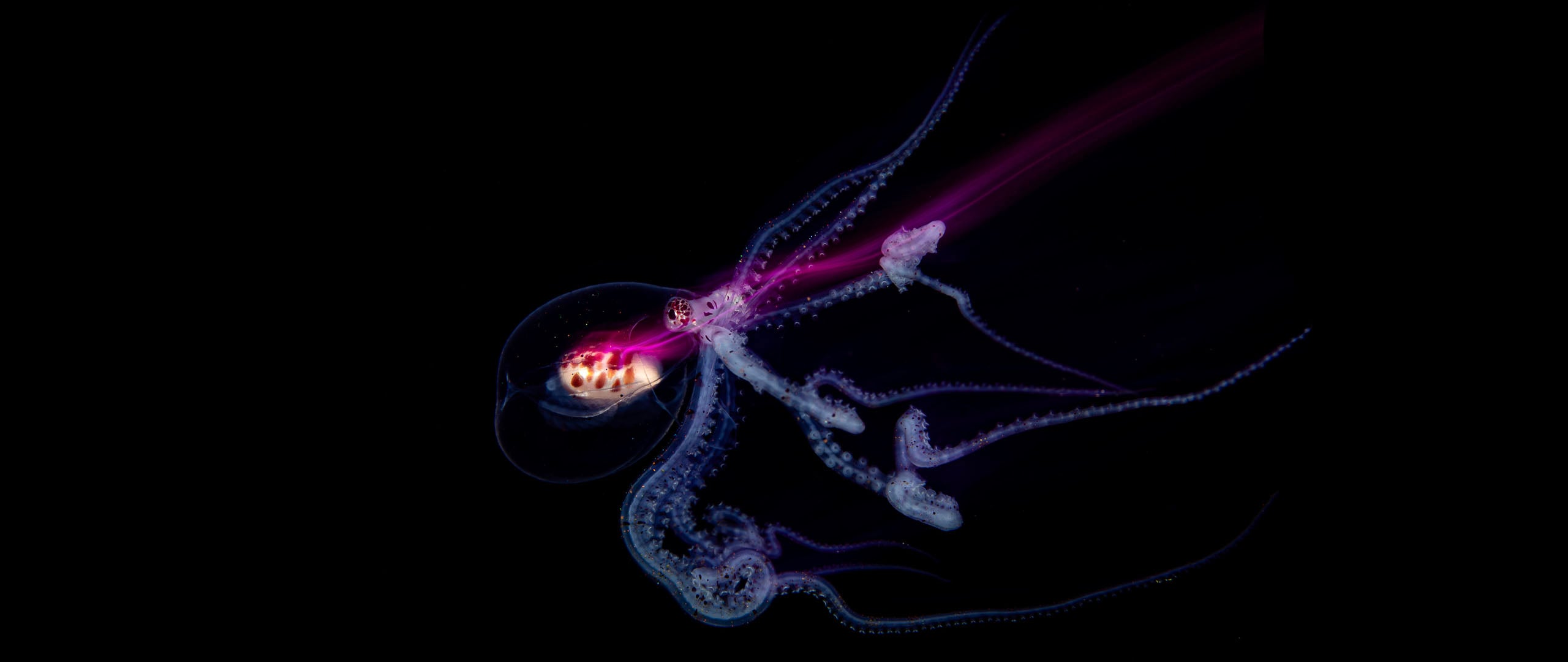
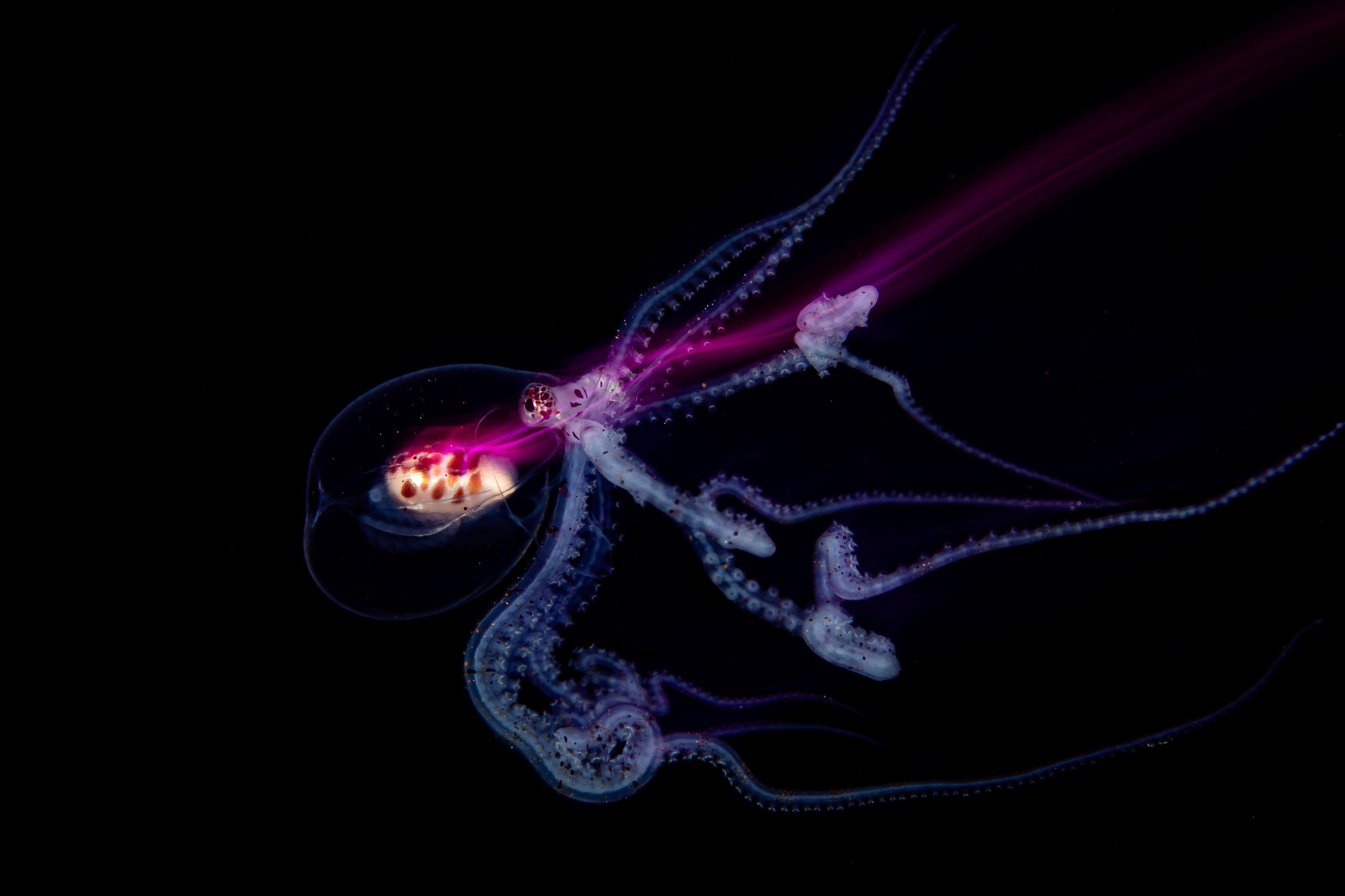
“So I improvised with a video light and filters, and I put the filter on during the slow shutter, and then ended my photo with flash to keep the details.”
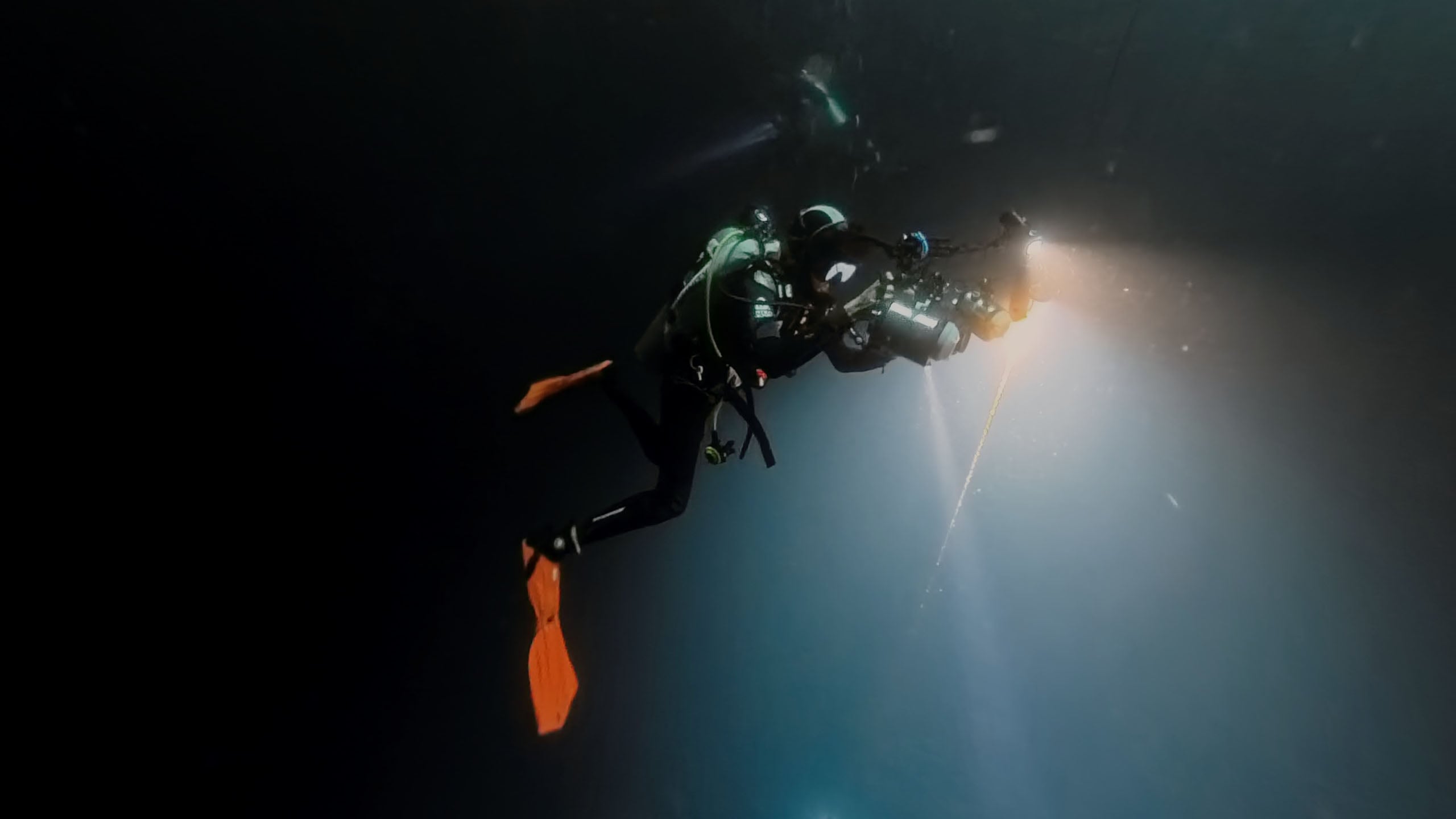
This brilliant bit of improvisation in the water, all at nighttime on the open ocean no less, reflects Pari’s creativity and technical skills.
“It wasn’t that bad,” Pari says of the blackwater dive. “There were a lot of people there. And it was like 100 meters deep down there, and I didn’t know what could come up, so I was excited.”
Diving and Photographic Expertise Comes Together
Underwater photography is an especially challenging photographic discipline, requiring not only serious photography chops, but extensive diving expertise, which can take many years to acquire.
For Paribatra, he might as well have been in the ocean. He started scuba diving as soon as he was legally allowed to, at age 10, and very quickly earned his certificate. He then added a diving rescue certification shortly thereafter.
“I just practiced and practiced and practiced,” he says.
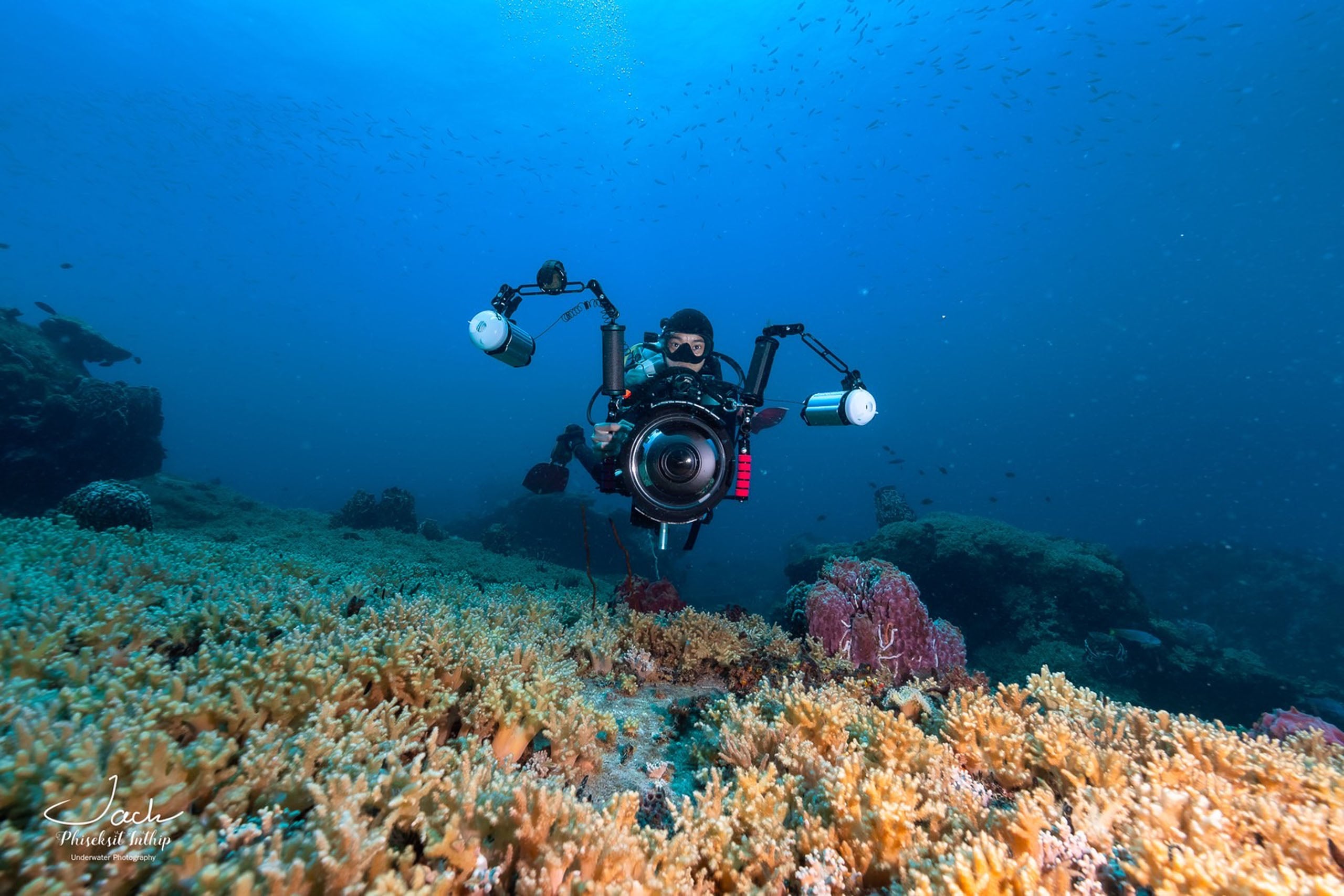
Like so many other accomplished photographers, Paribatra first picked up a camera to document what he saw on his adventures.
“I always had an action camera,” Pari says of his earliest dives. “I just thought I would record what happened out there.”
When his first photos were “really bad,” he grew determined to improve his photography skills.
“I had to improve,” Paribatra laughs. “Then it went on, and I started really liking it.”
He quickly moved up, both in terms of his skills and his gear.
A Nikon Z8 and a 105mm Macro Lens
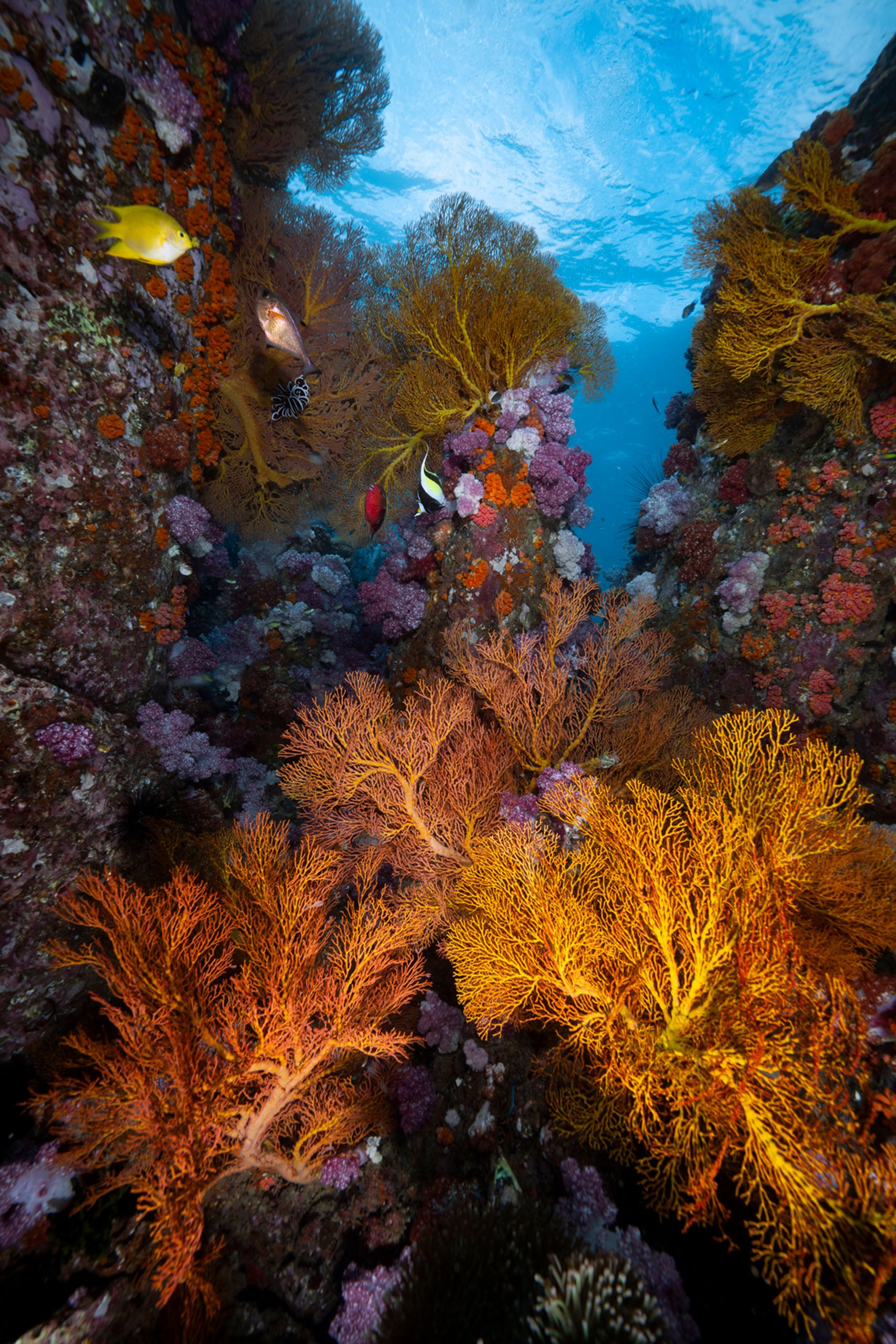
He now shoots with a Nikon Z8, often with a Nikkor Z MC 105mm f/2.8 VR S macro lens. He uses a pair of Kraken strobes mounted to either side of his lens and also swims with a video light.
When asked why a 105mm lens, rather than the more typical wide-angle lenses that underwater photographers use, Paribatra says he needs to get really close-up shots of tiny subjects, and if he needs more space, he can always swim farther away.
Paribatra’s favorite of his three Hasselblad Masters photos, the one of the octopus, may look like it’s a big creature. It isn’t. Pari says it was just about the size of a ping-pong ball.
Paribatra’s love for macro can also be partially explained by one of the first photos that really excited him, but not for the reasons you might expect.
“It was a sea slug,” Pari recalls of the moment he truly fell in love with photography. “I saw it on documentaries, and I was like, ‘Wow, this thing actually exists, and you can actually see it.’ So I was like, ‘I have to take a photo of this.
“And then I took it, and it came out very blurry. It was very bad. So the next time I went out, I had to make it better.”
The Biggest Challenges of Underwater Photography
Although it’s easy to believe, listening to Paribatra explain his photography, that everything comes easy, he’s adamant that’s not true. He has had to work extremely hard to hone his photographic skills, and he still faces challenges on every dive.
“It’s hard because you can’t control a lot of things,” the diving photographer explains. “You can control the light, but you can’t control the water. If the water isn’t cooperating, it’s really hard to do anything.”
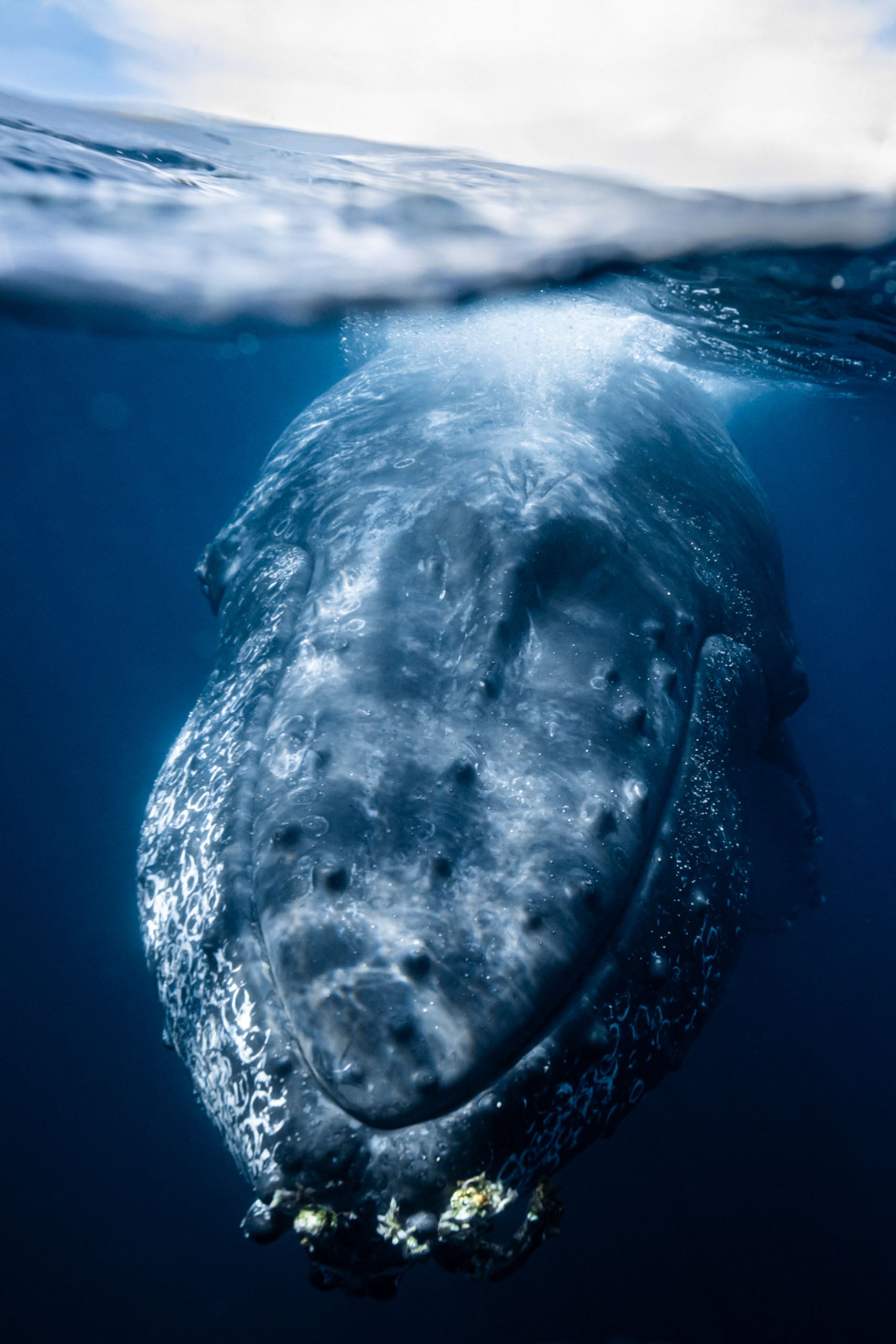
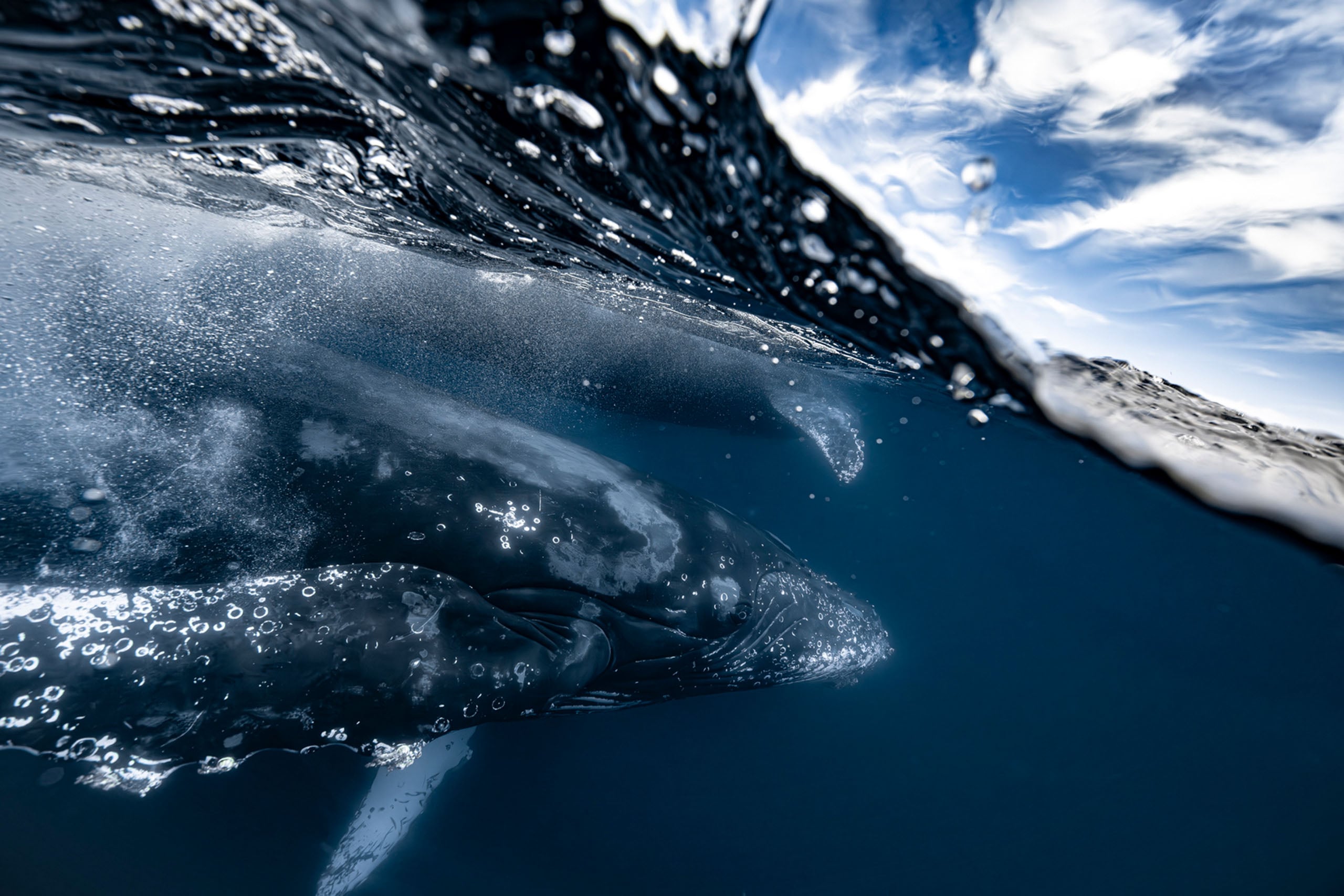
And then the subject is almost always moving, adding another layer of complexity to the process. Although Paribatra is an excellent diver, underwater creatures have significant advantages in speed.
Then there’s visibility. There are often things floating in the water that make it hard to see.
“The subject is moving, we’re moving, and sometimes the conditions aren’t great. You’re just not always going to get photos, and that’s really disappointing.”
Pari, an Ocean Ambassador for the Manta Trust and a Young Shark Ambassador for Fins Attached Marine Research and Conservation, has huge respect for the ocean and all its inhabitants, so he’s also extremely careful to never stress out his subjects. He has to wait for them to come to him, and that doesn’t always happen.
Paribatra says he quickly learned to always be ready in the water. As soon as he gets in the ocean, he double-checks all his settings and makes sure his test shots look good.
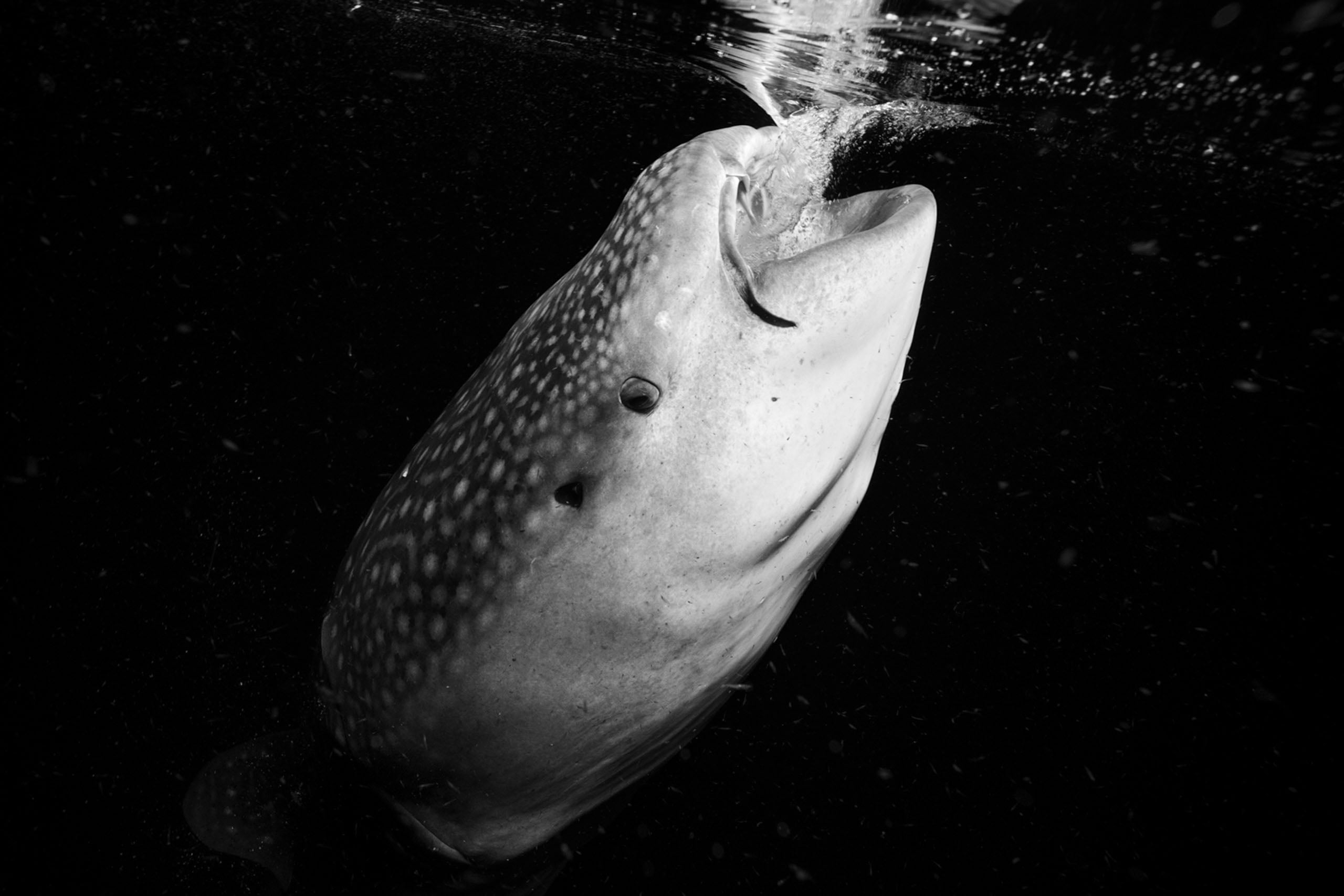
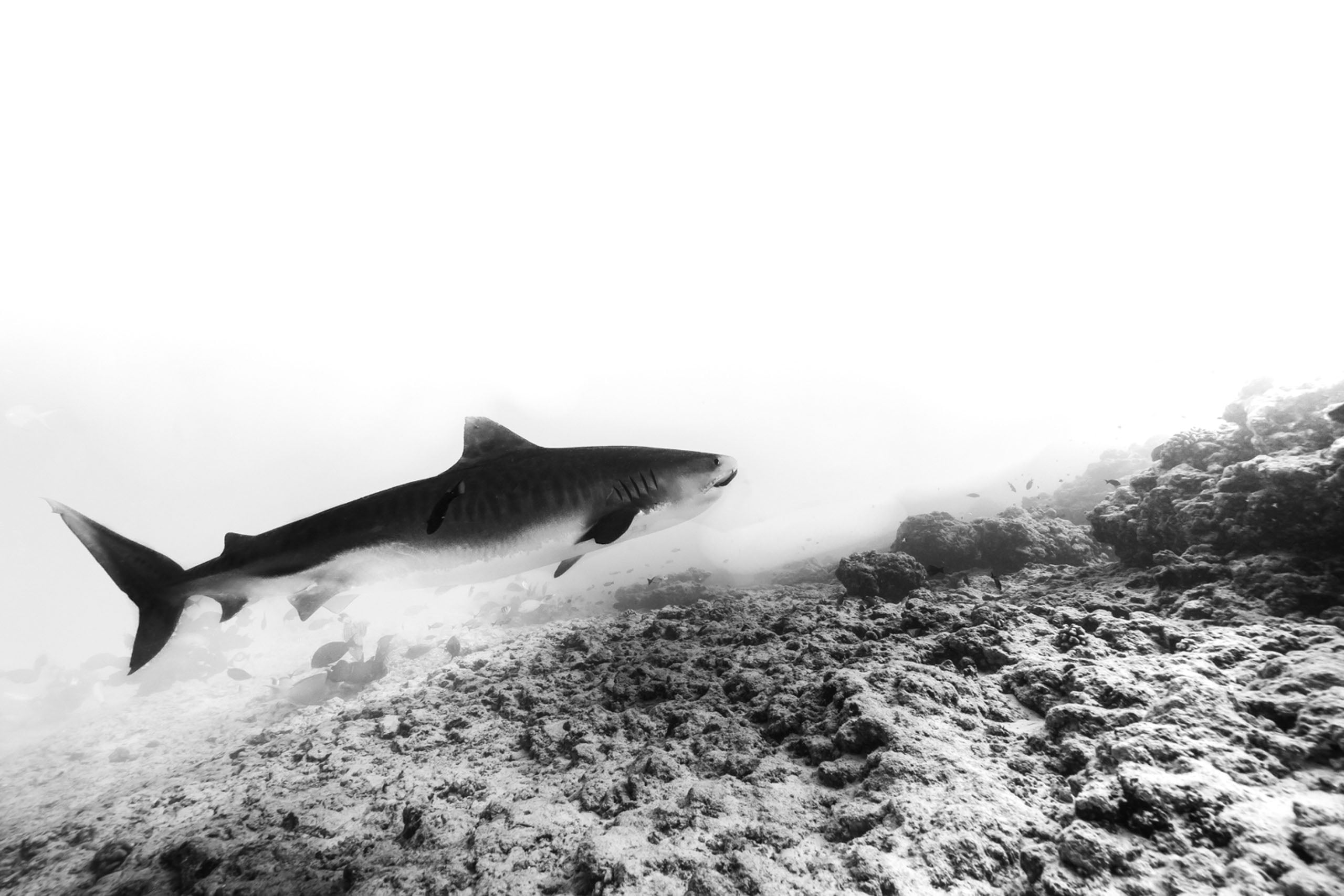
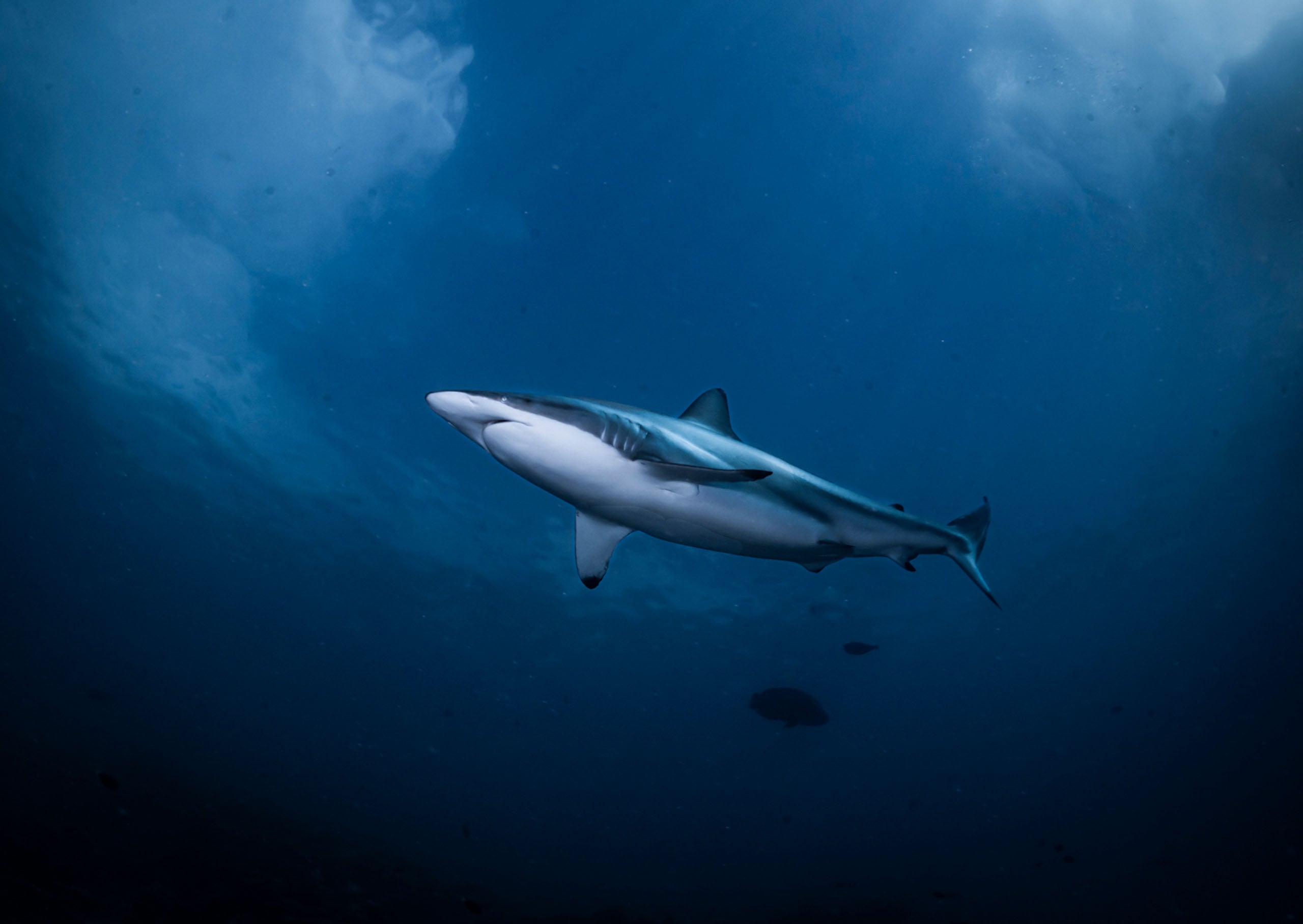
“I practice on the person next to me or a rock or something to make sure the settings are perfect first, because a shark isn’t going to stick around long,” Pari says. “So if it does, I’m ready and just try to find the angle and click because I can’t set anything up on my camera after the shark shows up.”
A Love for the Ocean
“I have always liked the ocean, spending time in the ocean,” Paribatra tells PetaPixel. “Long before I started diving, I knew I had to do something to pay back what the ocean gave to me.”
Paribatra has given many presentations over the years and most recently hosted a photo exhibition Bangkok, “Pay Back to the Ocean.”
“Other people do stuff with data and science and awareness. But I just thought that photography — I enjoy photography — so I want to use that and do something good for the ocean.”
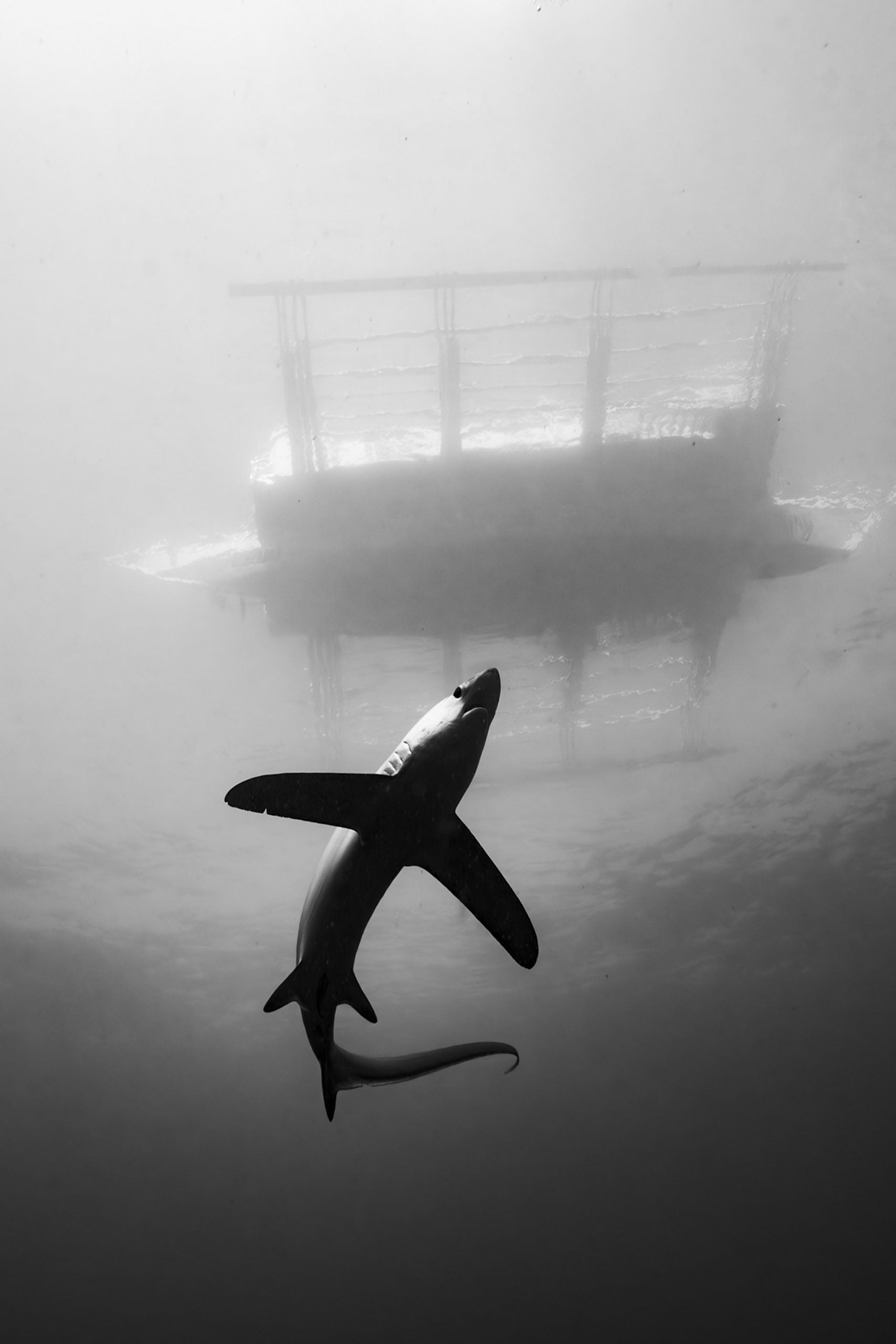
Although it may seem like Paribatra is destined for a life of professional underwater photography, the young photographer says that isn’t his dream.
“I want to improve, I want to get better,” Paribatra says of photography. “But I also want to enjoy it in a way that it might not be the number one job in my life. Because when it becomes a commitment, and something I have to do a lot, I won’t enjoy it as much.
“I think it’s a number one hobby, but not everything in my life.”
Paribatra knows he wants to pursue a career related to the ocean,, though. Maybe something related to science.
“But I’m not sure yet.”
One thing is for sure, no matter what Pari Paribatra decides to do, he has the skill and drive to excel.
To stay up to date with Paribatra’s underwater photography adventures, readers can follow him on Instagram and visit his website.
Image creditsAll photos by Panitbhand Paribatra “Pari” Na Ayudhya


