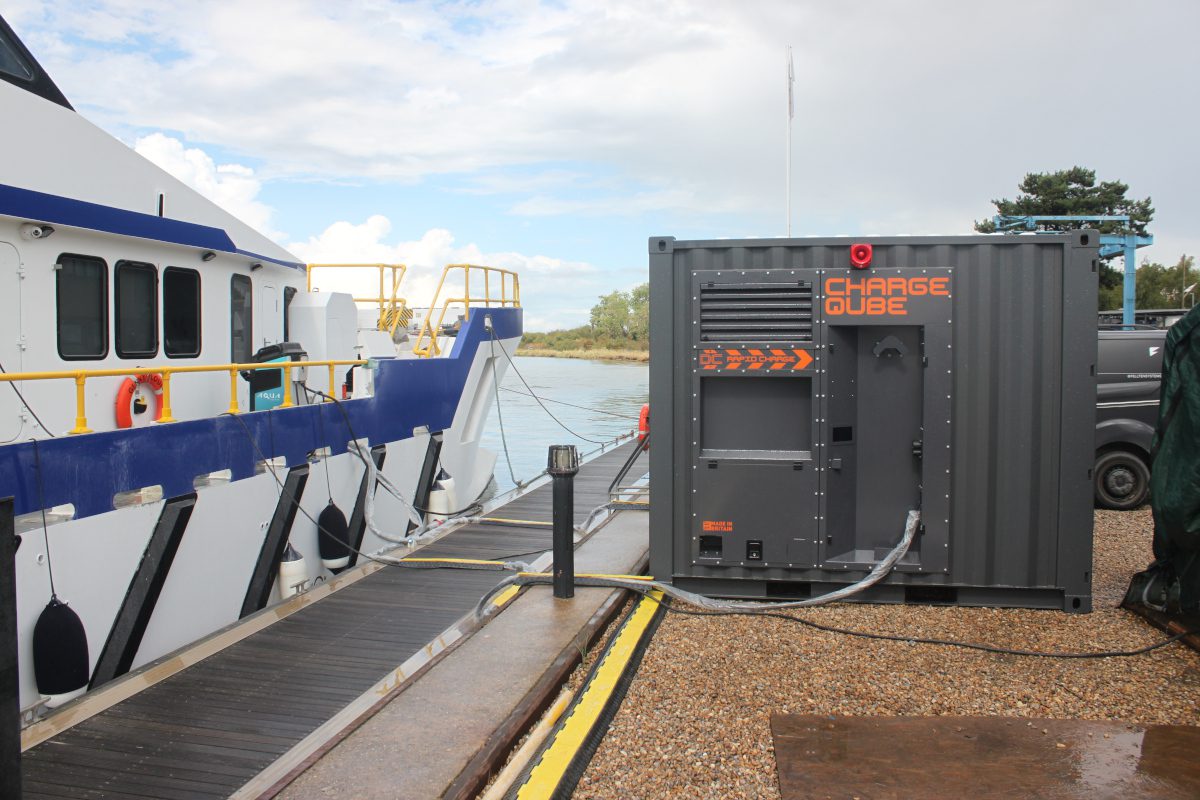


A 450 kWh mobile battery energy storage system is being deployed to charge an electric offshore wind crew-transfer vessel, offering a way around constraints on the grid connections available at ports.
Marine electrification specialist Tidal Transit is using Fellten’s Charge Qube CQ450 to provide shoreside charging for e-Ginny, its conversion of the diesel-powered Ginny Louise into a fully electric crew-transfer vessel (CTV).
The mobile, modular battery system has 450 kWh of storage and can provide charging at up to 240 kW. It can be transported between shoreside locations, allowing charging capacity to be deployed where it is needed without waiting for permanent high-power grid infrastructure to be installed.
The companies see mobile battery storage as one way of addressing an emerging obstacle to marine electrification: electric vessel technology and charging requirements are developing faster than the grid infrastructure at some ports.
“One of the biggest challenges facing marine decarbonisation is that electric vessel technology is advancing faster than the supporting infrastructure onshore,” said Leo Hambro, co-founder and CEO of Tidal Transit.
“If we’re serious about reduced fossil fuel dependence and decarbonising offshore wind logistics and wider maritime operations, we need practical charging solutions that work now, not years down the line.”
He said the Charge Qube would provide the high-power charging required to support e-Ginny and potentially other electric and hybrid vessels without being limited by local grid constraints.
Fellten offers mobile battery systems ranging from the 160 kWh CQ160 to a planned 1 MWh model. Its systems are already being used in applications including electric vehicle fleet depots and battery-electric vehicle programmes, where grid capacity can restrict access to high-power charging.
The e-Ginny project has involved converting Ginny Louise from diesel propulsion to fully electric operation, alongside work by Tidal Transit to develop offshore charging infrastructure.
Mike Ellenthorpe, general manager at Fellten, described the vessel as a demonstration of how mobile storage could support commercial marine electrification.
Tidal Transit said the combination of offshore charging infrastructure and the new shoreside battery system is intended to help demonstrate how electric CTVs could replace diesel-powered vessels used to transport personnel in the offshore wind sector.



