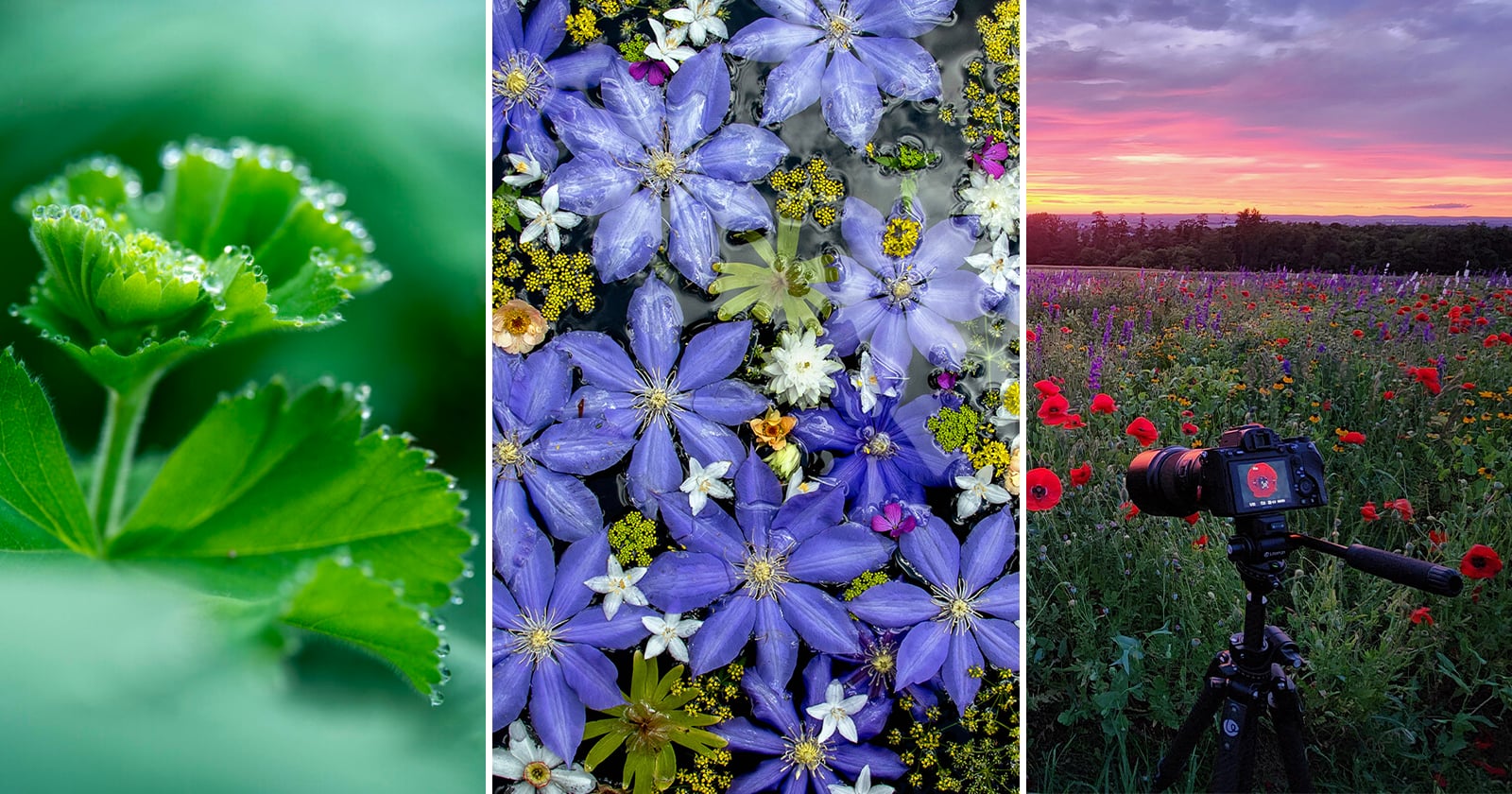
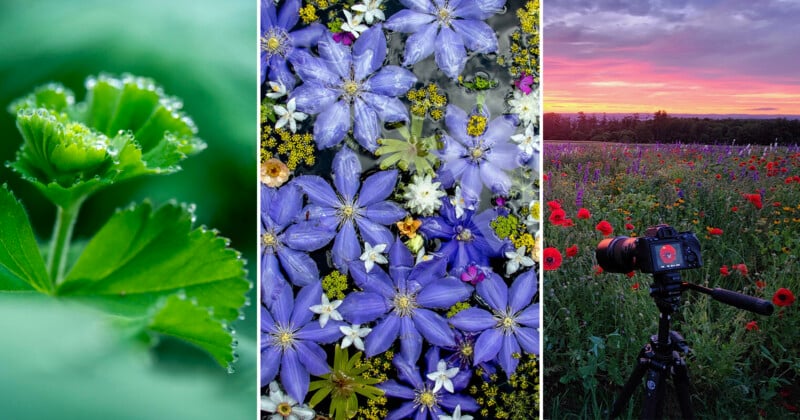
Transform tiny subjects into striking works of art using advanced macro techniques that go far beyond simply getting close. In this guide, we’ll explore how experienced photographers build depth, control light, and craft intentional compositions that turn the smallest details in nature into powerful, visually compelling images.
Macro photography is often introduced as a way to reveal details that are invisible to the naked eye. Magnification becomes the primary focus, with photographers striving to capture every hair on an insect or every grain of pollen on a flower. While technical sharpness certainly has its place, truly memorable macro photography goes beyond documentation. The most compelling images transform tiny subjects into complete visual worlds, using composition, light, depth of field (DoF), and storytelling to create photographs that feel larger than life.
As photographers gain experience, the challenge shifts from simply executing sharp photos of small subjects to creating images that guide the viewer’s eye, evoke emotion, and reveal nature in unexpected ways. At this stage, macro photography begins to share more in common with landscape photography, portraiture, and fine art than it does with simple close-up documentation. Success often comes from understanding how to build a composition at a microscopic scale rather than simply maximizing magnification.
Lots of Depth of Field: Advanced Focus Stacking Techniques
Focus stacking is a technique that combines multiple photographs taken at different focus distances into a single image with an extended depth of field, allowing macro photographers to overcome the naturally shallow depth of field that comes with high magnification. By carefully shifting focus through a subject and blending the resulting frames in post-processing, it becomes possible to render complex scenes with a level of clarity and depth that would be unattainable in a single exposure.
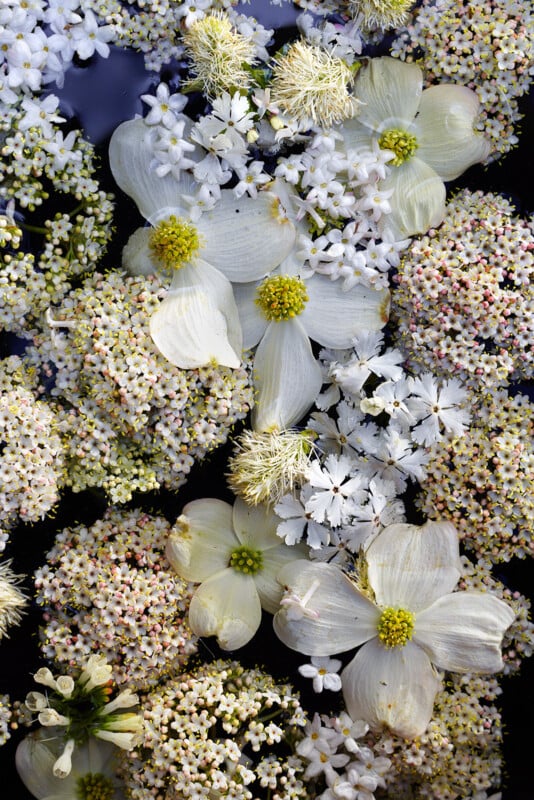
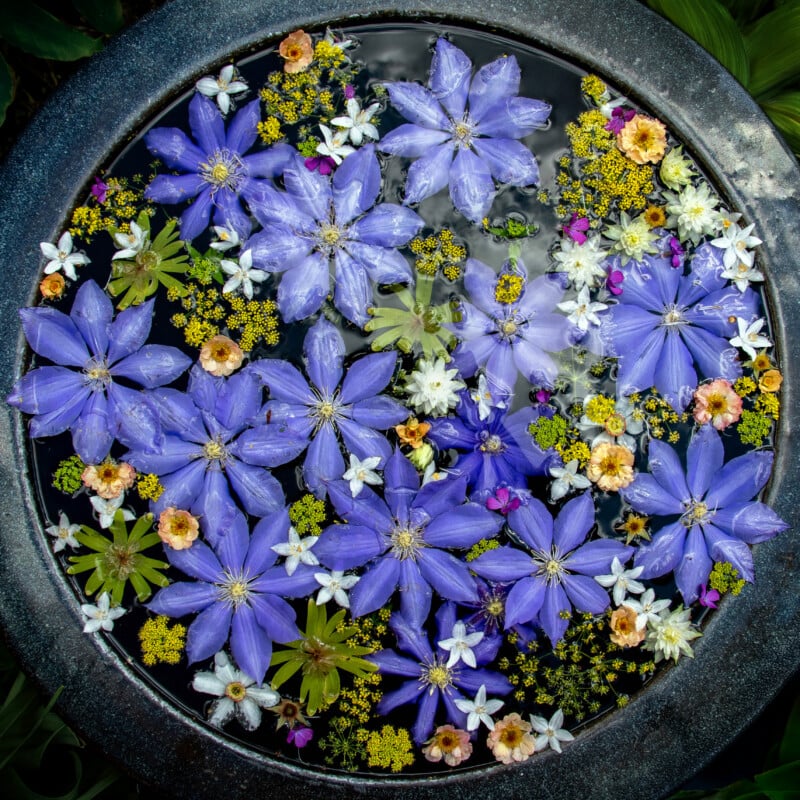
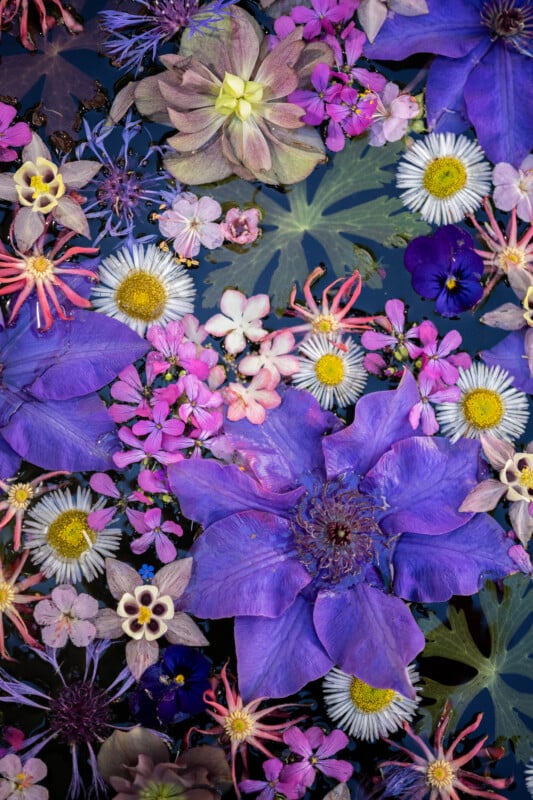
To create the focus-stacked image below, I photographed my flat lay floating floral scene as a series of seventeen separate exposures using manual focus. For each frame, I made a small, precise adjustment to the focus ring, gradually moving the plane of focus through the composition until every layer of the scene had been captured sharply. This allowed me to record the intricate textures, petals, and details slice by slice across the entire arrangement.
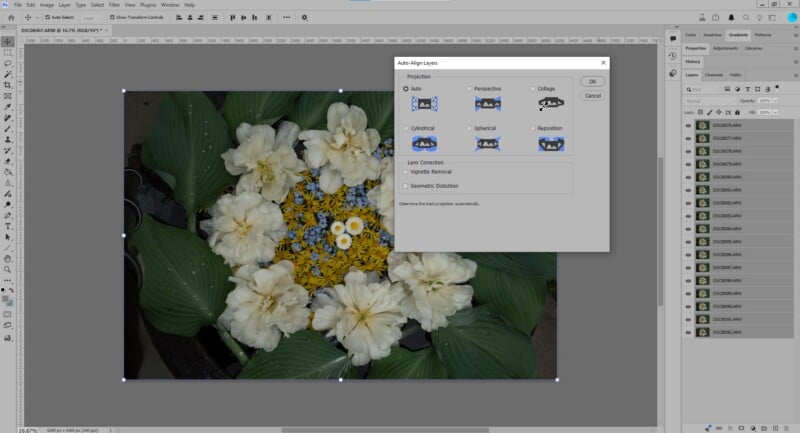
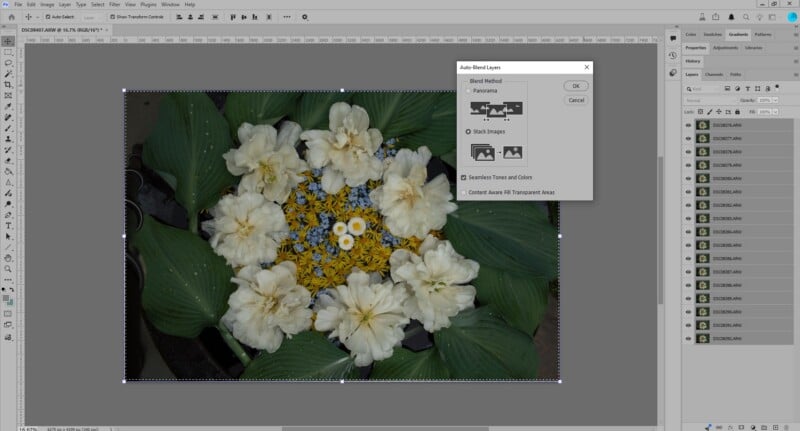
Once back at my computer, I loaded all seventeen images into a single Photoshop document as layers. After using Photoshop’s Auto-Align Layers function to compensate for any slight shifts between frames, I applied Auto-Blend Layers to analyze each exposure and combine the sharpest areas into a single photograph. The result is an image with a level of depth and detail that would have been impossible to achieve in a single exposure, allowing the entire scene to retain clarity while preserving the rich textures and visual complexity of the composition.
Once the focus stack was completed in Photoshop, I brought the final image into Lightroom for standard post-processing and refinement. The result is an image with significantly greater depth, allowing detail to extend throughout the composition while still benefiting from adjustments to color, contrast, and overall mood. Most importantly, it reveals a level of texture, clarity, and visual complexity that would be impossible to achieve in a single exposure due to the extremely shallow depth of field inherent in macro photography.
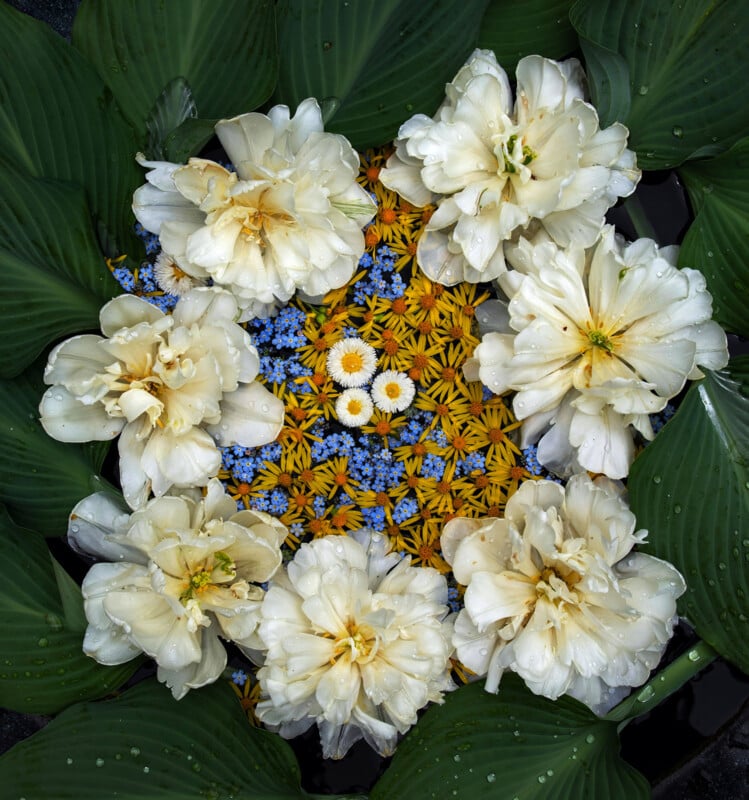
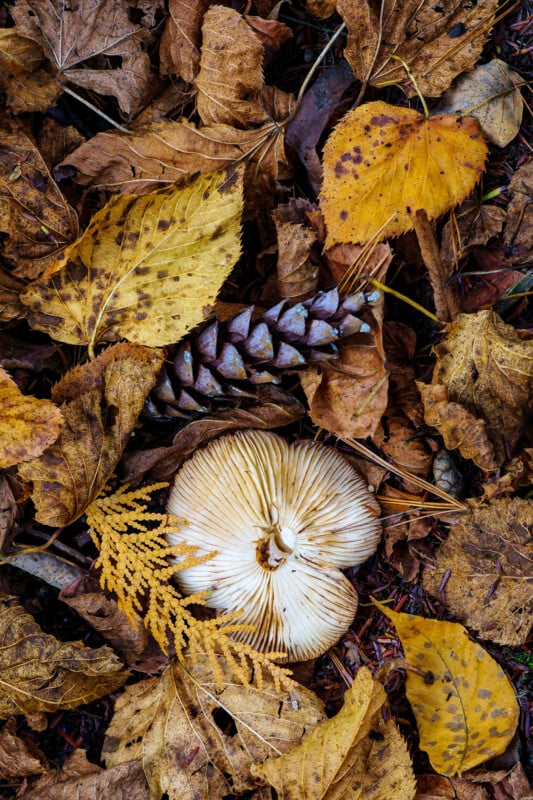
In my own work, I often use focus stacking as a core part of my nature flat lay series to create a more surreal sense of depth and texture. These compositions are built intentionally, either as floating flower bowls, curated forest scenes assembled from elements gathered during hikes, or naturally occurring arrangements found in mossy environments where nature has already created its own visual structure. I’ll place leaves, bark, pinecones, fungi, and other found objects into carefully considered arrangements that feel organic but still visually designed.
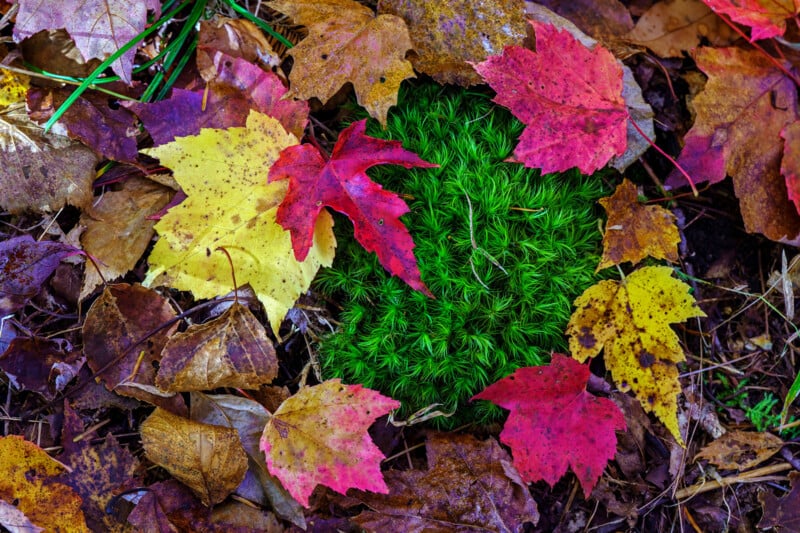
Because these scenes often contain multiple layers of detail at different distances from the camera, focus stacking allows me to capture the entire composition in a way that feels fully dimensional. Instead of parts of the scene softening, every layer of texture, from foreground elements to subtle background details, can be rendered with clarity while preserving a natural sense of depth and atmosphere. This balance between sharpness and depth is what gives the final images their slightly surreal, almost sculptural quality.
When capturing a stack, stability is critical. A sturdy tripod, remote trigger, and calm shooting conditions can dramatically improve results. Rather than making large jumps between focus points, use small incremental adjustments that slightly overlap each area of sharpness. Many modern cameras offer focus bracketing modes that automate this process, but manually advancing focus can provide greater control for complex subjects.
Planning stack depth becomes especially important at higher magnifications. At 1:1 magnification, a flower may require only 10 to 30 images, while extreme macro subjects can demand hundreds of frames. Start at the closest point you want in focus and gradually work toward the farthest point, ensuring every important detail is captured along the way.
Wind presents another major obstacle. Even slight movement can introduce ghosting and stacking artifacts that are difficult to correct later. Many macro photographers use plant clamps, wind blockers, or temporary supports to stabilize flowers and foliage. For outdoor work, shooting during the calm conditions often found shortly after sunrise can make a significant difference.
Post-processing is where the stack truly comes together. Software such as Helicon Focus, Zerene Stacker, and Adobe Photoshop can align and blend the images automatically, but advanced photographers often perform additional retouching by hand to correct halos, edge artifacts, or areas where movement occurred between frames. The best focus stacks are often the ones where viewers cannot tell a stack was used at all.
Ultimately, successful focus stacking is less about maximizing sharpness everywhere and more about controlling where detail appears within the frame. When used thoughtfully, it allows photographers to create images that would be physically impossible to capture in a single exposure while still maintaining a natural and visually appealing result.

Advanced Focus Stacking Using Rails
As magnification increases beyond life size, the technical demands become significantly greater. At extreme magnifications, depth of field may be measured in fractions of a millimeter. Capturing a fully sharp subject can require hundreds of individual exposures, each separated by microscopic focus adjustments.
This is where macro focusing rails become indispensable. Rather than relying solely on focus adjustments within the lens, rails allow photographers to move the entire camera system forward in precise increments. The resulting stacks tend to produce cleaner transitions and greater consistency.
Photographers working with microscope objectives, bellows systems, and specialized macro setups often spend hours constructing a single image. The process can feel more like scientific imaging than traditional photography.
Shallow Depth of Field: Controlling Depth Through Focus Plane Placement
In macro photography, depth of field is often discussed in terms of aperture choice, but the focal plane itself is a far more precise and expressive tool. The focal plane is the exact three-dimensional slice in space where your image is in perfect focus. Everything that falls on that plane appears sharp, while anything in front of or behind it begins to fall into progressively softer focus. At macro distances, this plane becomes extremely thin, sometimes only a fraction of a millimeter thick, which makes its placement far more important than most photographers initially realize.

Rather than thinking of focus as simply “what is sharp,” advanced macro photographers begin to treat the focal plane as something that can be positioned, angled, and shaped within the composition. Where you place it determines not just sharpness, but the entire sense of structure and depth within the image.
Aligning the focal plane parallel to your subject is the most direct way to maximize clarity across a surface. This is especially effective when photographing relatively flat subjects like petals, leaves, fungi caps, or insects positioned side-on, where you want to preserve detail across the entire plane of interest. However, the real creative control comes when you deliberately break that alignment.
By angling the camera or repositioning it relative to your subject, you can tilt the focal plane so it cuts diagonally through the scene. This creates a sense of depth that feels far more dynamic and immersive, guiding the viewer’s eye along a controlled path of sharpness through the frame. A stem extending toward the camera, a dragonfly perched along a slanted reed, or a curled leaf emerging covered in morning dew can all benefit from this approach, where only a carefully chosen path through the subject remains in focus.
In the following series, I did exactly that and explored the lines of dew-covered leaves, angling the focal plane to see how one subject can be photographed very differently through focal plane placement.
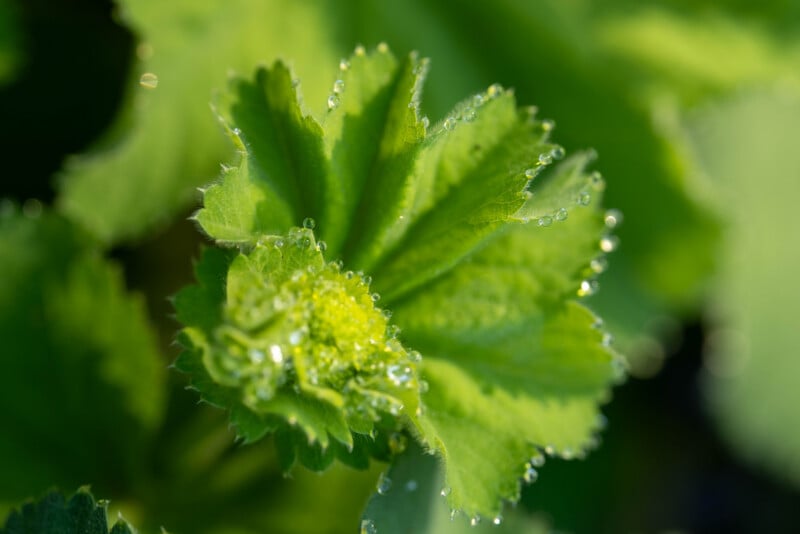

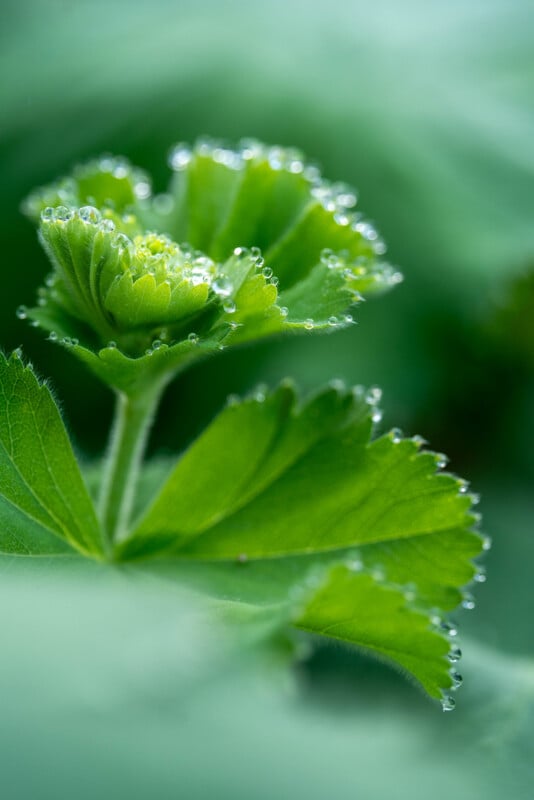
At this level, the question is no longer simply what should be sharp, but how sharpness itself moves through the image. The focal plane becomes a compositional element in its own right, shaping the visual rhythm of the photograph and controlling how the viewer experiences depth.
Light: Visually Sculpting Tiny Landscapes
In macro photography, light is not just a tool for exposure, it is one of the most powerful ways to completely reshape a scene. At close magnification, even small changes in direction, hardness, or color temperature can transform texture, mood, and depth in ways that feel almost architectural. The same subject can appear delicate and airy under soft diffusion, or dramatic and sculptural under directional, contrast-heavy lighting.
One of the most effective ways to control this is through deliberate manipulation of background and lighting. Simple tools like colored cardstock or seamless paper can instantly change the entire mood of a composition, turning a natural forest floor into a controlled, studio-like environment while still retaining organic detail in the subject. By separating the subject from its surroundings using controlled light falloff or a custom background plane, you can create images that feel far more intentional than what is naturally available in the field.
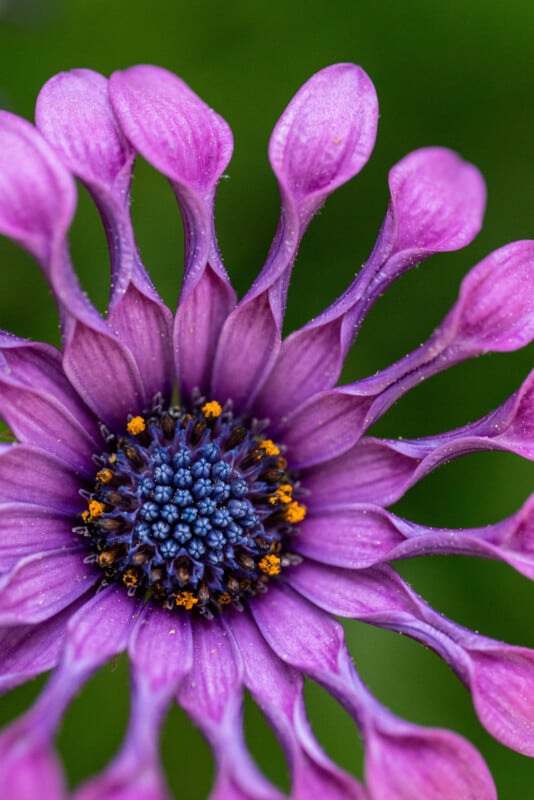
Many macro photographers rely on a combination of specialized lighting tools to achieve this level of control. Off-camera speedlights paired with small softboxes or diffusion domes are commonly used to soften harsh highlights while maintaining directional shape. Ring lights can provide even, shadowless illumination for highly detailed documentation work, while highly popular twin macro flash systems allow for precise sculpting of highlights and shadows directly around the subject. LED panels and small continuous lights are often used for focus stacking workflows, where consistent illumination is critical across multiple frames. At higher levels, photographers often build custom diffusion rigs using translucent fabric, foam-based modifiers, or DIY softboxes positioned extremely close to the subject to maximize softness.
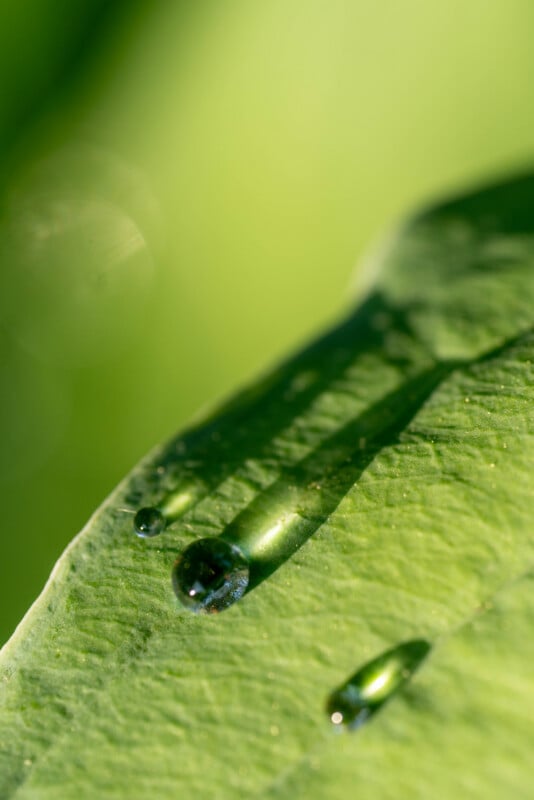
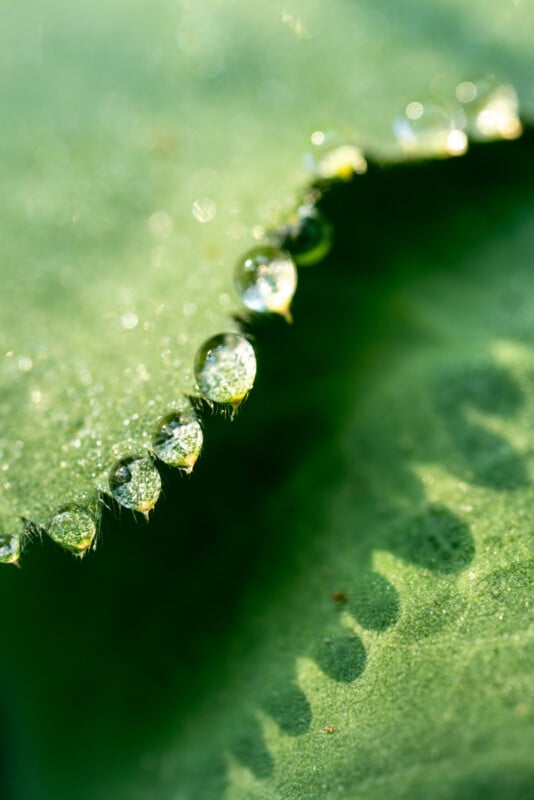
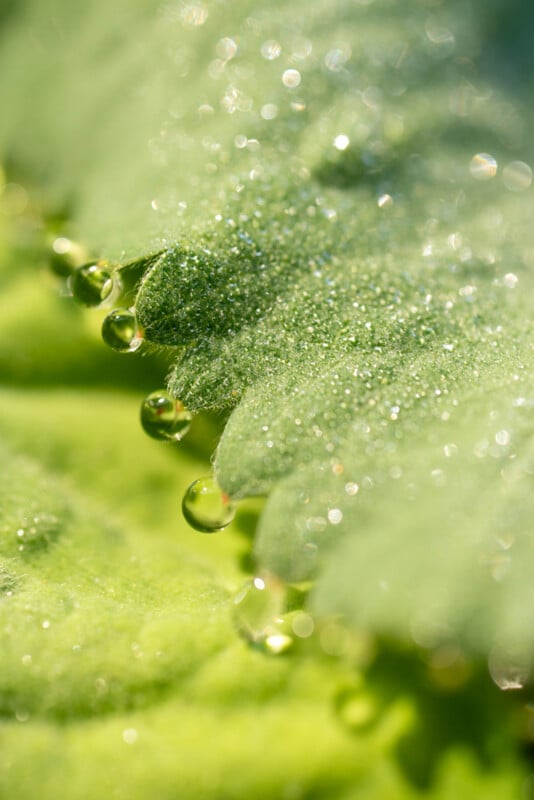
Diffusion becomes especially important at macro scale because the apparent size of the light source relative to the subject determines how natural or harsh the final image feels. A small flash without diffusion can feel clinical and overpowering, while the same light heavily diffused through multiple layers can mimic soft ambient light, even in otherwise difficult conditions.
When combined with background control and intentional lighting direction, these tools allow photographers to effectively redesign the visual environment around their subject. A simple patch of moss or a single flower can be transformed into a controlled stage, where light defines the subject’s form and separates it from the chaos of its surroundings.
Composition: Environmental Macro Photography
One of the most effective ways to elevate macro photography is to move beyond tightly isolated subjects and begin incorporating the surrounding environment as an active part of the composition. Rather than separating a subject from its world with heavily blurred backgrounds, environmental macro photography treats the habitat itself as a supporting character in the frame.
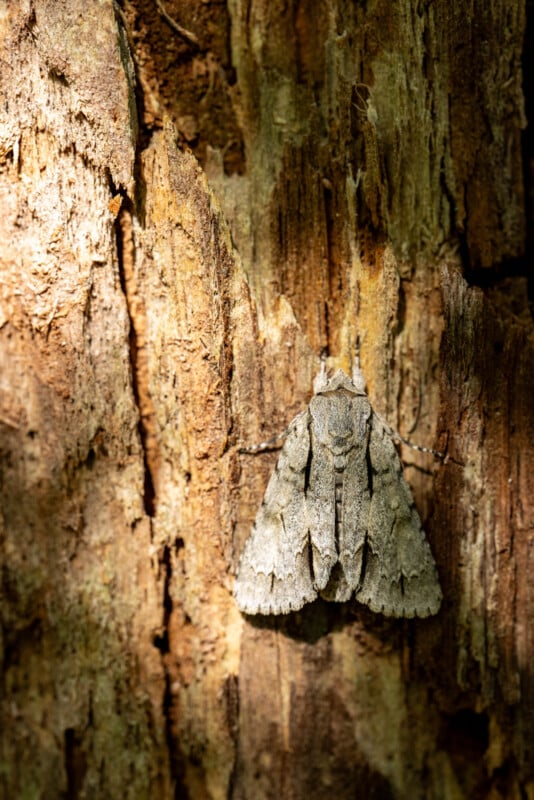
The surrounding context becomes part of the story rather than a distraction from it. A dragonfly photographed among the grasses where it hunts feels grounded in its behavior and purpose. A butterfly framed within a field of wildflowers communicates movement and setting rather than just form. A mushroom emerging from moss and forest debris becomes part of a larger ecosystem rather than a standalone specimen.

My own approach to this style often starts with identifying a “hero subject,” even something as simple as a single mushroom. From there, I frame the scene as if that subject is the central character in a larger narrative, almost like a grand figure on a journey through its own miniature world. The surrounding elements, fallen leaves, pine needles, bark, or patches of moss, become supporting structures that help guide the viewer through that story. This mindset shifts the image away from documentation and toward something more cinematic and intentional.
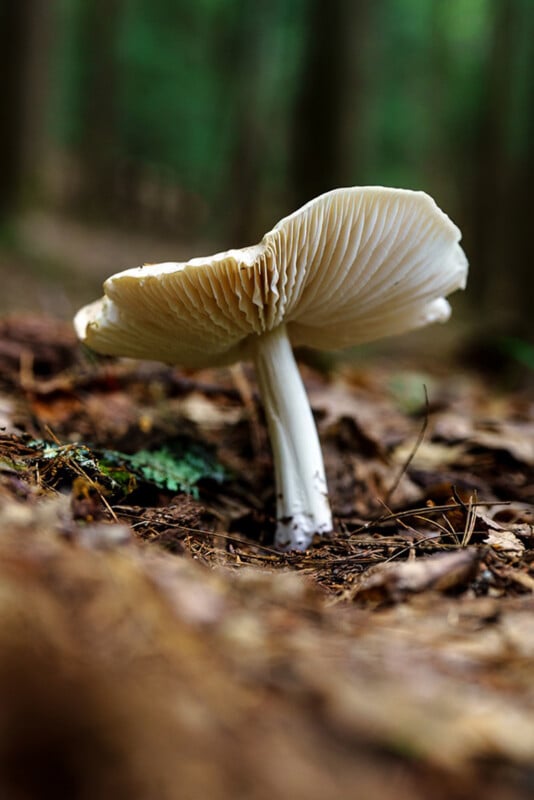
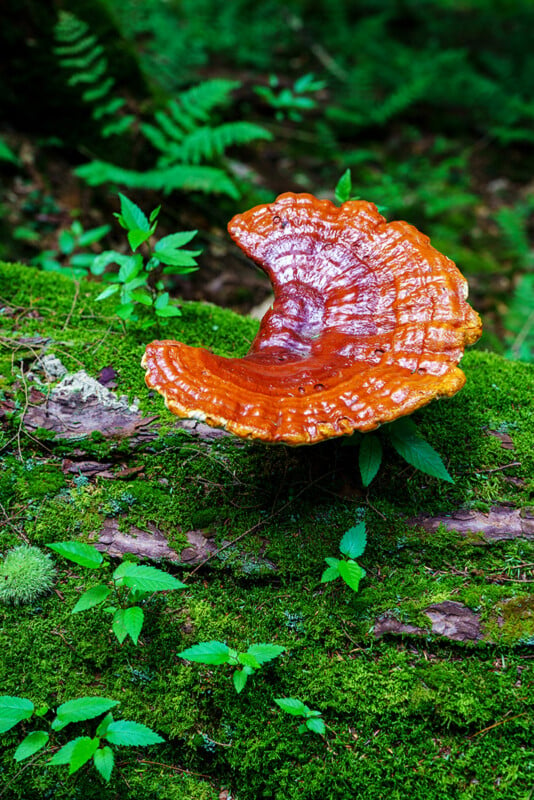
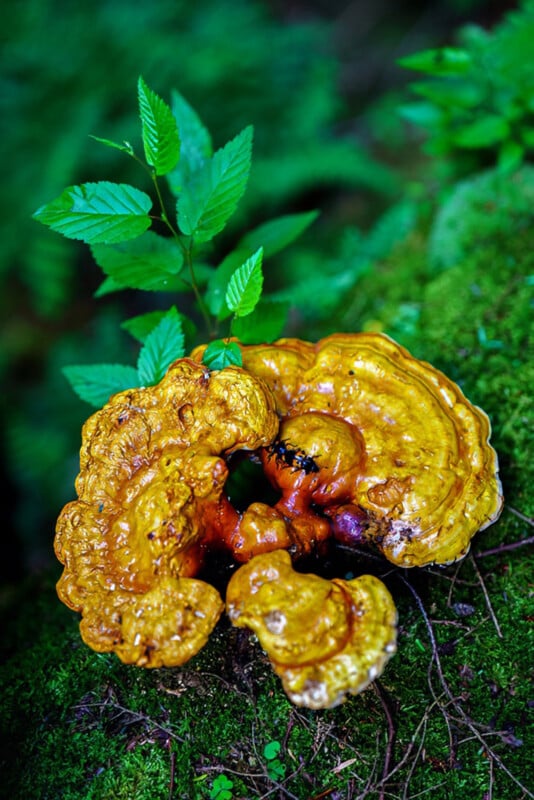
This style often requires balancing magnification with storytelling, deciding what to include and what to leave out so the scene still feels cohesive. When it works, the result feels less like a close-up and more like a complete world, compressed into a single frame.
Thinking Like a Landscape Photographer
At high magnification, a single flower, fungus, or insect is rarely just a subject on its own. Placed well within the overall scene, it becomes a terrain of shapes, textures, and spatial relationships that can be composed in the same way a wide landscape would be.
A flower petal can read as a rolling hillside of color and gradient transitions. A curled stem becomes an architectural line that leads the eye through space. A cluster of water droplets can function like points of light across a miniature terrain, anchoring attention and creating rhythm. Even something as small as a patch of moss begins to resemble a dense forest canopy when viewed at the right scale and angle.
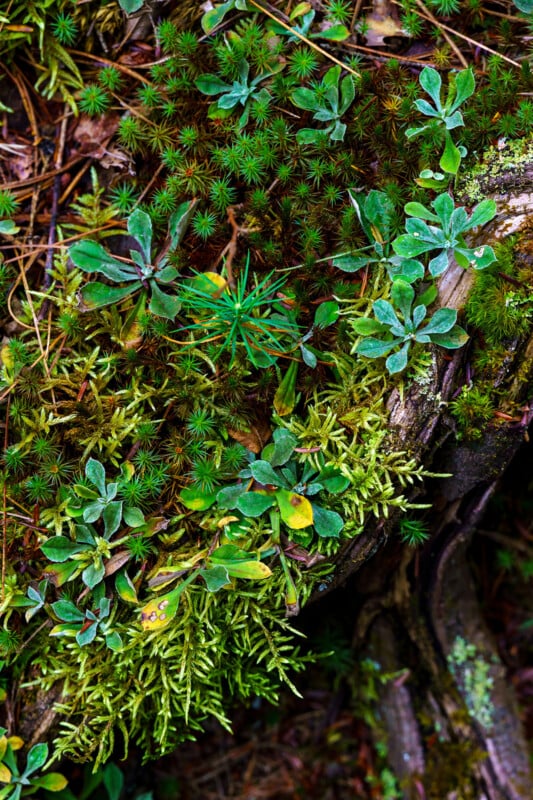
This way of seeing requires a shift away from identification and toward interpretation. Instead of asking what the subject is, the more important question becomes how its forms interact within the frame. Lines, curves, textures, and tonal shifts begin to matter more than labels or recognition. At this stage, the subject itself becomes secondary to the structure it creates.
The strongest macro images often succeed because they behave like landscapes in miniature. They are built, not just captured, with deliberate attention to flow, balance, and spatial tension. When you start thinking this way, macro photography stops being about photographing things and starts becoming about designing worlds at a microscopic scale.
Exploring the Abstract Side of Nature
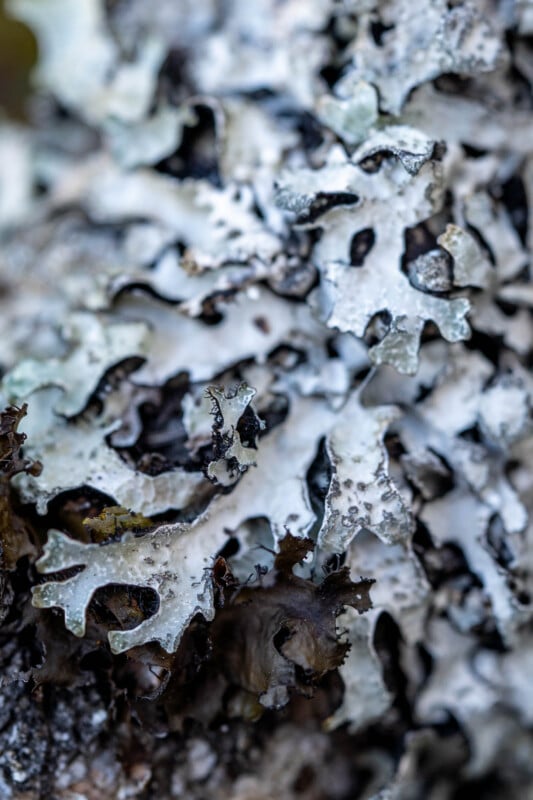
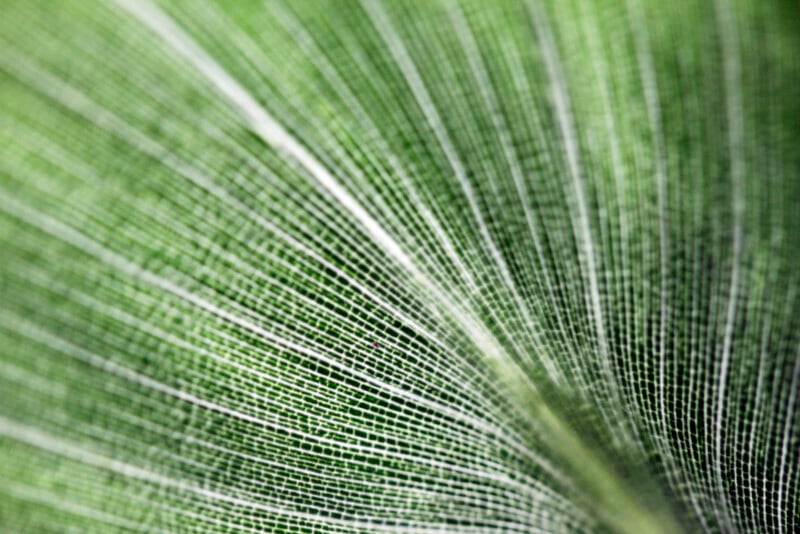
Advanced macro photographers often reach a point where subject recognition becomes secondary to visual design. At higher magnifications, familiar objects begin to dissolve into structure, and what remains is shape, rhythm, and texture rather than identity.
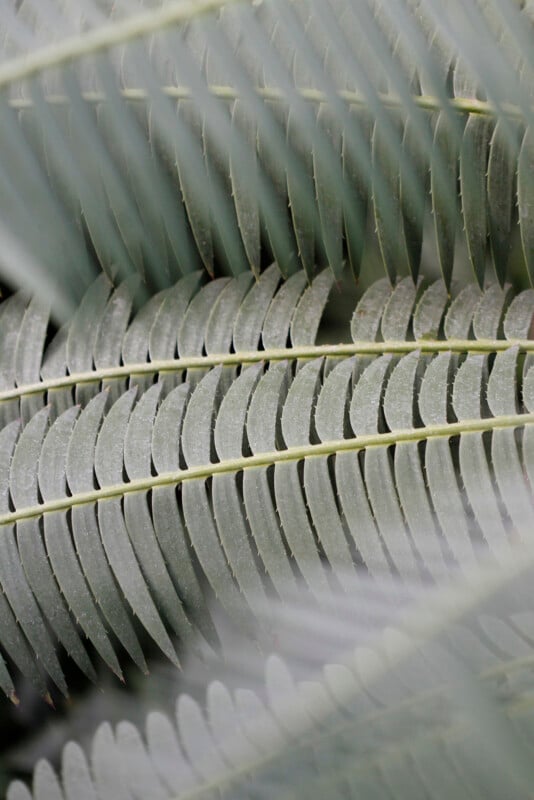
Abstract macro photography shifts the focus away from what a subject is and toward how it behaves visually within the frame. Ice crystals become geometric formations of repetition and fracture. Water droplets turn into suspended lenses of light and reflection. Feather barbs, leaf veins, and fungal structures start to resemble vast, unfamiliar terrains rather than small natural details.
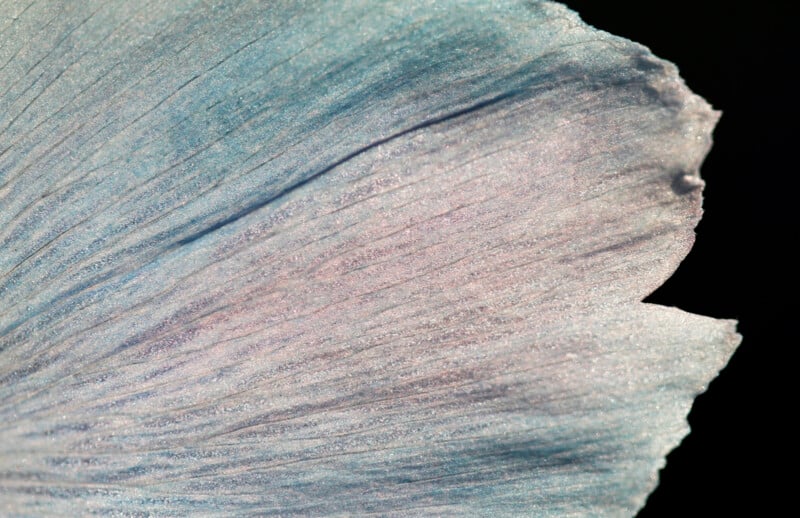
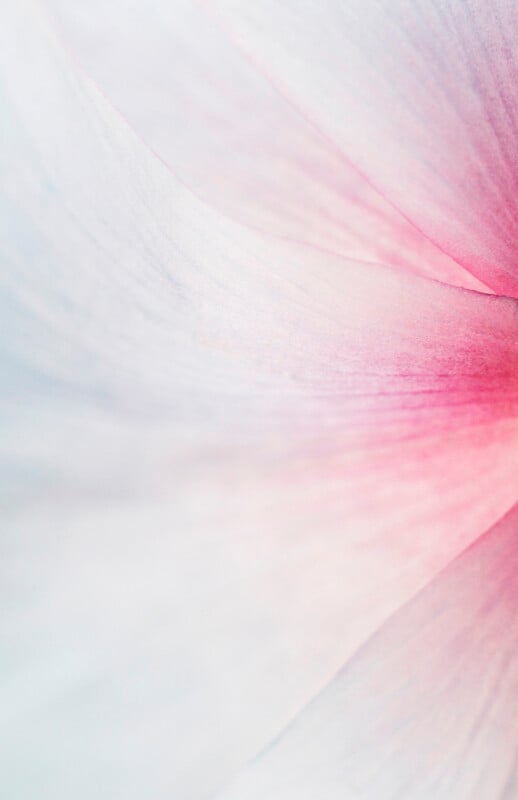
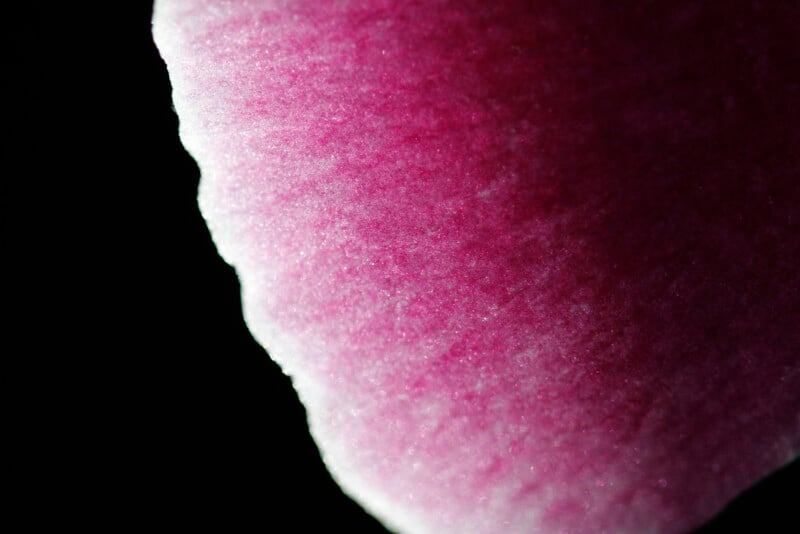
Developing this way of seeing requires a deliberate mental shift. Instead of asking what something is, the more useful question becomes whether its lines, patterns, and tonal relationships create a compelling composition. One technique I often use is to mentally “zoom out” and imagine the scene as if it were a drone photograph of an expansive landscape. A cluster of moss becomes a forest canopy, while a curled petal reads like a winding river cutting through terrain. Thinking in this way helps remove scale entirely and allows composition to lead the image rather than subject matter.
The strongest abstract macro photographs are often the ones that resist immediate interpretation. They invite the viewer to pause, explore, and slowly decode what they are seeing, turning observation itself into part of the experience.
Observation as an Advanced Skill
Perhaps the most overlooked skill in macro photography is observation. At a certain level, technical execution becomes secondary to the ability to notice subtle patterns, behaviors, and fleeting moments that most people walk past without ever seeing.
While camera settings, lighting setups, and focus techniques can be learned and refined relatively quickly, developing a trained eye for opportunity takes time in the field. Advanced macro photographers often spend far more time observing their subjects than actively shooting them, watching how light changes across a surface, how insects move through their environment, or how moisture, wind, and temperature subtly alter a scene over time.
Understanding insect behavior, for example, allows you to anticipate movement rather than react to it. Recognizing when a subject is likely to pause, feed, or reposition can be the difference between a missed frame and a compelling composition. Similarly, learning how flowers respond to shifting light or breeze conditions can reveal brief windows where form, texture, and illumination align perfectly.

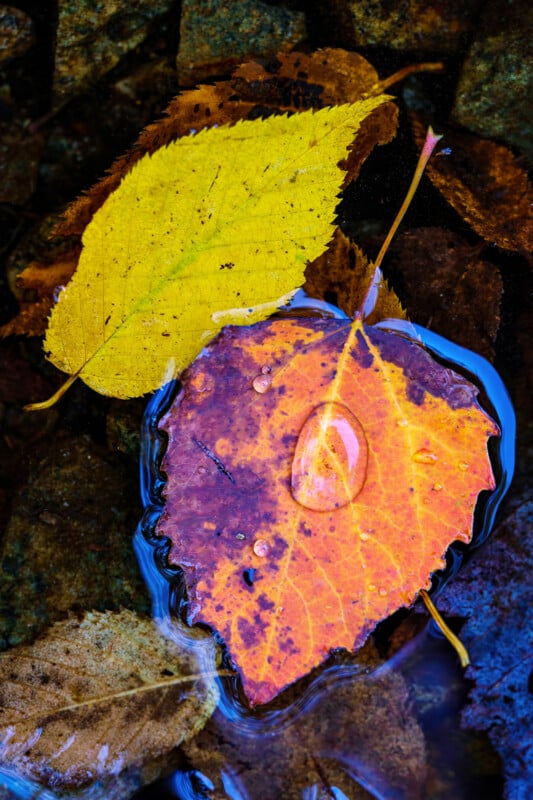
This awareness becomes even more important when working with seasonal changes in nature. In my autumn macro work, timing is everything. Understanding when foliage begins to shift color, peak, and eventually fade is just as critical as choosing the right lens or lighting setup. Those brief windows of peak color often last only a short time, and being even a few days too early or too late in the right place can completely change the mood and intensity of an image. The same applies to wildflower seasons and other cyclical natural events, where entire compositions can appear and disappear within a narrow timeframe.
The most accomplished macro photographers are often not defined by how they use their camera, but by how deeply they understand what they are photographing before the shutter is ever pressed.
Combine Techniques for Maximum Effect
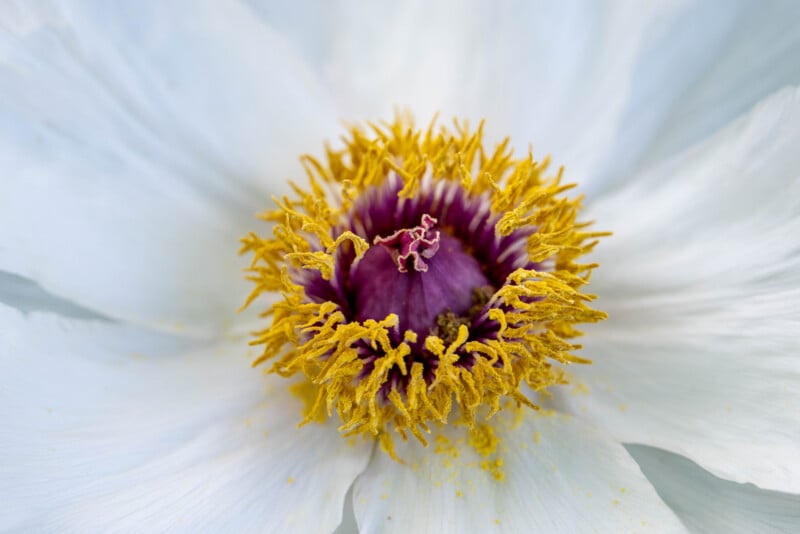
The real challenge of macro photography is learning how to master and combine multiple techniques into a single, intentional visual language. Focus stacking, selective focus, controlled lighting, environmental composition, and abstract interpretation are most powerful when they are not treated as separate tools but as parts of a unified approach to image-making.
As photographers progress, composition, light, storytelling, and observation begin to outweigh the purely technical aspects that often define early macro work. A technically perfect image is no longer the goal on its own. Instead, the aim becomes creating photographs that feel structured, dimensional, and emotionally engaging, even at extreme magnifications.
Whether you are building complex focus stacks to reveal hidden detail, using selective focus to isolate form and texture, crafting environmental scenes that place subjects within their natural context, or exploring abstraction to strip away recognition entirely, the strongest results come from knowing when and how to layer these approaches together. It is in this intersection of techniques that macro photography becomes something more than documentation.
At its best, macro photography is not about what you can magnify, but what you can reveal. When technique and intention work together, the smallest corners of nature can be transformed into images that feel expansive, immersive, and unforgettable.
Image credits: Photographs by Kate Garibaldi


