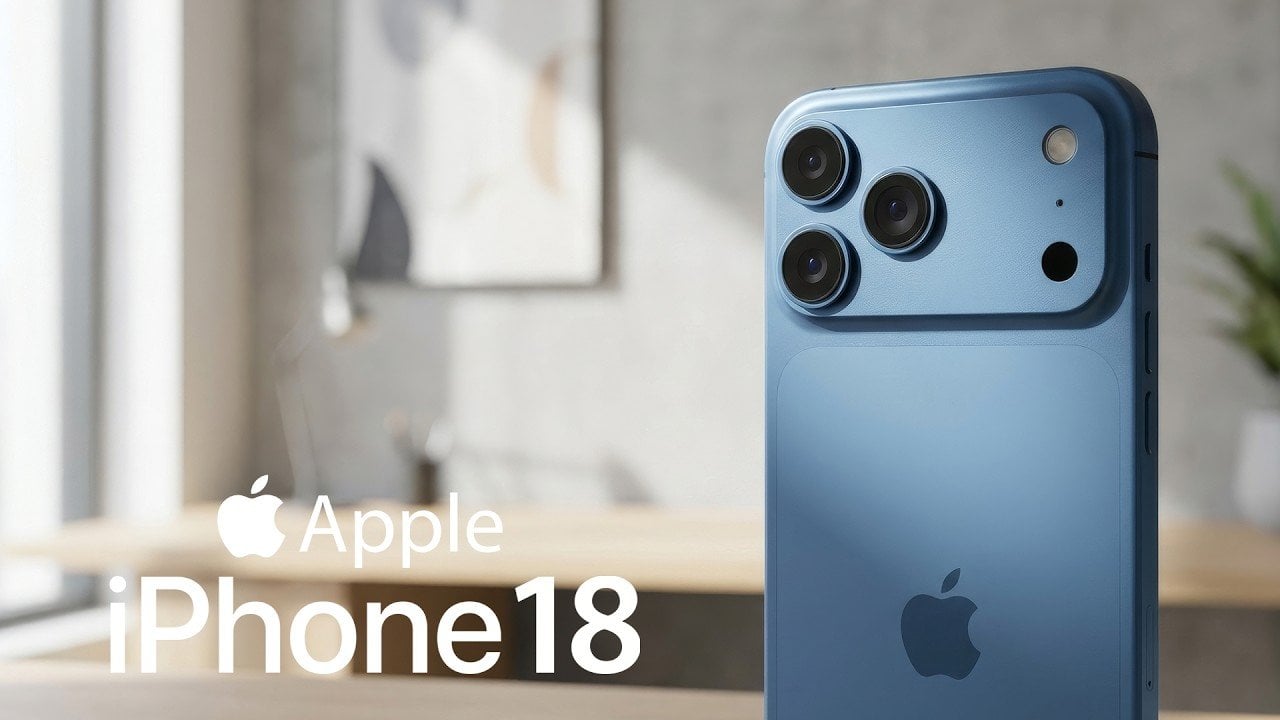
Apple’s upcoming iPhone 18 Pro Max is shaping up to be more than just a typical annual refresh. Rumors and supply-chain leaks suggest that this is the device where Apple cuts ties with major third-party suppliers, debuting its own custom-built wireless technology alongside a history-making processor.
From an incredibly dense, ultra-efficient internal architecture to a long-awaited design refresh on the front, the iPhone 18 Pro Max is poised to become the ultimate benchmark for pocket computers. Here is everything we know so far about Apple’s upcoming crown jewel. The video below gives us more details about the handset.

The Headline Upgrades at a Glance
To understand why the tech community is so focused on the September 2026 launch window, look no further than the rumored spec sheet. Apple is executing massive architectural shifts both inside and out:
- TSMC 2-Nanometer A20 Pro Chip: The first consumer processor built on a revolutionary 2nm node, promising up to 30% greater energy efficiency.
- 35% Smaller Dynamic Island: Face ID components are finally moving beneath the display glass, reclaiming valuable screen real estate.
- Variable Aperture 48MP Main Camera: Bringing mechanical lens control to mobile photography for true physical depth of field.
- The Custom Apple C2 Modem: A proprietary chip replacing Qualcomm, complete with advanced satellite connectivity.
- Monster 5,500mAh Battery: A physical capacity jump paired with a highly efficient chip to deliver historic battery life.
Design: Polished Titanium & Shrunken Island
While the familiar flat-edge structural silhouette remains, the iPhone 18 Pro Max introduces subtle, premium physical updates. Apple is reportedly transitioning to a polished Grade 5 Titanium finish that mimics the mirror-like luster of stainless steel while retaining the lightweight durability of titanium.
The front of the phone is where the most striking change occurs. By migrating the infrared sensors for Face ID directly under the active pixels of the OLED panel, Apple has reportedly shrunken the Dynamic Island footprint by roughly 35%. This leaves a tiny, floating dot that feels far less intrusive than prior generations.
To accommodate a much larger battery and a robust graphene-based cooling system (designed to tame the intense density of 2nm computing), the chassis will be slightly thicker and heavier, tipping the scales near 240 grams.
Additionally, rumors suggest Apple will launch a striking new signature hue: a rich, sophisticated Dark Cherry finish to replace the previous generation’s colorways.
Performance: Inside the 2nm “Pure Apple” Silicon
Under the hood sits the undisputed star of the show: the A20 Pro processor. Built on TSMC’s cutting-edge 2nm (N2) manufacturing process, this chip represents a massive financial and technical leap.
| Chip Generation | Node Size | Primary Engineering Focus |
|---|---|---|
| A19 Pro (Previous Gen) | 3nm-class | Peak performance burst & AI co-processing |
| A20 Pro (New) | 2nm-class (TSMC N2) | Sustained power, thermal control & efficiency |
Rather than just chasing astronomical benchmark scores, the N2 node allows Apple to prioritize thermal stability and sustained endurance.
- No More Throttling: Thanks to the internal graphene sheets and 2nm efficiency, the phone can run graphics-heavy AAA games or export 4K video streams without overheating or dimming the screen.
- On-Device Apple Intelligence: The A20 Pro features a heavily upgraded Neural Engine designed to process advanced Siri and generative AI models locally on the device.
- Integrated Memory Architecture: Rumors indicate Apple is stacking 12GB of LPDDR5X RAM directly onto the A20 Pro die using Wafer-Level Multi-Chip Module (WMCM) packaging, dramatically reducing memory latency.
Camera: Variable Aperture & Stacked Sensors
Mobile photography gets a true professional-grade upgrade. The standard fixed f/1.78 lens is expected to be replaced by a physical variable aperture system. This allows the camera to physically adjust between a wide opening (for incredible natural bokeh and low-light gathering) and a narrow opening (to keep entire landscapes or group shots in razor-sharp focus).
Furthermore, leaks suggest Apple is pivoting to a new three-layer stacked sensor architecture developed with Samsung. By separating the photodiodes and transistors into distinct, stacked physical layers, the sensor can capture double the light of a traditional camera sensor without requiring a massive, unsightly camera bump.
Connectivity: True Satellite Independence
In past generations, Apple relied heavily on Qualcomm for mobile connectivity. The iPhone 18 Pro Max changes the game with the debut of the Apple C2 custom modem.
Beyond optimizing local cellular connections and Wi-Fi 7 performance, the C2 modem brings native NR-NTN (New Radio Non-Terrestrial Network) support. This means true, low-bandwidth satellite data transmission. Users will eventually be able to send off-grid text messages or brief emails from completely remote locations without requiring cellular towers or emergency SOS protocols.
Release Date, Price, and Apple’s Split Launch Strategy
In a massive departure from historic patterns, industry analysts indicate Apple will split its smartphone release schedule across two distinct seasons:
September 2026: The Premium Flagships Debut
Apple hosts its annual keynote (tentatively tipped for September 8th or 9th) to announce the iPhone 18 Pro, the iPhone 18 Pro Max, and the highly anticipated, book-style iPhone Fold. Pre-orders go live immediately, with global shipping starting around September 18.
Spring 2027: The Budget & Air Models Follow
To keep momentum alive year-round, Apple delays the more affordable baseline models. The standard iPhone 18, the budget-friendly iPhone 18e, and an ultra-thin iPhone Air 2 make their official debut in early 2027.
The Elephant in the Room: Expected Pricing
Because TSMC’s experimental 2nm wafers are estimated to cost an unprecedented $30,000 per unit, Apple will likely pass some of these costs onto consumers. While exact pricing remains unannounced, analysts project a slight premium bump, placing the starting tier of the iPhone 18 Pro Max at $1,299 for the base 256GB storage configuration.
Expand your knowledge of the upcoming Apple hardware line with our specialized coverage:
Source & Image Credit: TT Technology
Filed Under: Apple, Apple iPhone, Top News
Disclosure: Some of our articles include affiliate links. If you buy something through one of these links, Geeky Gadgets may earn an affiliate commission. Learn about our Disclosure Policy.


