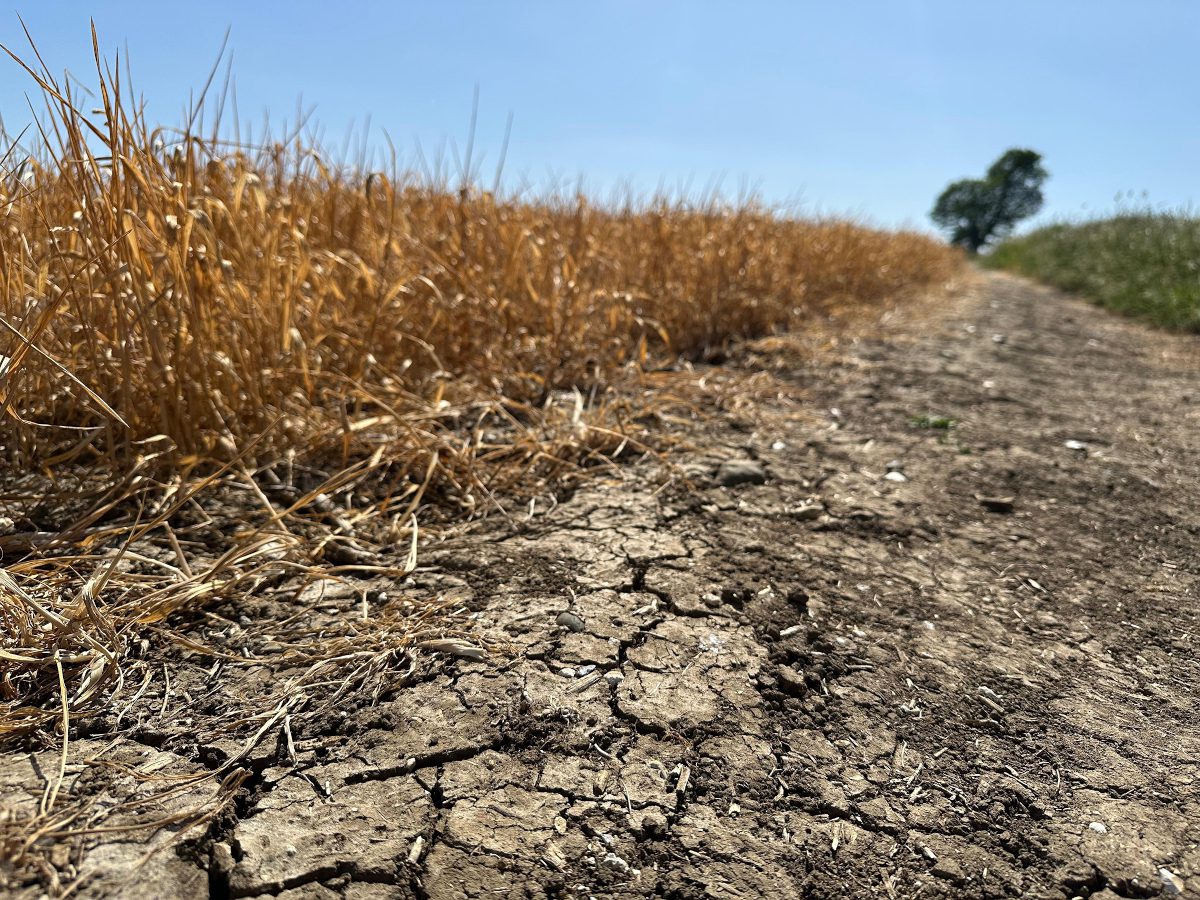
With almost three-quarters of England in drought and conditions also severe across Wales and parts of Scotland, the UK’s exceptionally dry summer is intensifying pressure on farms, rivers and water supplies. But the crisis is also focusing attention on a longer-term question: how can the country become better at capturing, storing and reusing the water it receives?
Almost three-quarters – 71.3% – of England was officially in drought by 10 August, following the driest July since records began in 1836.1 Four additional Environment Agency areas entered drought status that day, bringing the total to 11 and placing around 45 million people within drought-affected areas.
Conditions have continued to deteriorate. England received only 6% of its long-term average rainfall for August by 13 August, while reservoir storage had fallen to 67.7%.2 Of river-flow monitoring sites reporting during the week, 87% were classed as below normal or lower, including 37% recording exceptionally low flows.
The rapid transition has been characterised as a “flash drought”, with prolonged dry weather compounded by successive heatwaves and high water demand.3 Around 27 million people are now affected by restrictions on water use.4
Wales is also experiencing severe conditions. Natural Resources Wales declared drought across the whole country on 30 July after Wales received just 8% of its long-term average rainfall for the month, with the majority of monitored rivers described as exceptionally low.5
In Scotland, where drought is managed through a water-scarcity classification system, very low river flows also persist. Some catchments have moved into Significant Scarcity, with abstraction restrictions remaining in force in affected areas.
“Recent rainfall has helped in some places, but we’ve also seen rivers return to very low levels,” said Shona McConnell, Head of Compliance at the Scottish Environment Protection Agency (SEPA). “That underlines why we can’t look at individual periods of rainfall in isolation, recovery depends on sustained rainfall over time.”6
Farms under pressure
Much of UK agriculture is said to be struggling, with the timing of the latest heatwave being particularly inauspicious for crops. The Times reported on 15 August that farmers are facing “the worst harvest on record”.7 Crops have ripened early, yields have been affected and livestock farmers face shortages of grass and forage, while restrictions on abstraction are reducing access to water for irrigation in some areas.
In Wales, CLA Cymru warned on 14 August that an “emergency is developing” for farms dependent on private water supplies, with some springs, tanks and other sources running dry.8
The organisation said that while overall public water supplies remained adequate, practical access was becoming a serious problem for farms without mains connections for livestock water.
In England, the government announced a £65 million support package on 15 August, including additional funding through the Sustainable Farming Incentive and temporary flexibilities intended to help farmers respond to the dry conditions.9
The Wildlife Trusts welcomed the additional support but said greater emphasis was needed on long-term resilience.
“Lasting resilience will only come from sustained investment in healthy soils, nature-rich habitats, and Environmental Land Management schemes, including Countryside Stewardship, made available to all farms,” said Gemma Lane, land use policy manager at The Wildlife Trusts.10
She added that investment should make greater use of nature-based solutions “to help farmers hold more water in the landscape, reduce the impacts of drought and flooding, and strengthen food security.”
Storing water when it is plentiful
The present drought has highlighted an apparent paradox in UK water management: periods of severe scarcity can follow relatively quickly after periods in which rainfall is abundant.
The Climate Change Committee (CCC) noted in July that parts of the UK experienced exceptionally wet conditions early in 2026, including widespread flooding. By mid-century, however, it projects that drier summers could leave England facing water-supply shortfalls of more than five billion litres per day.11
This combination of increasingly extreme wet and dry periods is strengthening the case for infrastructure and land-management systems capable of retaining more water when it is available.
Major reservoirs and inter-regional water transfers form an important part of current plans, alongside leakage reduction and demand management. But smaller and more distributed forms of storage could also have a role.
The Rivers Trust has called for changes to planning rules and incentives to make it easier for farmers to build their own reservoirs.
“We’d especially like to see farmers given permitted development rights and other incentives to build on-farm reservoirs, which can be built at a lower cost, faster pace, and with less impact on the environment than large-scale ones but comes with too much of a regulatory burden at the moment,” said chief executive Mark Lloyd.12
He said this should form part of a wider effort to make more space for water in the landscape, using nature-based measures to store it and improve preparedness for drought and flooding.
The organisation has also advocated healthier soils and restoration of river corridors and floodplains as ways of slowing water movement through catchments. Such measures can potentially perform two functions: retaining more water following rainfall while also slowing runoff during periods of heavy precipitation.
Making water use visible
Another focus is the water already entering the supply network. Reducing leakage has long been a key component of water-resource planning, but digital monitoring and smart metering increasingly offer the possibility of identifying losses on both sides of the customer boundary.
“Water resilience is now a defining infrastructure challenge for the UK,” said Gary Adams, Operations Director for Water at Calisen.13
“But the challenge is not just supply, it’s visibility. Customer-side leaks that are found early can be fixed before they become disruptive and costly. Today, many leaks go unnoticed until they’ve already caused damage.”
The water industry’s AMP8 investment programme includes plans for millions of additional smart meters. But Adams argues that installing the hardware is only part of the task.
“Smart metering gives water companies the ability to identify leaks, reduce waste and better understand demand, but lasting impact comes from translating that data into meaningful customer action and sustained behaviour change,” he said.
Smart networks could ultimately allow water companies to understand consumption patterns with much greater precision, detect abnormal use rapidly and target interventions rather than relying primarily on broad appeals to consumers to reduce consumption.
From wastewater to water resource
The drought is also likely to intensify debate about whether drinking-quality water should continue to be used for activities that do not require it.
Potential alternatives range from household rainwater harvesting and greywater systems to large-scale wastewater reuse and industrial closed-loop systems. These could reduce demand on public supplies by using treated or captured water for processes including cooling, washing, irrigation and toilet flushing.
Bent Jensen, CEO of Commercial Building Services at pump manufacturer Grundfos, said the current response needs to extend beyond long-term supply projects and restrictions on household consumption.
“While the Government’s focus on long-term reservoirs and leak repairs is necessary, relying on 25-year infrastructure projects and household hosepipe bans will not insulate the UK economy from the acute climate risks crippling growth today,” he said.14
He called for mandatory on-site industrial water circularity, restrictions on the use of potable water for data-centre cooling and faster deployment of intelligent leakage detection systems.
But the trade-offs implicit in applying such measures at scale have yet to be fully explored. Industrial water reuse can require additional treatment, storage and distribution infrastructure, with costs varying widely according to the quality of wastewater available and the requirements of the process in which it is to be reused. Similarly, replacing potable water in data-centre cooling may require alternative cooling technologies or access to recycled water supplies that are not available at every location. Smart metering and leakage detection can identify losses more quickly, but delivering water savings also depends on translating the resulting data into repairs and changes in customer behaviour.
Notes
[1] “More areas in England declared in drought after record dry July”, Environment Agency, Department for Environment, Food & Rural Affairs and Met Office, 10 August 2026.
[2] “Dry weather and drought in England: 7 to 13 August 2026”, Environment Agency, 14 August 2026.
[3] Environment Agency et al., op. cit.
[4] “UK PM to chair emergency meeting on heatwaves, drought”, Reuters, 12 August 2026.
[5] “Drought status extended across all of Wales as environment continues to feel the strain”, Natural Resources Wales, 30 July 2026.
[6] Scottish Environment Protection Agency, “Scotland’s rivers remain under pressure as very low flows persist”, August 2026.
[7] “We are in unknown territory – farmers struggle to cope in drought”, The Times, Saturday 15 August.
[8] CLA Cymru, “CLA Cymru Writes to the Rural Resilience Minister Warning of Emerging Water Shortage Crisis for Farms”, 14 August 2026.
[9] “PM: Farmers should not carry the risk of a changing climate alone”, UK Government, 15 August 2026.
[10] The Wildlife Trusts, statement on government drought support for farmers, 15 August 2026.
[11] “Progress in reducing emissions 2026 report to Parliament”, Climate Change Committee, July 2026.
[12] The Rivers Trust, response to government announcement of drought support for farmers, 14 August 2026.
[13] Calisen, statement from Gary Adams, Operations Director for Water, 12 August 2026.
[14] Grundfos, statement from Bent Jensen, CEO of Commercial Building Services, August 2026.
[15] Scottish Environment Protection Agency, op. cit.




