When I glanced through the Pixel Watch 5’s press materials, I got another reminder that smartwatches are putting health tracking ahead of everything else. Google is adding a few health features to the Pixel Watch 5, including one that tracks insulin resistance over time. That puts my favorite search engine in the same conversation as Samsung, which lets Galaxy Watch9 owners monitor blood pressure from their wrists. Fair enough, but as someone who can count his skipped gym sessions on one hand (OK, two), I expect more from a smartwatch than health metrics alone. That’s what I’ll focus on in my Pixel Watch 5 vs. Galaxy Watch 9 face-off.
Quick verdict
Go with the Galaxy Watch9 (and I recommend most of you do so) when the same watch has to get you through a bench session and then stay on your wrist at midnight, and when the sleep data you start collecting in March needs to still be arriving in October… with no billing decision in between.
Reach for the Pixel Watch 5 when a Pixel is already the phone sitting in your locker, and you want something on your wrist counting the rest between sets, so you stop digging it out.
Head to head
Style
If you’re going to use your smartwatch like I do at the gym, you don’t need to worry too much about aesthetics unless you want to impress someone while drinking water between sets. But if you plan to wear it when hanging out with friends, style still matters, and not by a small margin.
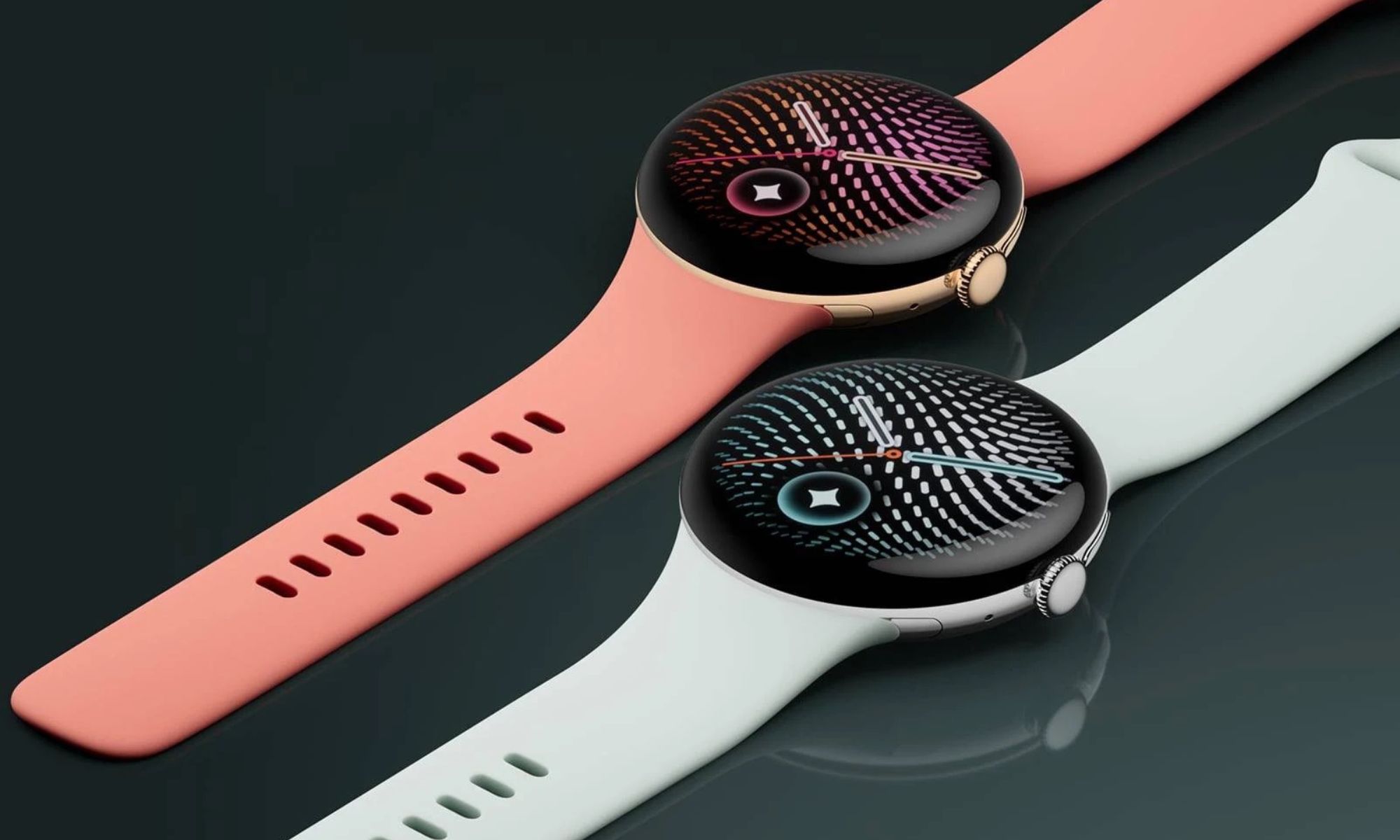
I don’t see the Pixel Watch 5 as a major physical redesign, since it keeps the domed Actua 360 display introduced with the Pixel Watch 4. What feels new to me is Google’s focus on personalization, with new Fog, Canyon, and Olive color options, plus Pyrite housing. I also like the emphasis on watch faces, with 11 new complication styles, two new faces, and generative faces that can reflect your personal style.
The Galaxy Watch9 feels more like a refinement of the design Samsung introduced with the Watch8 than a major visual reset. What stands out to me is the slimmer profile and redesigned Sport Band, which uses an air-pocket structure for a lighter feel and the Dynamic Lug System for a closer fit. I’ll get into that fit in more detail below.
I’d lean toward the Pixel Watch 5’s rounded design if I wanted a smartwatch that blends into my wrist. The Galaxy Watch9 would be my pick if I wanted something with more visual presence.
There’s nothing wrong with wearing a smartwatch; I just find it cringe when marketing departments try too hard to make them sound fashionable. A smartwatch can look good, but like a microwave, it’s never going to define fashion or class.
Comfort
Samsung is leaning hard into comfort with the Galaxy Watch9, positioning it as something you can wear day and night rather than a bulky fitness device.
The Galaxy Watch9 comes in two sizes: 40 mm and 44 mm. The Google Pixel Watch 5, by contrast, comes in 41 mm and 45 mm. But having larger wrists doesn’t automatically make the Pixel Watch 5 the better choice.
Samsung’s flatter design keeps the Galaxy Watch9 closer to the wrist without adding much bulk. The Pixel Watch 5 takes a different approach with its round, domed display, giving it a more pronounced profile that may catch on sleeves more often.
Health features
I’m one click away from ordering creatine to support my hypertrophy journey, so when smartwatch makers talk about health and fitness, I’m all in. Ever since Apple introduced hypertension notifications last year, my expectations for smartwatch health features have gone up. So how do the Pixel Watch 5 and Galaxy Watch9 compare?
For people with diabetes, managing blood sugar through diet, physical activity, medication, and insulin when prescribed can help reduce the risk of serious complications. That makes Google’s new feature for tracking insulin resistance trends worth watching. Even if you don’t have diabetes, though, frequent blood sugar spikes can contribute to insulin resistance over time. The Google Health app can flag signs of changing insulin resistance, which could prompt users to make lifestyle changes or speak with a doctor. I’d like to see how well the Pixel Watch 5 can identify meaningful insulin resistance trends in practice.
Meanwhile, Samsung adds blood pressure tracking to the Galaxy Watch9, letting you monitor systolic and diastolic readings from your wrist. You need the Samsung Health Monitor app and an initial calibration with a compatible blood pressure cuff before using the feature. Google’s Pixel Watch 5 also offers blood pressure trends, so neither watch leaves health tracking at the door.
It’s a shame that Google requires a $9.99-per-month or $99-per-year Google Health Premium subscription for access to the watch’s full suite of health features. Samsung, by contrast, offers workout, sleep, and wellness tracking without a subscription.
Fitness features
For strength training, I currently rely on a free workout-tracking app that has what I need, from training programs to animated GIFs. But I’m trying to spend less time looking at my phone at the gym. Google’s upcoming on-wrist Strength Training experience could help, with step-by-step guidance for sets and rest periods, plus quick logging for weights and reps.
Google Health Coach also creates customized strength workouts based on your goals. You can build and adjust your own strength routines in the Google Health app, which should suit anyone training at a small local gym without access to a wide range of equipment.
Samsung’s Galaxy Watch series has long covered the basics for swimming, cycling, running, sports, and gym workouts. If I were a competitive athlete, I’d probably get a Garmin and use it mainly for training. For most people, though, the Galaxy Watch9 should offer more than enough fitness features.
For fitness and recovery, Samsung’s Fitness Index gives you a snapshot of your overall fitness level, while Daily Cardio Load looks at recent activity and estimated recovery needs to help you decide when to push harder or take a break. I sometimes overestimate what I can handle at the gym and start a bench-press set only to realize halfway through that I need more rest. Other times, I get stuck staring at my phone between sets and lose more time than I intended. That makes Daily Cardio Load one of the Galaxy Watch9 features I’d actually want to use.
Battery life
Google promises up to 30 hours of battery life on the 41 mm Pixel Watch 5 and up to 40 hours on the 45 mm model. By comparison, Samsung rates both Galaxy Watch9 sizes for up to 30 hours with the always-on display enabled and up to 40 hours with it turned off. The 40 mm model has a 390 mAh battery (SM-L340NZKA), while the 44 mm version packs a larger 445 mAh cell (SM-L350NZKA).
Performance
The Galaxy Watch9 is the first Galaxy Watch powered by the Snapdragon Wear Elite platform. Built on a 3nm process, the chip uses “low-power islands” to handle tasks such as the always-on display and sensor tracking while helping conserve battery life. The Pixel Watch 5, meanwhile, uses the Snapdragon W5 Gen 2 Accelerated platform with a Cortex-M55 coprocessor, 50% more RAM, and a 12% CPU boost. Both watches support the latest health and fitness features, so I don’t expect a major difference in everyday performance.
Where the Pixel Watch 5 wins
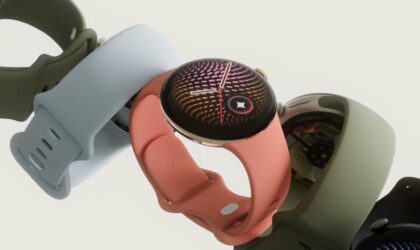
Google Pixel Watch 5 (41 mm)
Google’s on-wrist Strength Training experience walks you through sets and rest periods and logs the weight and reps where your hands already are, which counts for something on a busy Monday evening when your phone is buried in a locker. Google Health Coach then builds the routine around your goals, and you can trim it in the Google Health app when your gym has one squat rack and a queue for it.
Battery matters here too. Google rates the 45 mm model for up to 40 hours and doesn’t tie that number to switching the display off, so a Friday gym session and a Saturday morning walk fit between charges with the face still lit.
Personalization is the quieter win. Pyrite housing and the new Fog, Canyon, and Olive colors give you something to match to your wrist, and the generative watch faces mean the display you glance at fifty times a day stops looking like everyone else’s.
Where the Galaxy Watch9 wins
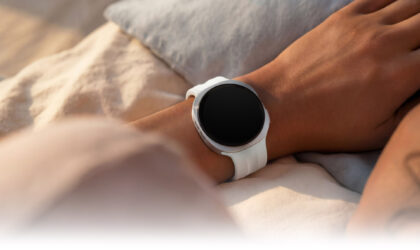
Samsung Galaxy Watch9 (40 mm)
The Galaxy Watch9 is the better buy for anyone who wants the full health picture without a recurring charge attached to it. Samsung keeps workout, sleep, and wellness tracking free, so the sleep data you start collecting in March still arrives in October without a billing decision in between. Blood pressure monitoring asks for a cuff calibration first, which is a one-evening chore rather than a subscription.
Comfort is the other reason to reach for it. The flatter case and the air-pocket Sport Band make overnight wear a reasonable proposition, and the Dynamic Lug System holds the sensor against your skin during a set instead of sliding around your forearm. Anyone who has abandoned sleep tracking because the watch felt like a brick at 2 a.m. knows how much that changes.
Recovery is where Samsung’s software earns its keep. Daily Cardio Load weighs your recent training and tells you whether tonight is a push night or a rest night, which is the call I get wrong most often on my own.
My final verdict
Samsung gives you comfortable overnight wear and recovery guidance without asking for $9.99 every month. Over two years, getting those features without another bill matters more to me than any Google-exclusive feature. CEOs will argue that recurring fees are necessary, but I have a hard time seeing the value in charging extra for features that should come with the wearable (looking at you, Google and Oura).
Buy the Pixel Watch 5 instead when you own a Pixel phone and plan to run every gym session through the on-wrist Strength Training experience. What I’d avoid is paying for Google Health Premium to chase insulin resistance trends you will check twice and forget.


