
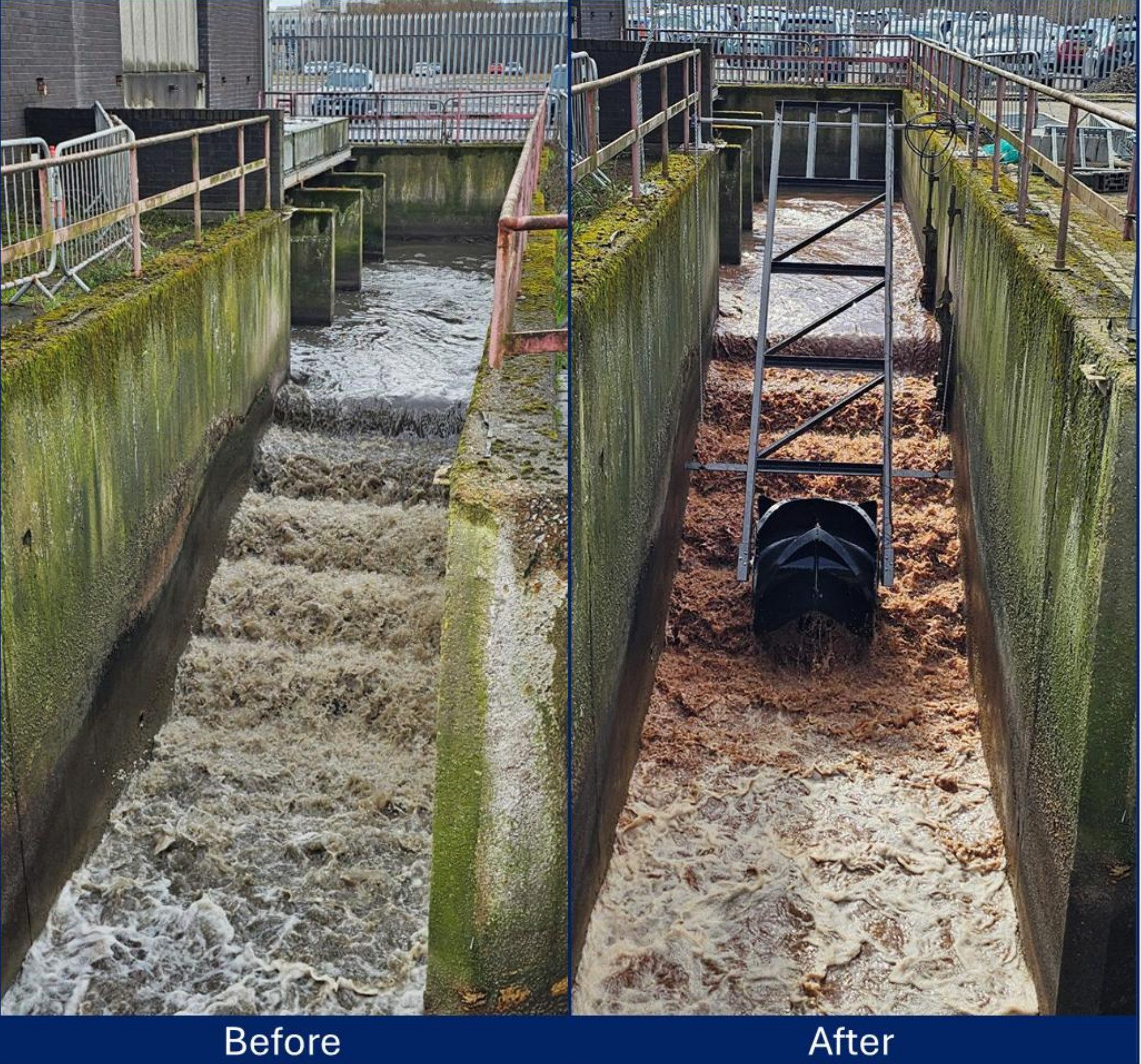
A novel hydropower technology is being trialled by Scottish Water at its Shieldhall Wastewater Treatment Works in Glasgow, to assess the possibilities it presents to recover energy that would otherwise be lost within wastewater treatment processes.
The pilot project, being delivered in partnership with Fish Friendly Hydropower Company (FFH) and WGM Engineering, involves the installation of FFH’s PicoStream floating turbine, a novel form of small-scale hydropower generation. As the group explains, “the PicoStream system sits within existing water channels, generating electricity from inter-process flows that would otherwise be lost — and can be rapidly deployed with no major infrastructure or disruption”.
Unlike wind and solar technologies, which depend on weather conditions, hydropower systems can operate continuously wherever suitable water flows exist.
Project partners suggest the approach could offer a practical route to expanding renewable energy generation in the UK water industry. Thousands of water and wastewater sites, as well as other locations featuring managed water flows, may offer opportunities for similar installations.
Sam Maitland, managing director of Fish Friendly Hydropower Company, said the trial represented an important step in demonstrating how low-impact hydropower could contribute to net-zero targets.
“There is huge, untapped energy in water infrastructure, and technologies like PicoStream allow us to capture that energy quickly, cost-effectively and with minimal disruption,” he said.
Jason Cramb, director of WGM Engineering, described the project as an example of how engineering expertise and innovation could be combined to deliver practical renewable energy solutions for the water sector.
Scottish Water said the trial formed part of its wider commitment to explore technologies that can reduce operational carbon emissions while maintaining reliable services.
Fraser Simpson, Product Owner for Major Projects at Scottish Water, said: “Scottish Water is committed to exploring innovative solutions that help reduce our carbon footprint while continuing to deliver high-quality, reliable services on our journey towards Net Zero.”
The Shieldhall installation is expected to provide valuable operational data on the performance of the technology in a live wastewater environment.
The project originated from an initiative aimed at identifying circular economy opportunities within water and wastewater operations, involving a collaboration facilitated by the Hydro Nation Chair and involving Scottish Water, WGM Engineering, Zero Waste Scotland, RMAS, and researchers from the universities of Edinburgh and Stirling.




