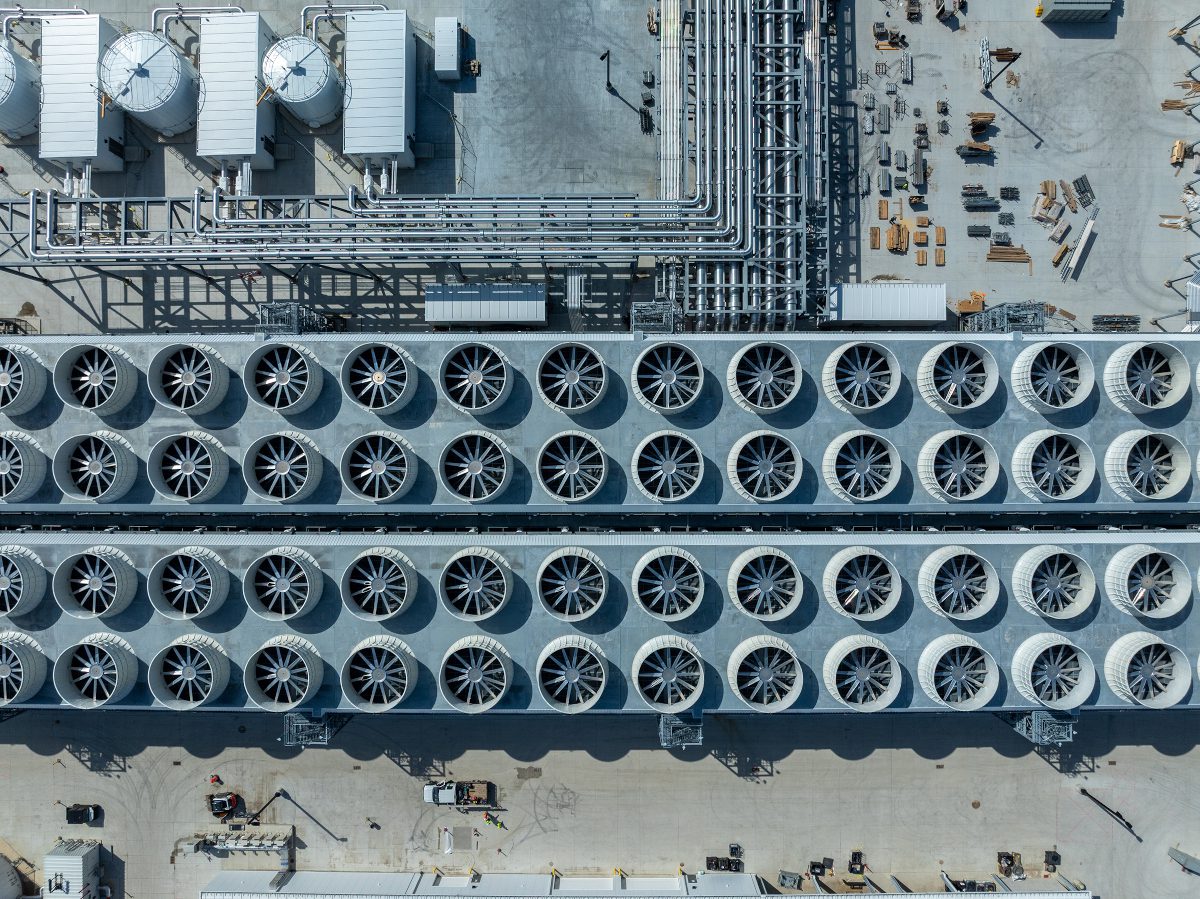
AI’s unprecedented demand for power is turning big tech companies into builders of their own energy infrastructure – and under the right policies and market rules, data centre investment could help accelerate innovation and deployment of clean energy technologies, argue researchers from WU Vienna University of Economics and Business.
Global electricity demand for new data centres will double by 2030, according to the International Energy Agency, outpacing the deployment of renewables. In the US, data centres could consume up to 17% of US electricity by 2030 – 60% higher than 2024 projections.
The critical constraint is how quickly data centres can access significant levels of reliable power, rather than the cost of electricity. Technology companies, like Google, need vast amounts of reliable power within a few years, far faster than conventional infrastructure can be planned and built. To help data centres meet demands, energy storage – like new battery technologies – is emerging as a potential solution.
Together with colleagues from the International Institute for Applied Systems Analysis (IIASA) and King Abdullah University of Science and Technology, the researchers argue that data centre plans should be judged not only as energy consumers, but by the flexibility, energy storage, and clean-firm capacity they bring to the system. With the right policies in place, AI’s growing demand for power could accelerate investment in new energy and storage technologies, bringing benefits to the wider electricity system.
To understand how much on-site energy storage could help data centres meet peak demand, the researchers analysed energy consumption at 96 UK data centres, using data from UK Power Networks. They show that if on-site batteries are used to help meet peak energy requirements, the peak imported electricity from the grid would reduce by 10–15%. This suggests that equipping data centres with batteries could ease pressure on constrained grids. With additional clean electricity generation on-site or nearby, a data centre’s reliance on the grid would be even less, say the researchers.
Proposed policy reforms
Their paper, published in Energy and Climate Change, proposes a series of policy reforms for system operators and market rules designed to incentivise and reward the deployment of energy storage technologies and other clean energy infrastructure in data centre plans:
- Reform grid-connection rules to reward projects that provide measurable, net benefits to the energy system.
- Make it easier for data centres to deploy batteries and clean generation on-site and remove market and regulatory barriers that prevent them from providing grid services.
- Treat computing load as a flexible, rather than fixed, resource by rewarding data centres for reducing demand during grid stress and matching computing activity to periods of clean electricity.
- Support innovation and make it easier to finance so that AI’s demand for reliable, clean electricity can help scale the next generation of energy-storage technologies.
Lead author, Behnam Zakeri, Assistant Professor and Deputy Head of the Institute for Data, Energy and Sustainability (IDEaS) at WU Vienna University of Economics and Business, said:
“AI is creating an unprecedented race for electricity. The question is not just where to find clean power, but how quickly it can be delivered to meet AI’s growing compute demand. Big tech companies are increasingly investing in energy storage as a solution to several of their power problems. What is now emerging is a ‘nexus’ where AI and energy storage reinforce one another.
“AI is already helping to discover new materials, accelerate battery development and optimise energy-storage systems. At the same time, the growing demand for reliable clean electricity for data centres is creating a powerful market for batteries, long-duration storage and other flexibility technologies. Under the right conditions, the digital infrastructure boom could help accelerate the clean-energy transition beyond data centres themselves, creating spillover effects across other sectors.”




