
TL; DR
- Qualcomm confirms Adreno Matrix Cores and Adreno Neural Fusion for its next flagship chip’s GPU.
- The new GPU runs at 1.45GHz, up from 1.2GHz on the Snapdragon 8 Elite Gen 5.
- Adreno Neural Fusion combines AI super resolution and frame generation, similar to Nvidia’s DLSS.
As Qualcomm prepares for its Snapdragon Summit later this month, it has begun announcing key technologies ahead of it. The latest reveal is about something new that improves the overall graphics performance on its chipsets, particularly for handling AI workloads.
Also Read: Apple’s First Foldable iPhone Could Bring MagSafe to a 4.5mm-Thick Body
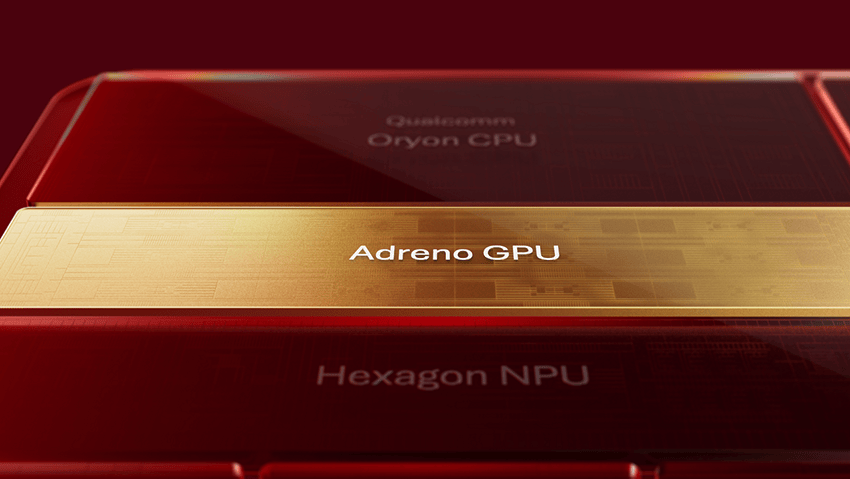
What’s Actually New Inside The GPU
The primary addition is what Qualcomm calls Adreno Matrix Cores. If the first name ‘Adreno’ sounds familiar, that’s because the company has been using it for its GPUs so far.
What’s new, however, is that the Adreno Matrix Cores are built directly into the GPU pipeline. This way, they can handle AI computation without sending data to a separate processing block.
The pitch, I’d say, is quite simple. Running AI workloads on the same silicon package as the one that renders graphics reduces the overall latency and total power draw. Otherwise, going back and forth between different parts of the chip takes more power and time.

Also Read: ChatGPT, Claude, Grok, Cursor, and Other AI Apps are Down
The Matrix Cores power a new rendering system called Adreno Neural Fusion. It basically acts as a super chip that combines neural processing, AI-driven super resolution, and frame generation into a single, superior package.
After reading this, I immediately recalled the additional supercomputing chip some smartphone manufacturers have included in their flagships for similar use cases. From my vantage point, this looks like Qualcomm is trying to eliminate the need to include dedicated hardware for similar use cases.
Also Read: Apple’s M4 MacBook Air is Under Rs 1 Lakh, With a Catch

Reading Between The Lines: This Is Qualcomm’s DLSS Moment
Anyone who’s followed PC gaming will recognize what Qualcomm is trying to. Nvidia’s DLSS renders at a lower resolution and uses AI to construct a sharper, higher-frame-rate image, and Adreno Neural Fusion facilitates exactly that. However, it’s built for the compact form factor and power requirements of a smartphone.
| Spec | Snapdragon 8 Elite Gen 5 | Snapdragon 8 Elite Gen 6 (Expected) |
| GPU Clock Speed | 1.2GHz | 1.45GHz |
| Architecture | — | 3-slice, granular power management |
| Dedicated AI Cores | No | Yes (Adreno Matrix Cores) |
| Rendering Tech | Standard upscaling | Adreno Neural Fusion |
| Dedicated GPU Memory | — | 18MB Adreno HPM |
| Efficiency Improvement | — | Claimed 12% |

Qualcomm has confirmed this tech works across Unity and Unreal Engine already. In other words, developers don’t need to remake their AI pipelines from scratch.
Also Read: 5 Reasons the iPhone 18 Pro Max Could Beat The 17 Pro Max
I think the framing worth paying attention to isn’t the clock speed jump, which is a fairly ordinary generational bump; it’s Qualcomm explicitly building for a future where mobile gaming expects console-adjacent visual fidelity without frying a phone’s battery in twenty minutes.

You can follow Smartprix on Twitter, Facebook, Instagram, and Google News. Visit smartprix.com for the latest tech and auto news, reviews, and guides.


