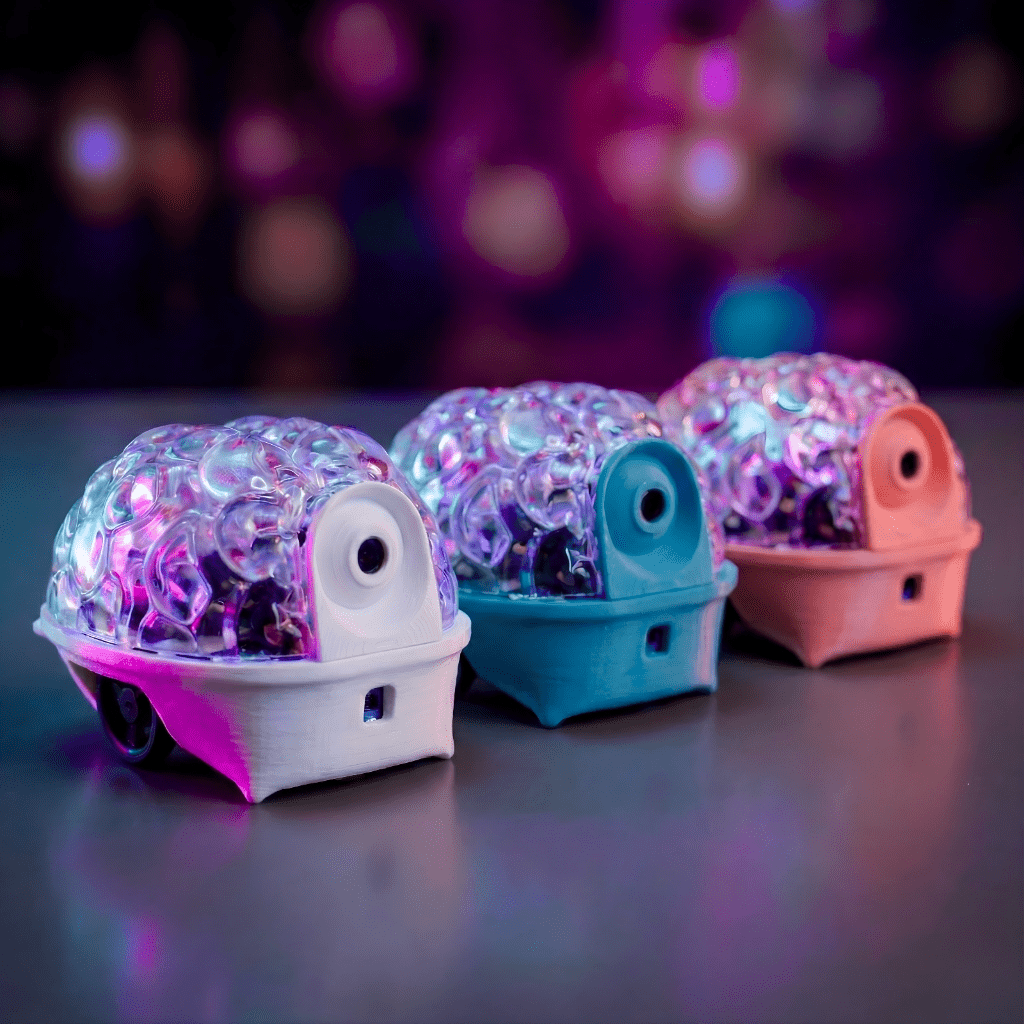
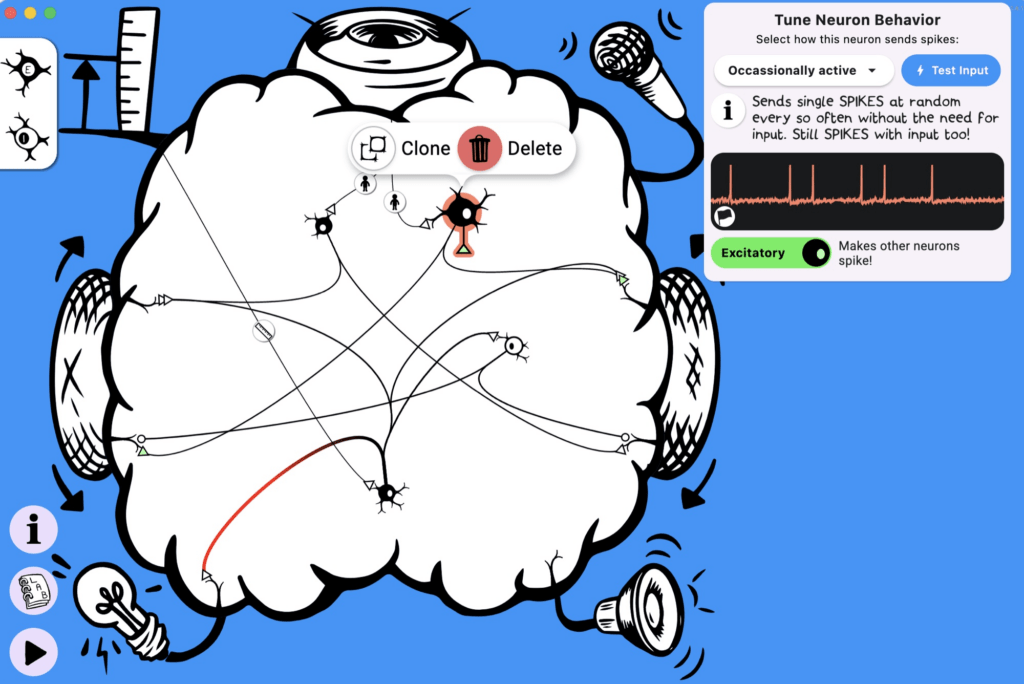
Backyard Brains launched SpikerBot on Kickstarter, a desktop robot whose behavior is controlled by spiking neural networks that kids build themselves. Instead of typing code or prompting a chatbot, students drag biologically inspired neurons into a no-code app, connect them to sensors and motors, and watch the robot move, react, speak, and change behavior in real time.
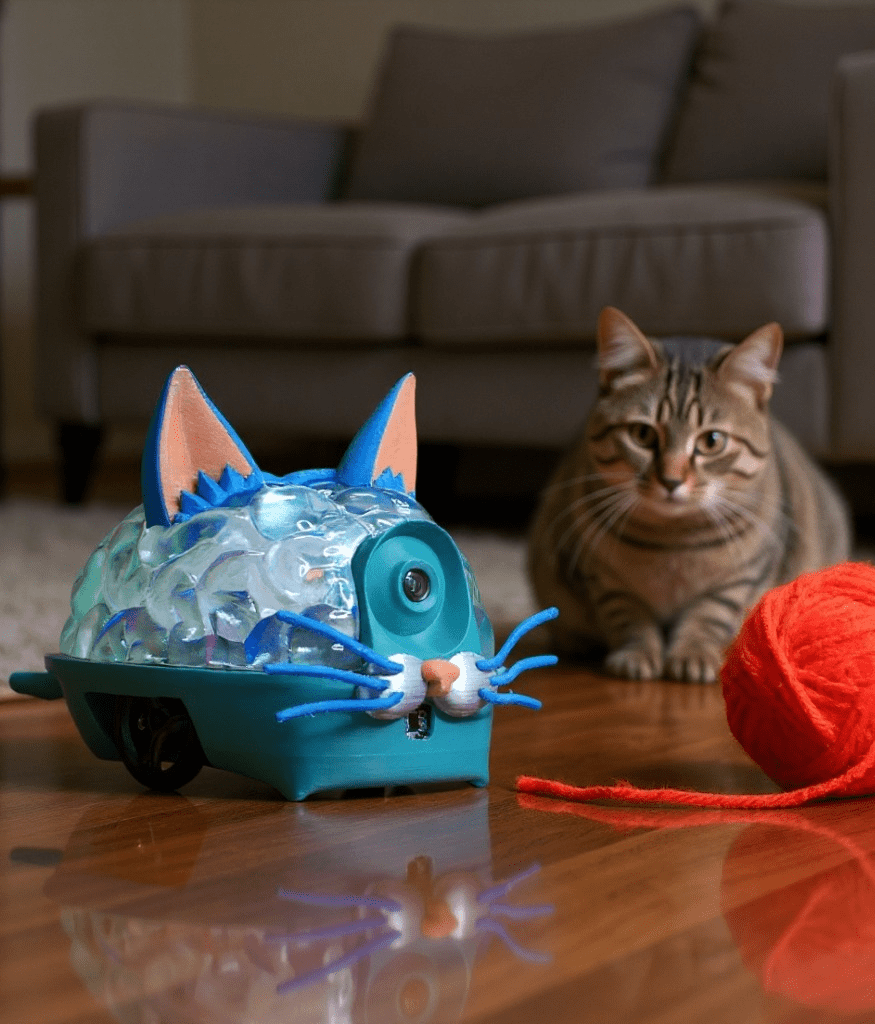
SpikerBot is designed to feel like a creature, not a robot. Wire visual neurons to the motors and it can chase a red ball. Change the connection and it can avoid that same object. Add sensors, sounds, inhibition, circuits that can hold short-lived internal states, or a second robot, and the behavior starts to feel less scripted and more alive. The point is not to memorize neuroscience vocabulary. The point is to test an idea, see what happens, and rebuild the brain until the creature behaves the way the child imagined.
That makes SpikerBot an educational robot with a concrete outcome: kids practice prediction, debugging, iteration, and critical thinking while learning how neurons and circuits shape behavior. It is built for families, classrooms, maker spaces, and curious adults who want a hands-on alternative to passive screen time and black-box AI tools.
SpikerBot grew out of years of NIH-supported research by Backyard Brains, the Ann Arbor company known for making neuroscience accessible outside the laboratory. In earlier classroom workshops using the neurorobotics platform, 295 high-school students built and tested robot brains over a one-week unit. The peer-reviewed study, published in Frontiers in Neurorobotics (doi.org/10.3389/fnbot.2020.00006), found significant gains in students‘ understanding of key neuroscience concepts and confidence in neuroscience.
„Kids do not need another device that gives them answers,“ said Greg Gage, co-founder and CEO of Backyard Brains. „They need something they can question, change, break, and fix with their own hands. SpikerBot makes the brain visible. You change a synapse, and the creature changes.“
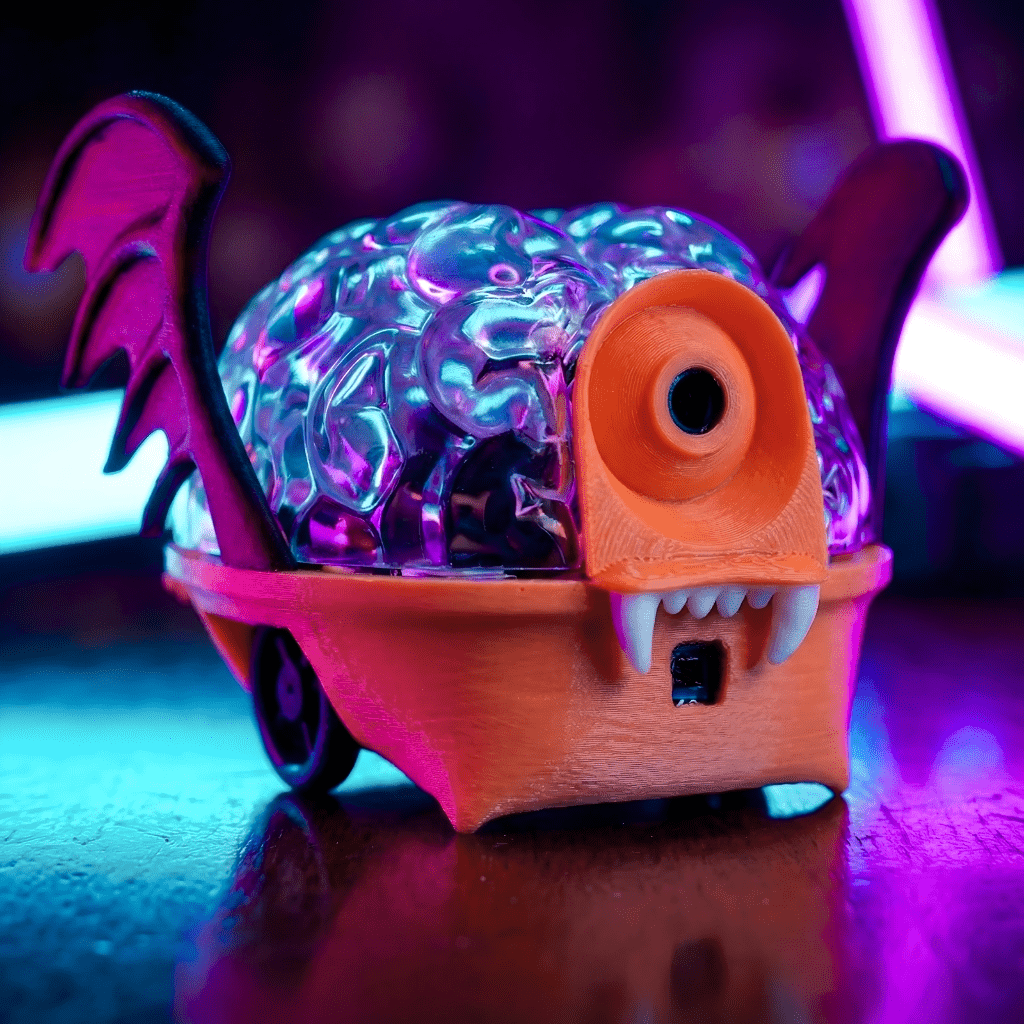
The robot includes a camera, microphone, speaker, distance sensors, drive wheels, RGB LEDs, a customizable body shell, and a free SpikerBot app with pre-built brain examples. Learners can start with simple predator, explorer, reflex, or shy-creature circuits, then take them apart and build their own. Advanced users can hack the open-source platform and connect external sensors, game controllers, or Backyard Brains SpikerBit Brain-Machine Interface product.
Backyard Brains‘ SpikerBot development was supported by the National Institutes of Health through NINDS SBIR Phase II grant 2R44NS108850-03A1. „Public science funding helped us turn a research idea into something students can hold, test, and understand,“ Gage said. „Kickstarter is the path to move it from final development into the hands of families and teachers.“
SpikerBot is available on Kickstarter beginning May 12, 2026. Early-bird pledges begin at $199, with standard Kickstarter pledges at $239 and a planned retail price of $300. Units are expected to ship in September 2026. The recommended age range is 10 to 99.
ABOUT BACKYARD BRAINS
Backyard Brains was founded in 2009 in Ann Arbor, Michigan, to make neuroscience
accessible. The company builds hands-on tools that let students, teachers, families,
and curious citizens investigate the nervous system directly. Its products and
curricula are used in classrooms, labs, makerspaces, and homes around the world,
supported by grants from the NIH, NSF, and the Department of Defense, and have been
featured in The New York Times, BBC, WIRED, TED, Netflix, NPR, Science Friday, Good
Morning America, and Last Week Tonight.
Ähnliche Beiträge


