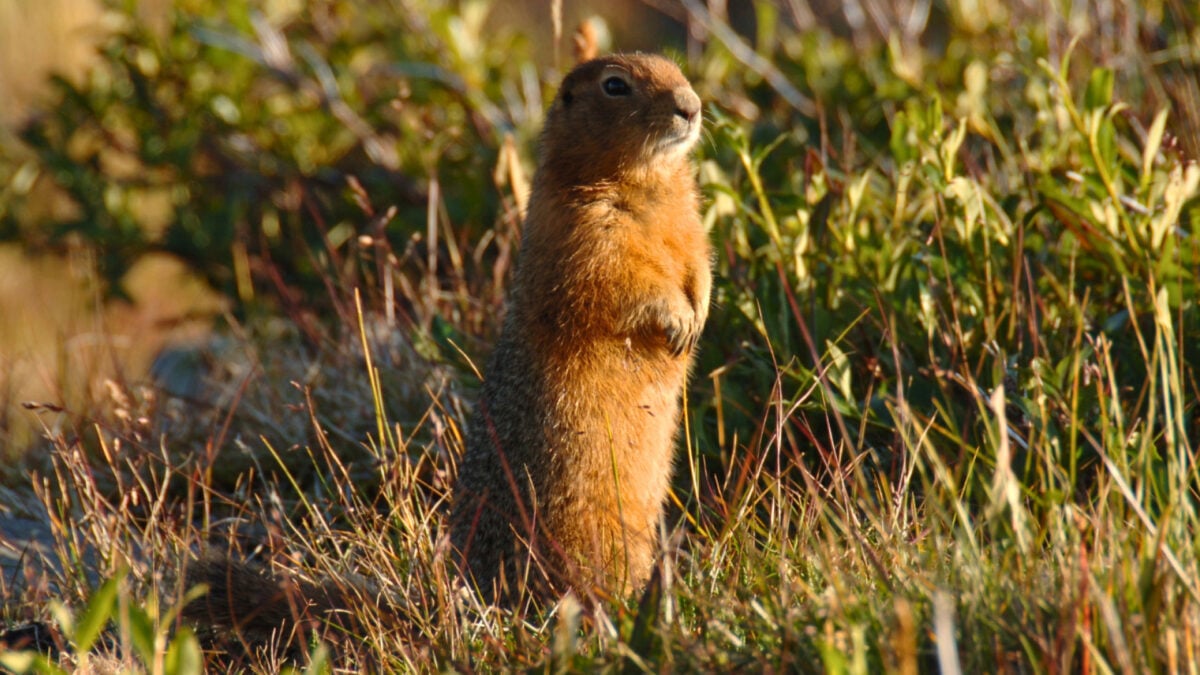
Arctic ground squirrels will eat just about anything. Apparently, they have been like this for at least 700,000 years—as evidenced by their poop, preserved in Yukon’s deep permafrost. But that’s not all. Scientific investigation of this poop found an unprecedentedly rich trove of ancient DNA from hundreds of thousands of years ago.
When researchers analyzed 13 permafrost samples spanning several glacial periods, they found a lot of frozen squirrel poop, or, as they’re formally called, coprolites. These coprolites held an astoundingly diverse spectrum of ancient environmental DNA, including plants, insects, microbes, and animals such as hares, bison, horses, and even mammoths, according to a study on the findings published in Nature Communications.
This remarkable reservoir of genetic information “helps reconstruct paleoenvironments in much deeper time, providing insights into environmental change, megafaunal evolution, dispersal, and ultimately extinction,” Hendrik Poinar, the study’s co-senior author and an evolutionary geneticist at McMaster University in Canada, said in a statement.
The poopy assistant
According to the study, Arctic ground squirrels are quite the “opportunistic feeders.” In the statement, study lead author Tyler Murchie explained that the squirrels, much like pack rats, will collect a “whole bunch” of plant material, bones, and seeds to prepare for long-term hibernation up to seven months.
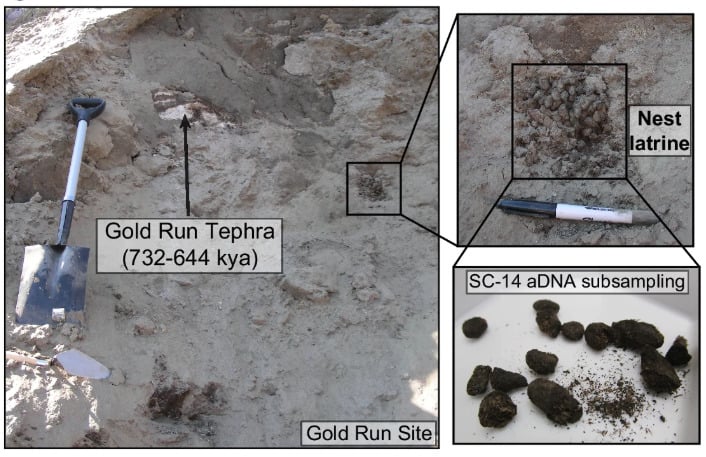
“They have little latrine areas and tunnel networks and caches of food,” Murchie told Science News. But researchers hadn’t thought to thaw the poop—about the size of a rabbit dropping—and subject it to advanced DNA analysis, as coprolites degrade easily, the team explained in the paper. In fact, Murchie added to Science News that he expected the DNA would “mostly just be the squirrel plus their gut microbiome.”
You are what you eat
So naturally, the sequencing results were shocking. For one, the samples contained much more ancient DNA that dated back to around 30,000 to 700,000 years. A detailed classification of the DNA produced 18 unique mitochondrial genomes, which the team is compiling in a separate forthcoming report. Some DNA traced back to gray wolves or some kind of big cat was likely the squirrel feeding on the carcass of the predator, the team hypothesized. That said, given the general lack of available datasets for ancient animal DNA, some genetic matches may be less conclusive than others, the paper warned.
Of course, the droppings revealed new things about the squirrels themselves. The analysis uncovered previously unknown genetic diversity among the squirrels, including one lineage that today lives far away from the Yukon. Overall, the team noted in the statement, the poop fossils “appear to preserve ancient DNA even better than bones or surrounding permafrost.”
“Science is sometimes at its best when it takes something ordinary, weird, or even funny and shows that it contains a much larger story,” Murchie told Popular Science.
Indeed, the coprolites might not be as impressive as other fossils from a similar era, like mammoth tusks or the remains of saber-toothed cats. But, as the study says, the usefulness of squirrel poop “exceeds” that of cooler-looking fossils.


