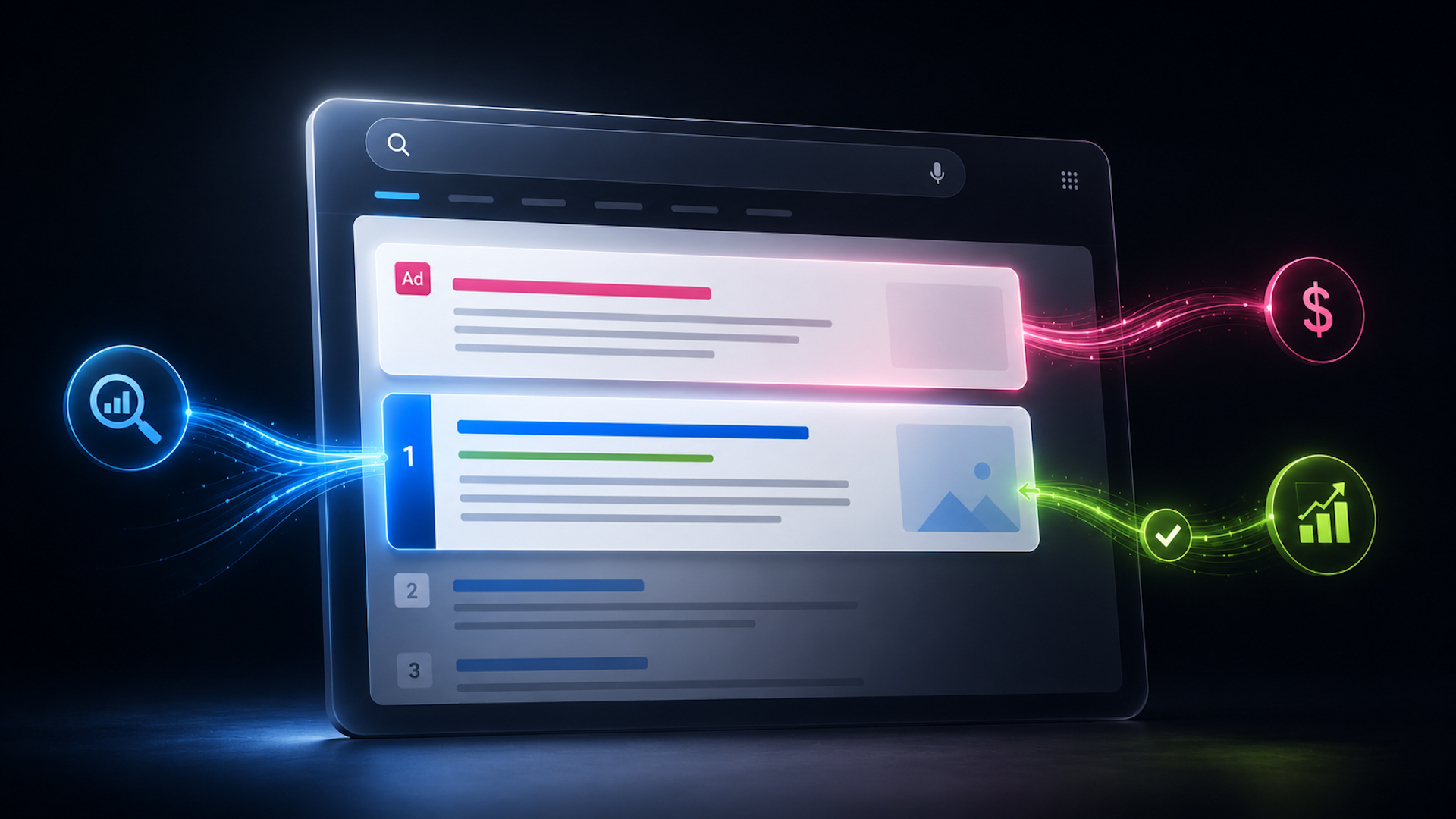
Having both SEO and PPC doesn’t mean you have a search strategy. It means you have two channel strategies. That’s very different, and the gap between them is where budget gets wasted and opportunities get missed.
In many businesses, the SEO team and the PPC team operate separately. One focuses on organic visibility, while the other focuses on managing bids and budget. Both are hitting their own targets and reporting on their own metrics, but nobody is looking at the bigger picture. That’s where the problems start.
Why the silos exist in the first place
SEO and PPC genuinely are different jobs. The skills, the tools, and the way success is measured are different. In many agencies and businesses, they sit in separate teams, sometimes with separate budget holders or even separate agencies managing each one. That makes sense up to a point. The problem is when that separation becomes the default, and nobody ever looks across both channels at once.
Part of the issue is how teams are measured.
An SEO team gets judged on rankings and organic traffic. A PPC team gets judged on CPC, conversion rate, and return on ad spend. Neither is set up to care about what the other is doing, and unless someone has visibility across both, the gaps just stay there.
Sometimes the issue is simpler than that.
Teams don’t always know enough about the other channel to ask the right questions. Other times, there’s a reluctance to share data in case it leads to budget being redirected away from their channel. Both are understandable, but both come at a cost to the business.
Dig deeper: Why the SEO vs. PPC debate is finally over
Uncover the keywords, ads, landing pages, and strategies driving your competitors’ paid search success—and find your next opportunity to outperform them.
What the disconnect actually costs
The most obvious waste is paying for clicks on terms you already rank for organically. If a page is sitting in position one, there’s a reasonable argument for not bidding on that keyword at all. But if the PPC team has no visibility into where the site ranks organically, that spend just keeps going.
The less obvious cost is the missed opportunity when paid performance shifts. If CPCs are rising on certain terms and the return is falling, that’s a signal worth acting on. Those terms are becoming more expensive to win through paid, making them stronger candidates for organic investment, whether that’s creating new content or improving pages that are already close to ranking. That thinking requires looking across both channels.
The impact runs in both directions.
When paid data shows which keywords convert, that intelligence should be feeding directly into organic content priorities. When organic data shows which terms a site already ranks strongly for, that should inform where paid budget gets focused and where it gets pulled back. Without that flow of information between teams, both channels are making decisions based on an incomplete picture.
There’s also a brand consistency issue that rarely gets discussed.
When SEO and PPC operate separately, they can end up sending different messages to the same audience. The organic result might lead to an informational page, while the paid ad drives to a promotional landing page for the same query. From the user’s perspective, that inconsistency erodes trust and reduces the likelihood of converting, regardless of which channel brought them in.
When SEO and PPC teams share data and make decisions together, businesses make better use of their marketing budget. Paid spend can be focused on keywords where organic visibility is limited, while strong organic rankings reduce reliance on paid ads for established terms. The result is a more efficient overall search strategy, with the two channels working together rather than running in parallel.
Dig deeper: The new search journey changes how SEO and PPC should work
What good collaboration looks like in practice
The good news is that none of this requires a major restructure. Three practical changes make the biggest difference.
Start with shared keyword research
Keyword research should never be a channel-specific task. Both teams need to be working from the same list from the start.
SEO takes a long-term view: what people are searching for over time and what informational content is needed. PPC brings the commercial validation, what’s actually converting, and what the demand looks like right now.
When both teams are looking at the same data, they stop pulling in different directions and start making decisions together.
Dig deeper: SEO and PPC alignment starts with your org chart
Avoid duplicate landing pages
One of the most common problems I see is duplicate landing pages, and it almost always comes down to one team not knowing what the other has already built. The PPC team needs a page for a campaign. They request one, and nobody checks whether SEO already has a page targeting the same thing. You end up with two pages going after the same intent, splitting authority, and confusing Google about which one to rank.
I’ve seen this play out where a new page goes live for a paid campaign and, a few weeks later, the SEO team spots it in Google Search Console without knowing where it came from. They spend time working out whether it’s cannibalizing an existing page, whether a canonical tag is needed, or whether a noindex tag would be more appropriate to keep the page out of organic search entirely. That’s time spent fixing a problem that a five-minute conversation could’ve prevented.
Before any new landing page gets built for a paid campaign, someone should check what already exists. More often than not, improving a page that’s already there gets better results for both channels than starting from scratch.
Hold joint client calls
Getting both teams on the same monthly call sounds simple, but it makes a significant difference. Everyone hears the same objectives, commercial priorities, and campaign updates at the same time.
If the PPC team is planning a new landing page or shifting keyword priorities, the SEO team knows in advance. That’s when you can actually prevent problems rather than just fix them.
It also changes the dynamic with the client. Instead of two teams presenting their results separately, everyone looks at the account as a whole. Clients notice that. It builds confidence that they’re getting one joined-up strategy rather than two separate teams doing their own thing.
The data both teams should be sharing
PPC search term reports show which queries are driving paid conversions, which are expensive without converting, and where CPCs are trending. That information is directly useful for organic keyword prioritization, content planning, and identifying gaps where SEO isn’t yet competing.
In the other direction, organic ranking data shows where a site is already visible without paying. If a page ranks in position one for a term, that’s a signal to reduce or pause ad spend on that keyword and redirect budget elsewhere. If pages are ranking between positions four and 10, a targeted paid push could increase total visibility while organic continues to improve.
SEO content research is also a valuable source of negative keywords for paid campaigns. If the SEO team knows which informational queries are driving organic traffic that doesn’t convert, that list should feed directly into PPC negative keyword exclusions.
Paying for clicks on queries that consistently fail to convert is a straightforward waste of budget, and the SEO team often has the data to prevent it. This is one of the simplest and most overlooked ways the two channels can save the business money without changing anything else.
Both teams should also be reporting on the same outcomes. Revenue, leads, and conversions matter more than channel-specific metrics. When both teams are measuring the same commercial results, deciding how to allocate effort and budget becomes much more straightforward.
See where competitors are investing, which keywords drive their results, and how to capture more of the market.
The fix is simpler than you think
The gap between SEO and PPC isn’t a technical problem. It’s a communication problem. And communication problems are the easiest ones to fix, if someone decides to.
SEO and PPC don’t need to become one team. They need to share the data that helps each make better decisions. When paid insights inform organic priorities and organic data informs paid spend, both channels can work toward a more efficient search strategy instead of operating in parallel.


