3
AI cameras on ordinary vans turn daily technician routes into wireline inspection
In sum – what we know:
- Ride-along inspection – SK Telecom’s Topda mounts AI cameras, a GPS antenna and a neural processing unit on work vans technicians already drive, inspecting wireline infrastructure along normal routes.
- Four-month pilot results – Six vehicles covered about 50% of major wireline sections in the Seoul metropolitan area from May through August 2026, reaching 88% detection accuracy, up from 65% in 2024.
- Scaling and expansion – The fleet grows to roughly 150 vehicles next year with a 70% coverage target, rising past 90% by 2028, and tunnel inspection joins the scope by year-end.
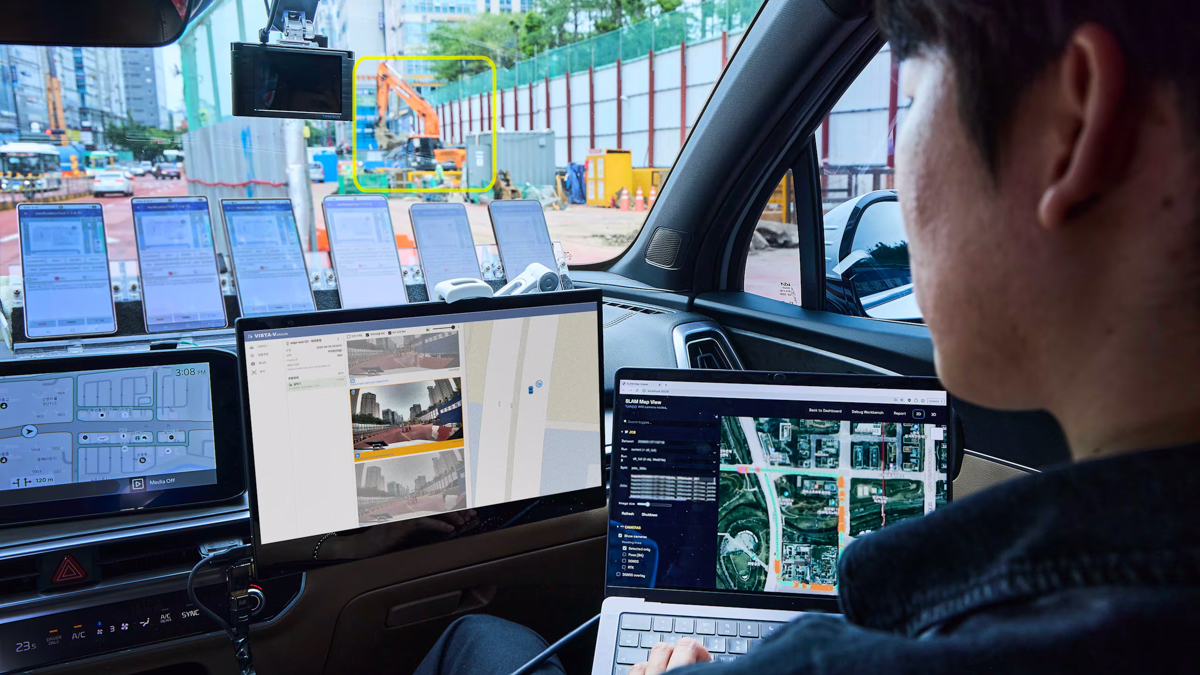
SK Telecom has commercialized “Topda,” an AI-powered inspection system that turns the company’s ordinary work vehicles into a rolling survey fleet for South Korea’s wireline infrastructure. The pitch is essentially to mount AI cameras, a GPS antenna, and a neural processing unit on the vans technicians already drive, and let the system inspect everything they pass while they go about their normal work. The footage gets captured and pre-processed continuously as crews handle customer complaints or maintenance calls, then analyzed either on-device or on central servers.
SK Telecom’s wireline network includes about 2.35 million utility poles and enough fiber-optic cable to circle the Earth five times, per the company’s own figures. Inspecting all of that manually means dedicated patrol teams driving dedicated routes, and it means things can get missed. Topda promises continuous, nationwide coverage without hiring waves of new inspectors or standing up a separate vehicle fleet, because the vehicles are already out there.
That’s also what separates this from what other telecoms have been trying. Operators globally have experimented with drones, satellite imagery, and fixed cameras for infrastructure inspection, but SK Telecom’s bet is on the vehicles it already runs every day, paired with digital twin modeling of the physical network. It’s a pragmatic angle — the marginal cost of inspection drops toward zero when the inspection rides along with work that was happening anyway.
Detecting 11 risk factors through the Vista platform
Under the hood, Topda runs on SK Telecom’s VISTA platform, a digital twin system that maps physical facilities into a virtual model of the network. VISTA combines three AI layers the company developed internally — Vision AI for recognizing objects like poles, cables, and machinery; Context AI for judging whether what it sees actually matters — by the company’s count, only about 30% of the excavators it spots on a given day are an actual risk, the rest just in transit or parked; and Spatial AI for understanding where everything sits relative to the infrastructure around it. Spatial AI’s positioning comes via a partnership with US company Swift Navigation, with accuracy of roughly one to two meters. Notably, the whole thing runs on standard camera and drone footage. There’s no LiDAR or other expensive sensor hardware involved.
Topda’s Vision AI models watch for 11 specific inspection elements spanning environmental risks and equipment defects. On the environmental side, that means construction sites near telecom routes and heavy equipment operating close to cables. On the defect side, it covers sagging lines, leaning or damaged poles, and unauthorized attachments, among other irregularities. The system also checks work-site safety compliance — for instance, whether workers near aerial work platforms are wearing helmets and whether traffic cones are in place. When the system flags something, it tags the GPS coordinates, updates the central facility database automatically, and can generate a task or dispatch order for network operators. In other words, the loop from detection to action is meant to close without anyone reviewing raw footage by hand.
How well it works is the harder question. Reports put detection accuracy at around 88% for target risks and defects — a figure SK Telecom says was reached following the four-month pilot, up from 65% in 2024, with a target of roughly 95% next year. That’s progress, but it still means hazards are missed and there could be false positives. Camera-based systems are also at the mercy of conditions. Fog, rain, poor lighting, awkward camera angles, and nighttime driving all degrade detection quality, and SK Telecom hasn’t detailed how the accuracy figure holds up across those scenarios. Operators will need triage workflows and careful calibration to keep the alert stream useful rather than noisy. There’s also the less glamorous problem of plugging AI detections into legacy asset databases and older GIS systems, some of which carry incomplete or inaccurate records for aging infrastructure.
Commercialization
The launch follows a four-month pilot, running from May through August 2026 in the Seoul metropolitan area, where just six equipped vehicles managed to inspect about 50% of major wireline sections at least once. Next year the fleet scales to roughly 150 vehicles with a 70% coverage target, and SK Telecom wants more than 90% of major wireline sections covered by 2028. That coverage number, from such a small fleet, is certainly impressive. Topda sits within the company’s broader “Network AX” strategy, which already includes VISTA-Drone, a drone-based AI inspection system that reconstructs cell towers as 3D models and has apparently cut tower inspection time by 60% and image-interpretation time by 85%.
The company is also framing Topda as a solution brand rather than an internal tool, with an eye toward packaging it for electric utilities, rail operators, or municipalities — anyone with linear infrastructure strung along roads. The operational case is easy to make. Catching construction risks and damaged cables early should mean fewer accidental line cuts, fewer large-scale outages, and better long-term visibility into aging assets.
That said, there are open questions the announcement doesn’t resolve. SK Telecom says the system augments workers by prioritizing field visits and automating fault detection — but a system this good at automated patrol will probably reduce the need for dedicated manual patrol roles over time, whatever the near-term framing.


