Published August 12, 2026 11:40AM
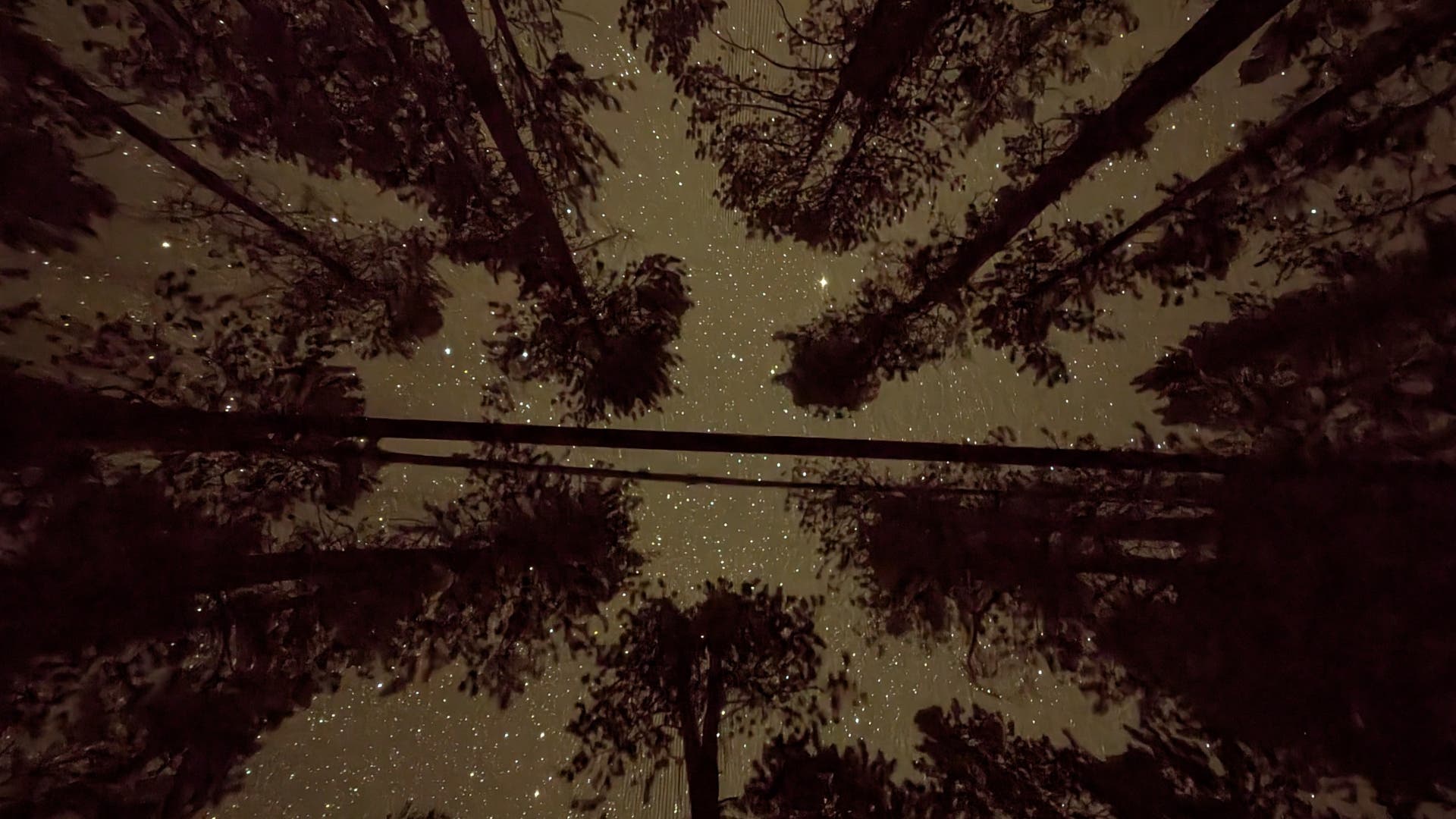
The stars overhead looked close enough to touch. I lay quietly and comfortably in my sleeping bag, totally transfixed by the night sky. This was the first time I’d used my Sky View Solo Tent, and it was an experience. While some tents are specialized for high-alpine environments or thru-hiking, these tents are purpose-built for stargazing.
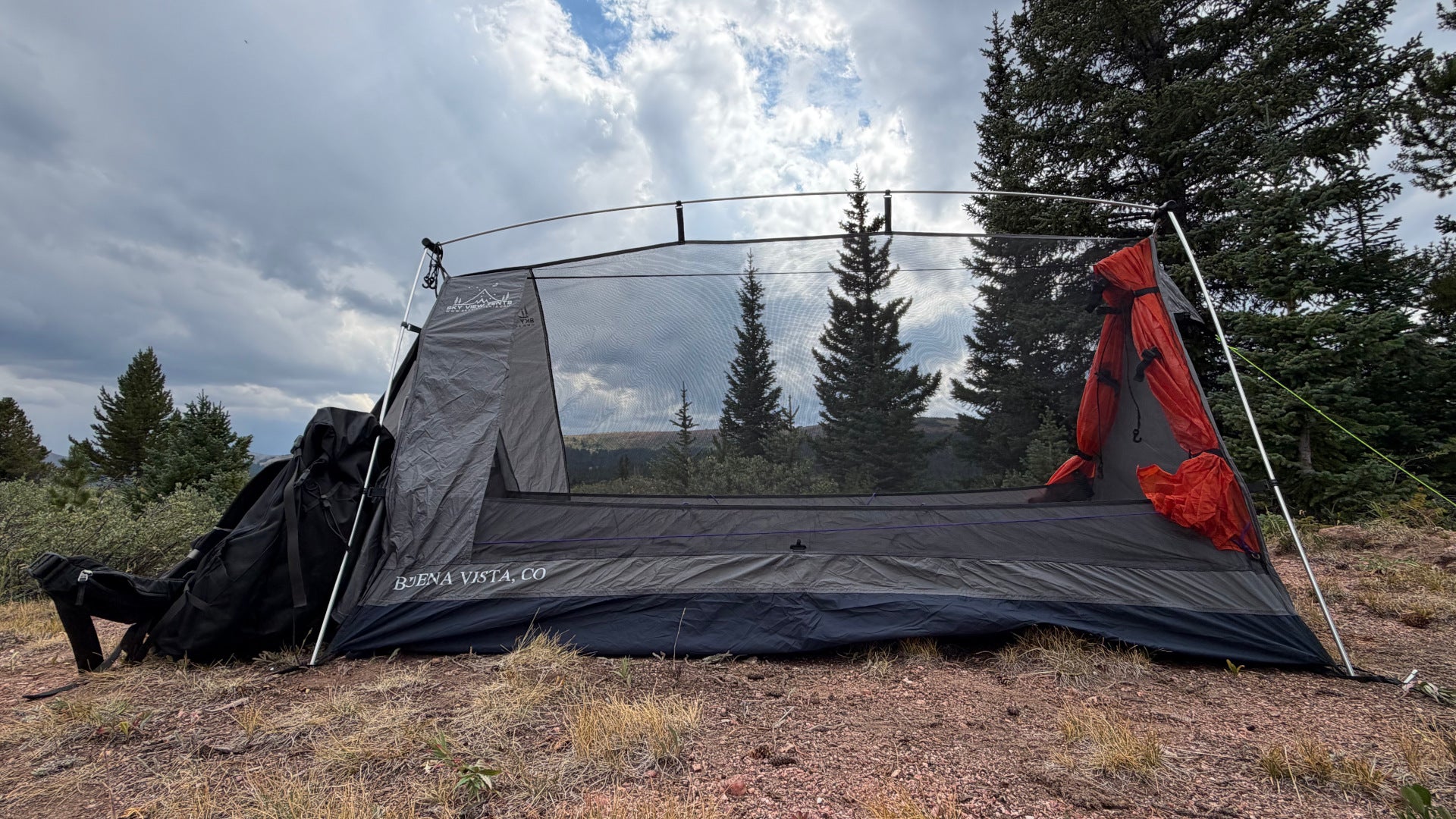
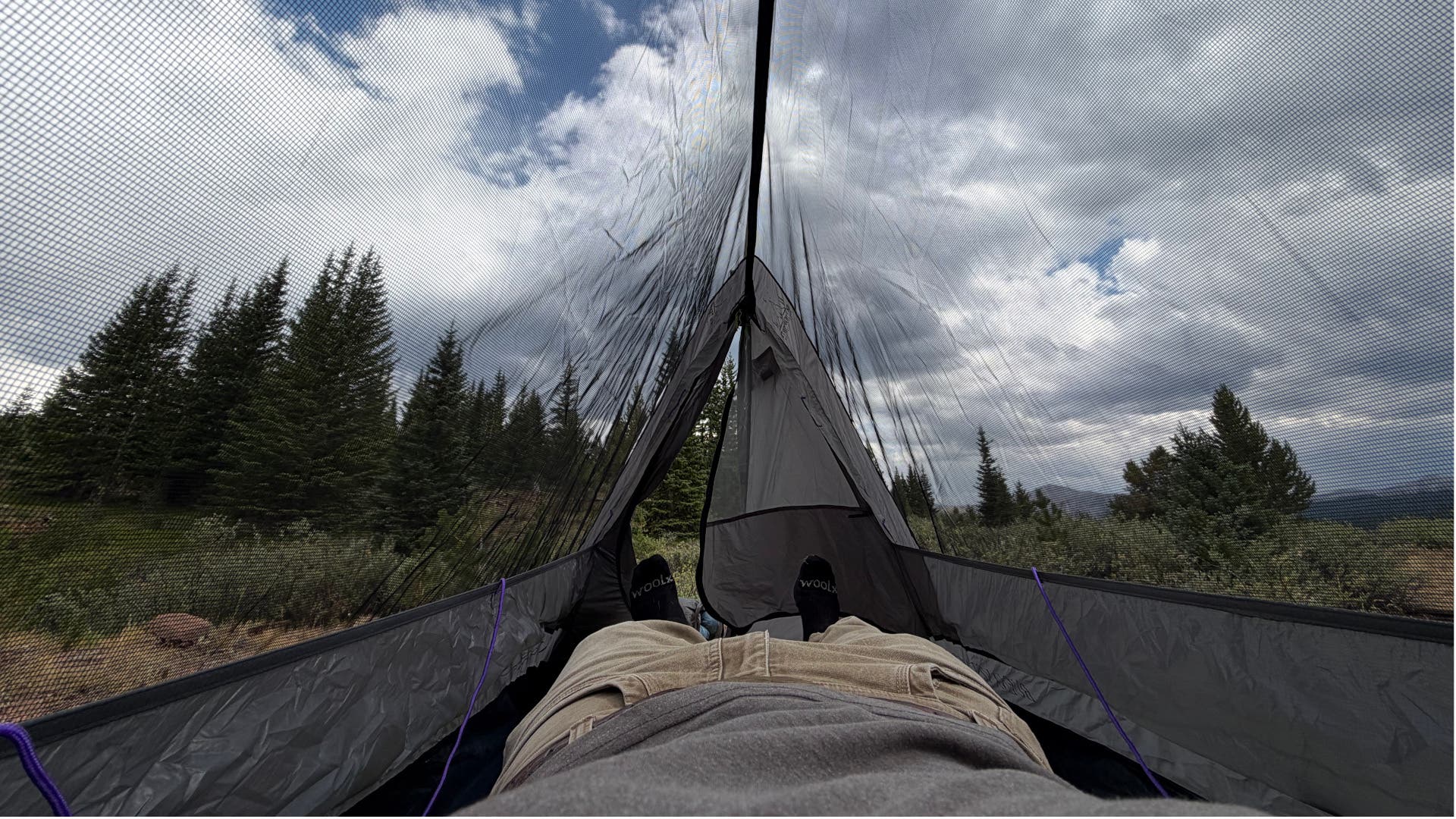
Truly, it’s unlike any tent I’ve used. It has the clearest view of any tent mesh I’ve seen. The A-frame makes for an unobstructed panorama of the sky while lying down. And the rainfly sits on the inside, rather than the outside, so you can quickly deploy it if you fall asleep wondering at the cosmos and weather rolls in.
The Sky View certainly isn’t for everyone, or every occasion, but for astro-camping, night sky photography, and other stargazing activities, Sky View tents are a game-changer.
Sky View, Buena Vista: Tent Factory, Art Gallery, Garden Store
If you get a chance to stop by the Sky View store in downtown Buena Vista, Colorado, it’s worth checking out. The walls are covered in incredible astrophotography from local artists, and one corner is devoted to mescaline-containing San Pedro cacti (for display purposes only, of course). In the center of the room, on display, is the brand’s largest tent, the Sky View XL. With 55 inches of headroom and over 56 square feet of floor space inside, it’s an impressively large tent. Three, maybe even four stargazers could easily fit. You can even test these tents at the shop, in a dark room lit with lasers that simulate the experience a Sky View offers in nature. In short—the storefront is as funky and creative as the tent itself.
The Design
When company founder Joe Bissonnette first had the idea for Sky View, it was around 4 a.m. on New Year’s Eve on a beach in Mexico. He was with his fiancé, and a falling star streaked across the sky, “one of the craziest ones I’ve ever seen,” he said. “I was like, ‘Man, I wish I brought one of our tents so we could spend the night at the beach.’”
It wasn’t long before Bissonnette started toying with design options for a stargazing tent. He said the first iterations used a clear plastic top. But the ventilation was terrible, and the view of the sky wasn’t great. Then, he found “UltraVue 2,” a high-visibility type of insect mesh used for permanent screen enclosures on houses. It’s incredibly transparent compared to standard tent mesh, and Bissonnette knew he’d hit the jackpot.
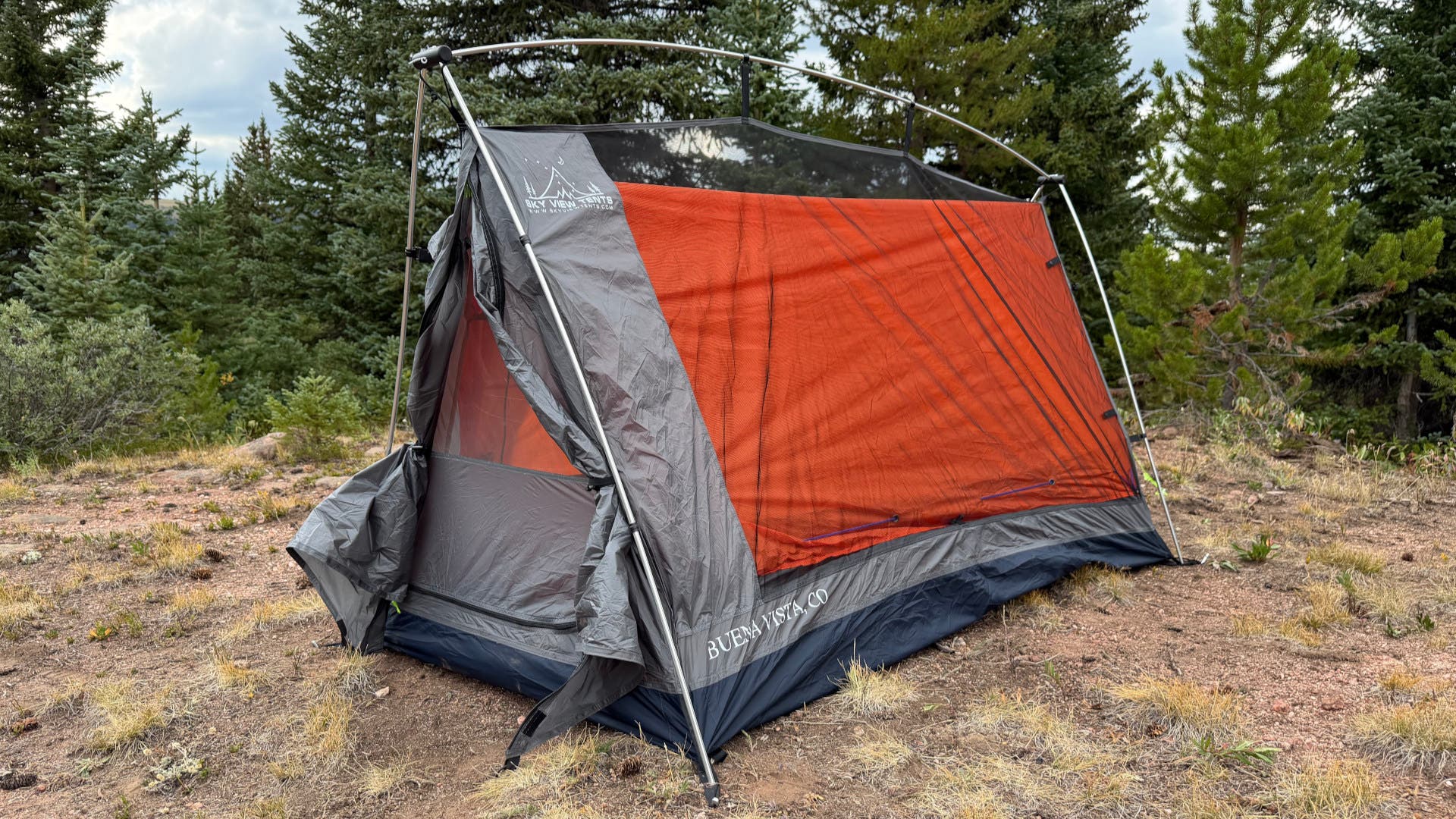
From there, he had to figure out the tent’s layout. He decided to use an old-school A-frame shape so that users would have the widest field of view. He admits it’s not the most wind-resistant design, but asserts that it is the best for viewing stars.
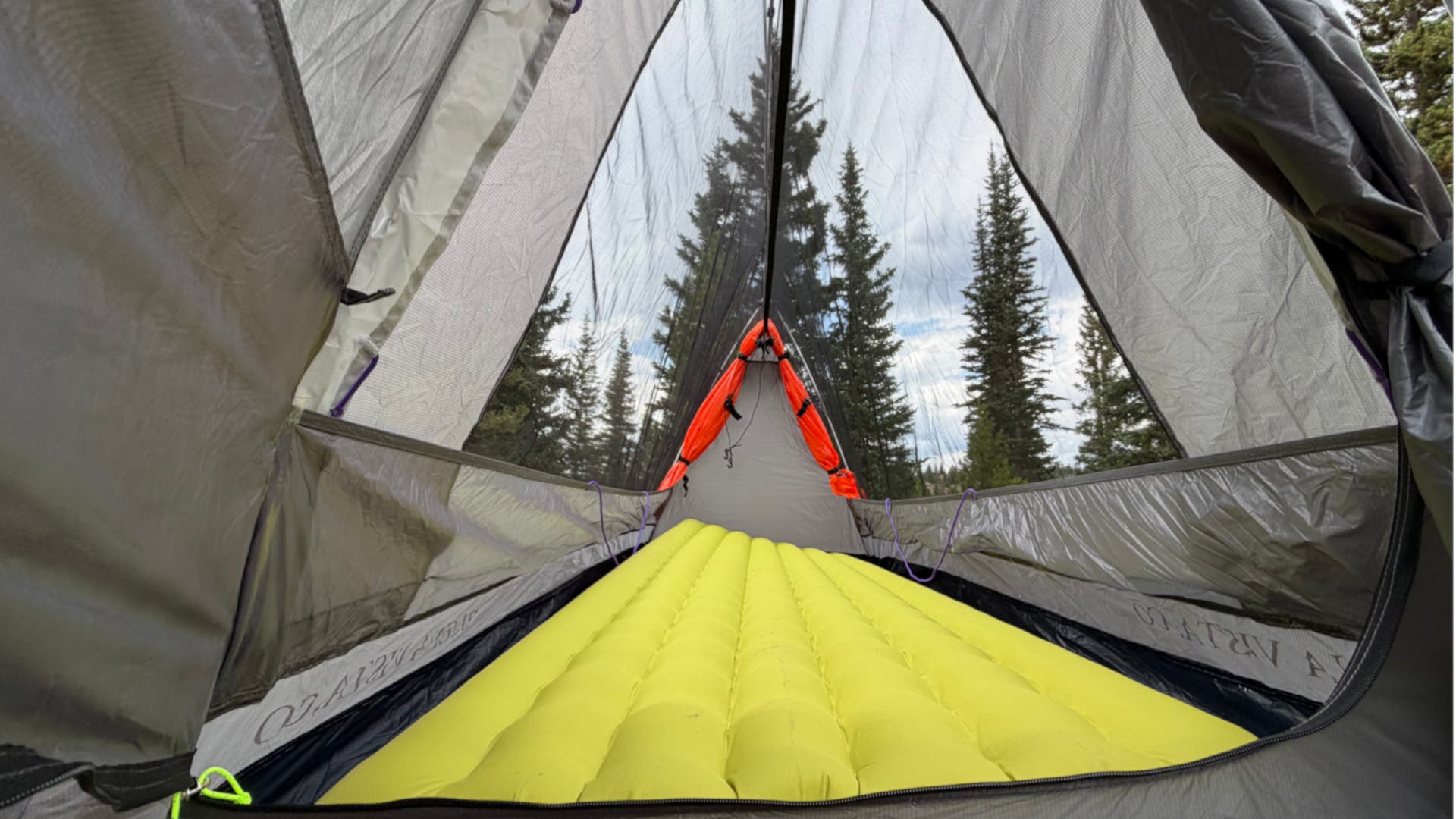
The rainfly posed a tricky problem. This tent is obviously meant to be used without a rainfly, but he knew he needed to include one in case people got unexpectedly caught in poor weather. Instead of designing an exterior fly, Bissonnette brought it inside. That way, if rain rolls in, users can simply unclasp the fly and deploy it without ever leaving the comfort of their tent. The orange fly extends along the top from one end to the other, blocking rain from the inside of the mesh.
Under The Stars
I wasn’t testing the XL when I took the Sky View for a spin. Instead, I got a sample of the brand’s Solo Tent, which is much smaller, fits in a backpack, and weighs just 3.8 pounds. It isn’t an ultralight tent, nor is it the kind of thing you’d bring if you’re expecting extreme weather. But for clear, warm summer nights when you want a cosmic experience at the campsite, it’s the right tool for the job. It isn’t without its quirks (more on these below), but not many tents offer an experience when you sleep in them. This one does.
My first night using the tent was an experience. I set up in Twin Lakes, Colorado. There was a slight breeze, but it wasn’t windy, and most importantly, was crystal clear.
I’ve slept in mesh tents without rain flies plenty of times, but the UltraVue mesh is strikingly different from a regular tent. I brought a book in case I wanted to read, but watched the stars for as long as I could instead. The moon came out around 11:30 p.m., though, and it was bright enough to keep me up. I unclasped and deployed the rainfly, clipping it to the attachment points at far end of the tent—it was dark enough to sleep easily until morning. .
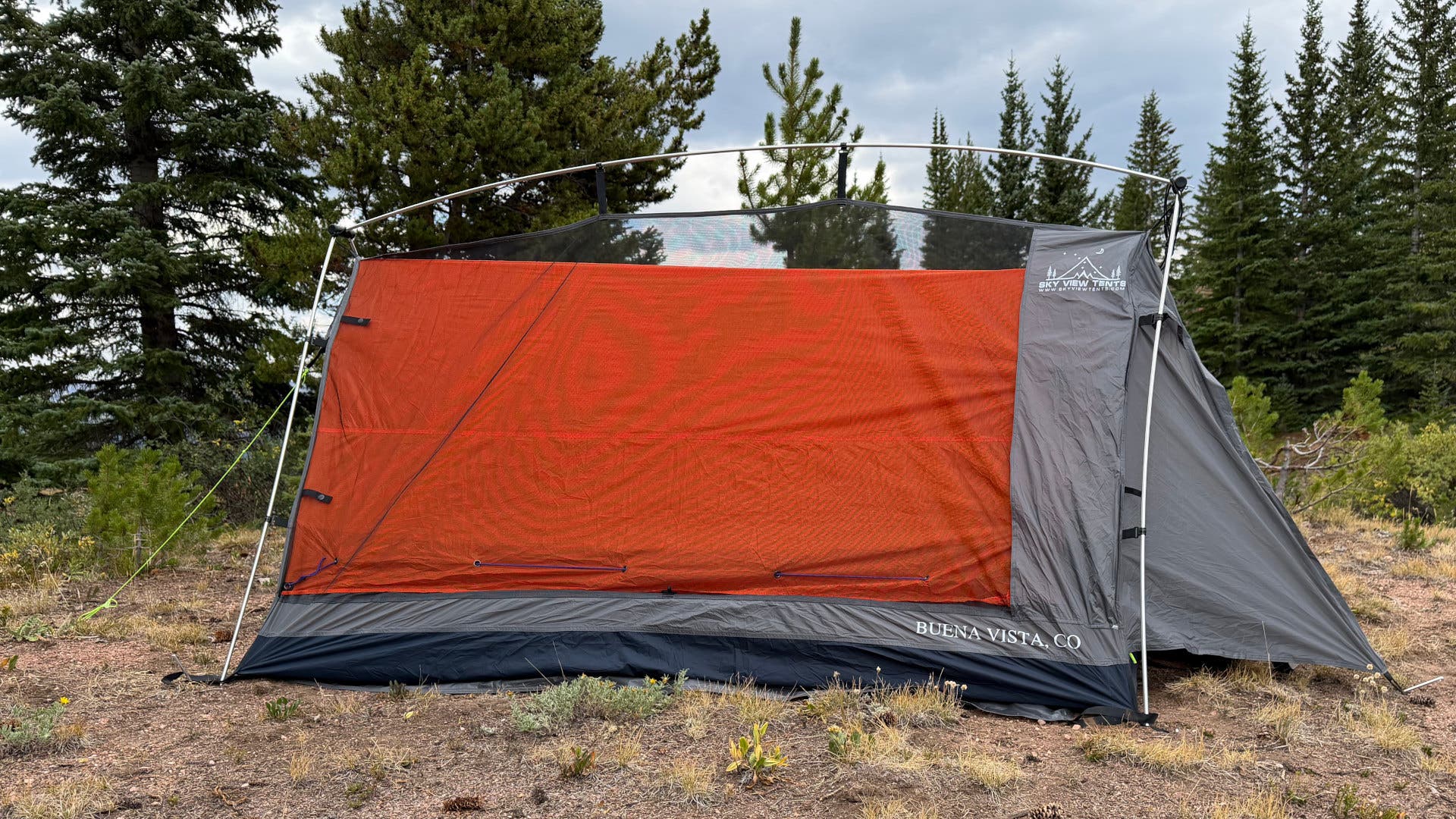
As a freestanding, one-person tent, the Sky View Solo is otherwise unremarkable. It has one entrance with a small vestibule that’s large enough for a backpacking pack and a pair of hiking shoes. It’s has just under 21 square feet of floor space, is made with 20- and 40-denier ripstop nylon, and the fly has a 3000mm waterproof coating. The biggest downsides to the Sky View Solo Tent’s A-frame design are that headroom is tight and it struggles in heavy wind. It’s designed from the inside out to stargaze in conditions that don’t normally call for a rainfly.
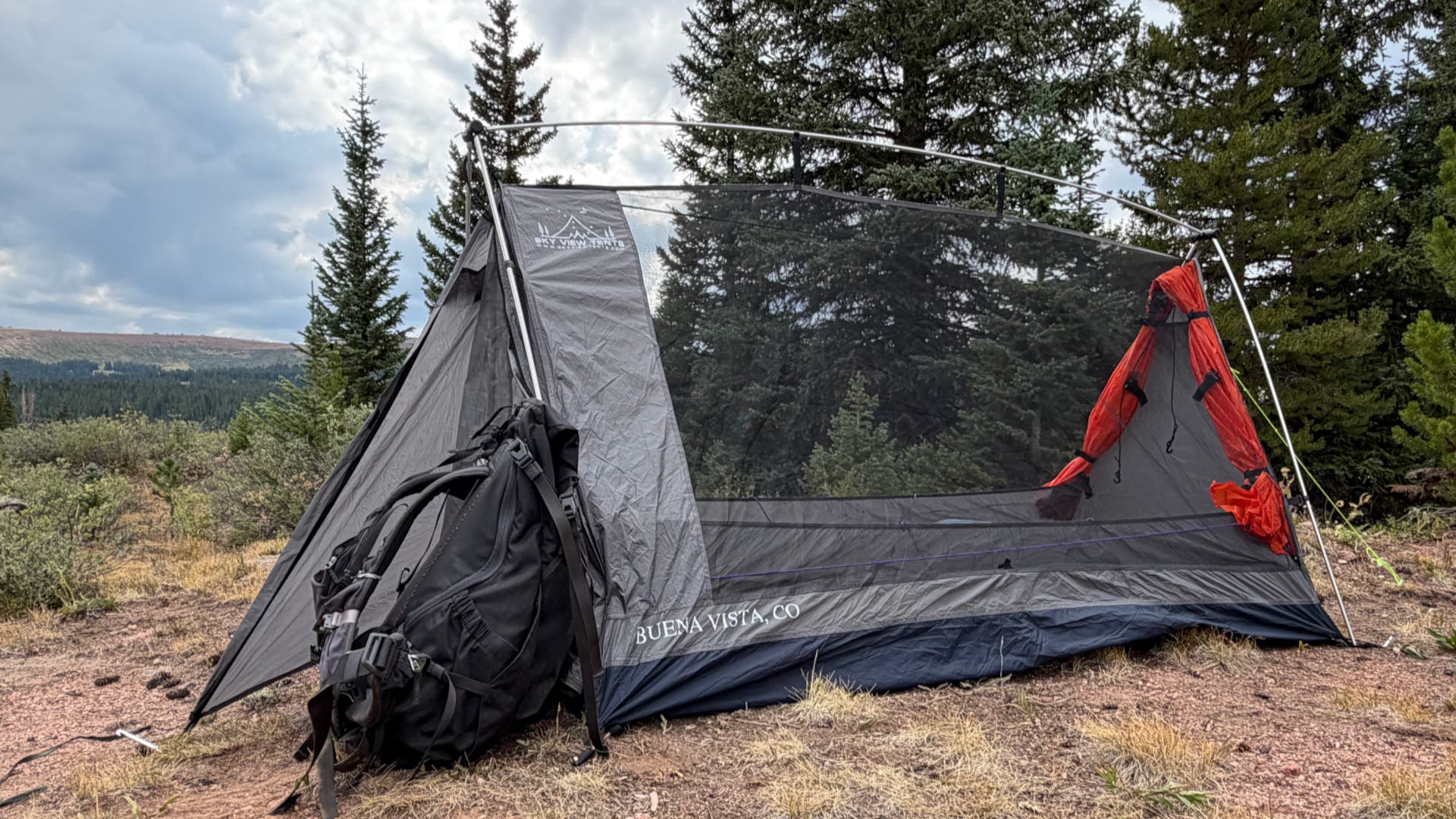
Cowboy camping offers a similar experience, but one that’s more exposed to the elements. I’ve slept on groundsheets without a tent plenty of times, and know from experience that creepy crawlies, mosquitoes, and sand flies can easily ruin the experience. A Sky View tent allows you to stargaze, totally protected, with the reassurance that if weather rolls in, you still have a rainfly to stay dry. During a summer meteor shower or for dark-sky backpacking, this is the perfect fairweather shelter.


