
SoftBank has completed a high-altitude platform station (HAPS) trial service in Japan in anticipation of its commercial launch in 2027.
The Japanese operator partnered with the US aerospace company Sceye, which sent the HAPS vehicle 15,000 kilometers into the stratosphere during a pre-commercial flight from Roswell, New Mexico, to Japan. The 13-day journey across the Pacific Ocean took place from August 3 to August 23.
During the trial, the HAPS vehicle flew over Muroto City in Kochi Prefecture. It remained over the operational target area within a 5-kilometer radius for an extended period. SoftBank connected its core network to a 4G LTE-equivalent base station installed on the HAPS vehicle through a ground gateway. Two-way communication tests were conducted between the HAPS vehicle in the stratosphere and smartphones on the ground.
“The tests confirmed stable voice calls and text messaging, the use of apps, such as social media services, and high-capacity data communications, including video calls and video streaming. SoftBank and Sceye also verified the operation of emergency alert messaging systems for earthquake early warnings and tsunami warnings, as well as voice calls to the 118 maritime emergency number in cooperation with the Japan Coast Guard,” SoftBank said in a statement.
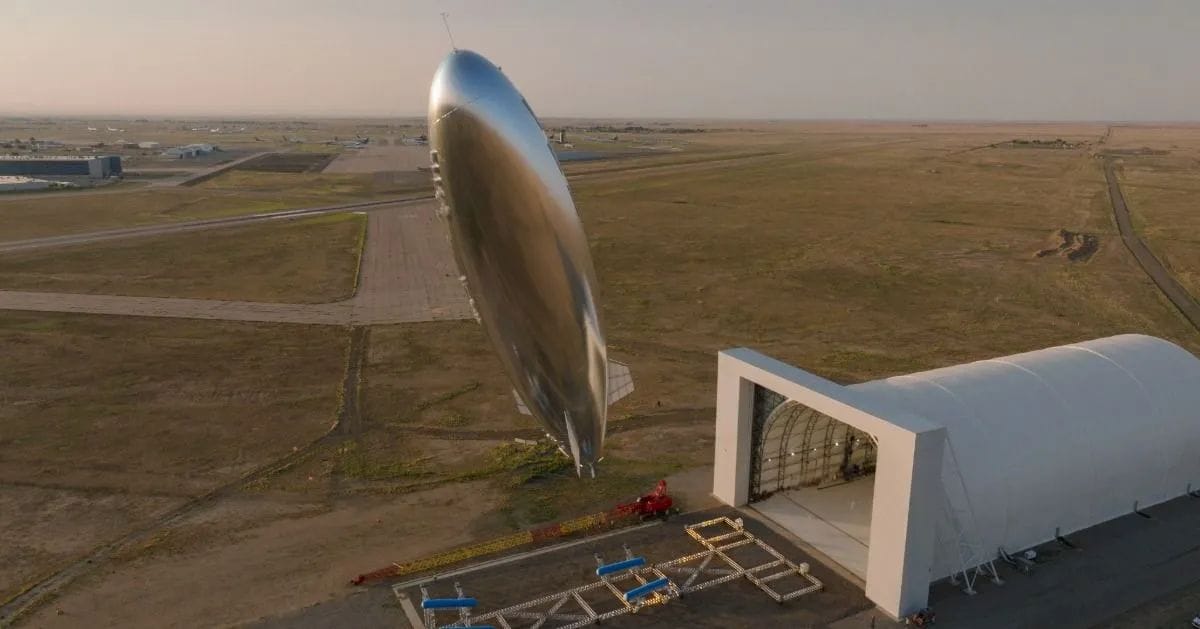
(Source: SoftBank)
Preparing for the 6G era
In preparation for the 6G era, SoftBank is developing a “next-generation, three-dimensional communications network”, set to seamlessly integrate satellite, HAPS and terrestrial communications networks.
With this in mind, SoftBank also conducted automated drone flights in order to test the connection between HAPS and drones. This aligns with the telecom operator’s goal of building a three-dimensional communications network that uses HAPS to provide communication services to people on the ground and stable connectivity to aerial mobility systems, such as drones.
The company also investigated the potential of edge computing in the stratosphere. To this end, a processing server was installed on the HAPS to enable data processing to be conducted directly on the platform.
According to SoftBank. the tests showed that the average round-trip response time for processing on the HAPS server was 68 milliseconds, reducing communications latency by more than 40% compared with processing in the cloud via the Internet.
SoftBank is seeking to unlock new use cases that require extensive geographic reach and ultra-low latency, which it plans to achieve by integrating HAPS’s wide-area communications coverage with advanced edge computing capabilities. These applications span critical domains, including physical AI systems and real-time video analytics.
Meanwhile, SoftBank and Sceye plan to use the data and insights obtained from these HAPS trial services to refine the operational framework and improve the system’s communication quality, with the aim of launching it commercially by 2027.
“Going forward, in collaboration with Sceye, we will continue to integrate a wide range of technologies, including communications and AI, to develop HAPS into a new form of social infrastructure,” said Junichi Miyakawa, SoftBank president and CEO.


