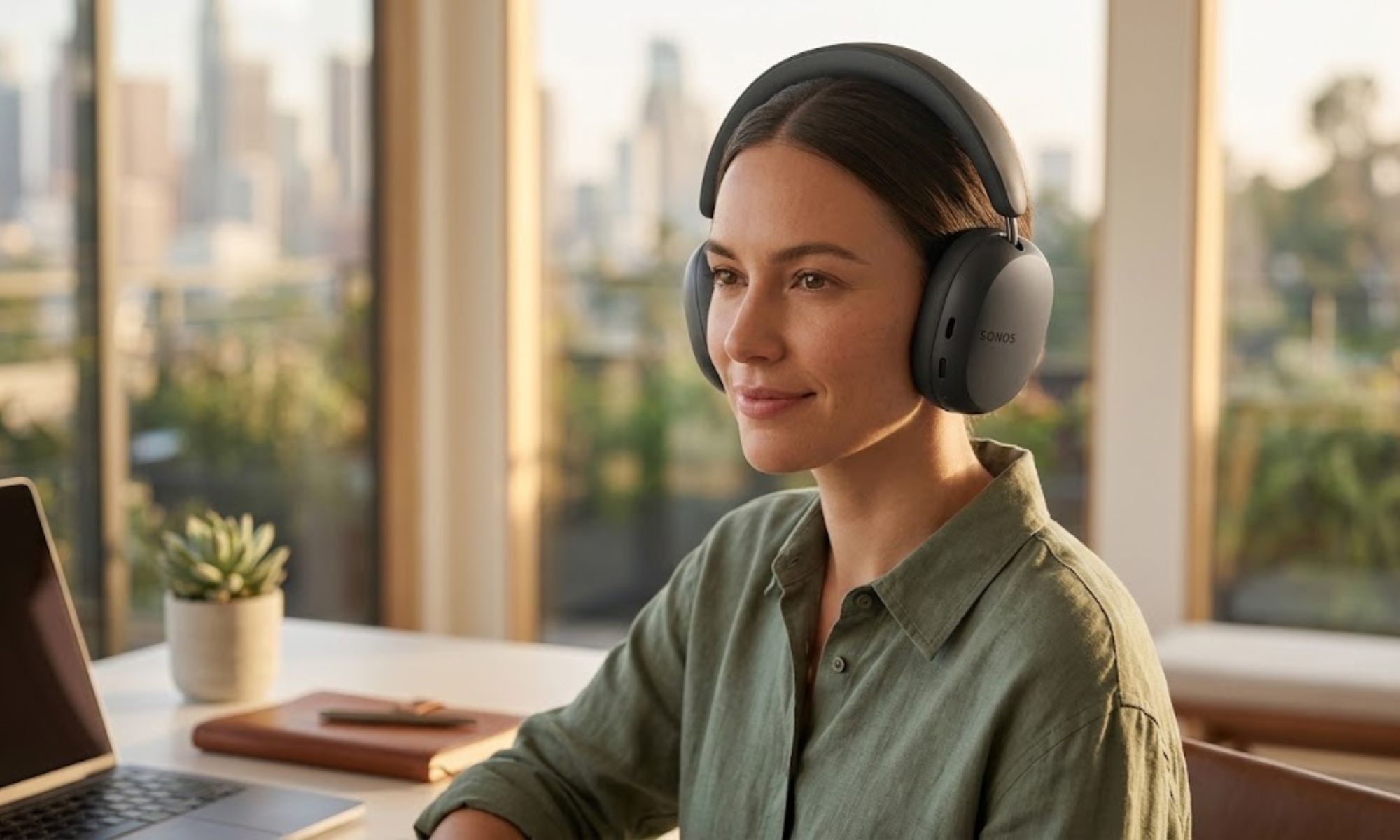
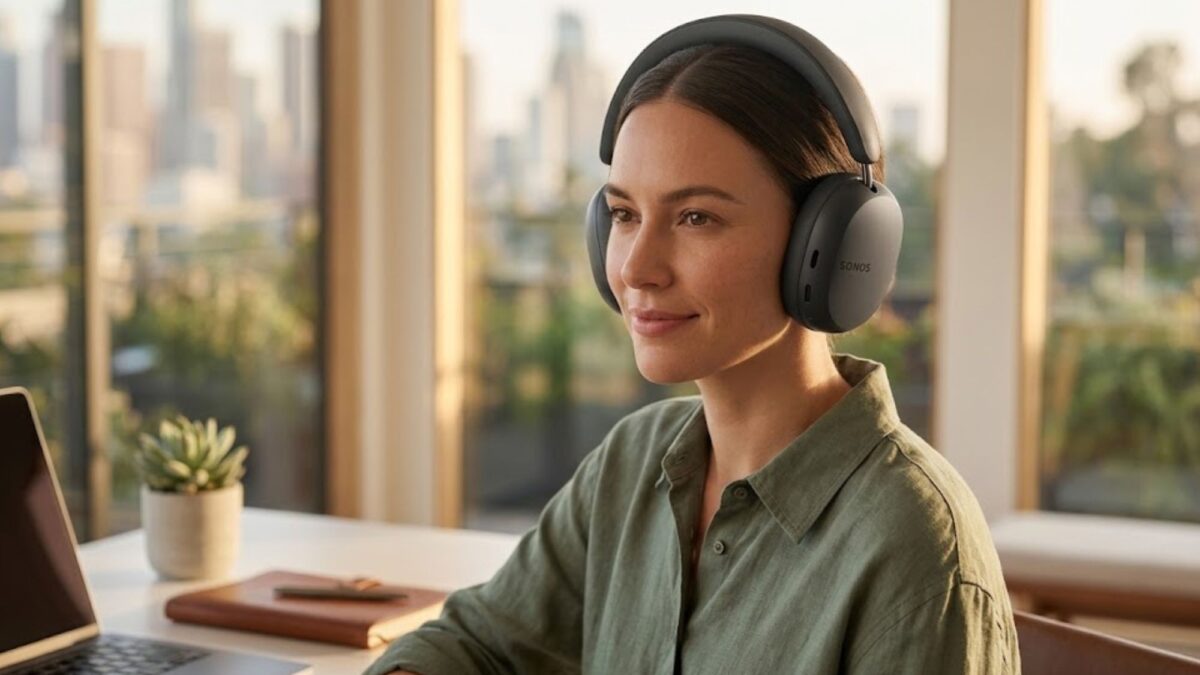
$3 trillion. That’s the scale of off-balance-sheet AI commitments nine of the biggest tech companies have signed, buried in the footnotes of their most recent securities filings and towering over the $600 billion or so of ordinary capital spending they reported across the past year. Sonos wants a piece of the same story, and its opening bid costs $449.
The Ace Ultra headphones are the front edge of a hardware wave meant to push Sonos deeper into artificial intelligence, with the company’s whole-home audio system pitched as the ideal match for cutting-edge AI models and voice interaction. An FCC filing on August 10 confirmed the product name and left room for as many as five colors, with most of the document redacted. According to leaker billbil-kun, the announcement comes September 1, with retail availability on September 29 at $449 in the US, £399 in the UK, and €449 across Europe.
Doubled noise cancellation is the entire pitch two years on. Everything else in the leak I could have guessed in 2024.
Agave is the only color worth waiting for
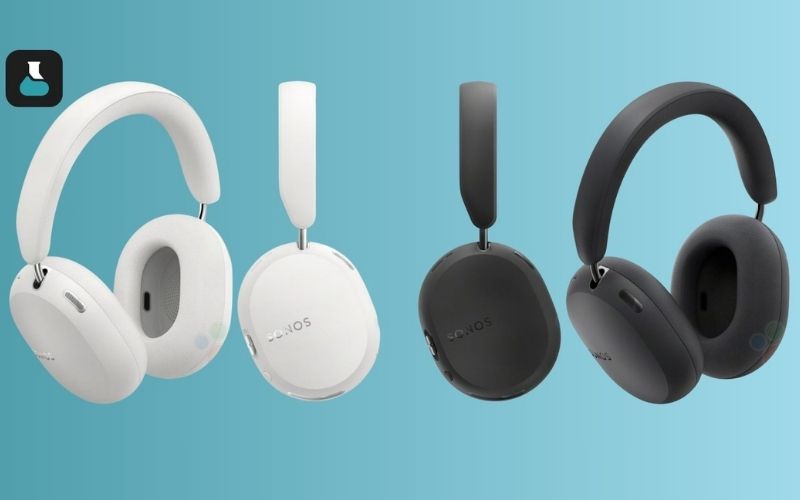
Black, White, and a blue-green called Agave make up the range, according to billbil-kun. Agave is the one I want, since the first Ace shipped in the two dullest colors a premium headphone can wear. Leaked marketing visuals turned up Black and White alone, and the filing left space for five, so the final count belongs to Sonos for another two weeks.
American buyers pay $449 for a headphone whose predecessor currently goes for $249 at Amazon. The Ace opened at $399 in 2024, which puts the Ultra $50 above a launch price Sonos spent two years discounting and $200 above what the outgoing pair costs this week. Europe gets €449 against the Ace’s €499, better on paper and irrelevant to anyone shopping in dollars.
The ANC claim carries the whole upgrade
Noise cancellation up to twice as effective as the Ace is the headline, and it’s the only leaked figure with the weight to change the product. Battery climbs to 35 hours with ANC running. Three minutes on the charger returns about three hours of playback, unchanged from the first Ace.
26 dB. That’s the ceiling for over-ear noise cancelling on a test bench, and the Ace has never appeared on one of those charts. So there’s headroom. Doubling means nothing without a frequency range attached to it, though, and until somebody straps the Ultra to a bench I’m treating the number as a line from a slide deck.
Losing the Content Key costs more than Sonos thinks
The Content Key on the Ace is a slider you push up for volume and press to stop a track. Ace owners defend that key harder than they defend the sound. The Ultra spec sheet puts touch controls and automatic wear detection in its place, though the leaked images look to me like the slider is still on the earcup.
Reach up to tuck your hair behind your ear on a crowded train and the track you were enjoying skips. Nobody tunes their way out of that. Sonos had the answer in a physical key and threw it away.
Still no Wi-Fi streaming from your own Sonos system
Replaceable pads and a replaceable battery are the line in the leaked spec table I’d point to, because a $449 headphone should outlast its cells. The rest of the sheet runs through a dynamic driver, adaptive EQ, spatial audio, and a beamforming mic array, none of it new to the Ace. Wi-Fi streaming from a Sonos system appears nowhere, which is the gap two years of owner complaints have been aimed at.
The Ultra may take voice commands, which the Ace never could, and a redacted FCC filing is the only hint of it so far. Tom Conrad wants people talking to their house, but I’m not sure headphones carrying no radio of their own can hold up that end, so your phone fields the question and the speakers keep whatever edge Sonos has built at home.
Sonos rushed the first Ace out during its app disaster
A rewritten Sonos app shipped broken in 2024, sales fell, and hardware launches stalled for the better part of a year. The Ace was caught up in that, built to require the new software with no fallback to the old one, which is part of why the rewrite went out on schedule. Then-CEO Patrick Spence pushed the launch through after years of internal stops and starts.
Conrad took the job permanently last July and has since acknowledged that the first Ace needed deeper system integration, or some other feature separating it from Apple, Sony, and Bose. He cut longtime design and product management staff this summer and brought in a chief marketing officer in January ahead of a fall campaign. Amazon’s Alexa+, meanwhile, remains absent from Sonos hardware, nearly a year after the company turned up on a partner slide.
Open questions run to the final color count, whether any Wi-Fi capability surfaces on September 1, and what shares the stage with the headphones. billbil-kun says the Ace Ultra won’t be alone up there.
Grigor Baklajyan is a copywriter covering technology at Gadget Flow. His contributions include product reviews, buying guides, how-to articles, and more.


