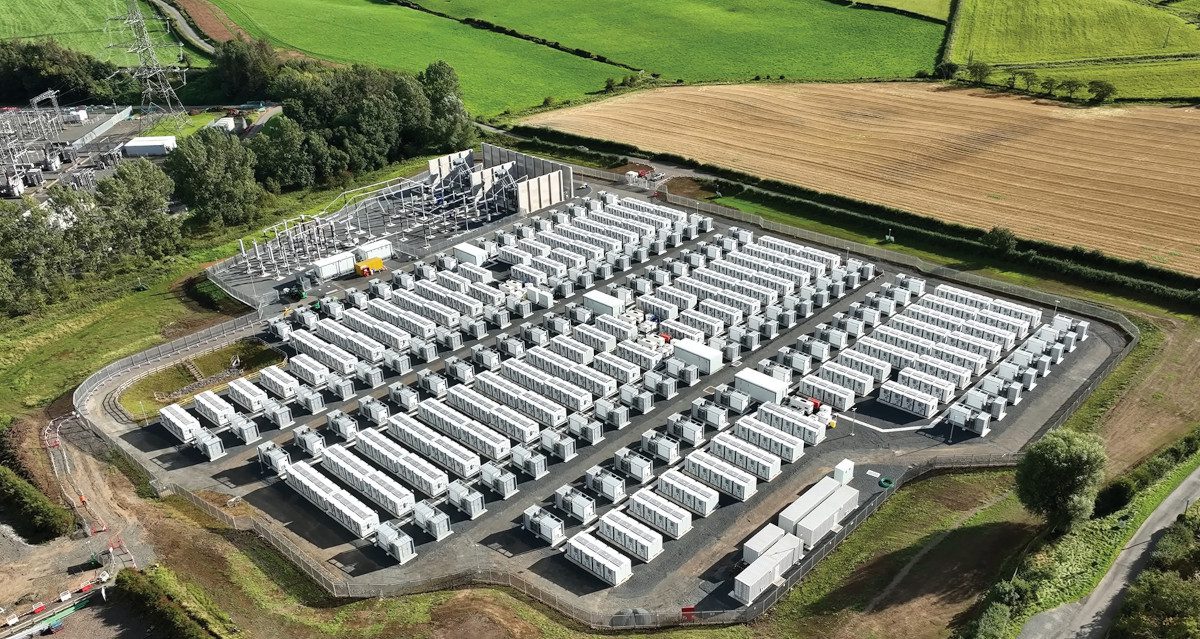
A £28 million UK programme has been launched to develop energy storage technologies capable of supplying electricity for more than 100 hours, with advanced batteries and underground hydrogen storage among the technologies being primed for a role.
The Ultra-Long Duration Energy Storage (Ultra-LDES) Challenge will provide government funding through UK Research and Innovation (UKRI) for technologies designed to store renewable electricity over periods of four days or longer.1
The programme is intended to address one of the challenges accompanying increased reliance on wind and solar generation: maintaining electricity supplies through extended periods of low renewable output without falling back heavily on gas-fired generation.
It will focus on two areas. The first involves new electrochemical storage technologies capable of delivering electricity for more than 100 hours. These have yet to be commercialised at scale, and the government is seeking an opportunity for the UK to establish an early position in the emerging market.2
The second strand will support development and testing of systems that produce and store hydrogen underground for subsequent use when electricity supplies are constrained. The government estimates that underground hydrogen storage could reduce total energy-system costs by between £14 billion and £50 billion over 2035–50.3
From research to the grid
The programme is intended to take technologies beyond early-stage research. UKRI says the Ultra-LDES Challenge aims to deliver one or two storage demonstrators exceeding 100 MWh by 2030, followed by deployment at GWh scale on the electricity grid by 2035.4
An initial competition is making up to £3 million available for project-development studies into electrochemical ultra-long-duration storage. Projects will examine technologies capable of providing cost-effective electricity to the grid for at least 100 hours.
Energy Minister Michael Shanks said storing domestically generated clean electricity for periods when it is most needed was critical to reducing dependence on gas and creating a more secure energy system.5
The £28 million programme forms part of the government’s wider £102 million Clean Energy Challenges package, which also includes £74 million for a Consumer-led Flexibility Challenge intended to encourage electricity consumption to shift towards periods when power is cheaper and more readily available.6
The launch also coincides with Ofgem proposals to support 16 long-duration electricity storage projects, including what could become the UK’s first new pumped-storage hydropower developments in more than 40 years.
UKRI Clean Energy Challenge Director Jenny Hill said developing effective storage technologies was “a vital part of the equation” in moving towards a cleaner and more secure energy system.7
Notes
[1] UK Government, New challenge launched to store clean energy for longer and protect households from price spikes, 20 August 2026; [2] Ibid.; [3] Ibid.; [4] UK Research and Innovation, New challenge launched to store clean energy for longer, 21 August 2026; [5] UK Government, New challenge launched to store clean energy for longer and protect households from price spikes, op. cit.; [6] Ibid.; [7] UK Research and Innovation, New challenge launched to store clean energy for longer, op. cit.




