Published May 26, 2026 08:00AM
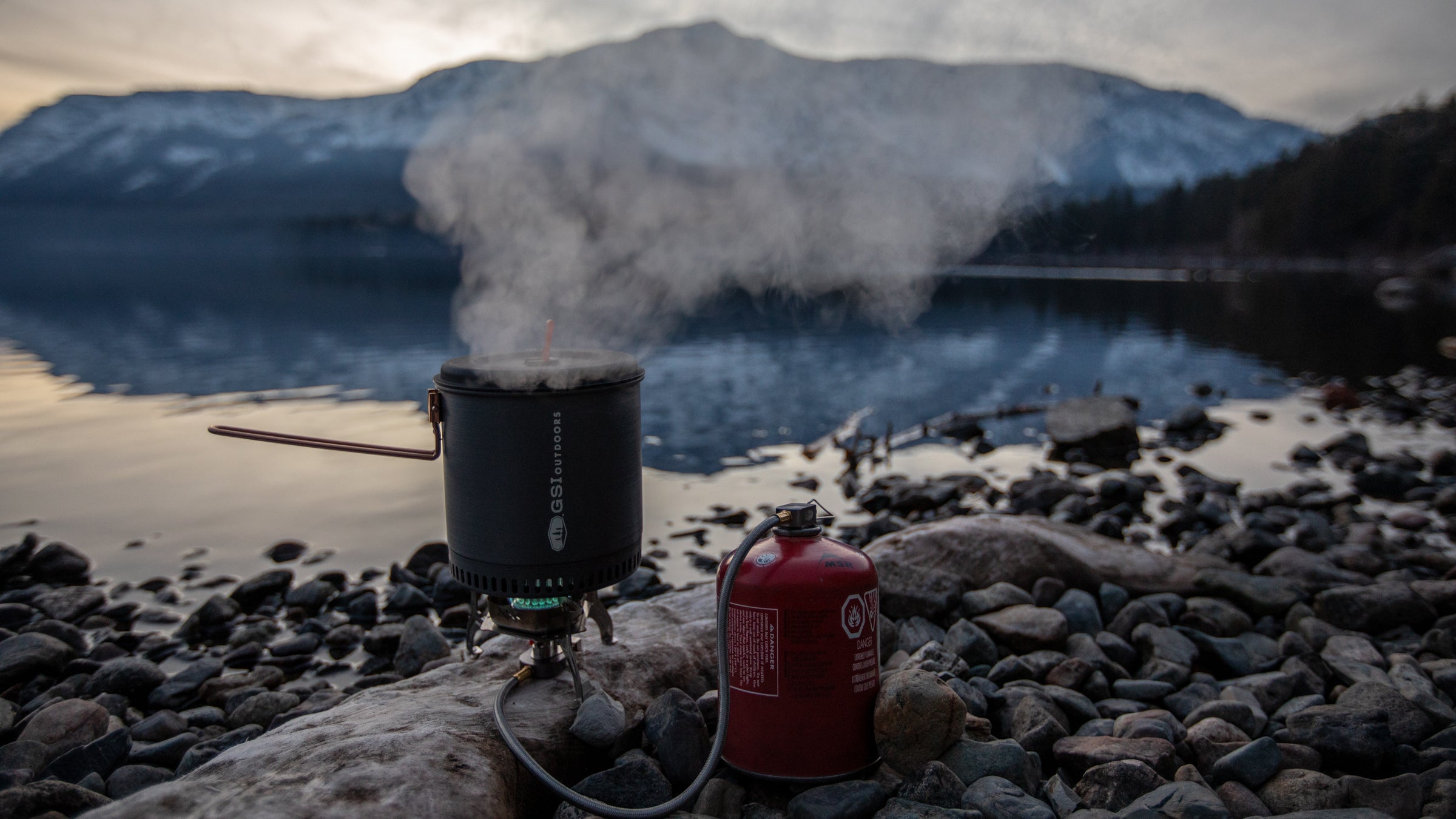
May 2026: Our favorite pot set overall is the GSI Halulite Dualist HS for its clever nesting design and heat exchanger, which makes for rapid boil times. Our favorite minimalist pot for solo backpackers is the Toaks 750ml Pot, which weighs a scant 3.9 ounces and is just the right size for dehydrated meals and boiling water for coffee. This year we added the Snow Peak Multi Compact Cookset (Best Ultralight Cookset) and Primus Essential Trek Pot Set (Best Value.)
The right cookware can make or break your backcountry cooking game—it’s hard to sear trout in a flimsy aluminum skillet or boil water in a tall, narrow pot. For this guide, we set out to find backpacking pots and pans that go the extra mile, from ultralight one-person setups to versatile nesting sets that can handle multiple courses and cooking styles. If it saved time, money, or impressed us with functionality and durability, it was a contender for this competitive list. Here are our picks for the best backpacking pots and pans.
At a Glance: The Best Pots and Pans for Backpacking
Best Pot Set
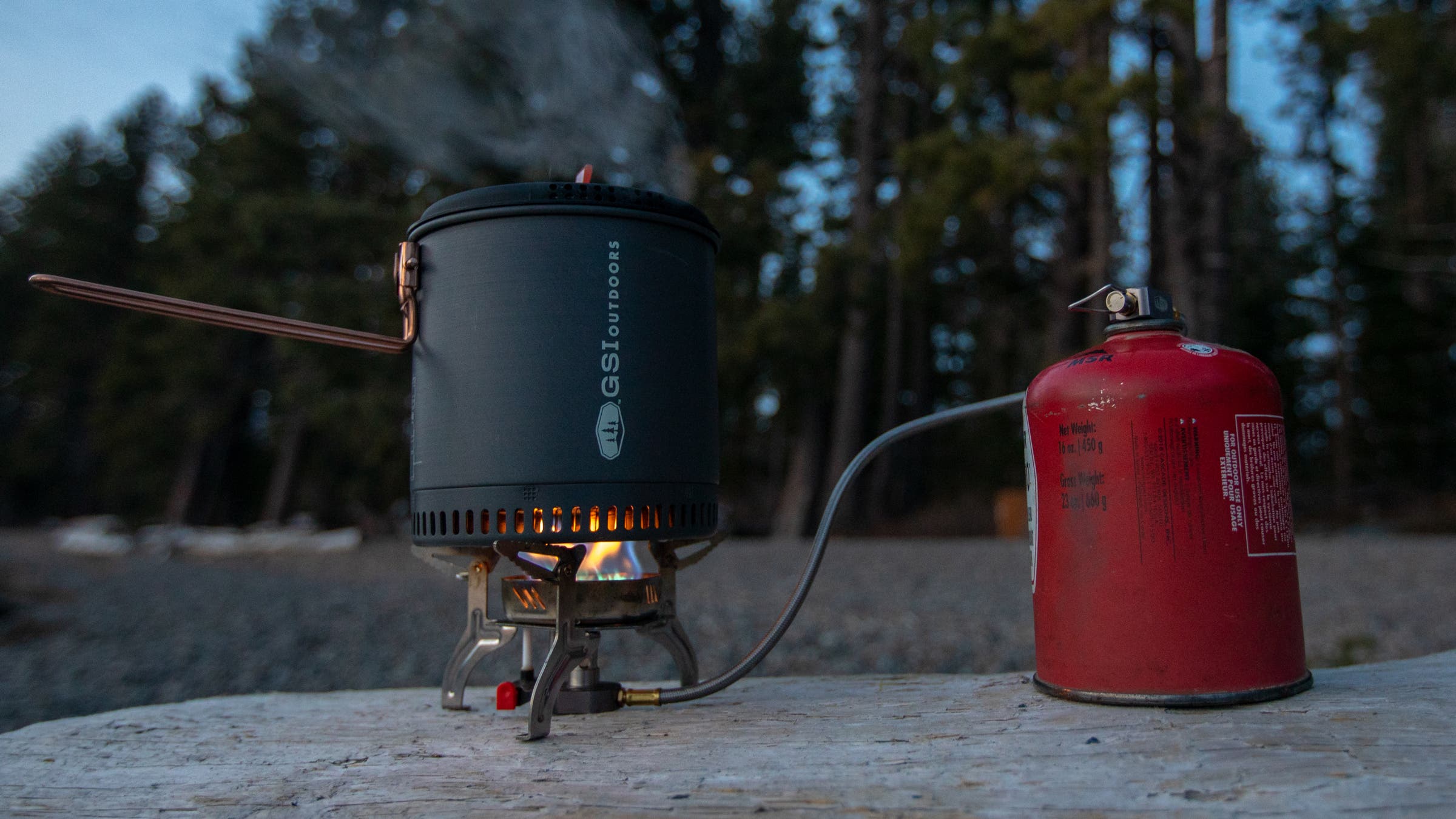
GSI Halulite Dualist HS
Weight: 1.4 lbs (23.1 oz)
Volume: 1.8 L
Pros and Cons
+ Efficient heat exchanger
+ Includes nesting bowls, mugs, and sporks
+ Packs neatly
– Heavy
Nesting more neatly than a Russian matryoshka doll, this set includes everything needed for two people, with enough space to fit a 100-gram canister-style stove inside. But what truly sets it apart is the corrugated heat exchanger on the bottom of the pot. Paired with a quality canister stove like the Soto Windmaster, it takes around 2.5 minutes to boil a liter of water—a whopping 3 minutes faster than a traditional pot. On a two-day backpacking trip above 11,000 feet in Colorado’s Sangre de Cristos Mountains, our testers were astonished at how fast their coffee was ready (and how much fuel they had left at the end of the trip.)
Unlatch the insulated pot handle, which functions like a locking mechanism, and you’ll find two sets of mugs, bowls, and plastic sporks packed neatly inside. Sip-tops and insulated mug sleeves are a nice touch, and protected our testers’ fingers when wolfing down bowls of soup and sipping their morning coffee.
The tall sides and relatively compact size (just under 2 liters) make this pot better suited for boiling water than other cooking tasks, though a hard-anodized aluminum construction did a better job than titanium competitors of achieving a rolling simmer without incinerating the food at the bottom of the pot. A downside to the material? It’s relatively heavy, weighing 12 ounces, and a total of 1.4 pounds including the flatware. But with this pot’s efficient heat exchanger design, the weight you save toting a smaller gas canister might just break even.
Best Ultralight Cookset
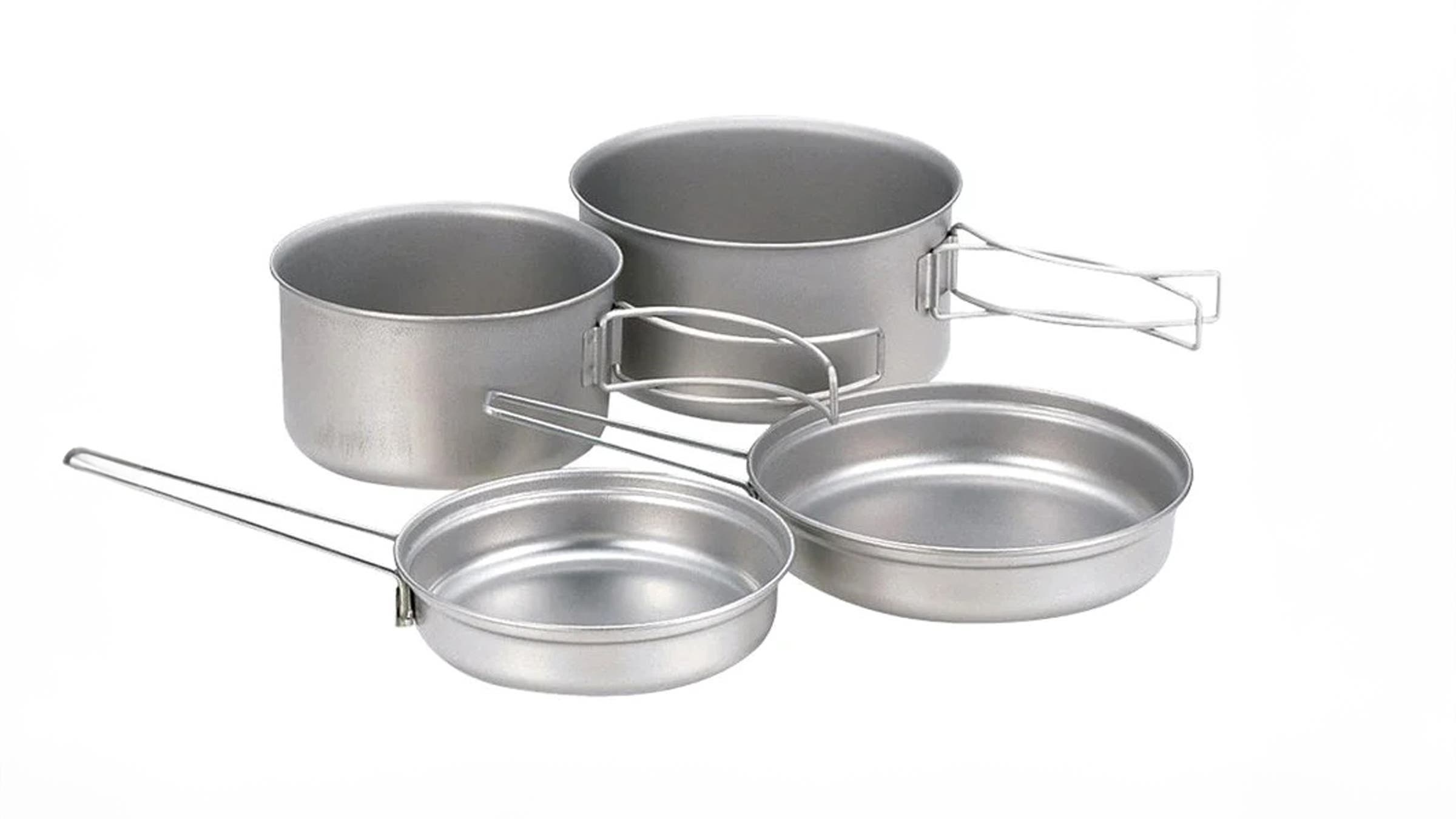
Snow Peak Multi Compact Cookset
Weight: 11.6 oz
Volume: 1 L, 0.8 L
Pros and Cons
+ Light
+ Two pots and two frying pans
+ Durable
– Doesn’t fit a fuel canister
This cookset proved its chops over three nights of camping, hiking, and fishing in Colorado’s Mt. Zirkel Wilderness. “I love how lightweight and high quality it is,” said one tester. At less than 12 ounces, this four-piece cookset unpacks into enough pots and pans for a four-course backcountry meal. Apart from boiling water for coffee, we used it to cook rice, oatmeal, and soup, which heated quickly and evenly (better than our microwaves at home); each of those meals was followed by our field cleaning test, where some burnt-on rice required a little bit of scrubbing but everything else slid off quickly.
The entire set fits into the largest pot, making a compact 6-by-4-inch bundle that takes up little room in a pack, satisfying even our most minimalist testers. (A 4-ounce fuel canister will fit, but an 8-ounce won’t.) The frypans both double as lids, with folding handles that didn’t wobbles in any position. Long handles on the pots hold a full pot easily and fold flush to the sides for storage. The all-titanium construction proved resistant to dings and dents (we didn’t drop it on purpose, but Colorado has a lot of rocks and sometimes we trip on them). Overall this is an excellent set for backcountry chefs who want to cut pack weight without sacrificing versatility.
Best For Larger Groups
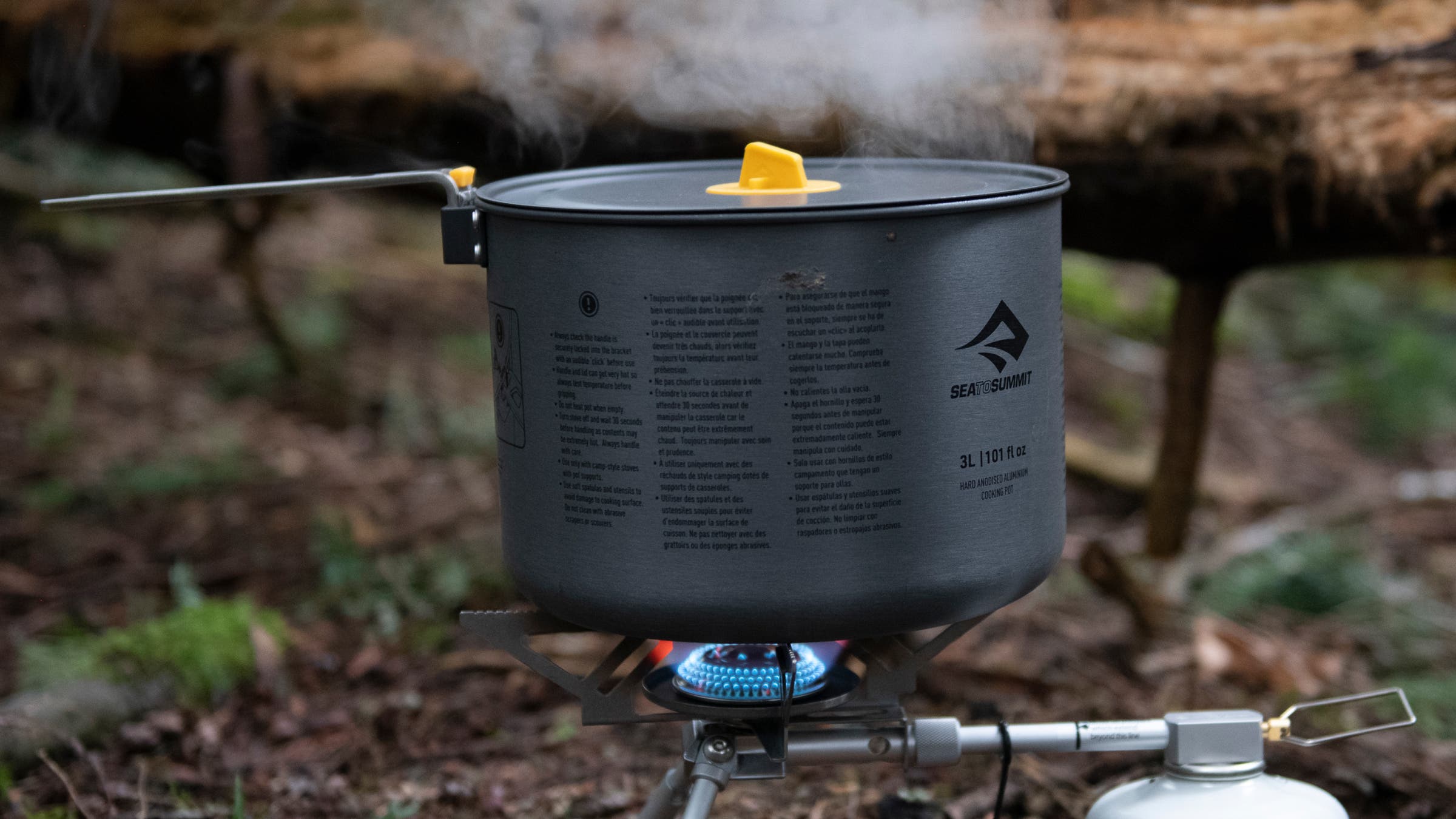
Sea to Summit Frontier Ultralight Pot (3L)
Weight: 10.7 oz
Volume: 3L
Pros and Cons
+ Nonstick ceramic coating
+ Large capacity
+ Nests easily with smaller pots
– Handle can be finicky
When it comes to cooking anything non-liquid, camp cookware suffers from a major drawback: The intense heat output from most camp stoves quickly chars food on the bottom, leaving the top layer (and your feelings) lukewarm. When you’re cooking large amounts of food, this problem is only exacerbated. That’s where the Frontier Ultralight Pot stood out. The hard-anodized aluminum alloy construction and ceramic coating provided even, stick-free heat while keeping weight down.
That nonstick coating did a stellar job keeping food from burning and making clean-up a breeze: During a trip into Washington’s North Cascades, it effortlessly handled a batch of mac and cheese, a well-known precursor to hopelessly burnt-on scraps. And the three-liter capacity was enough to allow a group of four to use a single pot, cutting down on the total amount of cookware needed for the three-day trip.
Thoughtful details, like embedded measurement markings, a secure-fitting lid with strainer holes, and a lid clip pot attachment (to keep it out of the dirt while stirring) simplify the cooking process. Our only beef? The detachable handle, which was finicky to attach and easy to lose.
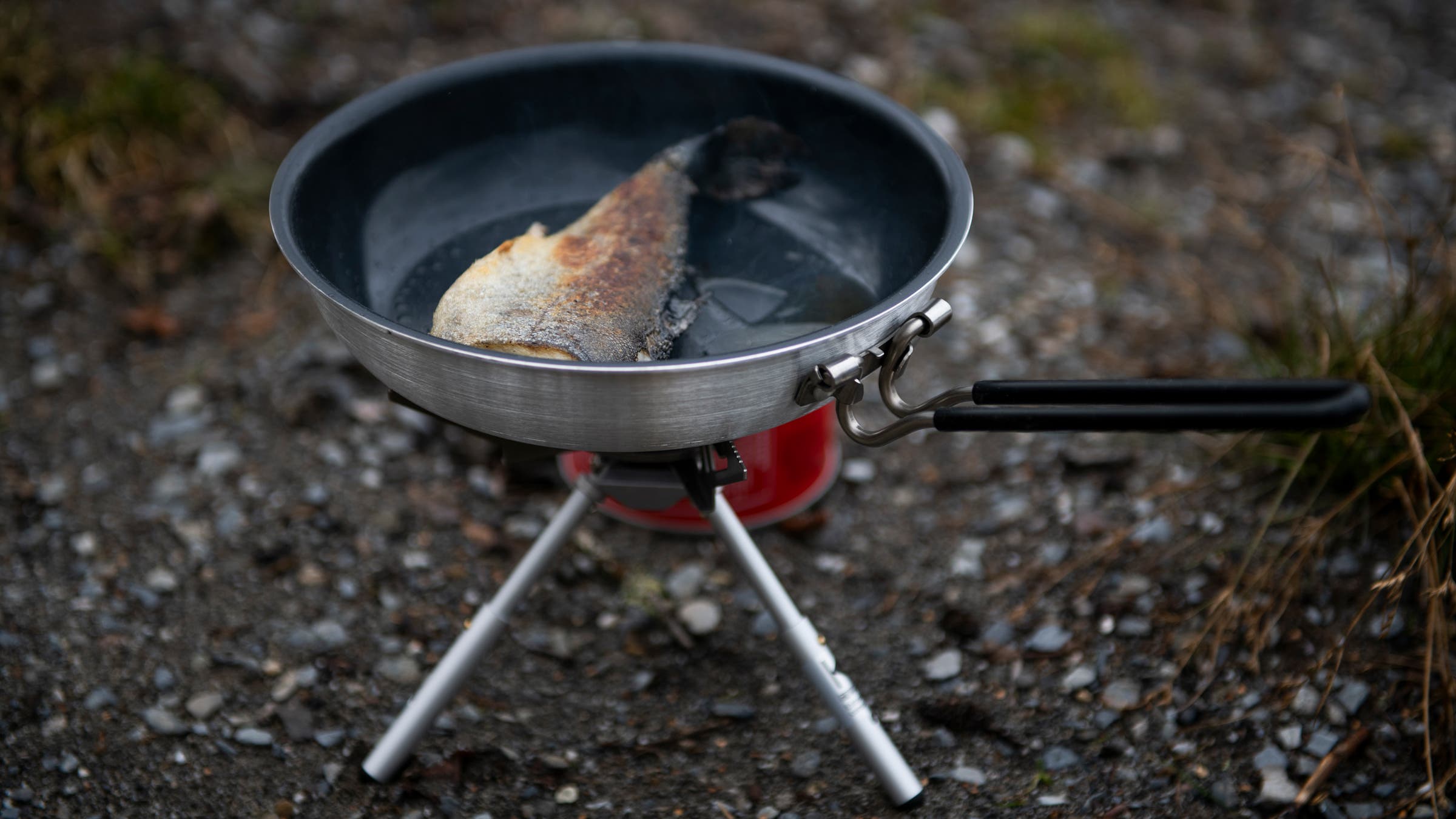
Best Skillet
GSI Bugaboo Ceramic Frypan (8 in.)
Weight: 12.8 oz
Volume: 1.8 L
Pros and Cons
+ Durable nonstick surface
+ Even heat distribution
+ Collapsable handle
– Heavy
This frypan cooked up burgers, grilled cheese, and vegetables with minimal fuss, and was even easier to clean afterward. That’s thanks to its generous 8-inch diameter, sturdy and silicone-wrapped collapsible handle, and nonstick ceramic coating.
Our testers appreciated the ridges across the bottom side of the pan, which kept it secure on small-diameter backpacking stoves. “I’ve had issues with other frying pans falling off the backpacking burner, but not this one,” said one tester after two days in the woods outside Twin Falls, Idaho.
This skillet’s relatively heavy aluminum construction withstood occasional abuse with little more than a few cosmetic scratches. It suffers from the same problem that plagues all nonstick cookware, however: Its coating will eventually wear off. It also requires a bit more diligence to make sure the coating doesn’t get hammered by metal objects in your pack, so if you’re particularly rough on your gear, nonstick cookware may not be the best option.
But if you like to incorporate fresh ingredients into your trail diet, having a proper aluminum skillet like the Bugaboo Ceramic Frypan for the job goes a long way towards elevating your backcountry cooking game.
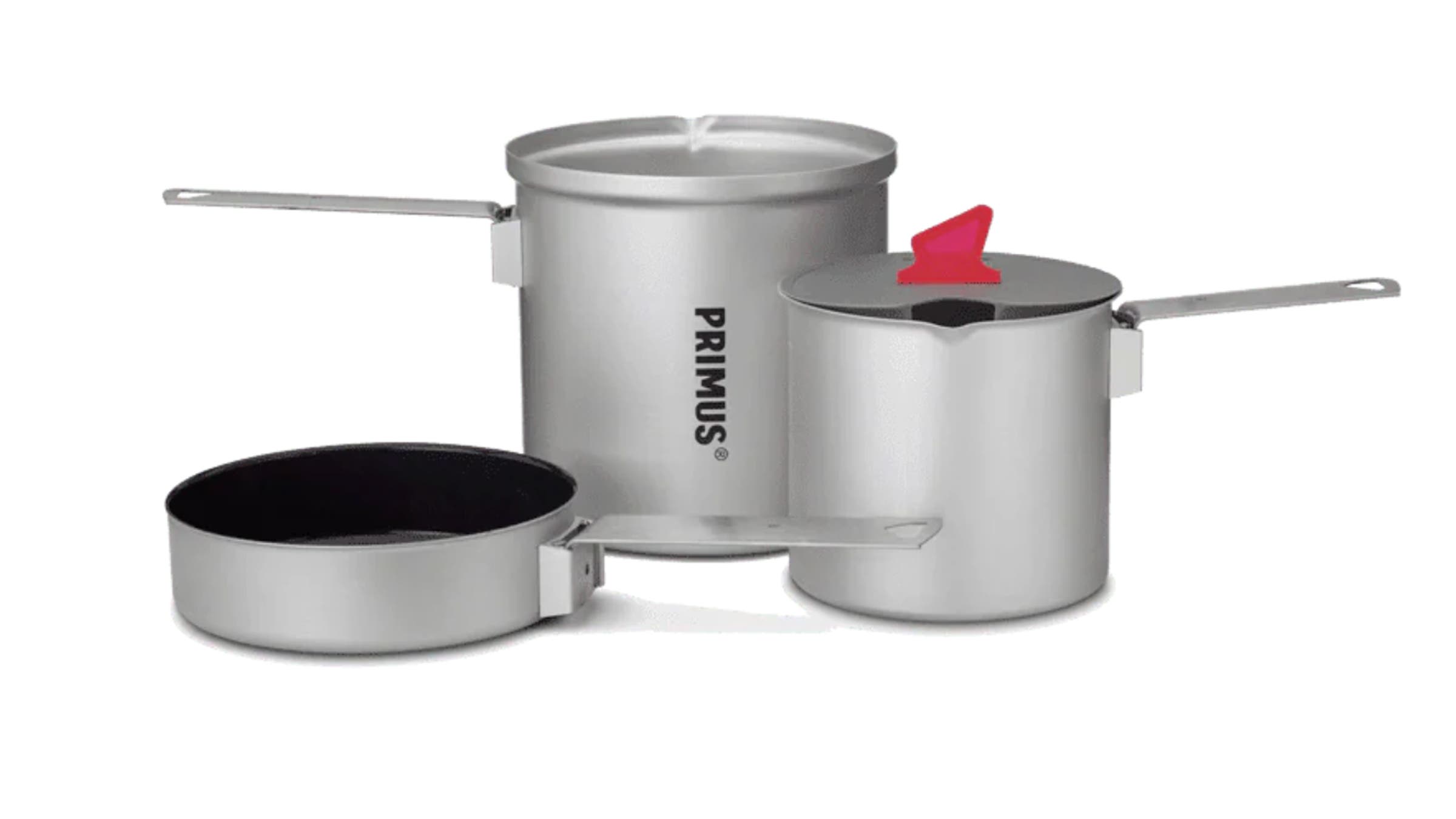
Best Value Set
Primus Essential Trek Pot Set
Weight: 14.5 oz
Volume: 1 L, 0.6 L
Pros and Cons
+ Easy to clean
+ Good heat distribution
+ Durable
– Doesn’t retain heat well
– Slightly heavy
On a fishing trip along Colorado’s South St. Vrain Creek, our tester fried eggs on the Essential Trek Pot Set’s frying pan lid while using the pot to whip up some hot apple cider. Versatility is the name of the game here, with a smart, lightweight design that lets you cook up complex meals (straining and non-stick sautéing included) at under a pound.
“You can make perfect ‘over medium’ eggs with barely anything left behind to clean,” reported our Colorado-based tester, praising the skillet’s ceramic nonstick coating. The anodized aluminum of the pot took a little bit more scrubbing, but was still one of the easiest in test to clean.
The frying pan doubles as a lid for the 1-liter pot, while the 0.6-liter pot comes with its own plastic lid that doubles as a strainer—ideal for dumping pasta water. Three removable handles are included with the Essential Trek Pot Set, so you can use every pot and pan at the same time. Testers found them to be slightly fragile, but they didn’t bend over weeks of testing. A spout on both pots made pouring water into coffee cups or pouches of freeze-dried food easy and mess-free.
At $75, this set is cheaper than comparable titanium cooksets and without a huge weight penalty. If you’re looking for a sturdy, reasonably-lightweight cookset for a small group that won’t break the bank, the Primus Essential Trek Pot Set is a great pick.
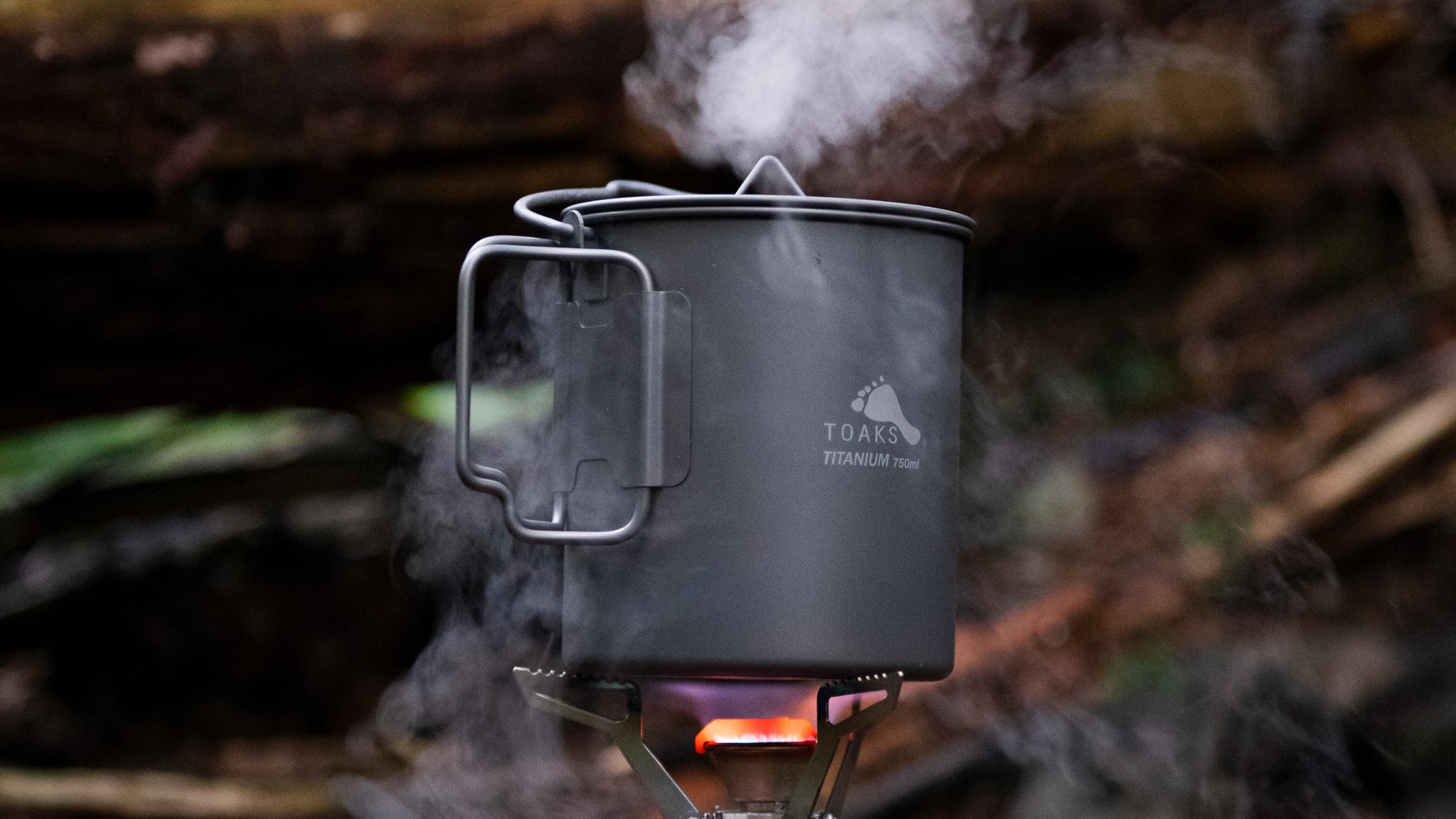
Best for Solo Backpackers
Toaks Titanium 750ml Pot with Bail Handle
Weight: 3.9 oz
Volume: 750 ml
Pros and Cons
+ Extremely light
+ Bail handle adds versatility
+ Great value
– Very minimalist
– Thin and prone to dings
For such a simple piece of cookware, this compact titanium pot was a surprising hit among small groups and solo testers. It weighs about the same as a deck of cards, fits a 100-gram fuel canister and a small stove, and still manages to come in at a budget price.
Testers loved the detachable bail handle, which not only makes holding a hot pot easier, but also means you can hang it over an open fire. I put this to the test cooking soup over an open flame, and though using the bail handle in this manner can be a bit sketchy, titanium doesn’t retain heat as well as other materials, so you’re less likely to burn yourself in the process.
Embedded measurements inside the pot remove the guesswork, and while the lid isn’t anything special, it fits snugly and includes a pull tab. As with other titanium pots, it doesn’t absorb odors or flavor, so your coffee won’t taste like beef stew. Because the 750-milliliter pot uses a thinner titanium, it is more prone to dings and warpage than thicker competitors. But with some care, it’s easy to keep this pot in good shape.
Unlike its titanium competitors, however, this pot lacks the hefty price tag. Titanium can be notoriously expensive, but somehow Toaks keeps the price point right around $30. You won’t be cooking elaborate gourmet backcountry meals with this slightly-larger-than-pint-sized pot, but for the solo backpacker who wants to keep their setup as simple, compact, and light as possible, it’s hard to beat.
Other Products We Tested
- Jetboil Summit Skillet ($45): This skillet shares many attributes with the GSI Bugaboo Ceramic Frypan: They’re similar in size, weight, intended use, and performance. The Summit Skillet is significantly more expansive, however, and the included plastic spatula melted from the heat of the pan.
- SnowPeak Ti-Mini Solo Combo 2.0 ($75): This titanium cookset worked great for a solo backpacker boiling water and making some morning coffee without fuss, but the pot isn’t well-shaped for cooking anything else.
- Soto Thermolite Cookset ($38): This anodized aluminum pot weighs approximately nothing, and the pot lid’s ability to double as an easy-to-drink-from mug lid was appreciated. The cozy was a great touch, especially with pot walls this thin. Testers found it easy to dent, though, raising concerns about durability.
- Soto Titanium Pot 1100 ($45): If shaving ounces is your absolute top priority, this featherweight, ultra-thin titanium pot is an excellent choice at a great price point. But it was flimsier and more difficult to grip without burning your fingers than the competition.
- GSI Halulite Tea Kettle ($35): There are advantages to using a quick-boiling tea kettle over a pot, but unfortunately, more disadvantages.
- Sea to Summit Detour Stainless Steel One Pot Cook Set ($201): The pop-up silicon sides of this set work great for storage, and as one tester noted, are “very cute.” But the pot was prone to folding down on itself while full of boiling water (not very cute).
- Solo Stove Pot 1800/900 ($46/$35): There’s nothing inherently bad about these pots, but for their basic stainless steel design, there are better, lighter, and cheaper options that make them a difficult sell.
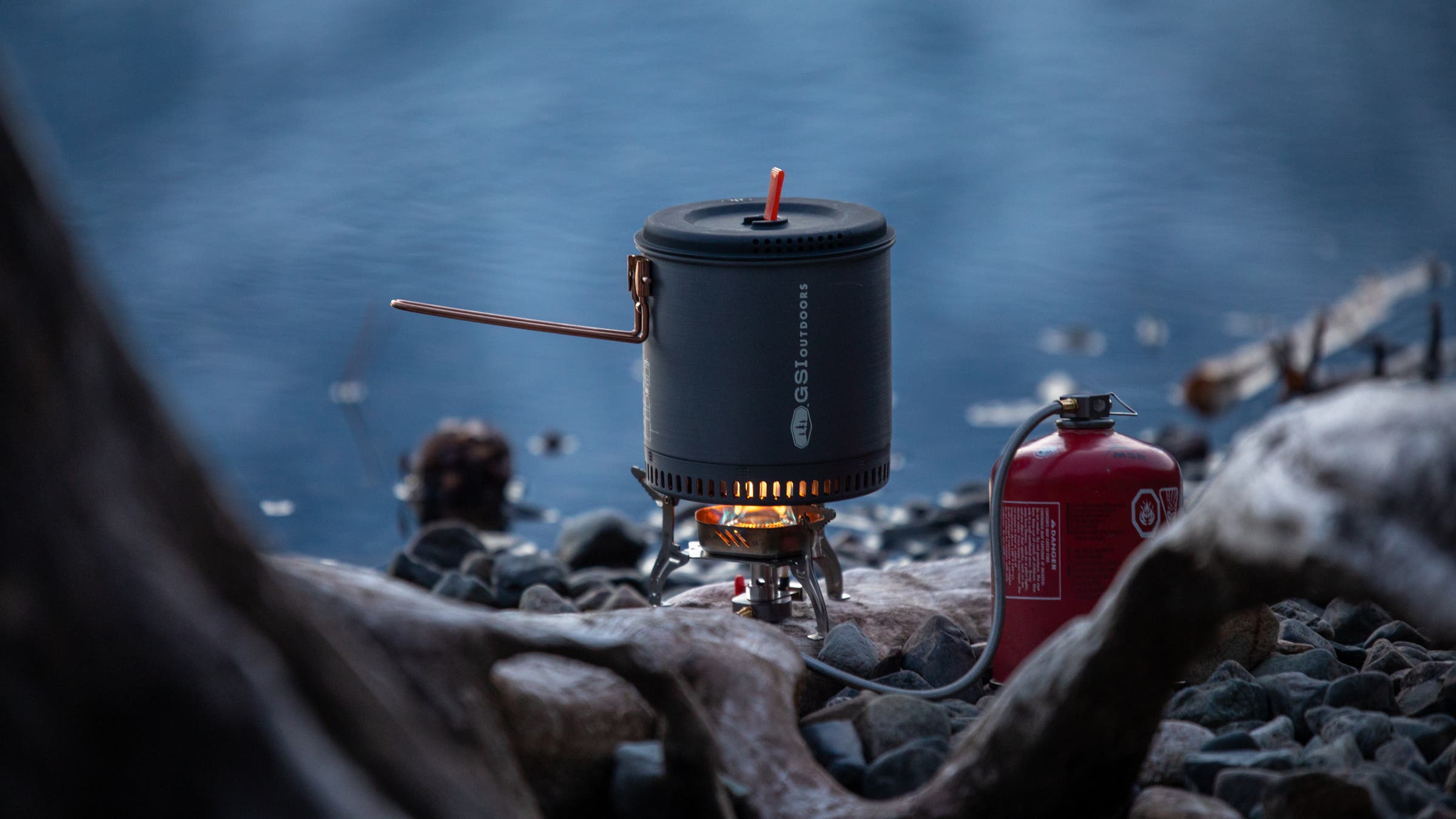
How to Choose Pots and Pans for Backpacking
Cooking style: If boiling water for coffee or dehydrated meals is your top priority, a simple pot made of titanium, aluminum, or stainless steel will last for years. If you’re planning on cooking actual food, it’s worth considering pots and pans with a nonstick coating. These require some extra care and attention, but the coating helps keep food from sticking to the bottom and burning, and makes dish-duty much easier.
Size and weight: We’d all rather have a lighter pack, but cutting weight usually means sacrificing performance elsewhere. How much you’re willing to sacrifice is entirely personal, but shaving a few ounces often comes at the cost of heat transfer, user-friendliness, and durability.
Pot design: The pots that can boil water the fastest have one thing in common: a heat exchanger, or some variation of corrugated metal fins on the bottom of the pot. This transfers heat far more efficiently, cutting boiling time by half in some cases. It adds a small amount of extra weight, though any gains by choosing a lighter pot may be offset by the need to carry extra fuel. Pot width also plays a factor in boiling time—a wider bottom allows for more surface area to be in contact with the flame, heating the contents faster. It’s also worth considering how well other gear, such as fuel and a stove, can nest together inside.
Materials: The best material for cookware depends on your cooking needs, weight preferences, and budget. The three most common are:
- Titanium: The lightest and most expensive material. It’s also a poor distributor of heat, which can lead to hot spots and burnt food, making it best for boiling water.
- Aluminum: For most backpackers, this is the best option. It’s slightly heavier than titanium, but cheaper and distributes heat more evenly and efficiently.
- Stainless Steel: The most durable cookware material, stainless steel transfers heat with a similar efficiency as aluminum. Durability comes at the cost of weight. Unless you have a knack for destroying cookware, aluminum will likely meet your needs just fine.
- Nonstick coatings: Like death and taxes, it’s a certainty that all nonstick coatings will eventually wear out. Avoid using metal utensils on nonstick surfaces and put a cloth or bandana in-between pots and pans to avoid scratches. If you tend to abuse your gear, nonstick may not be the best option.
How We Test Pots and Pans for Backpacking
- Products tested: 14
- Testers: 9
- Lids melted: 1
- Chickens fried: 1
- Fish caught: 0
We took the latest and greatest pots and pans into the mountains and rivers of Colorado and Idaho to see which could unseat our reigning champions. This test was conducted simultaneously with our backpacking stoves category, enabling us to try each pot and pan with a variety of stoves.
Our testers ranged from novice cooks who prefer an efficient, no-fuss backcountry meal to those who wouldn’t think of leaving home without their spice jars. Factors we considered when comparing our top picks were size and weight, efficiency, versatility, durability, and budget. Some products stood out for being able to handle a wide range of tasks, while others stood out for doing just one thing particularly well.
Meet Our Testers
Kristin Smith, a former Backpacker editor, has been a full- or part-time mountain guide for most of the last decade. In her spare time, she teaches Avalanche Terrain Avoidance for the Colorado Mountain Club, guides clients through the nearby peaks of Rocky Mountain National Park, and maps out new places to visit with her recently-acquired pilot’s license.
Nick Cote is a photographer and writer based in Bellingham, Washington. He is the author of Wild Eats: Campsite Cooking and is a frequent recipe contributor to Backpacker. His work has also been published in The New York Times, The Washington Post, The Wall Street Journal, Outside, and many others.
Owen Eigenbrot loves burritos above all else. They are the reason he wakes, the reason he hikes. His hunger has driven him to hike 13,000 miles across the United States, and scatters him to wild places worldwide. As a hiker, writer, and human, he lives to experience, understand, and help the Earth.
Dylan Warren is a wandering photographer in constant pursuit of deep snow and good dirt. His adventures have taken him from New York to Alaska, and everywhere in between. When he settles down, he splits his time between Lake Tahoe, Bellingham, and New York City.


