There are a lot of ways companies are trying to sell you a new smart TV. Some emphasize convenience while also stressing a large size or bright image. They may offer any collection of advanced video and sound features, with options to improve your gaming setup or support the best audio formats for a surround sound home theater.
On top of that, companies will try to sell you on operating systems, virtual assistants, and AI enhancements. It can make the buying process complicated. However, there’s one aspect of new smart TVs that companies are advertising as a perk that you should ignore.
Smart TVs advertise free channels
Tubi, Plex, and other platforms offer easy access

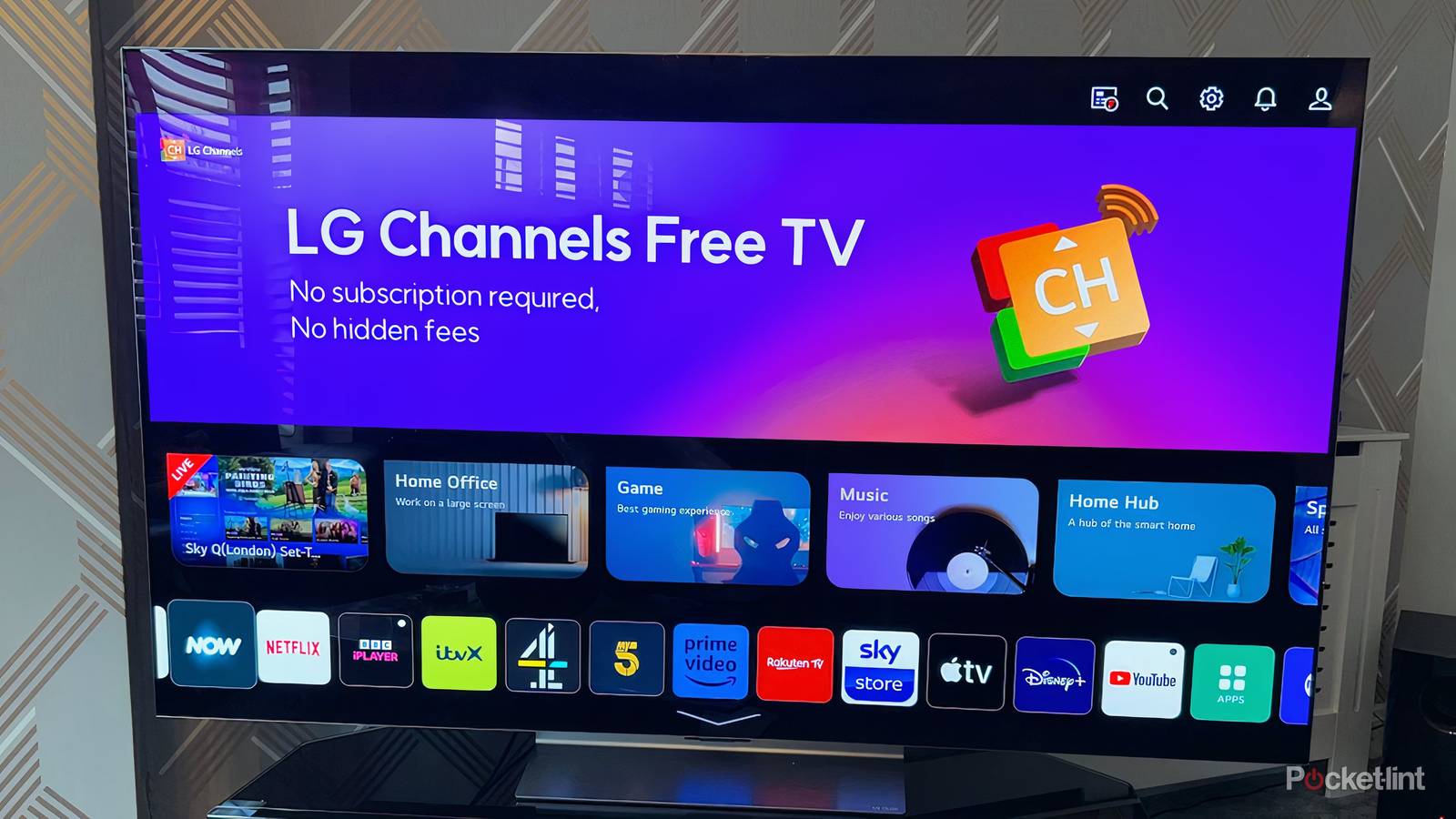
One of the many so-called features that TV manufacturers will advertise is a collection of free channels that come with the unit. Built into TV is a whole collection of channels that offer a range of genres and titles, from live news and sports to music, syndicated comedies from decades past to soap operas, kids’ shows to reality TV. These are accessed through the TV’s operating system; the channels will likely be one of the first few carousels you see on your home page.
Companies like to really highlight the sheer volume of the channels. LG Channels, for example, offers over 400 channels on your TV, while
Roku TV boasts 500 channels. Samsung, meanwhile, claims over 3,500 channels globally on Samsung TV Plus, although on any given unit that number is probably closer to 800.
Then there are apps such as Tubi, Plex, and Pluto TV that offer similar free programming. These blend the older idea of cable with streaming platforms, but they are free to use.
The word “free” is a great marketing tool, and a company that can list a high number may attract some attention from curious consumers. The reality is that these channels really cost the company nothing. Any fictional programming is going to be fairly old; they’re not picking up new releases. Local news and music channels cost very little as well; the live sports available aren’t exactly sought-after games either.
Free TV appeals to some consumers
Major streamers priced out viewers

Before looking at why they are so problematic, it’s worth looking at why these free channels have become so popular. It’s basically because everything else is so expensive. Netflix, Disney+, Max, and every other major streaming platform is consistently raising prices on consumers. It’s difficult to manage a monthly subscription bill when it comprises a bunch of different services that keep going up in price.
As a result, some consumers are looking for cheaper entertainment. So when companies advertise that their TV comes with hundreds of free channels, that sounds appealing. They make for convenient and inexpensive access, especially for those who don’t particularly care what they’re watching. That’s because the channels that are being offered aren’t the most compelling of watches.
Channels lack quality and detailed resolution
Dated titles stream on a small bitrate

These channels are not offer new series or prestige movies or cinematic masterpieces. With these channels, you’re going to get older titles from decades past.
The number of channels they advertised is certainly misleading, mainly because a lot of channels will be completely superfluous. You may get a hundred music channels, of which you might watch a handful, if any. There are a bunch of local news and weather stations that will be completely irrelevant. Then there are the 24/7 stations that play syndicated shows on a loop. Some viewers may want to watch Baywatch, Law & ORder, or MacGyver endlessly, but they may not be for everyone.
Whatever you choose to watch, you’re not going to get the best version of it either. They are going to come at you in HD or FHD resolution, lacking quality specs in terms of brightness, contrast, and color. These offerings aren’t coming in with Dolby Audio either. I suppose it’s fine, though, because most of what you’re watching on these channels wouldn’t have been made with any top features in mind. You don’t need 4K resolution if you’re watching a 70s sitcom.
Free channels are supported by ads
Targeted commercials come early and often

These channels are known as FAST: free ad-supported television, which is basically the old model of cable. And that’soOne of the main reasons to stay away from these channels:they are filled with ads and commercials. That’s a key reason why they are free. You’re essentially going back to the days of cables where what you’re watching will be interrupted frequently by commercial breaks.
However, there is a big difference between the old model of cable and this new setup that feels eerily similar. The ads you get now are going to be personalized to your tastes, lifestyle, and shopping habits. These channels can sell more ad space and make more money when offering companies a chance at targeted advertising. The channels may be free to you, but companies are making money off your information.
Channels pose privacy concerns
Viewing habits can determine your identity

Advertisers can target you because they know a lot about who you are based on your viewing habits. A number of features on your smart TV help create a profile of you based on your use. The most notorious of these tracking processes is ACR, or Automatic Content Recognition. Basically, these elaborate features identify anything you have on screen and make a note of it. It notes how long you’re watching a specific title, and what you may be watching briefly or skipping over.
The more you use your TV with ACR enabled, the more it can figure out who you are. With a sizable catalog of viewing history, it can infer your age, gender, religious, political beliefs, and ethnicity. Even if you have a diverse palette of viewing tastes, your identity can be figured out eventually.
The problem is that once your identity is figured out, companies can target you with very specific ads. So these free channels aren’t free after all. They’re tracking what you watch and then selling items to you that it knows you’re curious about and interested in. Even if you don’t buy anything you see in a commercial, your data is still available to be sold or hacked.
How to use FAST channels safely
Disable tracking and plan accordingly

I appreciate that free movies and shows can be appealing, and there may be things here and there that you want to watch. But it’s worth taking some simple precautions first.
To start, disable every privacy and tracking setting you can, starting with ACR. Turn off anything related to interest-based ads and ad recommendations. You don’t need your TV putting together a portfolio of recommended titles, because that’s just another way it can figure out who you are.
If you need an email address to use any platform or operating system, be sure to use one that isn’t tied to your identity or that is connected to any important personal or business use. If you can use the platform as a guest, then do so. You don’t want to use any voice features either; those are easy ways for companies to learn a lot about you.
Lastly, it’s helpful to know what you want to watch before you go in. With all these free channels, you can end up spending a lot of time searching and scrolling and just wasting time on a platform you might not be too keen on in the first place. That’s what they want; they want to keep you there. So turn on your TV with a plan.


