
When people think about reducing their environmental impact, they often focus on obvious areas such as transportation, food choices, or single-use plastics. Bedrooms rarely enter the conversation.
Yet the average household contains a surprising amount of textile material dedicated to sleep. Mattresses, pillows, comforters, blankets, mattress protectors, toppers, and bed linens can collectively weigh dozens of pounds and remain in use for years before eventually being replaced.
While bedding may seem like a small part of everyday consumption, the materials used to manufacture these products have environmental consequences that are often overlooked.
What Role Do Fossil Fuels Play in Modern Bedding?
Many of today’s bedding products rely heavily on synthetic materials. Polyester, microfiber, memory foam, and polyurethane-based waterproof barriers have become common because they are inexpensive, lightweight, and easy to manufacture.
However, these materials typically originate from fossil fuel resources.
The European Environment Agency notes that synthetic textile fibers are produced from oil and natural gas, linking everyday household products to non-renewable resource extraction. Their presence extends far beyond clothing. As the agency points out, “Plastic-based’ or ‘synthetic’ textiles are woven into our daily lives in Europe. They are in the clothes we wear, the towels we use, and the bed sheets we sleep in. They are in the carpets, curtains, and cushions we decorate our homes and offices with. And they are in safety belts, car tires, workwear, and sportswear.” While synthetic materials offer practical benefits such as affordability and durability, their production relies on resources that must be extracted long before the finished product reaches consumers.
The Microplastic Connection
There is also the issue of microplastics. According to the European Environment Agency, synthetic textiles contribute significantly to microplastic pollution, with fiber fragments entering waterways through everyday use and laundering. While this issue is often discussed in relation to clothing, household textiles such as sheets, blankets, pillowcases, and mattress protectors are part of the same textile ecosystem and can contribute to fiber release over time.
Why Durability Matters
Sustainability is not only about what products are made from. It is also about how long they remain useful.
A pillow that needs replacement every few years creates a different environmental footprint than one that maintains its performance for a decade. The same principle applies to duvets, mattress toppers, blankets, and mattresses themselves.
Products that remain functional longer generally require fewer resources, less manufacturing, and less transportation over their lifetime.
This is one reason durability is increasingly being discussed alongside recyclability and renewable materials when evaluating household goods.
A Growing Interest in Natural Materials
As consumers become more conscious of the environmental impact of household products, interest in natural bedding materials has increased.
Materials such as wool, cotton, linen, and natural latex have been used for generations and are derived from renewable resources rather than petroleum-based feedstocks.
Wool, in particular, has several characteristics that make it attractive for bedding applications. It naturally regulates temperature, manages moisture, and can remain durable for many years when properly cared for.
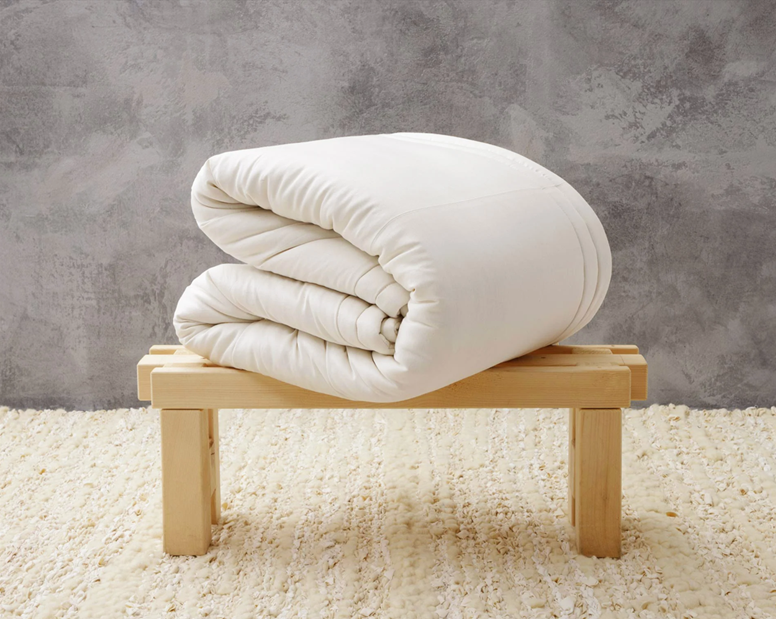
For consumers seeking alternatives to synthetic-filled bedding, products such as an organic duvet insert made with natural wool offer one example of how renewable materials can be incorporated into the bedroom without sacrificing comfort.
Small Choices Add Up
No single purchase will solve environmental challenges. However, millions of households replace bedding products every year. Collectively, those decisions influence resource use, manufacturing demand, transportation emissions, and waste generation.
The conversation around sustainability often focuses on visible lifestyle changes, but the products we use for eight hours every night deserve consideration as well.
The next time a pillow, duvet, mattress protector, or topper reaches the end of its life, it may be worth looking beyond comfort alone and considering the environmental story behind the materials inside. Sometimes sustainability begins in the least expected places, including the bedroom.


