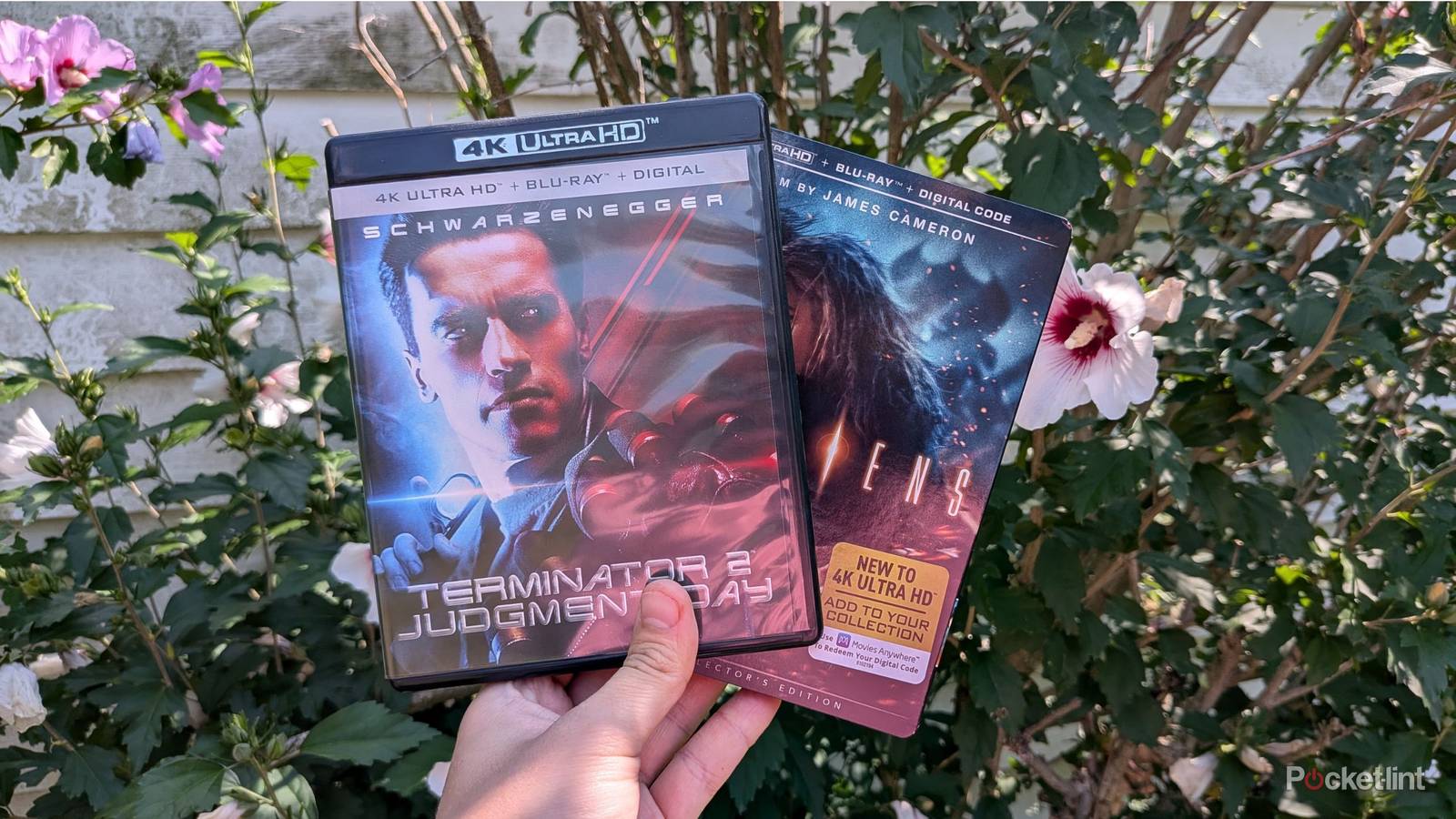
When you buy a 4K Blu-ray disc, there’s a tacit agreement that you’re paying for the best possible version of a movie. 4K resolution is just the start. You’re also supposed to be getting picture and sound at the highest possible bitrate, frequently remastered. You can, of course, get 4K and Dolby Atmos with a premium streaming plan, but extra compression is needed, and there’s no guarantee you’re watching a remastered version if one exists.
It might surprise you to learn, then, that some Blu-rays fake their 4K. Well, sort of. You’re still getting better quality than a 1080p disc, or likely streaming. It’s just that digital tricks were pulled to compensate for source material.
Why many Blu-rays aren’t fully 4K
Blame the middle children of history

The explanation lies in how movies were shot and edited during the transition to the technology we have now. For a long time, naturally, both processes were accomplished entirely on film, usually 35mm. From a Blu-ray remastering perspective, this is gold, so long as you can find prints in good condition. These can be scanned directly into 4K, even if restoration and enhancement are needed to bring quality up to modern standards. 70mm prints are a rare treat, since they support scans up to 12K for futureproofing purposes.
Starting in the 1990s, digital entered the picture, but in a primitive and piecemeal fashion. Towards the end of the decade, some movies started being shot on digital cameras — but that equipment typically topped out at 1080p. Where film was still being used, it was often converted to a 2K digital form — the 2K intermediate — to make editing the final product easier. This also included compositing CG effects, rendered at about the same resolution.
You might have a sense of the problem already. To elaborate, though, the finished product for a lot of movies (and TV shows) was capped at 2K resolution. There’s no way to extract 4K detail out of 1080p camera footage. For titles shot on film, producing a true 4K version for Blu-ray can involve tracking down disparate original elements, scanning each of them, and reassembling them in order — assuming they still exist somewhere. As for CG, you may have the same problem unless you can re-render effects or replace them entirely, and studios tend to steer their effects budgets towards newer, more profitable releases. The original data may have been wiped a long time ago.
The stopgap solution for a 4K Blu-ray, then, is upscaling during the remastering process. This is a notch over the upscaling performed by your TV or Blu-ray player. Because it doesn’t have to happen in real-time, studios can apply more complex algorithms, and refine the output until it matches their expectations. Detail is more likely to be preserved in the process.
How much does upscaled 4K really matter?
Picking over the filet mignon

At a glance, you probably won’t notice any gap between upscaled and native 4K, especially on TVs below the 65-inch mark. It’s difficult to tell the difference between conventional resolutions at that screen size, let alone content that’s been meticulously enhanced ahead of time. As if that weren’t enough, bitrates should be generally identical between native and upscaled discs. That minimal compression is a large part of the appeal of Blu-ray, as I mentioned earlier.
You may care if you have a TV 75 inches or larger, since you’ll start noticing the reduced detail versus true 4K. But realistically, there’s no point in holding off on particular movie or show unless a costly, full-scale remaster has already been announced. Chances are that the 2K upscaled version is as good as it’s going to get, barring a miracle.


