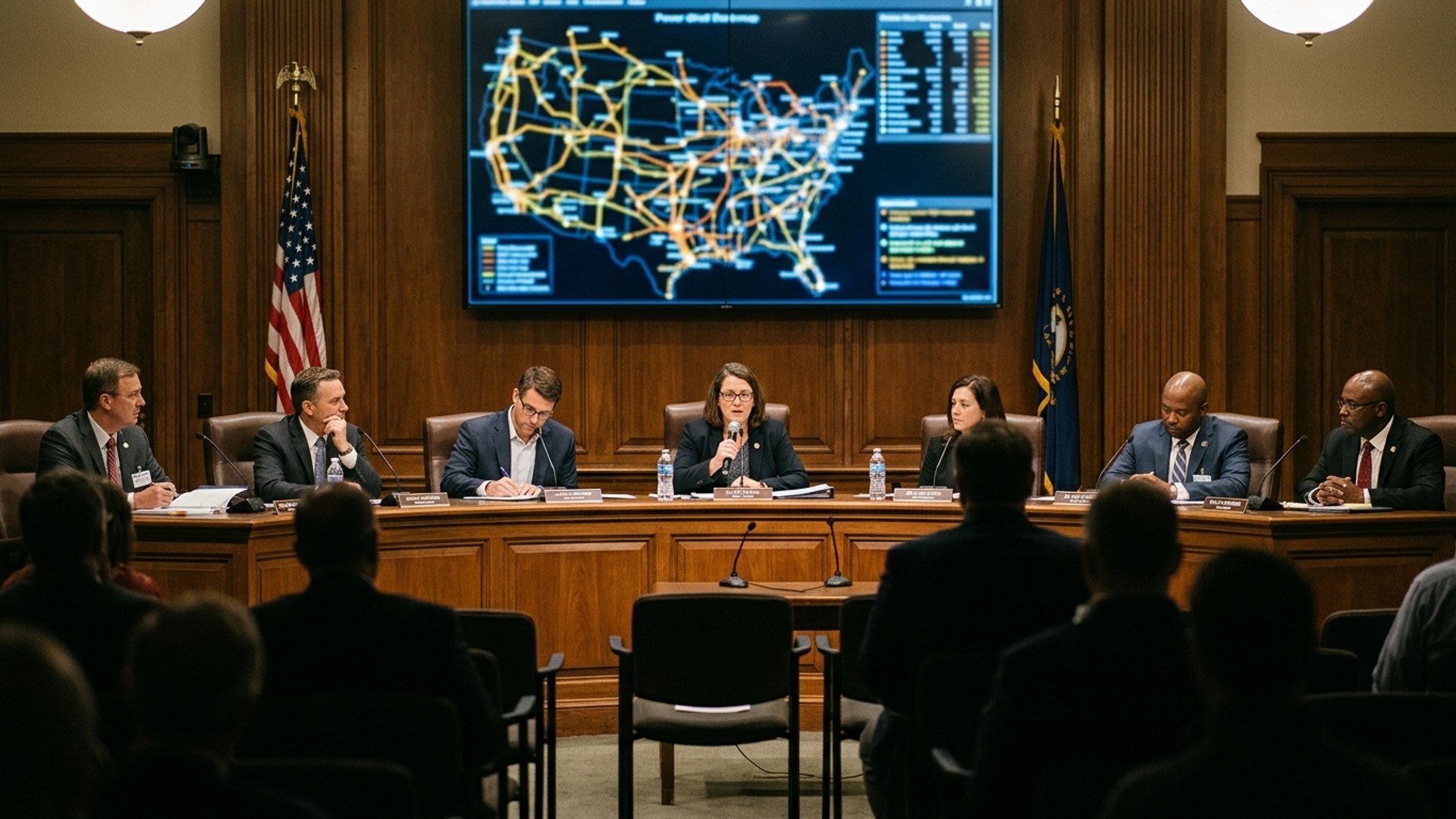
The Tennessee Valley Authority’s (TVC ) Board of Directors on August 20, 2026 approved a new wholesale rate class built specifically for data centers, part of a package that also adopted the utility’s 2026 Integrated Resource Plan and a fiscal 2027 budget carrying more than $13 billion in planned generation and transmission spending through FY29. The actions, taken at the board’s quarterly meeting in Memphis and detailed in TVA’s announcement, make the nation’s largest public power supplier one of the first big U.S. utilities with a dedicated tariff aimed at AI-driven load.
The rate’s mechanics are laid out in the board presentation materials. Effective October 1, 2026, new or expanding data center loads above 5 megawatts fall under a Capacity Commitment Charge attached to TVA’s data center rate schedules, designed to recover the incremental capacity costs those customers impose rather than spreading them across the general rate base. TVA expects the all-in average billing impact for data center customers to run approximately 10%, phased in over three consecutive fiscal years.
“Maintaining low rates and high reliability for customers is our first priority,” said TVA Chair Mitch Graves. “As AI and advanced industries consume more electricity, TVA’s Board is making sure that hardworking American families and small businesses aren’t left carrying the cost.”
How the Data Center Rate Works
Beyond the commitment charge, the package adds a Power Interruption Provision covering data centers that ask to come online before the generation capacity to serve them is actually available, a term aimed squarely at the interconnection-queue pressure AI developers have put on utilities across the Southeast. Data centers already moving through TVA’s development pipeline must meet specific criteria to qualify for transitional provisions. TVA says it will still work with customers that want to bring their own generation, provided those arrangements align with the Ratepayer Protection Pledge the utility signed on July 23, 2026, a Trump Administration initiative under which hyperscale and AI companies commit to procuring new power supply, funding the transmission upgrades their facilities require, and paying for dedicated infrastructure whether they use it or not.
The same rate action tightens contract-demand rules so customers sit in rate classes that match actual usage, adds a stability-focused contract option for existing manufacturers with loads above 5 megawatts, and updates board policy governing new power requirements above 100 megawatts.
11 to 32 Gigawatts of New Capacity by 2040
The approved 2026 Integrated Resource Plan (TVA’s long-range supply study, which attributes the region’s rising demand primarily to population growth and data center development) concludes the Valley will need between 11 and 32 gigawatts of additional generation capacity by 2040. The plan’s modeled ranges include 7 to 26 gigawatts of new natural gas, up to 5 gigawatts of nuclear, 2 to 5 gigawatts of renewables, and 1 to 5 gigawatts of storage. The board directed staff to pursue the plan’s recommended actions and to monitor signposts on market conditions, policy, and emerging technologies so the portfolio can shift as conditions change.
Where the $13 Billion Goes
The FY 2027 budget funds the build-out side of that strategy. TVA plans more than $13 billion in capital spending through FY29, over $1 billion of it annually on the existing fleet and transmission system, and says 4,120 megawatts of new TVA-owned capacity is under construction with another 3,000 megawatts under evaluation. The presentation names the projects: a 1,500-megawatt gas energy complex at Kingston, Tennessee; a 1,450-megawatt combined-cycle plant at Cumberland, Tennessee; 500-megawatt and 350-megawatt combustion turbines in Mississippi and Brownsville, Tennessee; a 200-megawatt aeroderivative unit in Memphis; 100 megawatts of solar in Kentucky; and a 20-megawatt battery installation at Vonore, Tennessee. The budget also carries a financing shelf for up to $4 billion in long-term bonds and a $300 million contribution to the retirement system.
“Affordability and reliability remain at the center of every budget decision we make,” said TVA Chief Financial Officer Tom Rice.
TVA enters this build cycle from an unusually low-cost position — the 12-month rolling residential rate of 13.42 cents per kilowatt-hour sits well below the 18.76-cent top-quartile median in the federal data TVA cited, with industrial rates at 6.14 cents — which is precisely the position the new tariff is designed to protect as large loads connect. The pressure is visible well beyond the Valley: NVIDIA’s guarantee of up to $105 billion for an 8-gigawatt Ohio AI campus leased by OpenAI is the extreme end of what single-site demand now looks like, while builders like Skanska, which signed a $1.2 billion contract for four Southeast data centers, are pouring concrete across TVA-adjacent territory. The new rate takes effect October 1, 2026, with the Capacity Commitment Charge phasing in across the following three fiscal years; the board’s next scheduled meeting is November 10, 2026.


