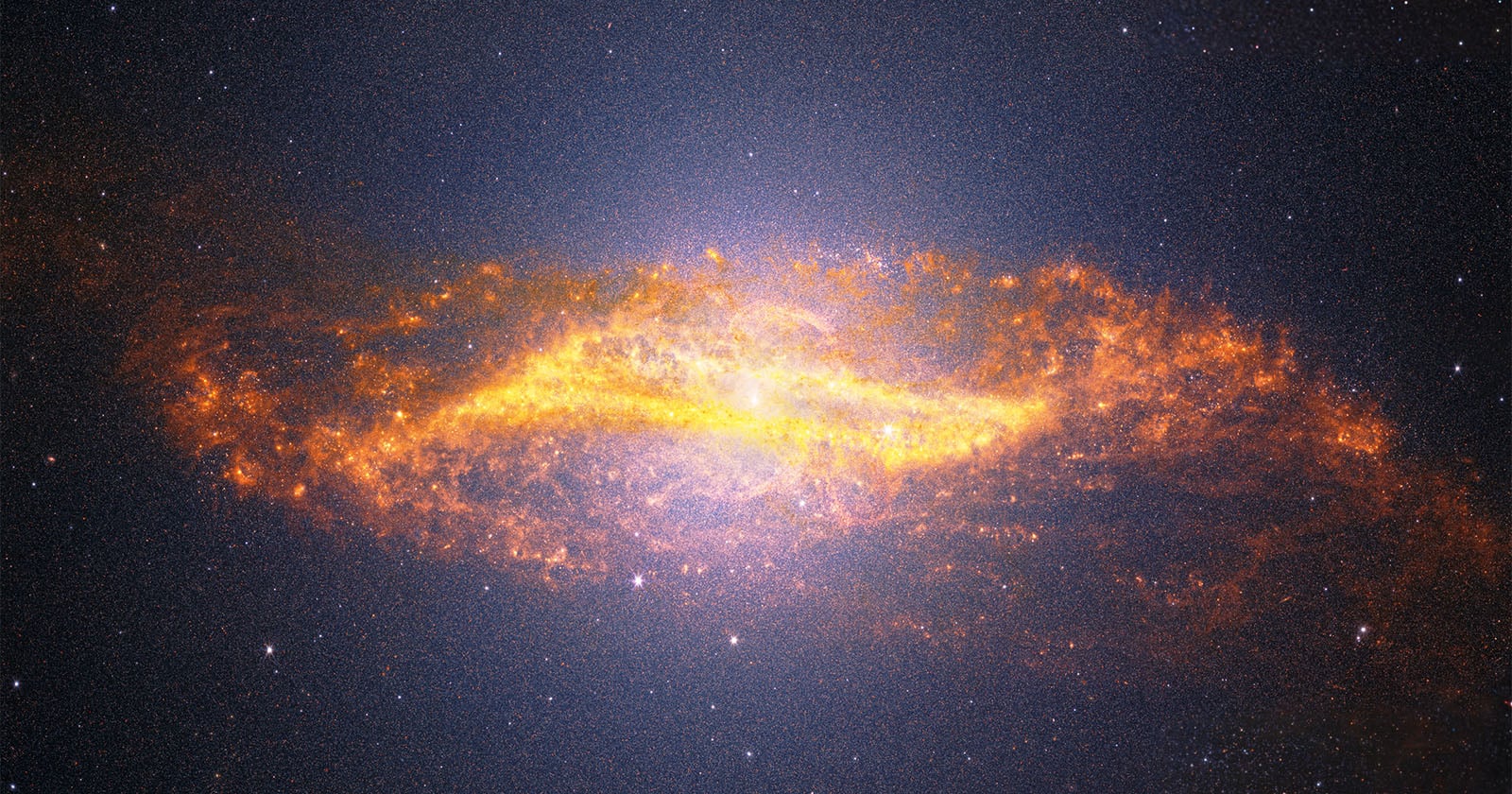
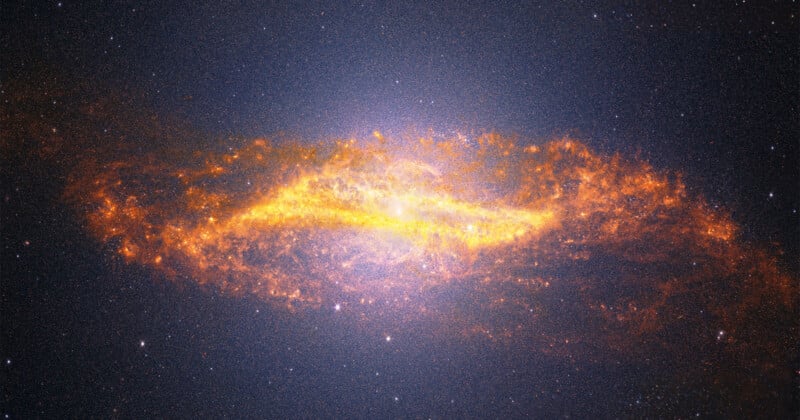
To celebrate the James Webb Space Telescope’s fourth anniversary of scientific operations, NASA, ESA, and CSA have unveiled new photos of a familiar galaxy that illustrate just how special Webb’s imaging systems are. The new images showcase Webb’s exceptional ability to peer through cosmic dust and unravel the mysteries of the Universe.
The new images show Centaurus A, also known as NGC 5128, a galaxy that has long ignited heated debate among scientists. Located about 11 million light-years from Earth, Centaurus A is among the nearest large starburst galaxies to Earth. These are special types of galaxies with inordinately high amounts of star formation that are believed to be the result of a galactic collision.
What makes Centaurus A such a hotbed for debate among scientists is exactly what kind of galaxy it is. It has been extensively studied and is among the brightest galaxies in the night sky, but scientists do not agree unanimously on its fundamental properties. NASA describes it as a “peculiar elliptical galaxy,” which seems to be a leading theory. But others think it could be a lenticular galaxy. Beyond this disagreement, there is even some debate on its precise distance from Earth.
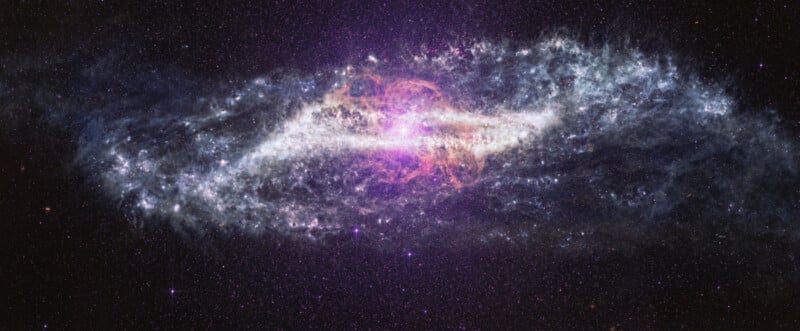
Nonetheless, in deference to NASA on the matter, NGC 5128, a peculiar elliptical galaxy, is full of intrigue and mystery. This extremely active galaxy, a rarity among those relatively close to Earth, is a cosmic laboratory where scientists can study how galaxies and black holes grow and evolve in tandem. NGC 5182’s central black hole is constantly eating matter and then expelling huge, powerful jets of energy, which then shape the galaxy that surrounds it.
While this is all happening right now, Centaurus A also carries incredible scars of its past — evidence of a violent galactic collision about two billion years ago. The aftermath of the stellar scuffle remains visible through NGC 5128’s distinct structure and shape.
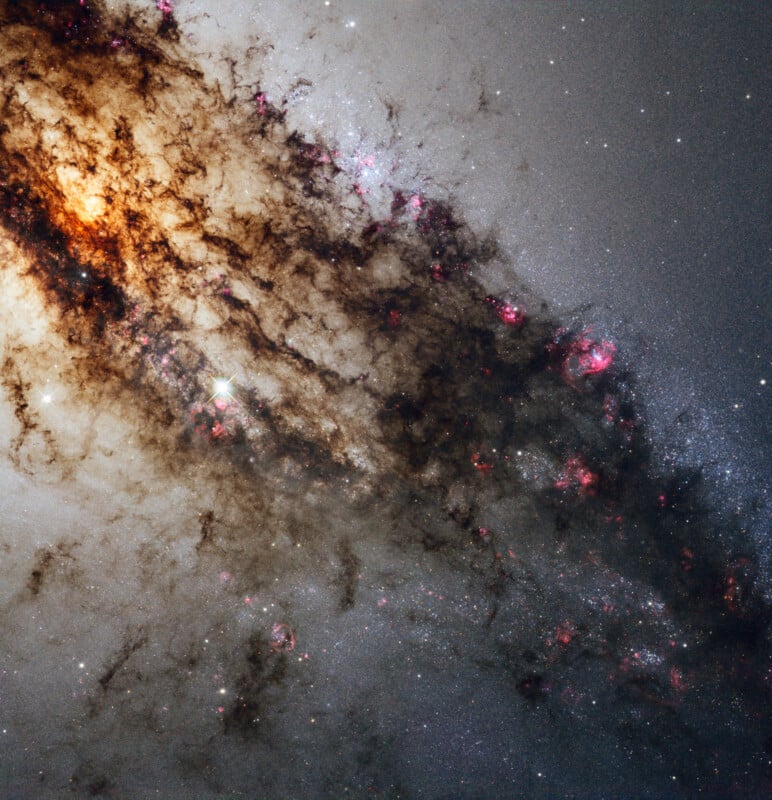
NASA and ESA have looked at NGC 5128 a lot over the years, including using their joint famous space telescope, Hubble. However, Hubble is a visible-light telescope, meaning it cannot see through dust and interstellar material to observe NGC 5182’s central region.
On the other hand, NASA’s retired Spitzer Space Telescope could see through the dust and resolve the inner regions of NGC 5128. But Spitzer’s resolution was insufficient to resolve individual stars in the galaxy.
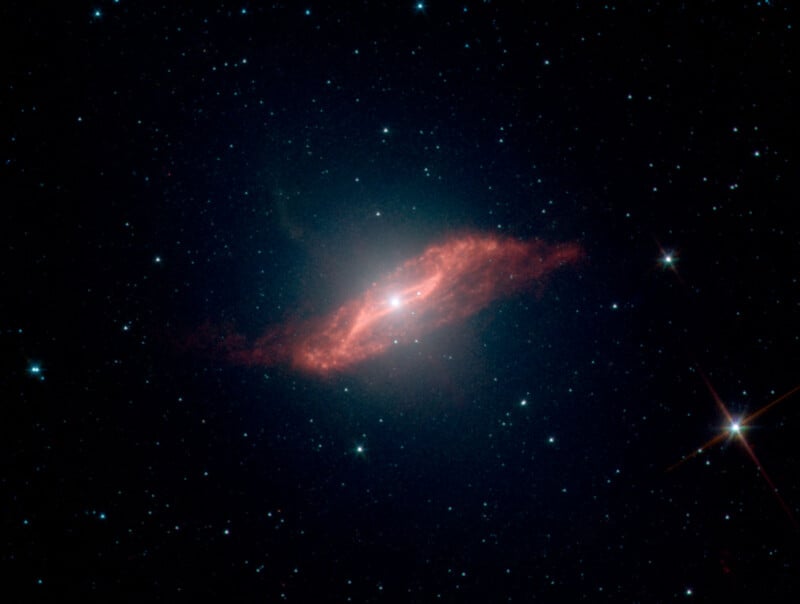
Enter the NASA/ESA/CSA James Webb Space Telescope with its sophisticated, ultra high-resolution near-infrared (NIRCam) and mid-infrared (MIRI) cameras. There are few better ways to celebrate Webb’s fourth birthday than by showing off how its uniquely powerful cameras chart new paths for space science.
“Webb brings both clarity and depth,” ESA writes.
Webb’s mid-infrared camera captures the galaxy’s dust structures, including the S-shaped feature that scientists continue to theorize about. What caused this shape? Did the black hole influence the structure? Is it the result of NGC 5128’s collision-filled past?
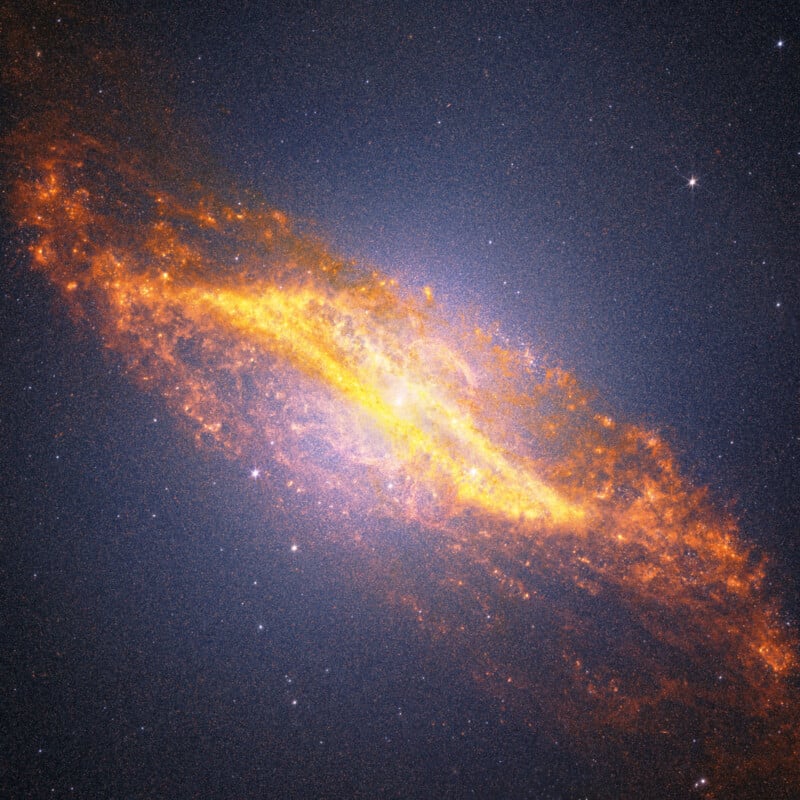
The $10 billion space telescope’s NIRCam image looks very grainy. However, that “noise” is not grain like in a high-ISO photo; it is a veritable hotbed of stars. Those specs are each stars, which scientists can study one at a time thanks to Webb’s resolution.
“With Webb’s view of Centaurus A, it becomes a case of galactic archaeology. Each star revealed helps to reconstruct when different events happened: when older stars first formed, when activity slowed down, a burst of star formation during the collision, and stars born from gas stirred in its aftermath,” ESA says.
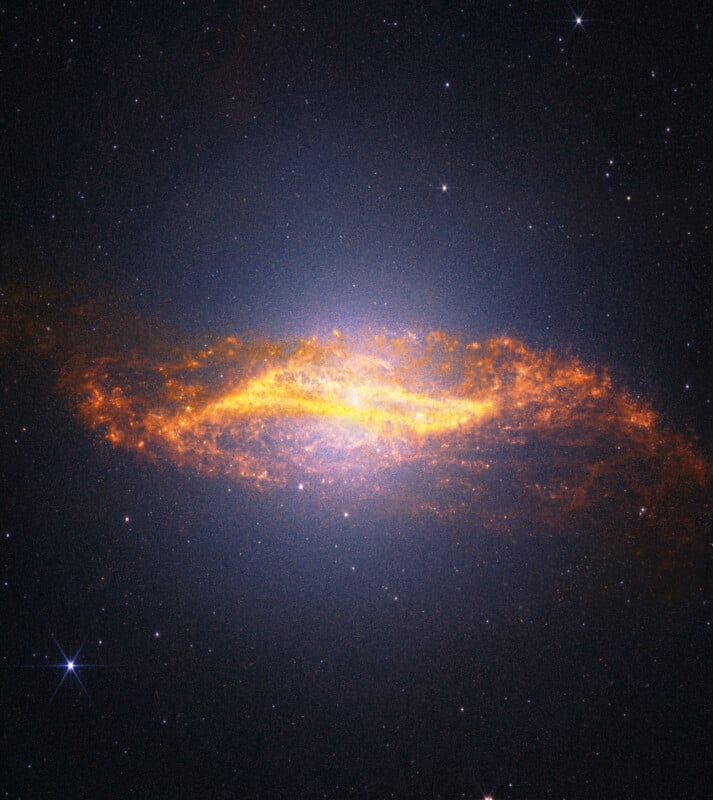
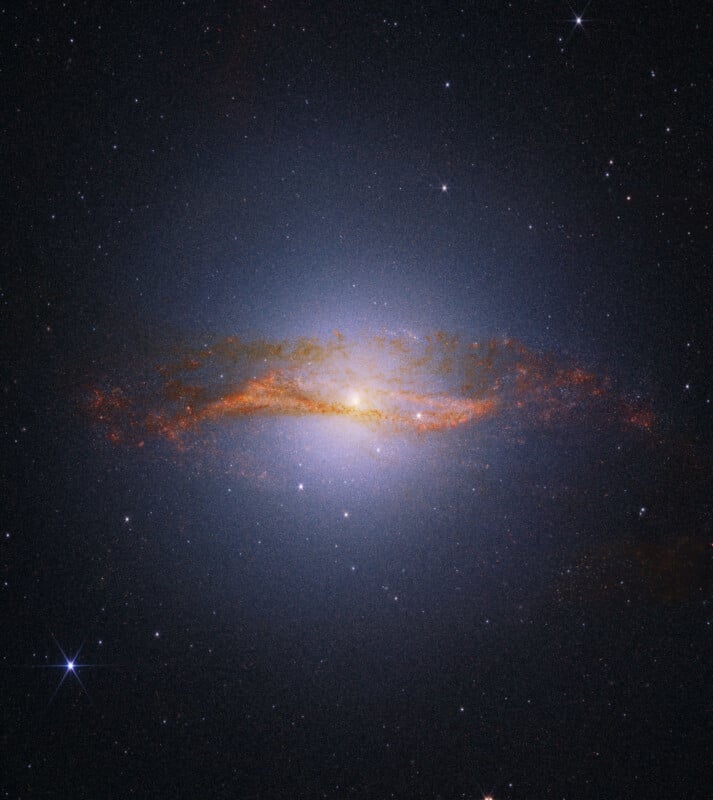
“Together, they form a timeline of the galaxy’s evolution.
“By tracing dust in never-before-seen detail, resolving millions of stars, and revealing the motion of gas near a supermassive black hole, Webb transforms Centaurus A into a vivid record of cosmic history.”
While the monumental scientific research that results from new photos like this is still underway, early returns are very promising. ESA explains that scientists are learning significantly more about how galaxies evolve and the impact of black holes on that process right now, thanks to Webb.


