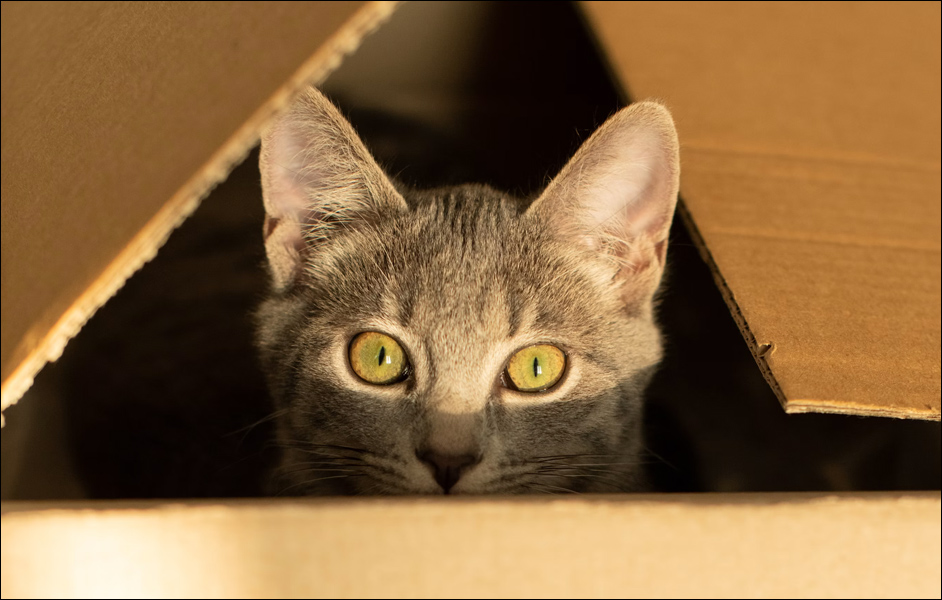
Yesterday evening, as often happens, my wife came over to show me various videos and images that have amused her on social media after work. These curations of hers are notably weighted towards ‘cute’ content laced with endearing animals and plush characters.
Shortly, she showed me something that she had saved but not had time to actually look at yet – a ‘cute animals’ video featuring an interaction between a female koala, her two sleeping newborns, and a curious cat.
Right off the mark, I wondered how a young domestic cat would have access to the same space as these wild animals, even presuming a ‘zoo’ environment or context. Yet I batted the thought away like an annoying mosquito, because it’s adequately covered under ‘life is strange’.
The video showed a static and quite tight shot of the mother koala and her two sleeping offspring, who were situated on a cloth, with the mother leaning against a nondescript wall.
A young, circumspect tabby cat entered the frame, driven past its apprehension by curiosity, and sidled up to the sleeping cubs – all the time keeping a weather eye on the mother, who might take a dim view of this intervention.
After about a minute of this speculative stalemate, the mother koala reached over and swooped up the young cat, holding it for a few moments, in a manner entirely consistent with the two animals’ relative weights and physiognomies; and then settled the interloper down next to its offspring, as an ‘acceptable guest’.*
A New Cat for a New Problem
At this point, at about the same moment, my wife and I declared that this video was likely to be AI-generated, and we expressed what I can only describe as a sense of ‘suspended disappointment’; for us, this was literally a new kind of Schrödinger’s cat – out of the box at last, but not necessarily alive.
I have not sought out the video since, to see if those who posted it have confessed its inauthenticity; or whether it was first posted prior to the current time, before such output could be whipped up for pennies at a multiplicity of web-sites and portals; or else to watch the video’s commenters accusing the material of being AI-generated, even though they may not know this for certain.
Whether or not that particular video was fake or real is immaterial; what struck me was that I had finally arrived at a long-awaited, long-expected epiphany – that, notwithstanding the fact that I have provided deep and intensive coverage** of AI-generated image and video systems (as well as discussing and creating deepfake-detection systems) for seven years now, even I cannot trust what I see any longer.
The biggest remaining bottleneck for AI video synthesis – inconsistency – is no obstacle to creating the kind of short-form content most likely to go viral. AI can perfectly and exactly fill our shrunken attention spans, and no more, for now; but obviously these caveats, challenging as they are, will eventually be overcome.
Therefore, this belated (and possibly even mistaken) thought about the koala video fits into a lifetime of ‘where I was’ moments: Mum’s up the ladder, painting the ceiling, and the radio says Elvis died; the star-destroyer thunders overhead at the Christmas eve 1977 Leicester Square public premiere of Star Wars; the T-Rex breaks out of its paddock, again in Leicester Square, in July 1993; Mara says (in Italian) ‘Come into the kitchen, guys – there’s something happening in New York’; I look at the cat in the koala video and I realize that this is the year, and – for me – the moment, that reality died.
(Hey, even I was off-world when Kennedy was shot.)
The ‘Enemy at the Gates’ Response
As of late 2025, according to one researcher, our capacity for recognizing AI-generated images is not far above chance, at 54%. Take the test for yourself – I didn’t do that well with it, and the quality of genAI has improved notably in the intervening eight or nine months:
Click to play – Despite years of study, when rating images as AI-generated or real, I score almost the exact average found in the tests conducted for the cited study. Source
The Washington Post made one of the earliest prognostications of a potential post-reality world, in February 2018, only a couple of months after autoencoder-based deepfakes first astonished the world. The piece quickly develops into an alarmed rallying cry for regulation, as eventually would come in the form of legislation against sexual deepfakes; the EU’s new law regarding the disclosure of AI-generated material; and the Coalition for Content Provenance and Authenticity (C2PA) authentication system.
The latter attempts to glue qualifying information to imagery over the course of its lifetime, from camera sensor data through to publication and archiving, recording any alterations made on its journey, and amending its manifest accordingly.
Naturally, this cradle-to-grave approach largely disregards the extant body of images in circulation, and only has consumer value in the very limited number of places that it has been adopted.
How Many Fingers am I Holding Up?
But the point is that the appetite for regulation around AI-generated content that has grown enormously since those knee-jerk early 2018 editorials is, ironically, a call for the automation or delegation of human judgement.
Either we do not want to do that work, and want governments and institutions to do it for us; or we do not feel that certain other people – or types of people – should be left to make these judgements (a standpoint that is not a credit to those who hold it).
Didn’t I already say, perhaps a little despondently, that I would not investigate the provenance of the koala/cat video? Not knowing whether that video was fake, and being unwilling to gather enough information to at least hazard a better-informed guess, suspends me in the same state of elastic belief that George Orwell describes in Nineteen Eighty-Four, where the protagonist is tortured by a police state until he begins to be psychologically able to hold two conflicting beliefs:
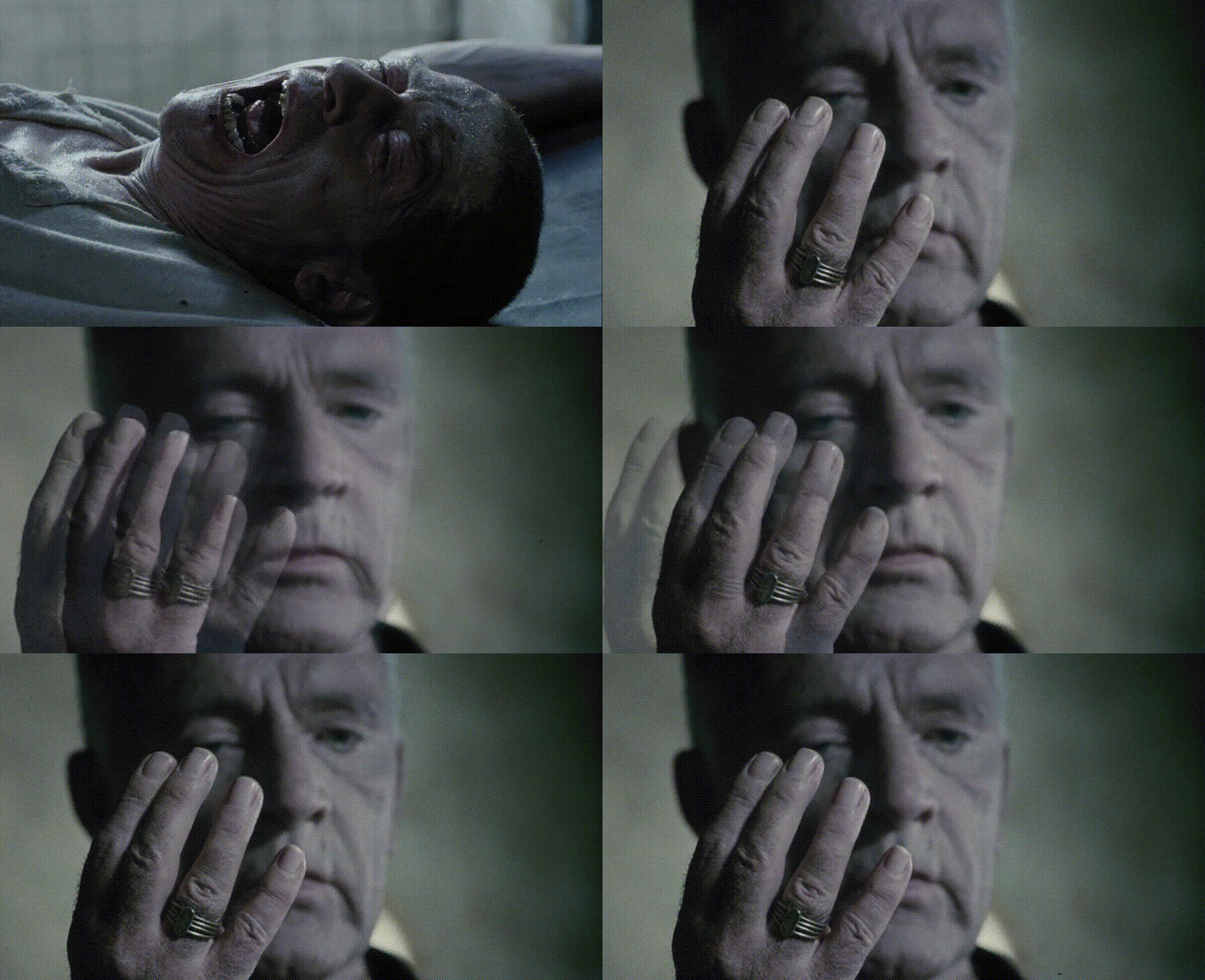
From Michael Radford’s 1984 adaptation of Orwell’s classic dystopian SF novel, a tormented Winston Smith (John Hurt) begins to at least concede that four fingers might actually equal three fingers, and that his eyes are not to necessarily be trusted. Still from 1984 (1984), © Metro-Goldwyn-Mayer Studios Inc. / Amazon MGM Studios.
In Orwell’s novel, the antagonist O’Brien character (played by Richard Burton in the 1984 adaptation pictured above) explicitly states to his victims that his aim in using torture is to render their beliefs ductile, so that they can – as suits the totalitarian state depicted in that work – simultaneously hold two beliefs – such as that four fingers held up can also be three fingers, if the State requires it.
This ‘elasticity of belief’ is naturally prized among influencers of all kinds, since it more normally tends to have ossified by the time voters – or consumers – have matured into desirable targets for influence.
Since, for me, the koala/cat video is both ‘AI’ and ‘not AI’, I have taken the first steps toward becoming habituated into dual belief; and susceptible to those who offer to stop that strobing, binary perception, and to tell me what is real.
Therefore, it occurs to me that this particular epiphany is not one to be prized, but rather, resisted. That inner concession to ‘irreality’ that came to me in the form of a ‘cute animals’ video, and might have come to you – or will yet come to you – in another form, is arguably a hazard to one’s own ability to judge and weigh the world.
On a Lighter Note
On a lighter note, the philosopher Joshua Habgood-Coote took a more optimistic stance in 2024, discounting the ‘epistemic apocalypse’ as alarmism around the loss of systems that were in any case, fragile, and – in the case of photography – rather recent.
But he also argues, in a more recent outing, that the memes ‘fake news’ and ‘post-truth’ have been weaponized for political ends, which, at least in the former case, is difficult to deny (even if it represents political opportunism, rather than any conspiracy).
* And are you in fact wondering if this convenient example is even real, or if I summoned it up – with or without AI – as a discursive device? It is real, I say; if the fact that I am not a new voice on these matters has any weight, perhaps you believe me. Or have I changed lately..?
** This includes citations in diverse entries in the literature, including The Cambridge Handbook of Generative AI and the Law (for Weights in Machine Learning).
First published Friday, September 4, 2026. Amended some minutes after first publication for errors around koalas; and a little later the same day, to add missing tags.


