The smart projector market continues to grow both in terms of quantity and quality, with mid-range and high-end options catering to your home entertainment needs. Smart projectors can act as both a supplement to a smart TV and as a complete replacement, with top models serving as a central hub for streaming, gaming, and enjoying physical media.
There are a bunch of similarities between a smart projector and a smart TV, but there are key features that make operating and enjoying each device a different proposition. Here’s where investing in a TV may be the wrong choice and why you might be better served by a projector.
You want a big screen for less money
Projector image sizes dwarf the top smart TVs

Perhaps the biggest draw of a smart projector is the potential to enjoy your favorite titles on a very sizable screen. A 65-inch TV is always going to be a 65-inch TV, but with a projector, you can achieve an image that’s up to 85 inches or even 100 inches. Some quality models will even hit 150 inches or 200 inches. That’s a pretty impressive image if you’ve got the space.
While giant smart TVs were trending last year, due in part to the size-to-price ratio, a projector is a lot more appealing since it’s easier to set up. It’s also still going to be cheaper than investing in a large smart TV. Even with more basic models that sacrifice image quality for size, you’ll find far better value with a smart projector.
Consider the throw of a projector before you buy. An ultra-short throw projector can create a large image close to the screen, while a standard throw requires the unit be placed far from a wall.
The image a projector casts isn’t a set size like a smart TV. Most come with a large range of sizes that you can enjoy depending on where the unit is located. In general, the farther back you put the project on the screen, the larger the image. That does come with limits, though, because as you pull back, you may start to lose detail and brightness after a certain range. To help your project obtain the best possible image from greater distances, invest in a quality screen and make sure you’re watching in the darkest room possible.
You prioritize space and aesthetics
A projector is smaller and more discrete

Another reason you might be compelled to invest in a smart projector is because of space-saving considerations. A projector is smaller than a TV and will take up less room. For those living in a studio apartment or small one-bedroom, it might be wise to invest in something smaller that can produce a big image instead of something that is itself big.
There is a caveat, of course. If you’re investing in a slender smart TV and mount it on the wall, it’s generally going to feel out of the way. Mounting allows the TV to sit on the wall, often very close, which means you save room by not needing to use a TV stand. Wall mounting can make a room feel bigger and what you’re watching more immersive. However, you can also mount your projector and keep that out of the way, too.
Still, it’s worth considering aesthetics as well. A smart TV is a piece of electronic equipment, and unless you’re investing a lot of money in a high-quality canvas TV, one with thin bezels, flush wall mounting, and a specialized art mode, then your TV is always going to look like a TV. This can interfere with any kind of interior design plan, especially if you’re trying to create a more natural look at home. A TV is big and bulky, even when it’s thin and trying to be discrete. A projector, however, can be installed in the ceiling or simply boxed up and removed from a space when not in use.
You need entertainment on the go
Projectors provide portability and easy storage

Because a projector is relatively small and light, at least compared to a smart TV, it will allow for far more mobility. If you’re someone who is often traveling, moving, or on the go, then a projector will allow you more value and use than a smart TV. From pocket-sized projectors to larger yet lightweight options that you can box up, the ability to set up a projector just about anywhere in the home or outside of it is a huge appeal to some.
If you’re buying a TV that’s 65-inches or larger, you’ll want to be sure it’s going to stay in the same spot for a while. Setting it up and mounting such a sizable TV is a two-person job (at least to do it safely). Mounting in particular requires drilling holes and carefully lifting the unit. A TV is a static device in the home whereas a projector can move around.
Similarly, some projector screens are also easy to move around. There are cheap canvas options available that can be folded up into a bag and stored, with plenty of options available for hanging the screen on any wall. All of this flexibility goes into making a projector the better choice for someone who is moving around a bit more and wants or needs to watch TV in more than one place.
You want a secondary screen in your home
Support your smart TV with another entertainment source

The discussion doesn’t always have to be about replacing a smart TV. There is plenty of value in investing in a projector to serve as an alternative for your main hub. That’s because of all those perks that a projector provides that a TV doesn’t.
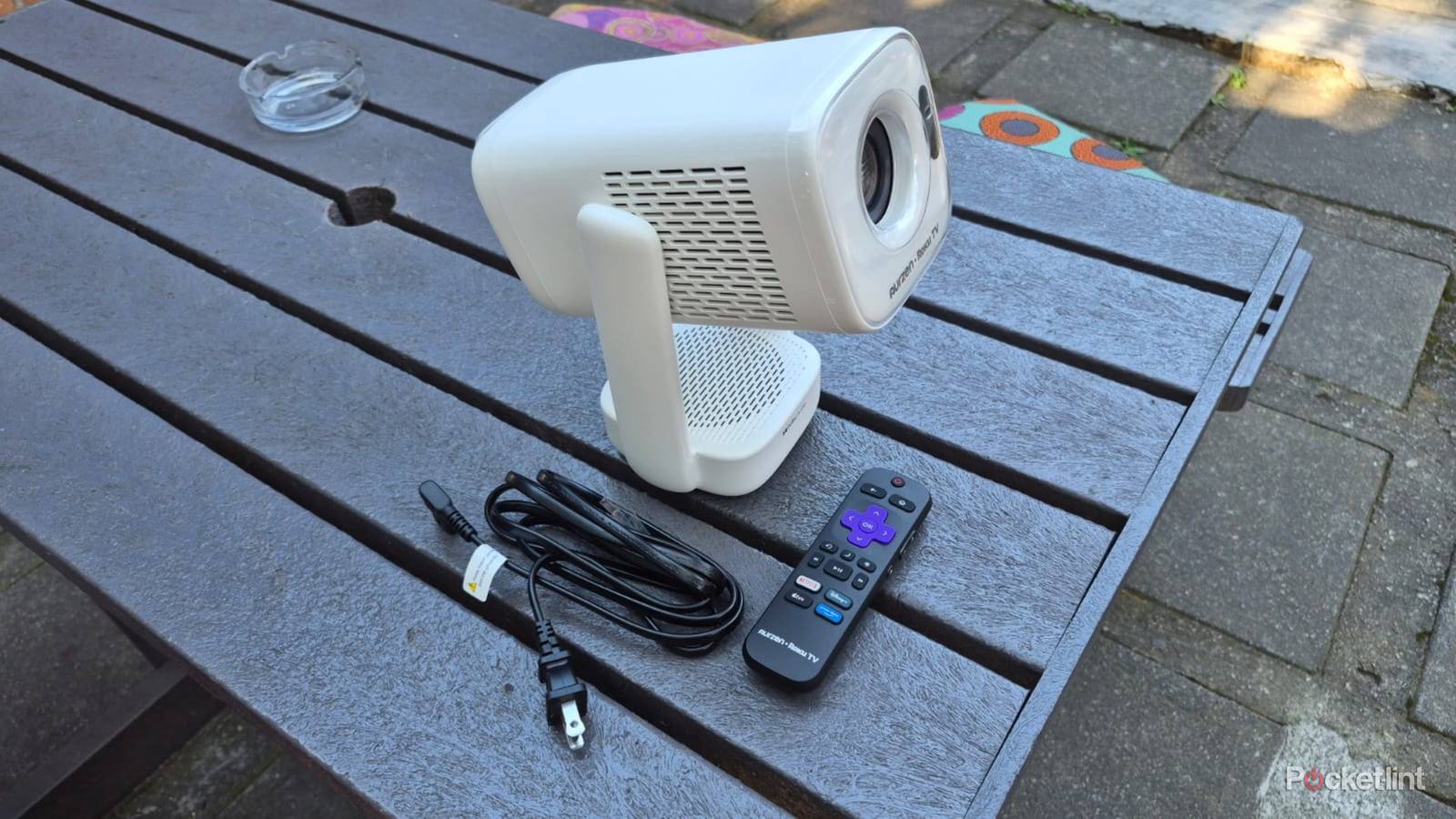
You’ll want to make sure the projector is a smart one, in that it comes with a built-in operating system. These are becoming far more common in years past, and they aren’t a ton of money, either. A smart projector connects to Wi-Fi and uses an operating system, such as Samsung’s Tizen, Roku TV, or Google TV, to grant you access to popular apps and streaming services. This means you don’t have to hook up any devices to your projector in order to watch Netflix or Disney+. There are plenty of other features that a projector has in common with a TV, with HDR or 4K resolution available, along with Dolby Vision, HDMI ports, and virtual assistants.
Consider what your smart TV offers you and what you’re looking for that’s different. A projector can allow for a much bigger screen as mentioned, or it can give you some portability if you want a screen that can move around different rooms in the home. If you have a main entertainment area in the home, then it’s worth thinking about having options everywhere else when you want to watch TV.
You’re not as interested in cinematic quality
A projector is ideal for casual content consumption

There are plenty of high-end, quality projectors that cost a lot of money and in return provide you with a bright, detailed image that can serve a terrific home theater system. However, a lot of projectors simply can’t reach the detail of the best smart TVs, and they can’t achieve the infinite contrast ratio of OLED models.
So if you’re something who isn’t a diehard about fidelity and adhering to the director’s vision, or if you’re simply someone who watches a lot of reality TV, live sports, or network shows, then a projector is going to suit your needs.
Brightness and contrast are going to vary across projectors, and you’ll end up paying more money if you’re investing in a 4K projector rather than an HD one. All of these components are going to factor into the quality of what you’re watching. You want these specs to be as good as possible if you’re watching the films of Christopher Nolan or James Cameron, but if you’re streaming a lot of Netflix and watching Real Housewives, then 4K resolution, the top HDR format, and an infinite contrast ratio isn’t going to matter too much. If you’re just going to buy a mediocre QLED smart TV, consider a quality smart projector for the same price and get some more value.


